
Leading Reporters
  • Headlines
  • Health
  • Business
  • Exclusives
  • Investigation
  • Entertainment
  • Opinion
Tuesday, December 2, 2025
Hot
Tinubu Nominates Ex-CDS Christopher Musa As Defence Minister
BREAKING: FG Publishes List of 15 Alleged Terrorist...
FG Proposes 40% Salary Increase for ASUU Lecturers
Northern Governors Host Emergency Meeting Over Escalating Security...
Tinubu appoints ex-INEC Chair Yakubu, Fani-Kayode, Reno Omokri,...
Niger Delta Boss Jennifer Adighije Accused of Corruption,...
India Orders $570 Million Payout in Major Fraud...
Dangote Refinery Saves Nigeria over ₦10bn Annually in...
Bandits Abduct 16-year-old boy, six girls in FCT...
Social Security: A Missing Link in Nigeria’s Search...
  • About Leading Reporters
  • Contact Us
Leading Reporters
Advertise With Us
  • Headlines
  • Health
  • Business
  • Exclusives
  • Investigation
  • Entertainment
  • Opinion
Hot
Tinubu Nominates Ex-CDS Christopher Musa As Defence Minister
BREAKING: FG Publishes List of 15 Alleged Terrorist...
FG Proposes 40% Salary Increase for ASUU Lecturers
Northern Governors Host Emergency Meeting Over Escalating Security...
Tinubu appoints ex-INEC Chair Yakubu, Fani-Kayode, Reno Omokri,...
Niger Delta Boss Jennifer Adighije Accused of Corruption,...
India Orders $570 Million Payout in Major Fraud...
Dangote Refinery Saves Nigeria over ₦10bn Annually in...
Bandits Abduct 16-year-old boy, six girls in FCT...
Social Security: A Missing Link in Nigeria’s Search...
Leading Reporters
Leading Reporters
  • Headlines
  • Health
  • Business
  • Exclusives
  • Investigation
  • Entertainment
  • Opinion
Copyright 2024 - All Right Reserved
Home > Pakistan
Tag:

Pakistan

India-Pakistan Conflict
Africa & World

Tensions Escalate Between Nuclear-Armed India and Pakistan After Cross-Border Strikes

by Nelson Ugwuagbo May 7, 2025
written by Nelson Ugwuagbo

India said on Wednesday it had carried out military strikes on multiple targets in Pakistan, citing retaliation for a recent terrorist attack in Indian-administered Kashmir that killed 26 civilians.

According to the Indian government, the strikes were conducted on nine locations, including sites in Pakistan-administered Kashmir and Punjab Province. The government stated that the operation was based on intelligence linking Pakistan-based militants to the Kashmir attack, which occurred two weeks ago in a popular tourist area.

“The military actions were measured, responsible, and designed to be non-escalatory in nature,” India said in an official statement, adding that only “known terror camps” were targeted.

Pakistani military officials reported that six locations had been hit, resulting in more than 20 fatalities and dozens of injuries. The Pakistani government condemned the strikes, describing them as “an unprovoked and blatant act of war” and a violation of its sovereignty.

In response, Pakistan said it had begun a “measured but forceful” military reaction and vowed to retaliate “at a time and place of its own choosing.”

The developments have heightened tensions between the two nuclear-armed neighbours, both of whom claim the disputed Kashmir region.
May 7, 2025 0 comments
0 FacebookTwitterPinterestThreadsBlueskyEmail
Health

Donate COVID-19 Vaccine To Poor Countries Or Risk Resurgence UNICEF Ambassadors Tell G7 Countries

by Leading Reporters June 11, 2021
written by Leading Reporters

Ahead of G7 Leaders Summit in the UK this weekend, joint letter urges G7 leaders to share at least 20 per cent of available COVID-19 vaccine doses

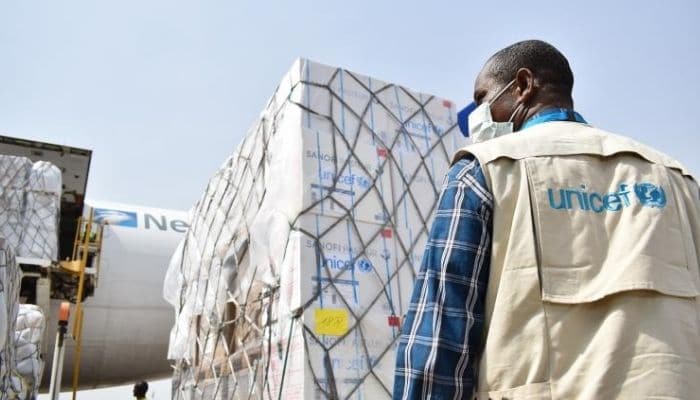
UNICEF Goodwill Ambassadors Priyanka Chopra Jonas, David Beckham, Katy Perry, Orlando Bloom, Whoopi Goldberg, Angélique Kidjo, and Liam Neeson have joined an extraordinary call by 28 high-profile UNICEF Ambassadors and Supporters demanding that G7 leaders commit to donating doses of COVID-19 vaccines to poorer countries now.

The open letter, published today ahead of the three-day G7 Leaders’ Summit (Friday 11-Sunday 13 June) in Cornwall, UK, urges G7 leaders to commit to sharing a minimum of 20 per cent of COVID-19 vaccine dose supply urgently, to reduce the risk of the virus spreading further and the threat of mutant strains.

Ramla   Ali, Fernando Alonso, David Beckham, Orlando Bloom, José Manuel Calderón, Sofia Carson, Gemma Chan, Priyanka Chopra Jonas, Olivia Colman, Billie Eilish, Pau Gasol, Whoopi Goldberg, David Harewood, Sir Chris Hoy, Angelique Kidjo, Téa Leoni, Lucy Liu, Juan Manuel López Iturriaga, Ewan McGregor, Alyssa Milano, Andy Murray, Liam Neeson, Liam Payne, Katy Perry, Sergio Ramos, Claudia Schiffer, Teresa Viejo and P!nk joined UNICEF in calling on G7 world leaders to donate doses and ensure fair and equitable vaccine supply to low- and middle- income countries.

“The world has spent a year and a half battling the COVID-19 pandemic, but the virus is still spreading in many countries and producing new variants with the potential to put us all back where we started,” the letter reads. “This means more school closures, more healthcare disruptions, and greater economic fallout – threating the futures of families and children everywhere.”

The letter goes on to warn that COVAX, the global initiative supporting poorer countries in gaining access to vaccines, is already facing a shortfall of 190 million doses, and proposes that, in order to help cover this shortfall, G7 countries donate 20 per cent of their vaccines between June and August – over 150 million doses – as a temporary stopgap measure to compensate for this shortfall.

Recent data analysis provided by Airfinity, the life sciences research facility, and commissioned by the UK Committee for UNICEF (UNICEF UK), indicates that G7 nations could do so without significant delay to current plans to vaccinate domestic adult populations.

“As a UNICEF Goodwill Ambassador I believe in the crucial benefit of vaccinations,” said David Beckham, UNICEF Goodwill Ambassador. “The pandemic won’t be over until it’s over everywhere, so it’s vital that all communities around the world have fair access to Covid-19 vaccines urgently.”

UNICEF is also warning that without urgently ensuring fair and equitable access supply, the world will continue to be at risk of deadly virus mutations – like the devastating second wave of COVID-19 sweeping across India and other South Asian countries including Nepal, Pakistan and Afghanistan.

“The crisis at home in India and across the region of South Asia is devastating. This deadly surge of Covid-19 is placing an enormous strain on health facilities across India, with hospital beds, essential medical supplies and oxygen running out. It’s also of huge concern to all of us at UNICEF to hear about children falling ill with this new variant – while many are also losing parents and left alone and at risk, unable to access critical health care, vaccinations and education,” said Priyanka Chopra Jonas, UNICEF Goodwill Ambassador.

“The crisis in India shows why we must act now to avoid further deadly mutations ravaging low- and middle- income nations around the world. UNICEF and its COVAX partners are ensuring vaccines and treatments reaches the world’s most vulnerable populations, but cannot do it alone. A clear solution to this is G7 countries committing to sharing their surplus COVID-19 vaccine doses immediately with the countries whose health workers and vulnerable populations need them the most,” said Priyanka Chopra. “That’s exactly why I’ve joined my fellow UNICEF Goodwill Ambassadors in signing this letter, urgently asking G7 leaders to make this commitment at the UK summit this week, to keep families and children everywhere safe from COVID-19.”

Finally, the letter argues that “this weekend’s G7 Summit is a vital opportunity for you to agree the actions that will get vaccines where they are most needed, fast…” and urges leaders to set out a roadmap to scale-up donations as supplies increase, noting that forecasts suggest as many as one billion doses may be available for donation by year end.

“Countries need not choose between fighting the disease at home or fighting it abroad. We can, and must, do both simultaneously – and immediately,” said Henrietta Fore, UNICEF Executive Director.

“This is a pivotal time in the fight against COVID-19, as leaders meet to set priorities for what form this fight will take in the coming weeks and months. I am pleased so many UNICEF supporters are joining our call for emergency support for COVAX, so we can continue to wage this fight globally. After all, the disease is not respecting boundaries on a map. Our fight to get ahead of the virus, and its variants, should not either,” said Henrietta Fore.

June 11, 2021 0 comments
0 FacebookTwitterPinterestThreadsBlueskyEmail
Health

If poor countries go unvaccinated, rich ones will pay, says study

by Leading Reporters May 7, 2021
written by Leading Reporters

In monopolising the supply of vaccines against Covid-19, wealthy nations are threatening more than a humanitarian catastrophe: The resulting economic devastation will hit affluent countries nearly as hard as those in the developing world.

This is the crucial takeaway from an academic study to be released Monday (Jan 25). In the most extreme scenario – with wealthy nations fully vaccinated by the middle of this year, and poor countries largely shut out – the study concludes that the global economy would suffer losses exceeding US$9 trillion (S$12 trillion), a sum greater than the annual output of Japan and Germany combined.

Nearly half of those costs would be absorbed by wealthy countries like the United States, Canada and Britain.

In the scenario that researchers term most likely, in which developing countries vaccinate half their populations by the end of the year, the world economy would still absorb a blow of between US$1.8 trillion and US$3.8 trillion. More than half of the pain would be concentrated in wealthy countries.

Commissioned by the International Chamber of Commerce, the study concludes that equitable distribution of vaccines is in every country’s economic interest, especially those that depend most on trade. It amounts to a rebuke to the popular notion that sharing vaccines with poor countries is merely a form of charity.

“Clearly, all economies are connected,” said Professor Selva Demiralp, an economist at Koc University in Istanbul who previously worked at the Federal Reserve in Washington, and is one of study’s authors. “No economy will be fully recovered unless the other economies are recovered.”

Prof Demiralp noted that a global philanthropic initiative known as the ACT Accelerator – which is aimed at providing pandemic resources to developing countries – has secured commitments for less than US$11 billion toward a US$38 billion target. The study lays out the economic rationale for closing the gap. The remaining US$27 billion may, on its face, look like an enormous sum but is a pittance compared with the costs of allowing the pandemic to carry on.

The commonplace idea that the pandemic respects neither borders nor racial and class divides has been promoted by corporate chief executives and pundits. This comforting concept has been belied by the reality that Covid-19 has trained its death and destruction of livelihoods on low-wage service workers, and especially racial minorities, while white-collar employees have been able to largely work safely from home, and some of the world’s wealthiest people can ride out the pandemic on yachts and private islands.

But in the realm of international commerce, there is no hiding from the coronavirus, as the study brings home. Global supply chains that are vital to industry will continue to be disrupted so long as the virus remains a force.

A team of economists affiliated with Koc University, Harvard University and the University of Maryland examined trade data across 35 industries in 65 countries, producing an extensive exploration of the economic impacts of unequal vaccine distribution.

If people in developing countries remain out of work because of lockdowns required to choke off the spread of the virus, they will have less money to spend, reducing sales for exporters in North America, Europe and East Asia. Multinational companies in advanced nations will also struggle to secure required parts, components and commodities.

At the centre of the story is the reality that most international trade involves not finished wares but parts that are shipped from one country to another to be folded into products. Of the US$18 trillion worth of goods that were traded last year, so-called intermediate goods represented US$11 trillion, according to the Organisation for Economic Cooperation and Development.

The study finds that the continued pandemic in poor countries is likely to be worst for industries that are especially dependent on suppliers around the world, among them automotive, textiles, construction and retail, where sales could decline more than 5 per cent.

The findings add a complicating layer to the basic assumption that the pandemic will leave the world economy more unequal than ever. While this appears true, one striking form of inequality – access to vaccines – could pose universal problems.

In an extraordinary testament to the innovative capacities of the world’s most skilled scientists, pharmaceutical companies produced life-saving vaccines in a small fraction of the time thought possible. But the wealthiest countries in North America and Europe locked up orders for most of the supply – enough to vaccinate two and three times their populations – leaving poor countries scrambling to secure their share.

Many developing countries, from Bangladesh to Tanzania to Peru, will likely have to wait until 2024 before fully vaccinating their populations.

The initiative to supply poor countries with additional resources gained a boost as US President Joe Biden took office. The Trump administration did not contribute to the cause. Mr Biden’s chief medical officer for the pandemic, Dr Anthony Fauci, promptly announced that the United States would join the campaign to share vaccines.

In contrast to the trillions of dollars that governments in wealthy countries have spent to rescue companies and workers harmed by the health emergency and the wrenching economic downturn, developing countries have struggled to respond.

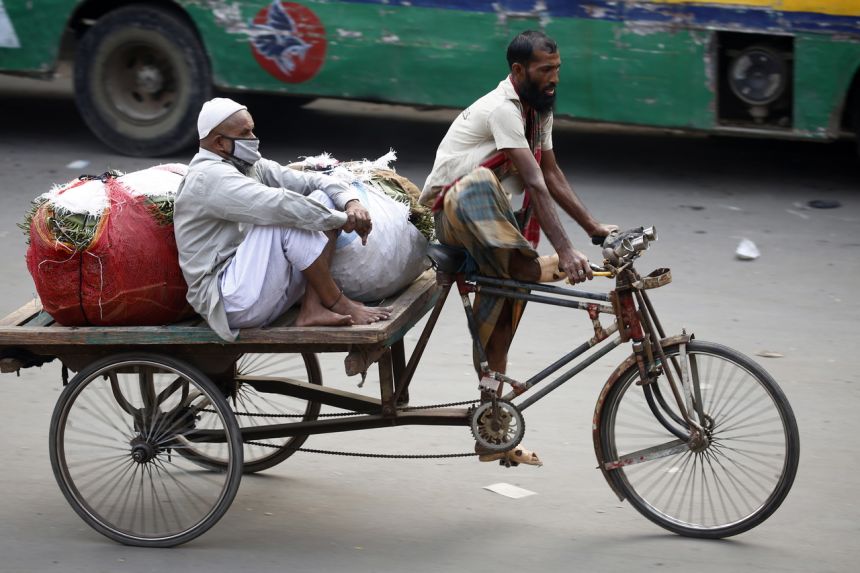
As migrant workers from poor countries have lost jobs during the pandemic, they have not been able to send as much money home, levelling a major blow to countries that have relied on these so-called remittances like the Philippines, Pakistan and Bangladesh.

The global recession has slashed demand for commodities, decimating copper producers like Zambia and Congo, and countries dependent on oil exports like Angola and Nigeria. As Covid-19 cases have soared, that has depressed tourism, costing jobs and revenue in Thailand, Indonesia and Morocco.

Many poor countries entered the pandemic with debt burdens that absorbed much of their government revenue, limiting their spending on healthcare. Private creditors have refused to participate in a modest debt suspension programme forged by the Group of 20. The World Bank and the International Monetary Fund both promised major relief but failed to produce significant dollars.

This, too, appears to be changing as new leadership takes over Washington. The Trump administration opposed a proposed US$500 million expansion of so-called special drawing rights at the IMF, a reserve asset that governments can exchange for hard currency. Mr Biden’s ascent has bolstered hopes among fund members that his administration will support the expansion. Democrats in Congress – now in control of both chambers – have signalled support for a measure that would compel the Treasury to act.

Still, in capitals like Washington and Brussels, the discussion about support for the developing world has been framed in moral terms. Leaders have debated how much they can spare to help the planet’s least fortunate communities while mostly tending to their own people.

The study challenges that frame. In failing to ensure that people in the developing world gain access to vaccines, it concludes, leaders in the wealthiest nations are damaging their own fortunes.

“No economy, however big, will be immune to the effects of the virus until the pandemic is brought to an end everywhere,” said Mr John Denton, secretary-general of the International Chamber of Commerce. “Purchasing vaccines for the developing world isn’t an act of generosity by the world’s richest nations. It’s an essential investment for governments to make if they want to revive their domestic economies.”

May 7, 2021 0 comments
0 FacebookTwitterPinterestThreadsBlueskyEmail

Recent Posts

  • Tinubu Nominates Ex-CDS Christopher Musa As Defence Minister

    December 2, 2025
  • Poor Toilets Driving GBV, School Dropouts – Wateraid

    December 2, 2025
  • BREAKING: FG Publishes List of 15 Alleged Terrorist Financers in Nigeria [SEE LIST]

    December 1, 2025
  • FG Proposes 40% Salary Increase for ASUU Lecturers

    December 1, 2025
  • Northern Governors Host Emergency Meeting Over Escalating Security Concerns

    December 1, 2025

Usefull Links

  • Contact Page
  • About Leading Reporters
  • Contact Us
  • Headlines
  • Investigation
  • Exclusives
  • Opinion
  • Business
  • Facebook
  • Twitter
  • Instagram
  • Linkedin

@2021 - All Right Reserved. Designed and Developed by PenciDesign


Back To Top
Leading Reporters
  • Featured
  • Politics
  • Opinion
  • Business
  • Entertainment
  • Sports
  • About Us
  • Contact