

Leading Reporters
  • Headlines
  • Health
  • Business
  • Exclusives
  • Investigation
  • Entertainment
  • Opinion
Tuesday, February 17, 2026
Hot
BREAKING: DSS Sues El-Rufai for Intercepting NSA Ribadu’s...
Major Health Crisis Plagues Dape, Karmo Residents As...
BREAKING: INEC announces timetable, schedule of 2027 elections
Aso Rock to disconnect from nat’l grid in...
Valentine’s Day: FG bans money bouquets, warns against...
INEC Proposes ₦873.78 Billion Budget for 2027 General...
Engine Failure: Passengers escape death as Arik Air...
Senate adopts electronic, manual transmission of election results
BURSTED: NSITF CEO MOVES On ₦297Billion Fund, Operates...
Peter Obi joins #OccupyNationalAssembly protest over electronic transmission...
  • About Leading Reporters
  • Contact Us
Leading Reporters
Advertise With Us
  • Headlines
  • Health
  • Business
  • Exclusives
  • Investigation
  • Entertainment
  • Opinion
Hot
BREAKING: DSS Sues El-Rufai for Intercepting NSA Ribadu’s...
Major Health Crisis Plagues Dape, Karmo Residents As...
BREAKING: INEC announces timetable, schedule of 2027 elections
Aso Rock to disconnect from nat’l grid in...
Valentine’s Day: FG bans money bouquets, warns against...
INEC Proposes ₦873.78 Billion Budget for 2027 General...
Engine Failure: Passengers escape death as Arik Air...
Senate adopts electronic, manual transmission of election results
BURSTED: NSITF CEO MOVES On ₦297Billion Fund, Operates...
Peter Obi joins #OccupyNationalAssembly protest over electronic transmission...
Leading Reporters
Leading Reporters
  • Headlines
  • Health
  • Business
  • Exclusives
  • Investigation
  • Entertainment
  • Opinion
Copyright 2024 - All Right Reserved
Home > Nigerian Constitution
Tag:

Nigerian Constitution

Headlines

Does anyone deserve immunity in Nigeria?

by Leading Reporters April 10, 2022
written by Leading Reporters

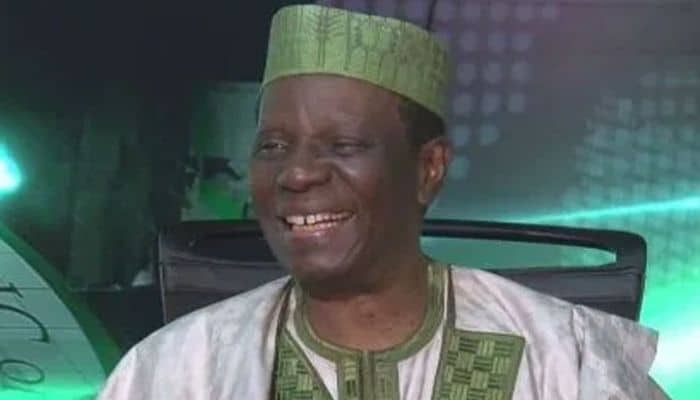
By Tonnie Iredia

In 2007, the Nigerian Judiciary turned down a request by the Federal Government to declare the office of Vice President Atiku Abubakar vacant on account of his defection from the then ruling People’s Democratic Party (PDP) to the Action Congress (AC).

The decision was premised on Section 308 of the Nigerian Constitution which protects a sitting President and his Vice as well as State Governors and their deputies from being prosecuted in court while in office. Atiku’s case therefore helped to underscore the inviolability of the immunity clause.

However, conscious of some likely negative effects, such as abuses by political office-holders, Umaru Yar’adua who became President a few months later, sought to expunge it from the Constitution. Yar’adua pointedly argued during the launch of his anti-corruption campaign that nobody in Nigeria deserved “the right to be protected by law when looting public funds.”

The suggestion was well received in many quarters, especially by those who wondered which party manifesto a Defector-Vice President would execute while in a ‘limbo-office.’ Interestingly, the Action Congress reputed to consist of progressives opposed the proposal on political grounds thereby making it more difficult for possible negative fall-outs from Section 308 to be resolved.

According to the then Publicity Secretary of the party, Alhaji Lai Mohammed, it was not the immunity clause that was protecting looters but the lack of political will by government to tackle corruption. The immunity clause survived, not because many were persuaded by the reasoning in Atiku’s case, but more because the attempt to sack Atiku was seen as political and not on account of corruption. In addition, Nigerians had assumed that any ill-gotten wealth garnered by corrupt leaders would be legally retrieved later while those found guilty of corrupt practices would be severely penalized.

This assumption has since been disproved especially after a former party chieftain declared that those who defect to the ruling party would have their sins forgiven. Perhaps, no one imagined that the immunity clause which was genuinely inserted in the Constitution to dissuade anyone from distracting the executive arm would be exploited by the same beneficiaries to commit mischief.

The logical reasoning was that as a developing society challenged by infrastructural deficiencies, leaders in the executive arm would have so much to do about development to have spare time to be engrossed in politics. In truth however, many Nigerian politicians are prepared to hide under constitutional protection and technicalities to engage in unwholesome political and electoral mal-practices. It is now obvious in retrospect that office holders who enjoy immunity are able to use the privilege negatively for personal gains which was not the purpose of the provision.

This over-pampering of executives who are not required to reciprocate the goodwill accorded them ought to be reviewed. For example, whereas the constitution stops anyone from instituting legal cases against leaders in the executive arm, the same constitution failed to also bar such leaders, while in office, from initiating same against members of the public. So, they can sue but cannot be sued! They are also free to engage in political immorality which they quickly defend using the instrumentality of the immunity clause.

Even the legal injunction that executives should not be engaged in other assignments except governance has not materialized. The first problem came from a new arrangement in which candidates elected at elections suddenly became designated by their parties as national leaders in the case of President or state leader in the case of governors. The main result of this designation and consequent preoccupation with party matters is that the executives have been diverted from spending ample time on governance issues as if they were elected by the entire electorate to run one political party or the other.

President Muhammadu Buhari as the national leader of the ruling APC has had to take charge of the party at different times. At a point he, had to arrange for a caretaker management when the party’s chairman was removed while he stepped in again recently to stop the party’s national convention from derailing. Governors Mai Mala Buni of Yobe, Abubakar Bello of Niger and Gboyega Oyetola of Osun had to virtually run the national working committee of their party for almost two years thereby relegating the tedious but substantive task of state executives.

While many state governors are now more seen in Abuja than their state capitals dealing with one party issue or another, many have in the last one year traversed the length and breadth of the country on party assignments well ahead of the official time for electioneering. As a result, the original time for governance has been heavily appropriated while expanding the time for electioneering. Yet, the constitution, in anticipation of the numerous projects of development that have to be executed for the benefit of the masses barred everyone from distracting executives.

In the midst of these self/party imposed distractions, some governors are counselled that to be reelected or elevated to higher positions, they have to defect to another party. They hurriedly implement such arrangements ignoring the fact that their current positions were attained through the sponsorship of another political party. If legally challenged, they are able to plead Section 308 of the Constitution. What bothers many about this trend is that it is only the arguments of senior lawyers copiously quoting the Supreme Court that the people hear.

No one considers that some die-hard actors would soon design extra-judicial arrangements to protect their votes from being transferred to another party. In other words, the injustice of defection which converts winners to losers by transferring the votes obtained at elections may soon generate political violence leading to another inexplicable insecurity. To confirm that there is no remorse about the approach, even legislators that the Constitution says should lose their seats upon defection are left untouched. What then is the purpose of voting, if the wishes of the people can be recklessly reversed?

The expectation that somewhere along the line, judicial activism would decisively put a halt to the vicious attack on the spirit of the Constitution is daily fading. At the same time, the justification for defection is becoming more bizarre by the day. The other day, one governor who was defending his defection from one party to another said on national television that he moved to avoid a fellow governor whom he described as a bully. He neither explained the venue of the alleged bullying nor how a governor in another state can stop him from working in his own state.

What he inadvertently confirmed was that he loathes how the so-called unnamed bully operates during party meetings. But why should a governor, an otherwise statesman, be occupied with party matters? When the court declined to remove him from office, he publicly celebrated “victory” whereas what happened was that the court couldn’t find an approved punishment for his unwholesome conduct.

Except the country finds a way of reversing the trend, defectors would increase shortly thereby retarding national growth and development. So far, the way the cases in court challenging the politicization of governance are being handled suggests that the reprehensible conduct will not be addressed soon as all eyes are turned towards only the letters of the law. With the fast approaching primary election for which everyone is already in the mood for campaigns not much can be done in the area of pushing for an amendment to Section 308 of the Constitution.

The direction to look towards in the circumstance is for our Supreme Court to help shape our public policy by using its powers of interpretation to positively expand the provisions of the section in such a way that the genuine intention of the drafters of our Constitution is attained. For example, considering that the judiciary has said that votes scored at an election belong to political parties, the executives wishing to defect should be allowed to do so but without taking away votes which still belong to their erstwhile parties.
April 10, 2022
April 10, 2022 0 comments
0 FacebookTwitterPinterestThreadsBlueskyEmail
HeadlinesOpinion

Sacking Defecting Governors Deserves Supreme Court’s Support

by Leading Reporters March 13, 2022
written by Leading Reporters

By Tonnie Iredia

On March 08, 2022, a federal High Court sitting in Abuja sacked the governor of Ebonyi state and his deputy as well as a number of state legislators for defecting from the party on whose platform they were elected. Reactions to the judgment have been overwhelming.

While most people found no fault with removing the law makers from office because it tallies with the express provisions of the Constitution, opinions are divided as to the legality of the judgment concerning the governor and his deputy whose defection the same Constitution is silent on. In 2018, when the governors of Benue, Sokoto and Kwara states similarly defected, what carried the day was the argument that the Constitution did not include defection among the factors for which governors can leave office. The implication of this is that how to handle a defecting governor will for some time to come remain an unresolved issue in Nigeria’s democracy. But bearing in mind that the occurrence is patently repugnant, one would have thought that steps would have since been taken to resolve the issue, but that has not happened.

A critical objective of this piece is to draw attention to the need to punish the wrong of defection by those who appear to be inadvertently protected by the law when they are in the wrong. Perhaps an appropriate take off point is to establish that political defection is a wrong which is not a difficult task to handle because as stated earlier, there is a consensus that it is a wrong on the part of law makers. But is it not curious to describe the act of transferring votes by some actors from one political party to another as a wrong and pretend that the same act is probably not a wrong when perpetuated by another set of actors? Luckily, most people deprecate the act of political defection which short-changes a particular set of voters irrespective of who the wrong-doers are. Unfortunately, whereas the law prescribes punishment for law makers involved in the act, it does not similarly do so for governors. But considering that the failure to punish a wrong does not cure the wrong of its defects, the best way to go seems to be to seek to punish every wrong doer on the basis that under the rule of law, everyone is supposedly equal before the law.

Against this backdrop, there are several issues calling for attention. The first of such issues is ownership of votes cast in a Nigerian election; is it the property of a candidate or his/her political party or both? The Constitution has left no one in doubt that political parties are the most important actors in the nation’s electoral process. To start with, the Constitution provides that only aspirants sponsored by political parties can be candidates in an election. Put differently, no one can dispense with political parties which is why it is impossible to be an independent candidate in any Nigerian election. Besides, the Judiciary has consistently held that votes at an election belong to political parties notwithstanding that the charisma of individual candidates may have helped a party to secure victory. In recent contests (Imo North Senatorial and local elections in Abaji-FCT) INEC declared specific political parties as winners pending the determination of their authentic candidates.

The second issue of importance is the power to transfer votes from one party/candidate to another. Here, it is obvious that in view of the strategic position of political parties as owners of votes cast in elections, a candidate who has been declared winner of an election cannot later transfer his votes to another party/candidate. Anyone who does so, is involved in the wrong of defection which can hurt the interests of some persons or groups. Based on this reasoning, the logical necessary follow-up question would take this form. Is it in order for the relevant societal institution – the Judiciary to overlook the wrong of such transfer of votes which a defection of an elected office-holder may have caused? If not, how best can the subject be handled?

For long, very many senior lawyers have continued to argue that removing a defecting governor from office is unconstitutional. However, they have all been silent on the propriety of leaving a wrong without a remedy. Here, it is apt to recall the Latin maxim ‘ubi jus ibi remedium’ which is an age-long philosophy meaning “for every wrong the law provides a remedy.” It is therefore not enough to lament the failure of the Nigerian Constitution to provide a remedy for the wrong of political defection by a governor because it is not only a Constitution that has the duty to provide every remedy; in what is known as judge-made law, a Court can also interpretatively prescribe a remedy to a wrong. Surprisingly, no effort has been made in recent years to follow the clear path identified by the greatest Nigerian judges of all times on what the nation should do when confronted by the issue of lack of provisions for an inevitable cause of action. In other words, Nigerian Courts ought to inventively dispense substantive justice instead of allowing a wrong to persist without sanctions because of over-reliance on technicalities.

As Karibi-Whyte a one-time famous justice of Nigeria’s Supreme Court once explained, “… it is erroneous to assume that the maxim ubi jus ibi remedium is only an English Common Law principle. It is a principle of justice of universal validity couched in Latin and available to all legal systems involved in the impartial administration of justice. It enjoins the courts to provide a remedy whenever the Plaintiff has established a right…” Although some analysts have criticised the decision of the Supreme Court in the famous Rotimi Amaechi’s case, it is quite hard to disagree with the proactive posture of the Justices that if a court is satisfied that a person has suffered a legal injury it ought to do justice by providing “a remedy irrespective of the fact that no remedy is provided either at common law or by statute.” Indeed, a court needs to do this so as to be able to follow the persuasive dictum of another legal luminary: Justice Katsina-Alu who opined that “the law is an equal dispenser of justice which leaves no one without a remedy for his right.”

With this clear line of thought provided by judges of old, no one can defend the
current conservative approach which gives an impression that the judiciary in Nigeria has been subdued by the other arms of government. The situation is more worrisome because defecting governors have never proffered any rational motivation for their behaviour other than personal materialistic interests. For example, Governor Ben Ayade of Cross River State defected because he reportedly wanted to support the President to provide good governance. Dave Umahi of Ebonyi State on his part defected to the ruling party because he doubted if his original party would zone the presidency to the South East. In the case of Zamfara State, Governor Bello Matawalle defected to a political party which the judiciary ruled was not in existence in the eyes of the law. These bizarre defections ought not to be protected through judicial over-reliance on technicalities which can encourage other actors into seeking extra-judicial means of ventilating political grievances.

As if to reiterate the definition of law by the legendary English jurist, Lord Denning which sees law as what the Judge says it is, Justice Inyang Ekwo has taken the first crucial step in bringing to an end, the notorious wrong of Nigeria’s political defections. All Higher Courts should support him by disallowing the perpetrators from using the protection offered them by the Constitution to hide behind fraudulent activities. Any defector-governor should not be seen as someone removed from office; but one who worked away from a mandate. He should thus not be allowed to transfer the same mandate elsewhere because its owners – the electorate had instinctively determined where the mandate should be.

……..Professor Iredia, a former Director-General of the NTA, media law teacher, communication expert and broadcast manager wrote from Abuja.

March 13, 2022 0 comments
0 FacebookTwitterPinterestThreadsBlueskyEmail
Headlines

Constitution constraint Gov’s from protecting her citizens – Fayemi

by Leading Reporters May 1, 2021
written by Leading Reporters

The Chairman of Nigeria Governors’ Forum (NGF) Governor Kayode Fayemi said limitations in the Nigerian Constitution and practical challenges were hindering governors from protecting residents in their states.

Fayemi said this while delivering his address at 2021 ‘The Platform’ organised by The Covenant Nation with the theme, ‘Is devolution of powers the solution to Nigeria’s problem’ held in Iganmu, Lagos State, on Saturday.

According to Fayemi, all governors in Nigeria were committed to protecting the lives of residents of their states, saying, however, that they were theoretically chief security officers of their states.

He said although they had the power to engage with all heads of security formations operating in their states, the governors’ directives were often not adhered to until they were cleared by ‘higher authorities.’

“…What would probably not surprise you because you’ve heard this before now is that sometimes that commissioner of police may not necessarily take your directive until he has cleared it with higher authorities,” Fayemi said.

When asked if he meant that governors could not secure their states, Fayemi noted that they could do so but beyond the reliance on federally-controlled policing arrangement.

Speaking on the political structure of Nigeria, the NGF chairman said there was no federation in the world with a unitary policing system except Nigeria.

In Nigeria, due to the rising state of insecurity, some regions have established regional security outfits to protect lives and properties in selected areas. In some northern states, there is Hisbah; South-West has the Western Nigeria Security Network (WNSN) codenamed Operation Amotekun, while  South-East has Ebube Agu security network.

Over the years, many Nigerians, including lawmakers, ethnic groups and religious heads, have called for ‘true federalism’ and restructuring of the country.

However, the Presidency has replied that “such unpatriotic outbursts are both unhelpful and unwarranted” as the government would not succumb to threats and take any decision out of pressure.

May 1, 2021 0 comments
0 FacebookTwitterPinterestThreadsBlueskyEmail

Recent Posts

  • BREAKING: DSS Sues El-Rufai for Intercepting NSA Ribadu’s Phone

    February 16, 2026
  • APC Senator Seeks 16-Year Single Tenure for Nigeria’s President

    February 16, 2026
  • Major Health Crisis Plagues Dape, Karmo Residents As Dust Pollution From AMAC Road Project Chokes Residents

    February 16, 2026
  • BREAKING: INEC announces timetable, schedule of 2027 elections

    February 13, 2026
  • Aso Rock to disconnect from nat’l grid in March – Perm Sec

    February 12, 2026

Usefull Links

  • Contact Page
  • About Leading Reporters
  • Contact Us
  • Headlines
  • Investigation
  • Exclusives
  • Opinion
  • Business
  • Facebook
  • Twitter
  • Instagram
  • Linkedin

@2021 - All Right Reserved. Designed and Developed by PenciDesign


Back To Top
Leading Reporters
  • Featured
  • Politics
  • Opinion
  • Business
  • Entertainment
  • Sports
  • About Us
  • Contact