
Leading Reporters
  • Headlines
  • Health
  • Business
  • Exclusives
  • Investigation
  • Entertainment
  • Opinion
Wednesday, March 11, 2026
Hot
Row In Senate As Natasha Akpoti-Uduaghan Dropped From...
Fire Breaks Out At Federal Head Of Service...
Police reportedly remove force PRO Hundeyin 6 months...
BREAKING: Tinubu appoints Taiwo Oyedele as Minister
“If I Run for President, Nigerians Will Vote...
Fuel Price in Nigeria Set to Increase amid...
INEC Shifts 2027 General Elections to January, February...
TINUBU DECORATES DISU AS ACTING INSPECTOR GENERAL OF...
Gunmen invade church in Ondo, abduct six worshippers
FCT Bye-Law: Court bans AMAC from arresting private...
  • About Leading Reporters
  • Contact Us
Leading Reporters
Advertise With Us
  • Headlines
  • Health
  • Business
  • Exclusives
  • Investigation
  • Entertainment
  • Opinion
Hot
Row In Senate As Natasha Akpoti-Uduaghan Dropped From...
Fire Breaks Out At Federal Head Of Service...
Police reportedly remove force PRO Hundeyin 6 months...
BREAKING: Tinubu appoints Taiwo Oyedele as Minister
“If I Run for President, Nigerians Will Vote...
Fuel Price in Nigeria Set to Increase amid...
INEC Shifts 2027 General Elections to January, February...
TINUBU DECORATES DISU AS ACTING INSPECTOR GENERAL OF...
Gunmen invade church in Ondo, abduct six worshippers
FCT Bye-Law: Court bans AMAC from arresting private...
Leading Reporters
Leading Reporters
  • Headlines
  • Health
  • Business
  • Exclusives
  • Investigation
  • Entertainment
  • Opinion
Copyright 2024 - All Right Reserved
Home > New york
Tag:

New york

Headlines

Wanted: 29-Year-Old Nigerian, Defrauded New York State Of $30Million

by Leading Reporters September 11, 2022
written by Leading Reporters

This was contained in a statement by the Department of Justice, U.S. Attorney’s Office, Eastern District of Pennsylvania. 

A Nigerian, Chidozie Collins Obasi, has been declared wanted by United States Federal Bureau of Investigation over $30 million fraud.Obasi, 29, was indicted and wanted for defrauding New York by posing as a ventilator seller during the height of the COVID-19 pandemic, according to FBI.

The suspect was indicted last year, but prosecutors in Pennsylvania only unsealed the indictment on Thursday and announced the case Friday. It was learnt that the suspect also targeted Americans through a spam email campaign offering illegitimate “work from home” jobs, adding that he perpetrated the fraud from Nigeria, with the help of co-conspirators in Canada and elsewhere.

This was contained in a statement by the Department of Justice, U.S. Attorney’s Office, Eastern District of Pennsylvania. US Attorney Jacqueline Romero announced that the suspect was charged with one count of conspiracy to commit mail and wire fraud, six counts of mail fraud, and 16 counts of wire fraud.

Chidozie Collins Obasi of Nigeria is wanted for defrauding N.Y. State out of more than $30 million. Anyone with knowledge of his whereabouts should contact their local FBI office or go to https://t.co/M0Wg0RiRKf—anonymous tips OK. More info via @USAO_EDPA: https://t.co/RRow3U6hWD pic.twitter.com/OnG9p5Os7N

— FBI Philadelphia (@FBIPhiladelphia) September 9, 2022

Obasi and his co-conspirators were accused of taking advantage of the EID Loan program by using stolen identities of U.S. citizens to apply for and obtain more than $135,000 in EID Loan proceeds, a statement posted on the US Department of Justice website revealed.

According to the statement, if caught and convicted, Obasi will face a maximum sentence of 621 years in prison, a five-year period of supervised release, and a $5,750,000 fine. He will also be required to make full restitution of the more than $31,000,000 that he obtained by fraud.

The statement read, “United States Attorney Jacqueline C. Romero announced that Chidozie Collins Obasi, 29, of Nigeria, was charged by Indictment with one count of conspiracy to commit mail and wire fraud, six counts of mail fraud, and 16 counts of wire fraud, all stemming from a complicated, evolving fraud scheme that initially targeted Americans through a spam email campaign offering illegitimate “work from home” jobs, and then during the COVID-19 pandemic shifted to targeting U.S. hospitals and medical systems by offering non-existent ventilators for sale beginning in March 2020, and finally shifted again in June 2020 to using stolen identity information of American citizens to apply for and obtain Economic Injury Disaster Loans (“EID Loans”). 

“The Indictment alleges that Obasi perpetrated this fraud from Nigeria, with the help of co-conspirators in Canada and elsewhere. The defendant and his co-conspirators are alleged to have obtained more than $31,000,000 through this multi-faceted fraud scheme, with the overwhelming majority of that money – more than $30 million – coming from the State of New York for the intended purchase of ventilators.

“The scheme alleged in the Indictment began in September 2018, with a spam email campaign that offered phony “work from home” jobs. When a person responded to the phony job offer, Obasi or a co-conspirator posed as a representative of a legitimate company, often a supposed medical equipment supplier based outside the United States, and offered the person a job as the company’s U.S. representative with responsibilities including collecting on outstanding invoices. 

“A co-conspirator in Canada then sent the new “employee” counterfeit checks purportedly from customers of the company, and the new “employee” deposited the checks, took a commission, and wired the rest of the money to a foreign bank account ostensibly owned by the fake company. As alleged in the Indictment, Obasi and his co-conspirators obtained more than $1 million in this manner.

“The Indictment further alleges that in approximately March 2020, soon after the COVID-19 pandemic hit the United States and ventilators were in high demand, Obasi posed as a representative of an Indonesian-based medical supply company offering ventilators for sale, and claimed to have a large stockpile of ventilators manufactured by a German company whose headquarters was in Telford, PA.

“The defendant allegedly convinced a medical equipment broker in the U.S. to broker sales of these non-existent ventilators, and ultimately deceived the State of New York into wiring more than $30 million for the purchase of ventilators that did not exist. Obasi continued to target other potential customers with this same scam, including hospitals.

“Later, in approximately June 2020, the Indictment alleges that Obasi and his co-conspirators took advantage of the EID Loan program by using stolen identities of U.S. citizens to apply for and obtain more than $135,000 in EID Loan proceeds.

“Obasi is presently a fugitive, and the United States is seeking to locate and arrest him. Anyone with knowledge of his whereabouts should contact their local FBI Office.

“If caught and convicted, Obasi faces a maximum sentence of 621 years in prison, a five-year period of supervised release, and a $5,750,000 fine. Obasi also will be required to make full restitution of the more than $31,000,000 that he obtained by fraud.” 

“The case was investigated by the Federal Bureau of Investigation and is being prosecuted by Assistant United States Attorney Michael S. Lowe.

An Indictment, Information, or Criminal Complaint is an accusation. A defendant is presumed innocent unless and until proven guilty,” the statement added. 
September 11, 2022 0 comments
0 FacebookTwitterPinterestThreadsBlueskyEmail
Africa & World

Global Covid-19 vaccine crisis sends ominous signal for fighting climate change

by Leading Reporters May 7, 2021
written by Leading Reporters

The stark gap in vaccination rates between the world’s rich and poor countries is emerging as a test for how the world responds to that other global challenge: Averting the worst effects of climate change.

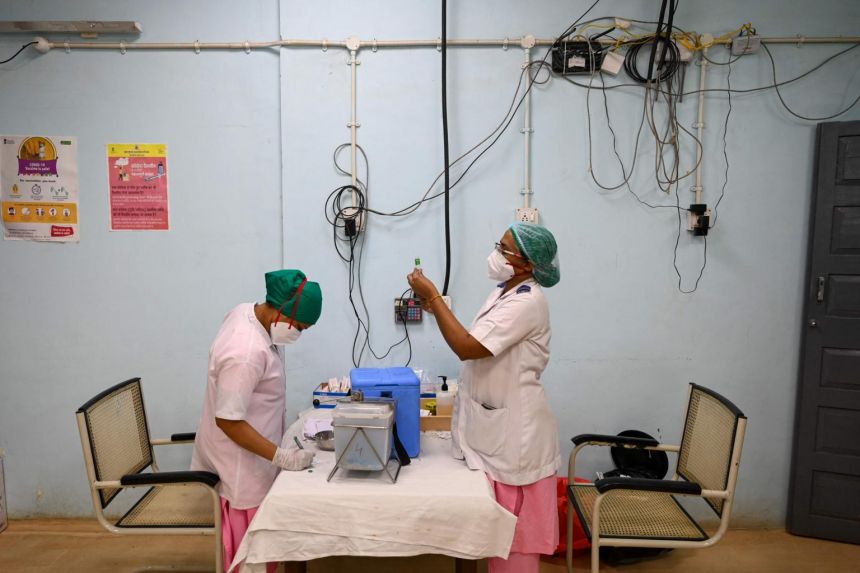
Of the more than 1.1 billion vaccinations administered globally, the vast majority have gone into the arms of people who live in the wealthiest countries. The United States, where nearly half the population has received at least one dose, sits on millions of surplus doses, while India, with a 9 per cent vaccination rate, shatters records in new daily infections. In New York City, you hear cries of relief at the chance to breathe free and unmasked; in New Delhi, cries for oxygen.

The vaccine gap presents an object lesson for climate action because it signals the failure of richer nations to see it in their self-interest to urgently help poorer ones fight a global crisis. That has direct parallels to global warming. Poor countries consistently assert that they need more financial and technological help from wealthier ones if the world as a whole is going to avoid the worst consequences of climate change. So far, the richest countries – which are also the biggest emitters of greenhouse gases – haven’t come up with the money.

More immediately, this year’s vaccine shortages in the nations of the global South could hinder their ability to participate in the United Nations-led climate talks in Glasgow set for November, minimising their voice in critical policy decisions about how to wean the global economy away from fossil fuels.

“Equity is not on the agenda,” said Gregg Gonsalves, assistant professor of epidemiology at the Yale School of Public Health and a veteran activist for global access to AIDS drugs. “If we can’t do it for the worst pandemic in a century, how are we going to do it for climate change?”

The case for sharing technology

Prof Gonsalves is among those who favour waiving drug-company patents for Covid-19 vaccines, sharing technology with vaccine manufacturers and ramping up production around the world. Pharmaceutical industry groups and their backers in the White House have opposed freely sharing intellectual property with rival drugmakers, and some in the administration have argued that vaccine raw materials are needed for production of vaccines for Americans.

India has pushed to relax Covid-19 vaccine patents and United States export rules on vaccine raw materials to allow Indian companies to ramp up production. In Brazil, several lawmakers have recently sought to suspend patents for Covid-19 vaccines and medicines. The US has so far blocked efforts at the World Trade Organisation to relax patent rules.

Of course, the devastation of the pandemic in countries like Brazil and India can’t be laid at the feet of rich-world patent holders alone.

Brazil’s right-wing populist president, Mr Jair Bolsonaro, scorned public health guidance and insisted that lockdowns and mobility restrictions would be a bigger threat to the country’s weak economy. Brazil now has one of the world’s highest death tolls and its economy is in tatters.

India’s right-wing populist prime minister, Mr Narendra Modi, who earlier this year boasted of conquering the virus, allowed large religious and political gatherings. And instead of securing vaccines for India’s 1.4 billion citizens, India began exporting Indian-made doses to other countries. Today, India has become the worst-hit country in the world, with close to 380,000 new infections daily over the past seven days.

The long-running global battle over intellectual property rights to medicines has a parallel to climate action, too, with the Paris climate agreement explicitly calling for the transfer of technology to develop clean energy infrastructure. Developing countries have long said they cannot cope with the effects of climate change if the rich world does not share money and technology, and that problem is only made more acute by the economic collapse brought on by the pandemic and the inequitable access to vaccines.

Not least, the consequences of global warming are unequal, hurting the poorest people in poor countries hardest.

“If this is the way rich countries conducted themselves in a global crisis – where they took care of their own needs first, took care of companies, did not recognise that this is an opportunity to reach out and demonstrate solidarity – then there’s no good track record for how they will conduct themselves in the face of other global crises, such as the climate crisis, where poorer countries will bear the highest burdens,” said Mr Tasneem Essop, a former government official from South Africa who is now executive director of Climate Action Network, an advocacy group.

Money is at the heart of the distrust.

The Biden administration promised to double grants and loans to developing countries to US$5.7 billion (S$7.6 billion) a year, a target that is widely seen as both insufficient and lagging behind the pledges of other wealthy industrialised nations, notably in Europe. Many low- and middle-income countries are carrying so much debt, they say it leaves them nothing left to retool their economies for the climate era. In addition, the rich world has yet to fulfill its promise to raise US$100 billion a year that could be used for green projects, whether solar farms or mangrove restoration.

“In both cases, it’s about a willingness to redistribute resources,” said Ms Rohini Pande, a Yale University economist.

In the case of coronavirus response, it’s about helping vaccine makers around the world manufacture billions of doses in a matter of months. In the case of climate change, huge sums of money are needed to help developing countries retool their energy systems away from dirty sources like coal.

The next few weeks will be critical, as world leaders gather for meetings of the seven richest countries, the Group of 7, in June and then of the finance ministers of the world’s 20 biggest economies, the Group of 20, in July. Those meetings will then be followed by the UN-led climate negotiations in Glasgow in November.

Those negotiations, known as the 26th Conference of the Parties to the Paris Agreement, or COP26, to a significant degree could determine whether the world can slow down the rate of warming that is already causing Arctic ice melt, worsening wildfires and other crises. At that meeting, countries big and small are set to present more ambitious plans to keep the average global temperature from rising past 1.5 degrees Celsius compared with preindustrial times.

“We will not have a successful outcome at COP26,” said Ms Christiana Figueres, a former UN climate diplomat who helped negotiate the Paris Agreement in 2015, “unless we have financial commitments that are commensurate with the impacts that many developing countries are feeling.”

credit: .straitstimes.com

May 7, 2021 0 comments
0 FacebookTwitterPinterestThreadsBlueskyEmail

Recent Posts

  • Row In Senate As Natasha Akpoti-Uduaghan Dropped From UN Summit Delegation

    March 10, 2026
  • Energy Crisis: Restore Fuel Subsidy, Fix Refineries Now — Faduri

    March 10, 2026
  • Tatum Bank Meets CBN’s New Recapitalization, within 10 Months of Operation

    March 10, 2026
  • Fire Breaks Out At Federal Head Of Service Building In Abuja

    March 9, 2026
  • Police reportedly remove force PRO Hundeyin 6 months after serving as Ex-IGP’s apologist

    March 5, 2026

Usefull Links

  • Contact Page
  • About Leading Reporters
  • Contact Us
  • Headlines
  • Investigation
  • Exclusives
  • Opinion
  • Business
  • Facebook
  • Twitter
  • Instagram
  • Linkedin

@2021 - All Right Reserved. Designed and Developed by PenciDesign


Back To Top
Leading Reporters
  • Featured
  • Politics
  • Opinion
  • Business
  • Entertainment
  • Sports
  • About Us
  • Contact