
Leading Reporters
  • Headlines
  • Health
  • Business
  • Exclusives
  • Investigation
  • Entertainment
  • Opinion
Tuesday, December 2, 2025
Hot
Tinubu Nominates Ex-CDS Christopher Musa As Defence Minister
BREAKING: FG Publishes List of 15 Alleged Terrorist...
FG Proposes 40% Salary Increase for ASUU Lecturers
Northern Governors Host Emergency Meeting Over Escalating Security...
Tinubu appoints ex-INEC Chair Yakubu, Fani-Kayode, Reno Omokri,...
Niger Delta Boss Jennifer Adighije Accused of Corruption,...
India Orders $570 Million Payout in Major Fraud...
Dangote Refinery Saves Nigeria over ₦10bn Annually in...
Bandits Abduct 16-year-old boy, six girls in FCT...
Social Security: A Missing Link in Nigeria’s Search...
  • About Leading Reporters
  • Contact Us
Leading Reporters
Advertise With Us
  • Headlines
  • Health
  • Business
  • Exclusives
  • Investigation
  • Entertainment
  • Opinion
Hot
Tinubu Nominates Ex-CDS Christopher Musa As Defence Minister
BREAKING: FG Publishes List of 15 Alleged Terrorist...
FG Proposes 40% Salary Increase for ASUU Lecturers
Northern Governors Host Emergency Meeting Over Escalating Security...
Tinubu appoints ex-INEC Chair Yakubu, Fani-Kayode, Reno Omokri,...
Niger Delta Boss Jennifer Adighije Accused of Corruption,...
India Orders $570 Million Payout in Major Fraud...
Dangote Refinery Saves Nigeria over ₦10bn Annually in...
Bandits Abduct 16-year-old boy, six girls in FCT...
Social Security: A Missing Link in Nigeria’s Search...
Leading Reporters
Leading Reporters
  • Headlines
  • Health
  • Business
  • Exclusives
  • Investigation
  • Entertainment
  • Opinion
Copyright 2024 - All Right Reserved
Home > New Delhi
Tag:

New Delhi

HeadlinesAfrica & World

India Orders $570 Million Payout in Major Fraud Case Against Nigeria’s Sterling Oil

by Leading Reporters November 27, 2025
written by Leading Reporters

In a sweeping move, India’s Supreme Court has allowed billionaire siblings Nitin and Chetan Sandesara to evade full prosecution in a massive alleged bank-fraud scheme if they settle with a payment equal to about one-third of their assessed debt.

The ruling, which allows the pair to settle for about $570 million on liabilities pegged at $1.6 billion, could end years of criminal proceedings that New Delhi has pursued across multiple jurisdictions.

The ruling could open the way for economic offenders to strike similar settlements, leaving lenders struggling to recover their entire dues, said Debopriyo Moulik, a Supreme Court lawyer in independent practice, told Reuters.

“This is very similar to the approach adopted in foreign countries where fines are an alternative to facing trial,” Moulik said.

For the industrialists, the decision marks the closest India has come to resolving a scandal that has stretched from Mumbai to Abuja and into the offshore oil fields of West Africa.

Yet the brothers’ fortunes have never been brighter.

Far from the Indian courts that have hounded them since 2017, the Sandesaras have built one of Nigeria’s largest independent oil producers, turning a once-minor set of onshore licenses into a sprawling African energy empire delivering tens of thousands of barrels of crude a day.

Their success in Africa, combined with Nigeria’s persistent refusal to extradite them, has long frustrated Indian authorities and underscored how geopolitical and commercial interests have shielded the pair from consequences at home.

Nigeria, Africa’s top crude producer, has embraced the Sandesaras even as India brands them fugitives responsible for what investigators call “one of the largest economic scams in the country.”

Their flagship companies, Sterling Oil Exploration & Production Co. and Sterling Global Oil Resources Ltd, pump roughly 50,000 barrels of crude daily, according to a 2023 Bloomberg report, operating under contracts with the Nigerian National Petroleum Company.

The brothers’ rise in Nigeria accelerated after they pivoted away from India in the mid-2010s. What began almost 20 years earlier with two modest onshore licences in the Niger Delta matured into a vertically integrated drilling and crude-export business.

The Sandesaras transferred operations to Lagos, hired the former head of Nigeria’s petroleum regulator to oversee their expansion, and secured major state contracts that cemented their standing in the country’s energy sector.

Their companies now rank among Nigeria’s top oil exporters, and in 2019 the government said taxes and royalties paid by Sandesara-linked entities accounted for 2 percent of national revenue.

According to the Indian Times, their operations have also cleverly sidestepped the endemic sabotage of Nigeria’s pipeline network by shipping crude via barges to a floating offshore storage vessel. The approach has allowed them to keep exports steady even as peers disrupted by oil theft and militant activity scaled back.

Nigeria has also doubled down on the Sandesaras’ involvement in its future oil ambitions. Government officials last year announced the discovery of as many as 1 billion barrels of crude in the country’s arid northeast, part of a multi-billion-dollar hydrocarbons push that relies partly on drilling contractors connected to the brothers.

To New Delhi, the brothers are not pioneers but perpetrators of a sweeping financial fraud. Indian agencies allege the Sandesaras built their now-collapsed domestic conglomerate, Sterling Group, with the help of fabricated documents, inflated valuations, and an intricate network of shell structures designed to siphon overseas cash.

The brothers deny any wrongdoing and say they are victims of political persecution.

The Central Bureau of Investigation (CBI) claims the group owed more than 140 billion rupees ($1.7 billion) to state-owned lenders, including State Bank of India, Union Bank of India, and Bank of Baroda.

A 2019 charge sheet accused the family of channeling loan proceeds into offshore ventures, including their Nigerian oil operations.

The same banks later pursued the group abroad, winning two UK High Court rulings in 2018 and 2021 that ordered Sandesara-linked companies to repay nearly $60 million after defaulting on obligations related to the Sterling Oil business.

India also sought the brothers’ extradition from Nigeria. But in a blow to New Delhi’s efforts, Nigerian officials in 2018 refused to arrest them, saying India’s allegations “appeared to be political in nature,” according to correspondence published by the Organised Crime and Corruption Reporting Project and reviewed by Bloomberg.

The brothers subsequently applied for Nigerian citizenship, according to CBI filings.
November 27, 2025 0 comments
0 FacebookTwitterPinterestThreadsBlueskyEmail
Headlines

Do you know Government Interventions In Agriculture May Not Yield Any Positive Result?

by Leading Reporters May 22, 2021
written by Leading Reporters

That scares right? Nigeria Governments at Federal and State levels are desirous of feeding its exploding population and earn from export.

But all that may still equal zero despite hundreds of Billions of Naira Government has plunged into agriculture through NIRSAL/CBN. 

Have you wondered why despite all the intervention policies, prices of food are skyrocketing and shortage of food still persist? The answer is simple. Government is facing only a side of what needs to be done. We’re just scratching around the solutions. We’ve not fully delved into the solutions proper.

Perennially, our interventions have been that of brigade-approach without proper and result-oriented planning. We are trying to grow AGRIC sector without efforts at growing the technology that drives the desired growth.

I’m awed at how much India is leveraging technology to solve most of its problems. We just tidied up a two-week training on Disruptive Agri-Tech Initiatives, sponsored by African Asian Rural Development Organization New Delhi and National Institute for Micro Small and Medium Enterprises NiMSME Hyderabad.

It was 8 days of interactive session with presentation from some of the best tech-companies in India.  Today, you can have a clue of what the next farming season looks like vis-a-vis the soil texture, weather condition,  your farm vulnerability in terms of pest and bacterial attack and what the yield will look like even before you till the ground.

There are other simple technology in form of Apps that can increase growth by over 40%. Indian rural farmers are becoming players in the international market and export. All thanks to disruptive Agri-Tech and many interventions by the Indian Government. Agric sector contributes over 21% of Indian export of these AGRIC produce are coming from rural farmers in India.

In Nigeria, the Government is doing great in supporting farmers with low interest loans ans other forms of intervention policies. But Government intervention in Agri-Tech is almost zero. Most of the start-ups in Agri-Tech are private sector driven and they’re walking okay silken soft thread, all by themselves. 

21st century is a technology-driven century. Billions of Dollars intervention in agric will equate nothing if there’s no technology driving growth in AGRIC sector.

May 22, 2021 0 comments
0 FacebookTwitterPinterestThreadsBlueskyEmail
Africa & World

Global Covid-19 vaccine crisis sends ominous signal for fighting climate change

by Leading Reporters May 7, 2021
written by Leading Reporters

The stark gap in vaccination rates between the world’s rich and poor countries is emerging as a test for how the world responds to that other global challenge: Averting the worst effects of climate change.

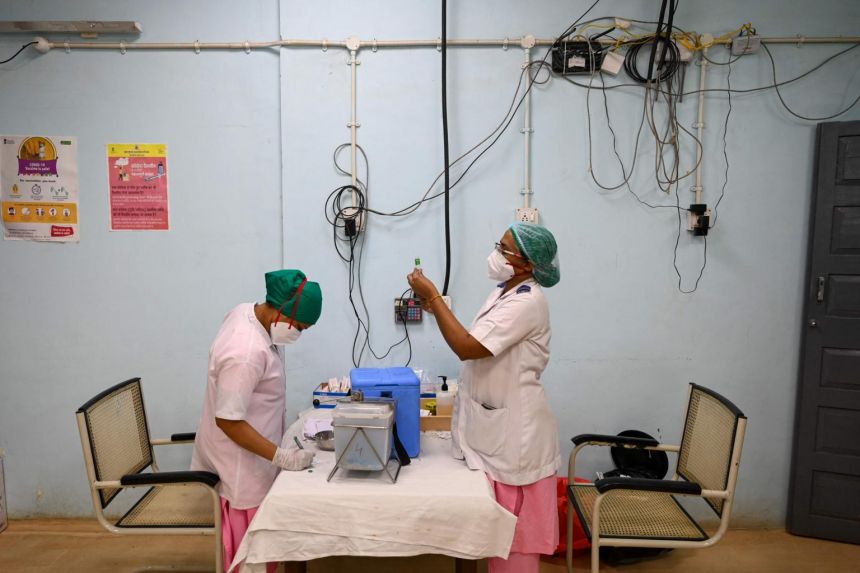
Of the more than 1.1 billion vaccinations administered globally, the vast majority have gone into the arms of people who live in the wealthiest countries. The United States, where nearly half the population has received at least one dose, sits on millions of surplus doses, while India, with a 9 per cent vaccination rate, shatters records in new daily infections. In New York City, you hear cries of relief at the chance to breathe free and unmasked; in New Delhi, cries for oxygen.

The vaccine gap presents an object lesson for climate action because it signals the failure of richer nations to see it in their self-interest to urgently help poorer ones fight a global crisis. That has direct parallels to global warming. Poor countries consistently assert that they need more financial and technological help from wealthier ones if the world as a whole is going to avoid the worst consequences of climate change. So far, the richest countries – which are also the biggest emitters of greenhouse gases – haven’t come up with the money.

More immediately, this year’s vaccine shortages in the nations of the global South could hinder their ability to participate in the United Nations-led climate talks in Glasgow set for November, minimising their voice in critical policy decisions about how to wean the global economy away from fossil fuels.

“Equity is not on the agenda,” said Gregg Gonsalves, assistant professor of epidemiology at the Yale School of Public Health and a veteran activist for global access to AIDS drugs. “If we can’t do it for the worst pandemic in a century, how are we going to do it for climate change?”

The case for sharing technology

Prof Gonsalves is among those who favour waiving drug-company patents for Covid-19 vaccines, sharing technology with vaccine manufacturers and ramping up production around the world. Pharmaceutical industry groups and their backers in the White House have opposed freely sharing intellectual property with rival drugmakers, and some in the administration have argued that vaccine raw materials are needed for production of vaccines for Americans.

India has pushed to relax Covid-19 vaccine patents and United States export rules on vaccine raw materials to allow Indian companies to ramp up production. In Brazil, several lawmakers have recently sought to suspend patents for Covid-19 vaccines and medicines. The US has so far blocked efforts at the World Trade Organisation to relax patent rules.

Of course, the devastation of the pandemic in countries like Brazil and India can’t be laid at the feet of rich-world patent holders alone.

Brazil’s right-wing populist president, Mr Jair Bolsonaro, scorned public health guidance and insisted that lockdowns and mobility restrictions would be a bigger threat to the country’s weak economy. Brazil now has one of the world’s highest death tolls and its economy is in tatters.

India’s right-wing populist prime minister, Mr Narendra Modi, who earlier this year boasted of conquering the virus, allowed large religious and political gatherings. And instead of securing vaccines for India’s 1.4 billion citizens, India began exporting Indian-made doses to other countries. Today, India has become the worst-hit country in the world, with close to 380,000 new infections daily over the past seven days.

The long-running global battle over intellectual property rights to medicines has a parallel to climate action, too, with the Paris climate agreement explicitly calling for the transfer of technology to develop clean energy infrastructure. Developing countries have long said they cannot cope with the effects of climate change if the rich world does not share money and technology, and that problem is only made more acute by the economic collapse brought on by the pandemic and the inequitable access to vaccines.

Not least, the consequences of global warming are unequal, hurting the poorest people in poor countries hardest.

“If this is the way rich countries conducted themselves in a global crisis – where they took care of their own needs first, took care of companies, did not recognise that this is an opportunity to reach out and demonstrate solidarity – then there’s no good track record for how they will conduct themselves in the face of other global crises, such as the climate crisis, where poorer countries will bear the highest burdens,” said Mr Tasneem Essop, a former government official from South Africa who is now executive director of Climate Action Network, an advocacy group.

Money is at the heart of the distrust.

The Biden administration promised to double grants and loans to developing countries to US$5.7 billion (S$7.6 billion) a year, a target that is widely seen as both insufficient and lagging behind the pledges of other wealthy industrialised nations, notably in Europe. Many low- and middle-income countries are carrying so much debt, they say it leaves them nothing left to retool their economies for the climate era. In addition, the rich world has yet to fulfill its promise to raise US$100 billion a year that could be used for green projects, whether solar farms or mangrove restoration.

“In both cases, it’s about a willingness to redistribute resources,” said Ms Rohini Pande, a Yale University economist.

In the case of coronavirus response, it’s about helping vaccine makers around the world manufacture billions of doses in a matter of months. In the case of climate change, huge sums of money are needed to help developing countries retool their energy systems away from dirty sources like coal.

The next few weeks will be critical, as world leaders gather for meetings of the seven richest countries, the Group of 7, in June and then of the finance ministers of the world’s 20 biggest economies, the Group of 20, in July. Those meetings will then be followed by the UN-led climate negotiations in Glasgow in November.

Those negotiations, known as the 26th Conference of the Parties to the Paris Agreement, or COP26, to a significant degree could determine whether the world can slow down the rate of warming that is already causing Arctic ice melt, worsening wildfires and other crises. At that meeting, countries big and small are set to present more ambitious plans to keep the average global temperature from rising past 1.5 degrees Celsius compared with preindustrial times.

“We will not have a successful outcome at COP26,” said Ms Christiana Figueres, a former UN climate diplomat who helped negotiate the Paris Agreement in 2015, “unless we have financial commitments that are commensurate with the impacts that many developing countries are feeling.”

credit: .straitstimes.com

May 7, 2021 0 comments
0 FacebookTwitterPinterestThreadsBlueskyEmail

Recent Posts

  • Tinubu Nominates Ex-CDS Christopher Musa As Defence Minister

    December 2, 2025
  • Poor Toilets Driving GBV, School Dropouts – Wateraid

    December 2, 2025
  • BREAKING: FG Publishes List of 15 Alleged Terrorist Financers in Nigeria [SEE LIST]

    December 1, 2025
  • FG Proposes 40% Salary Increase for ASUU Lecturers

    December 1, 2025
  • Northern Governors Host Emergency Meeting Over Escalating Security Concerns

    December 1, 2025

Usefull Links

  • Contact Page
  • About Leading Reporters
  • Contact Us
  • Headlines
  • Investigation
  • Exclusives
  • Opinion
  • Business
  • Facebook
  • Twitter
  • Instagram
  • Linkedin

@2021 - All Right Reserved. Designed and Developed by PenciDesign


Back To Top
Leading Reporters
  • Featured
  • Politics
  • Opinion
  • Business
  • Entertainment
  • Sports
  • About Us
  • Contact