
Leading Reporters
  • Headlines
  • Health
  • Business
  • Exclusives
  • Investigation
  • Entertainment
  • Opinion
Friday, March 13, 2026
Hot
Petrol Subsidy Removal Pushes 63% of Nigerians Below...
“We Are Not Miyetti Allah” — Plateau Fulani...
Reps prescribe 2-year jail term, 10m fine for...
Row In Senate As Natasha Akpoti-Uduaghan Dropped From...
Fire Breaks Out At Federal Head Of Service...
Police reportedly remove force PRO Hundeyin 6 months...
BREAKING: Tinubu appoints Taiwo Oyedele as Minister
“If I Run for President, Nigerians Will Vote...
Fuel Price in Nigeria Set to Increase amid...
INEC Shifts 2027 General Elections to January, February...
  • About Leading Reporters
  • Contact Us
Leading Reporters
Advertise With Us
  • Headlines
  • Health
  • Business
  • Exclusives
  • Investigation
  • Entertainment
  • Opinion
Hot
Petrol Subsidy Removal Pushes 63% of Nigerians Below...
“We Are Not Miyetti Allah” — Plateau Fulani...
Reps prescribe 2-year jail term, 10m fine for...
Row In Senate As Natasha Akpoti-Uduaghan Dropped From...
Fire Breaks Out At Federal Head Of Service...
Police reportedly remove force PRO Hundeyin 6 months...
BREAKING: Tinubu appoints Taiwo Oyedele as Minister
“If I Run for President, Nigerians Will Vote...
Fuel Price in Nigeria Set to Increase amid...
INEC Shifts 2027 General Elections to January, February...
Leading Reporters
Leading Reporters
  • Headlines
  • Health
  • Business
  • Exclusives
  • Investigation
  • Entertainment
  • Opinion
Copyright 2024 - All Right Reserved
Home > National Assembly > Page 4
Tag:

National Assembly

Opinion

National Assembly should avoid distracting the military

by Leading Reporters March 30, 2021
written by Leading Reporters
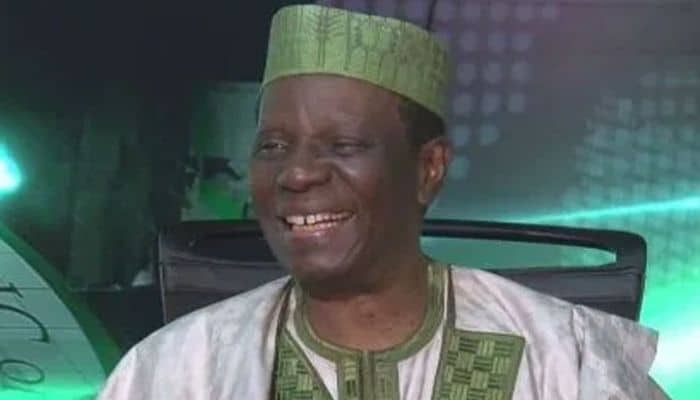
Tonnie Iredia

Section 89 of the 1999 Constitution, provides that the National Assembly can summon ANY person in Nigeria to give evidence before it over any matter that the Assembly can enact legislation.

Although what the provision on its face value confers on our legislators is huge power, a few knowledgeable persons in the polity have argued that there are people that cannot be summoned by the legislature. One of those cited to have such privilege is President Muhammadu Buhari.

According to Abubakar Malami, Attorney General and Minister of Justice, a plan by the National Assembly to summon the President over security issues was wrong because “the management and control of the security sector is exclusively vested in the President.” Those who didn’t agree with Malami had their points but what much can the legislature do to a President or indeed a state governor who can shun an invitation and get away with it by virtue of their constitutional immunity?

It was also canvassed that in certain cases, the National Assembly could not summon a Minister. A former Minister of Petroleum, Mrs. Diezani Allison Madueke, once told a court that both the Senate and the House of Representatives were required by law to first obtain the President’s consent before they could validly summon her.

To back her claim, she cited Sections 88 and 89 of the Nigerian Constitution 1999, as amended and Section 8 of the Legislatives Houses (Powers and Privileges) Act Cap. L12 Laws of the Federation of Nigeria, 2010. Veteran constitutional lawyer, Itse Sagay had similarly opined that not being a civil servant or a member of any commission, he was outside the group that the legislature could summon.

The cases cited above were however never fully tested to ascertain the true position of the law as Sagay, Madueke and the President did not appear before the legislature. In fact, some other Nigerians successfully shunned summons from the legislature without repercussions.

But beyond legal arguments, it is rational to accord the legislature such powers to enable her gather ample data to make or amend laws; and to expose “corruption, inefficiency or waste in the execution or administration of laws or the disbursement of funds appropriated for it.” If so, what encourages some citizens to think they can ignore our National Assembly? The reasons are many but one of them has to do with the conduct of some of our legislators.

Such law-makers usually depicted much of ego chasing with their summons – a posture which tended to imply that the summons were deployed just to establish the superiority of the legislature over other bodies. Sadly the summons often disrupted organized schedules in other segments of government because the legislators would insist that office holders must put off whatever they were engaged with to personally answer any legislative summons. Who says such summons are more useful to society than the functions they forcibly disrupt?

The more unacceptable aspect of the rather combative summons is that which discountenances the usefulness of delegation of duties. Why would legislators insist that only the chief executive of an organization can appear before them? Is it offensive for a deputy to deputize for his boss who is unable to break-off from a prior commitment? Interestingly, on many occasions, we see principal officers of the National Assembly representing the Senate President or the Speaker of the House of Representatives at functions.

If that is allowable in the legislature, does it mean that the principle of delegation of duties is in order only when employed in the legislature? Of course, that is not true because the principle is permissible worldwide. Thus when applied to the Nigerian Army, it is not out of place for Major General Charles Ofoche, Commandant of the Nigerian Army War College, to represent the Chief of Army Staff, Lt. Gen, Ibrahim Attahiru at a crucial meeting. As a result, the anger expressed on national television the other day by the ad hoc committee auditing arms and ammunition procured by the military only because the Army Chief was represented by Ofoche was unnecessary.

Both the Legislature and the Military are partners in the task of national development- none should derogate from the other. Both have different strategies of doing their jobs and the nature of each ought to be appreciated by the other. While the job of legislators especially in Nigeria is laced with pleasure, that of our armed forces is lined with harsh conditions. That seems to explain why Nigerian legislators have the leisure of functioning as armchair censors.

Last week, they began a 3-week holiday to mark the Easter season while other public officers, are yet to begin their only two days’ break. Our military on the other hand, may find themselves paying the supreme sacrifice on Easter Sunday making even a one-minute break impossible. What this implies is that because the job schedule of the military is exceedingly tasking and markedly different from that of legislators, the latter ought to help the former by ensuring that nothing is done to disrupt their job strategies.

Asking General Attahiru to give priority to a chat with the legislature over and above his tactical schedule of understanding the state of affairs within the first few weeks of assuming duty is to our mind a distraction. This is more so, when the issue agitating the legislators was handled by former military leaders that the same law-makers had just given a clean bill of health through a fast clearance to become ambassadors.

Our premise is that if the relevant committee of the legislature had done an effective oversight through proper monitoring of the arms purchase business, what the nation is looking for now would have been easier to uncover before Attahiru took office. Instead, the immediate past service chiefs that the entire nation including legislators appeared dissatisfied with were hurriedly cleared without being tasked on accountability. Such attitude of ‘wisdom after event’ is to our mind shadow chasing.

At the beginning of the tenure of the current service chiefs, President Buhari gave them a tough order to end insurgency before the rainy season which was some 5 weeks away. The team led by the Chief of Defence Staff; Gen. Leo Irabor offered assurances that they would deliver. Many Nigerians particularly those in the North East were happy with the officers who had previously acquitted themselves creditably in their assignment in the fight to end insurgency.

With such commendable track record, admonishing them at a point when all their attention is focused on routing out the insurgents could be counter-productive. The expectation of the military from the rest of us is not a reproach but the provisioning of non- kinetic strategies that can push the war effort to success.

The National Assembly should therefore seek to boost the morale of our armed forces by mobilizing the entire nation to prioritize the fight against insurgency. It would be a different result, if as it is now, the nation’s political leadership remains more pre-occupied with the politics of 2023 such as organizing defections and compiling membership register by the ruling party and political engineering efforts by the main opposition party to regain power.

We must all learn to avoid distracting the military from the current All-important task of bringing peace back to Nigeria.
March 30, 2021 0 comments
0 FacebookTwitterPinterestThreadsBlueskyEmail
Opinion

Nigeria’s Minimum Wage: Labour has a point

by Leading Reporters March 14, 2021
written by Leading Reporters

By Tonnie Iredia

Last Wednesday, state capitals across Nigeria witnessed protests by members of the Nigeria Labour Congress (NLC) against the plan to remove the country’s minimum wage from her Exclusive Legislative List.

Expectedly, several elite voices have since condemned Labour on the subject. While some, such as governors elected on the platform of the ruling All Progressives Congress APC, faulted the approach of the workers, others have described the protests as an attempt to stop the legislature from doing its work.

No one appears to remember that the National Assembly from where the bill was initiated is expected to consist of the people’s representatives whose primary obligation is to be on the side of the people. If so, which people in Nigeria requested their representatives to help them remove the minimum wage item from the exclusive legislative list or who are the legislators helping?

Opposition against the bill can hardly be surmounted. Already, many state legislators who addressed the workers’ protest last week expressed support for Labour making the reasoning of those in support of the removal to be unclear to everyone. It is argued that because some poor states may not be able to pay what others can afford, each state should have power to negotiate directly with its workers.

The argument is comical because a national minimum wage is supposed to be a figure that every state can pay; leaving more viable states with the option to pay far more than the barest minimum. In which case, is it not rational to leave the determination of such a benchmark to a central, neutral level? Against this backdrop, one is persuaded to agree with Labour that perhaps those against our apex workers’ union are yet to understand the ordinary meaning of ‘minimum’ as a term.

Why can’t Nigeria determine the least pay for her citizens in every part of the country? After all, the United States that our people constantly cite probably because our constitution is modelled after theirs has a national minimum wage. At the last count, no less than 29 American states had set their own minimum wages above the federal figure.

With respect to the reasonableness of the decision of Labour to organize protests against the bill which seeks to reorder the status of the minimum wage, one is tempted to conclude that our leaders are probably unable to appreciate that protests are legitimate and that they are covered by law in our country and elsewhere.

A peep at sections 38, 39, 40 and 41 of the Nigerian Constitution would reveal a combined effect of a fundamental human right of the people to assemble with like-minds to voice out their displeasure, disappointments and indeed their support for a policy. It is therefore unfair to echo the rather old-fashioned perspective in many parts of the country that persons who engage in protests are either unpatriotic or anti-establishment. It is hoped that this unprogressive stance will wear out soon, so that our nation is not dispossessed of what it takes to move side by side with other enlightened societies.

There is also nothing new or strange about the decision of Labour to protest. Perhaps some people would have preferred the option of dialogue, which at this point makes little sense in view of the long-drawn out dialogue which preceded the determination of the current minimum wage of N30, 000 that was done by Labour, Government at Federal and State Levels and the Private Sector. Six governors, one per geopolitical zone represented the states. The figure was negotiated over and over again and agreed upon before it was made into law. Labour imagines that it is states who have since breached the law that are now seeking a new path through a bill that removes the subject from the Exclusive Legislative list.

One would have thought that having reached a consensus earlier within the tenure of our current President, the determined minimum wage should have been allowed to work instead of looking for ways to thwart an agreement. Besides, we need to give peace medals to the current labour leaders who have not towed the path of their aggressive predecessors that harassed previous administrations on the same issues that are still begging for solution today.

We honestly cannot blame Labour now because many of the issues they have raised are not being tackled. For instance, Labour says minimum wage is a global phenomenon about which Nigeria should not seek to be an island on its own. They contend that the issue of a national minimum wage in the Exclusive Legislative List was settled as far back as June 16, 1961 when Nigeria joined other Sovereign nations to ratify the International Labour Organization (ILO) Convention 26 which prioritized the subject.

Another important point that has remained ignored is the issue of what happens to the informal sector when the minimum wage is put in disarray. Who will fix the minimum wage for the private sector and our numerous unskilled workers? In addition, if it is unfair for workers to earn same wages in different states that are not equally endowed, is it fair for governors of poor states to be equally remunerated with governors of more viable states? Would it not have been more palatable if the need to readjust wages began with our leaders who should lead by example?

The take-home pay of our national legislators has remained a disgusting issue. Each time it is raised, legislators team up as a union to place a smokescreen on the allegation. Those who publicly speak on the subject reveal only their basic salary, what about the outrageous allowances that even the body established to fix their remuneration has always disowned? Some even tell us of the ratio of funds available to the three arms of government to justify what the legislature gets. Is it only funds that should be shared by ratio, what about workforce? Those who speak privately for fear of suspension confirm millions of Naira at the disposal of federal legislators in Nigeria every month – a posture that is not amusing to the ordinary citizen. This probably explains the general belief that it is only the working class in our country particularly the lowly paid that are required to make sacrifices to stabilize Nigeria during this precarious financial situation.

History tells us how our leaders many years back without prompting, cut their expenses during periods of national financial difficulty. During the Murtala/Obasanjo military regime for example, austerity measures introduced to revitalize the nation began from the top when the most expensive official vehicle for top office holders was reduced to a Nigerian-assembled Peugeot car.

Today, the more the financial crisis, the more imported vehicles are procured for legislators and executives as if they belong to a group beyond the people they claim to represent. What this suggests is that if states are over-empowered at this point in time to determine wages, some of them will not only strangulate workers, they may procure private jets for retrieval of their own special allowances which being so high, might be in the sky. It is therefore hard to not agree that in the current agitation for workers’ survival, Labour has a strong point.

March 14, 2021 0 comments
0 FacebookTwitterPinterestThreadsBlueskyEmail
Newer Posts
Older Posts

Recent Posts

  • CBN directs banks to block loan defaulters from accessing credit facilities

    March 13, 2026
  • Petrol Subsidy Removal Pushes 63% of Nigerians Below Poverty Line — Report

    March 13, 2026
  • “We Are Not Miyetti Allah” — Plateau Fulani Christians Denounce Terrorist Links

    March 13, 2026
  • Reps prescribe 2-year jail term, 10m fine for dual party membership

    March 11, 2026
  • Row In Senate As Natasha Akpoti-Uduaghan Dropped From UN Summit Delegation

    March 10, 2026

Usefull Links

  • Contact Page
  • About Leading Reporters
  • Contact Us
  • Headlines
  • Investigation
  • Exclusives
  • Opinion
  • Business
  • Facebook
  • Twitter
  • Instagram
  • Linkedin

@2021 - All Right Reserved. Designed and Developed by PenciDesign


Back To Top
Leading Reporters
  • Featured
  • Politics
  • Opinion
  • Business
  • Entertainment
  • Sports
  • About Us
  • Contact