
Leading Reporters
  • Headlines
  • Health
  • Business
  • Exclusives
  • Investigation
  • Entertainment
  • Opinion
Monday, February 16, 2026
Hot
BREAKING: DSS Sues El-Rufai for Intercepting NSA Ribadu’s...
Major Health Crisis Plagues Dape, Karmo Residents As...
BREAKING: INEC announces timetable, schedule of 2027 elections
Aso Rock to disconnect from nat’l grid in...
Valentine’s Day: FG bans money bouquets, warns against...
INEC Proposes ₦873.78 Billion Budget for 2027 General...
Engine Failure: Passengers escape death as Arik Air...
Senate adopts electronic, manual transmission of election results
BURSTED: NSITF CEO MOVES On ₦297Billion Fund, Operates...
Peter Obi joins #OccupyNationalAssembly protest over electronic transmission...
  • About Leading Reporters
  • Contact Us
Leading Reporters
Advertise With Us
  • Headlines
  • Health
  • Business
  • Exclusives
  • Investigation
  • Entertainment
  • Opinion
Hot
BREAKING: DSS Sues El-Rufai for Intercepting NSA Ribadu’s...
Major Health Crisis Plagues Dape, Karmo Residents As...
BREAKING: INEC announces timetable, schedule of 2027 elections
Aso Rock to disconnect from nat’l grid in...
Valentine’s Day: FG bans money bouquets, warns against...
INEC Proposes ₦873.78 Billion Budget for 2027 General...
Engine Failure: Passengers escape death as Arik Air...
Senate adopts electronic, manual transmission of election results
BURSTED: NSITF CEO MOVES On ₦297Billion Fund, Operates...
Peter Obi joins #OccupyNationalAssembly protest over electronic transmission...
Leading Reporters
Leading Reporters
  • Headlines
  • Health
  • Business
  • Exclusives
  • Investigation
  • Entertainment
  • Opinion
Copyright 2024 - All Right Reserved
Home > Mr. Peter Obi
Tag:

Mr. Peter Obi

HeadlinesOpinion

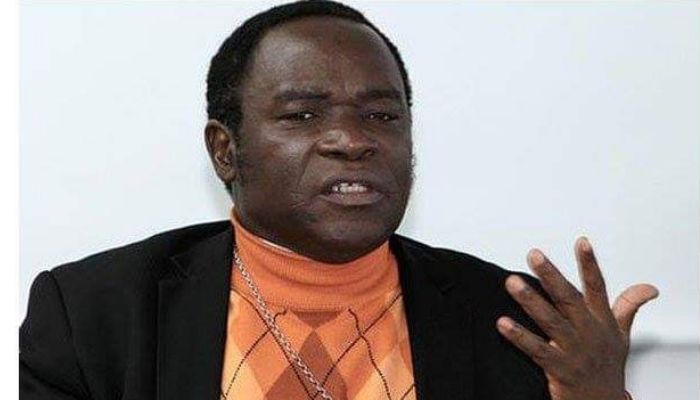
Bishop Kukah’s nation-building agenda: Matters arising

by Leading Reporters September 4, 2022
written by Leading Reporters

By Tonnie Iredia

For every event in Nigeria, the priority of most planners is to ensure that the big names in the country are pulled to the event. Politically exposed personalities such as president and governors are the most sought after in this regard. For me, there is some risk in relying on the big guys in town to make one’s event successful.  

This is because they often come late and disorganize the otherwise well-laid out plans for the day. Along the line, those tired of waiting begin to disperse, forcing the organizers to pick emergency chair/other actors in place of those originally empaneled. While much of this did not occur in last Wednesday’s celebrations of the 70th birthday anniversary of the Most Reverend Mathew Hassan Kukah, Catholic Bishop of Sokoto, ample attention still shifted from the celebrant to the presidential candidate of the Labour Party, Mr. Peter Obi, his colleague of the All Progressives Congress, Asiwaju Bola Ahmed Tinubu and his Vice, Kashim Shettima as well as a number of state governors.
 
It was probably impossible to prevent the event from turning into a political jamboree because it was held at a time of the year when persons seeking elective positions dutifully attend virtually all major functions to score some points ahead of a forthcoming general election. However, the presence of such highly placed politicians should not be taken to mean that they were on the same philosophical page as the day’s celebrant.  For example, while the fight for peace, justice and the rule of law are real to Kukah, they are mere slogans to many public office seekers. Whereas the politicians are looking forward to winning elections and exclusively appropriating the nation’s wealth, Kukah is bothered that many Nigerian politicians end up as accidental leaders, ill-prepared for public office. This is why he is proposing to use his foundation to build a N200million centre to provide leadership tools for accidental leaders and politicians in Nigeria. When completed the centre will have a main office complex; a school of government; halls, library, classrooms and offices; accommodation and lodging; an art gallery and studio. It will also focus its activities around interfaith dialogue, knowledge promotion and memory preservation.
 
It is worthy of note that President Muhammadu Buhari sent a goodwill message to the celebrating cleric, notwithstanding the general belief that Kukah is a not a friend of the present administration in view of his deep criticisms of its activities. In truth though, the Bishop does not appear ready to be a friend to any government for as long as the dwindling fortunes of Nigerians which have accumulated over the years are not redressed. Governor Aminu Tambuwal of Sokoto state who chaired the anniversary celebration virtually confirmed this in his opening address when he said, “Kukah’s writings over the years have become controversial and have drawn the ire of powers that be, but what is not in doubt is his undying love for Nigeria and Nigerians, and his belief in the possibility of a new Nigeria where justice and equity reigns.” Other messages followed the same thinking, with the Chairman of the Nigerian Governors’ Forum NGF, Kayode Fayemi concluding that Bishop Mathew Kukah’s love for ruffling the feathers of political leaders is essentially for the purpose of steering the country from the precipice.
 
Atiku Abubakar, presidential candidate of the Peoples Democratic Party PDP made about the same point when he described Kukah as ‘a remarkable public intellectual and formidable advocate for good governance whose contributions to Nigeria’s democracy are immeasurable and unquantifiable.’ Like President Buhari, Bola Tinubu and Kashim Shettima of the APC showed broadmindedness in celebrating their major critic at his point of glory. By describing the Tinubu/Shettima, Muslim-Muslim ticket of the APC as an unacceptable set-back for national integration, Kukah’s attack may have been quite frontal. Although many other leaders and citizens had made the same point, the Bishop’s eloquence and opinion-moulder status may have aggravated his own comments. The point must however be made that the numerous centrifugal forces in Nigeria’s heterogeneous polity would, any day, greatly support an attack on a same faith presidential ticket  
 
Many Nigerian critics of old, comrades and political activists have since joined the ruling class and forgotten the oppressed mases, but will Bishop Kukah at 70 also take a break? It is unlikely because he has continued to make many bold comments expected of a moral teacher and spiritual reformer after the anniversary celebration. We can hardly blame the Bishop as too many negatives have refused to leave Nigeria.  For instance, in spite of the passing of the Electoral Act 2022 and the recent vow by our president that the federal government will not allow anyone to misuse public institutions for the 2023 general elections, there are fresh and embarrassing allegations that well-placed politicians are at the verge of capturing an otherwise Independent National Electoral Commission INEC. Already, some opposition politicians are becoming scarred of the alleged nomination of politically tainted citizens to serve as Resident Electoral Commissioners. Should Kukah or any other patriot be quiet on this?
 
A Convocation Lecture titled, ‘Broken Truths: Nigeria’s Elusive Quest for National Cohesion’ delivered in June 2018 at the University of Jos had revealed too many negatives. Today, such things rather than ceasing are becoming more worrisome. One of them in the words of Bishop Kukah is that “recruitment and promotion in almost all sectors of the public service from the local governments through the state to the Federal Government depend on whom you know and not what you know.” If so, how can the nation make progress when its policies are not piloted by its first eleven team?  It would therefore be unreasonable for the next set of political leaders to expect that age 70 would stop Bishop Kukah from putting them under the same searchlight that their predecessors witnessed. In fact, that he will continue to serve as the conscience of human society is evidenced by his recent appointment by Pope Francis as a Member of the ‘Dicastery’ set up to advise and promote the Pope’s concerns on issues of justice and peace, human rights, torture, human trafficking, care of creation and other issues related to the promotion of human dignity and development.
 
Beyond a few critics, the unending socio-economic and political misfortunes of our people should at this point pull-up all citizens to take their destinies in their own hands and fix Nigeria. Many years back, Bishop Kukah had called on Nigerians to stop thinking that anti-corruption crusades directed at only top public office holders is all that is needed to fix the country. It is irrational according to the Bishop for our citizens to continue to line up all kinds of scapegoats among us whom they believe are responsible for our woes in Nigeria. While believing that the big people who steal huge sums are the ones that should flee with our sins into the desert so that our country can prosper, we often overlook the small people who cheat the bus conductor by not paying just as election rigging is seen as bad only when perpetuated by our opponents.
 
Again, we cannot scratch the surface of a problem and conclude that all is well that ends well. At the Bishop’s birthday event last week, former president Goodluck Jonathan spoke glowingly of how he resolved a four-month old ASUU strike one night. If he did so, why is ASUU still on strike over the same complaints? Why is the problem of ASUU still hinged on an official breach of a 2009 agreement? One of the matters arising now is for Nigerians to jointly beg the party to the agreement that did not play its part and not ASUU to reopen our universities. Secondly, should Bishop Kukah and his colleagues in the National Peace Committee continue to ask politicians to sign peace accords they do not believe in, while INEC officials especially the Ad hoc ones sourced from other bodies and some members of the judiciary continue to collude to render our elections incredible? While welcoming Bishop Mathew Kukah to the 7th floor of life, all citizens should work to resolve Nigeria’s outstanding matters

September 04, 2022  
September 4, 2022 0 comments
0 FacebookTwitterPinterestThreadsBlueskyEmail
OpinionHeadlines

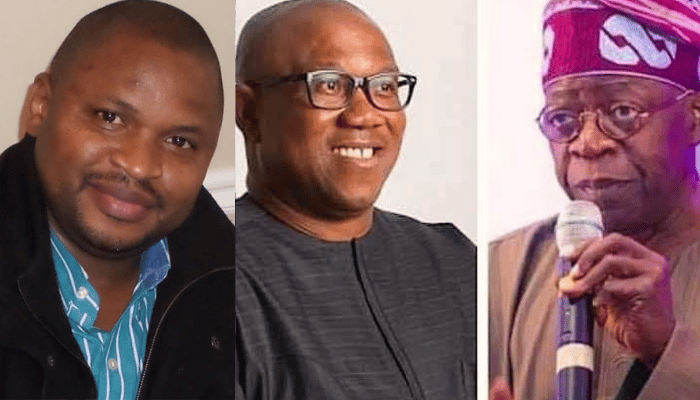
Tinubu And Obi Will Either Affirm Or Destroy These Two Theories In 2023

by Leading Reporters August 14, 2022
written by Leading Reporters

Farooq Kperogi

TWO certainties have underpinned voting behavior in Nigeria, which APC’s Asiwaju Bola Ahmed Tinubu and Labour Party’s Mr. Peter Obi will either uphold or explode in next year’s presidential election. While one of the certainties is time-honored, the other is more contemporary and enabled by social media.

The most time-honored fixity in Nigerian electoral politics since independence is the certitude that the Yoruba electorate will always overwhelmingly vote for a Yoruba candidate in national elective contests in which other candidates are non-Yoruba. Will Tinubu uphold, modify, or disaffirm this age-old pattern? I’ll return to this shortly.

The second fixture in Nigeria’s electoral politics since at least 2011 is the almost inexorable nexus between candidates who dominate the social media discursive arena and candidates who win the presidential election. Peter Obi is now undoubtedly the undisputed favorite in Nigeria’s social media circles. Will he replicate previous patterns?

Let’s start with Tinubu and the Yoruba voting trajectory. On the surface, it seems outrageously accusatory and unfair to say Yoruba people inescapably vote for their kind in presidential elections. But that is what the historical evidence says.

Note, however, I am not by any means saying that every single Yoruba voter has always voted for Yoruba candidates in presidential elections. I am only saying that the majority of Yoruba voters always vote for their kind.

Chief Obafemi Awolowo enjoyed the kind of political dominance in Western Nigeria that Sir Ahmadu Bello didn’t have even in Hausaphone Muslim Northern Nigeria (he could never win over Kano, for example) and that Dr. Nnamdi Azikiwe didn’t enjoy in Eastern Nigeria.

Well, one can attribute Awolowo’s political iconicity in Western Nigeria to his admirable policies and inclusive strategies when he was a premier of the region. But how about Chief MKO Abiola?

Abiola spent the better part of his political career undermining Awolowo and swimming against the political mainstream in Yoruba land. His Concord newspaper was virulently and implacably anti-Awolowo.

Unlike Tinubu who used to subordinate his Muslim identity to the point of erasure until the last few years, Abiola wore his Islam on his sleeves.

He advocated the establishment of sharia in Yoruba land; built hundreds of mosques nationwide; openly supported Islamic causes in and outside Nigeria; was the Baba Adini of Yoruba land [i.e., the ceremonial head of Islam in Yoruba land); and aggressively worked for and defended Nigeria’s membership in the Organization of Islamic Conference (OIC), which caused the Christian Association of Nigeria (CAN) in 1986 to urge Christians to boycott the Concord newspaper.

Abiola was also the victim of a vicious whispering campaign in churches that he bought hundreds of thousands of bibles and intentionally sunk them in the sea. It was false but many Christians believed it.

So, when he chose a northern Muslim running mate in 1993, like Tinubu has done, the exact same reaction as we’re seeing today from Christians followed. Northern Christians kicked, and Yoruba Christians said they wouldn’t vote for him both because of his past and his choice of a Muslim running mate.

But when his opponent turned out to be Alhaji Bashir Tofa, a Kanuri Muslim born and raised in Kano, the Yoruba electorate closed ranks, eschewed religious divisions, accentuated Abiola’s ethnicity, and voted for him overwhelmingly.

We saw a repeat of this with Chief Olusegun Obasanjo. When his major opponent was Chief Olu Falae, another Yoruba man, he lost not only the Southwest but also his natal Ogun State. However, when his major opponent in 2003 was Major General Muhammadu Buhari, the Yoruba electorate voted for him massively.

Note that Obasanjo did things that made him unpopular in the Southwest. For example, he ordered the shooting on sight of OPC members, starved Lagos of federal allocations out of spite, and actively worked to disrupt the prevailing political consensus of the region. Yet, the Yoruba political elite not only preferred him to Buhari, they also merged their political party, the Alliance for Democracy (AD), with the Peoples Democratic Party (PDP) for the purpose of the 2003 presidential election, which led to the death of AD.

In a February 21, 2003, confidential cable revealed by WikiLeaks in 2011, the US Consul General reported Tinubu to have told him that Yoruba people would vote for Obasanjo against Buhari because even though Obasanjo was unlikeable, he was Yoruba and Buhari wasn’t.

The cable reads: “Turning to the presidential contest, Tinubu disclosed that he does not like President Obasanjo because he contributed to the end of democracy in Nigeria during his tenure as a military president and is now benefiting from that history.

“That said, Tinubu admitted that he and his party, the Alliance for Democracy, must support Obasanjo. Southwest Nigeria is Yoruba land and the President is Yoruba. Tinubu”s [sic] party had no choice since it has not fielded a presidential candidate. Moreover, Obasanjo is the only candidate who stands a chance of blocking his rival, General Muhammadu Buhari, whose ethnocentrism would jeopardize Nigeria’s [sic] national unity. Buhari and his ilk are agents of destabilization who would be far worse than Obasanjo….”

Tinubu and his group would later embrace the same Buhari the fear of whom had driven them to embrace and support an unlikeable Obasanjo.

If the Yoruba voting pattern that I have established is any guide, Tinubu will win the majority of votes in the Southwest in spite of the apparent religious dissension in the region now.

Should he, however, win only marginally or, worse, lose in the region, it would mean that religion, particularly Pentecostal Christianity, has finally succeeded in trumping ethnicity in Yoruba land. That would be seismic and invite a reworking of the sociology of the region, especially if Peter Obi makes significant inroads in Southwest states outside of Lagos (where Igbos constitute a significant voting bloc).

It would mean that, like in Northern Nigeria, religion has graduated to a more significant predictor of political behavior than ethnicity in Yorubaland. That would have far-reaching consequences for the mapping of the contours of the Yoruba political landscape going forward.

The second observational data that will be up for empirical corroboration or explosion in the 2023 election is the nexus between social media popularity and electoral triumph in presidential contests. I studied this systematically from 2011 to now.

In 2011, when social media was still at its inchoate stage in Nigeria, Dr. Goodluck Jonathan bestrode the social media scene like a colossus and pulverized Buhari in the election. Buhari returned the favor in 2015 after coalescing with the dominant political elites of the Southwest. Buhari dominated the social media space and ended up winning the election.

In 2019, Buhari’s online devotees lost their creative juices and left the stage for Alhaji Atiku Abubakar’s online foot soldiers. Atiku ruled the social media conversation during electioneering and went ahead to win the election but was rigged out in one of the most brazen electoral heists in Nigeria’s history. Both INEC insiders and U.S. State Department officials have confirmed that Buhari lost the 2019 election by close to 2 million votes.

The clamorousness of Peter Obi’s dominance of the Nigerian social media scene is uncannily redolent of Buhari’s 2015 social media supremacy. The temperaments of their supporters are eerily similar: like Buhari’s 2015 supporters, Obi’s votaries are aggressive, malicious, passionate, monomaniacal, worshipful in their admiration of their idol, intolerant of alternative views, self-righteous, and apt to invent easily falsifiable falsehoods to shore up their hero’s image.

Like Buharists in 2015, Obi adherents, who call themselves by the singularly headless and uninspired moniker “Obi-dient,” have succeeded in shutting out the voices of people who support other candidates with their venomous vituperative darts, although they met their match on Twitter in former Enugu State governor Dr. Chimaroke Nnamani who requitted their verbal violence and caused the hashtag #ObidiEND to trend for days.

Well, although the link between social media dominance and eventual electoral triumph in presidential contests is more correlational than causational, it nonetheless points to the symbiosis between online and offline political organizing.

In other words, there’s a mutually reinforcing relationship between online visibility and offline success. For example, the exponential rise in PVC registration in the last few weeks has been attributed to the energy Obi has infused into the political process.

But should Obi fall short in 2023 in spite of dominating social media, I would attribute his social media dominance to what we call the spiral of silence in communication theory. Spiral of silence occurs when vast swaths of people self-censor themselves because they fear that a vocal minority’s shrill opinions are the dominant and only acceptable opinions. Fear of insults and social isolation from the vocal minority keep the majority from expressing opinions that depart from the consensus of the vocal minority.

Whatever it is, the 2023 election is shaping up to be an election like no other in the history of Nigeria.

August 14, 2022 0 comments
0 FacebookTwitterPinterestThreadsBlueskyEmail

Recent Posts

  • BREAKING: DSS Sues El-Rufai for Intercepting NSA Ribadu’s Phone

    February 16, 2026
  • APC Senator Seeks 16-Year Single Tenure for Nigeria’s President

    February 16, 2026
  • Major Health Crisis Plagues Dape, Karmo Residents As Dust Pollution From AMAC Road Project Chokes Residents

    February 16, 2026
  • BREAKING: INEC announces timetable, schedule of 2027 elections

    February 13, 2026
  • Aso Rock to disconnect from nat’l grid in March – Perm Sec

    February 12, 2026

Usefull Links

  • Contact Page
  • About Leading Reporters
  • Contact Us
  • Headlines
  • Investigation
  • Exclusives
  • Opinion
  • Business
  • Facebook
  • Twitter
  • Instagram
  • Linkedin

@2021 - All Right Reserved. Designed and Developed by PenciDesign


Back To Top
Leading Reporters
  • Featured
  • Politics
  • Opinion
  • Business
  • Entertainment
  • Sports
  • About Us
  • Contact