
Leading Reporters
  • Headlines
  • Health
  • Business
  • Exclusives
  • Investigation
  • Entertainment
  • Opinion
Tuesday, February 17, 2026
Hot
BREAKING: DSS Sues El-Rufai for Intercepting NSA Ribadu’s...
Major Health Crisis Plagues Dape, Karmo Residents As...
BREAKING: INEC announces timetable, schedule of 2027 elections
Aso Rock to disconnect from nat’l grid in...
Valentine’s Day: FG bans money bouquets, warns against...
INEC Proposes ₦873.78 Billion Budget for 2027 General...
Engine Failure: Passengers escape death as Arik Air...
Senate adopts electronic, manual transmission of election results
BURSTED: NSITF CEO MOVES On ₦297Billion Fund, Operates...
Peter Obi joins #OccupyNationalAssembly protest over electronic transmission...
  • About Leading Reporters
  • Contact Us
Leading Reporters
Advertise With Us
  • Headlines
  • Health
  • Business
  • Exclusives
  • Investigation
  • Entertainment
  • Opinion
Hot
BREAKING: DSS Sues El-Rufai for Intercepting NSA Ribadu’s...
Major Health Crisis Plagues Dape, Karmo Residents As...
BREAKING: INEC announces timetable, schedule of 2027 elections
Aso Rock to disconnect from nat’l grid in...
Valentine’s Day: FG bans money bouquets, warns against...
INEC Proposes ₦873.78 Billion Budget for 2027 General...
Engine Failure: Passengers escape death as Arik Air...
Senate adopts electronic, manual transmission of election results
BURSTED: NSITF CEO MOVES On ₦297Billion Fund, Operates...
Peter Obi joins #OccupyNationalAssembly protest over electronic transmission...
Leading Reporters
Leading Reporters
  • Headlines
  • Health
  • Business
  • Exclusives
  • Investigation
  • Entertainment
  • Opinion
Copyright 2024 - All Right Reserved
Home > Minister of Agriculture and Rural Development
Tag:

Minister of Agriculture and Rural Development

Headlines

FG Establishes First Poultry Cottage in FCT, move to mitigate Demand Gap

by Folarin Kehinde November 22, 2021
written by Folarin Kehinde

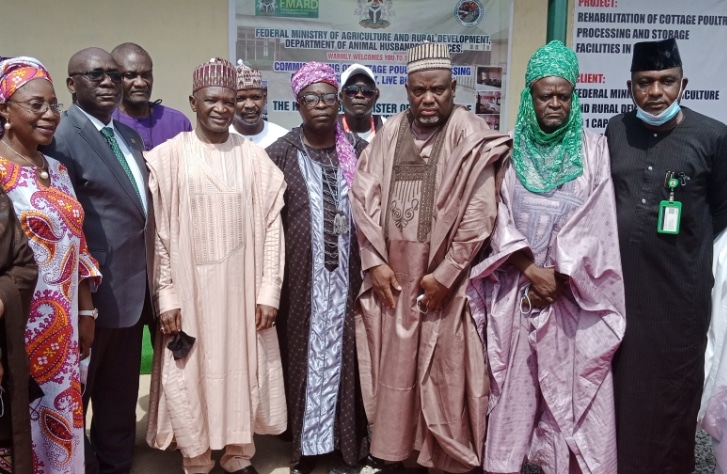
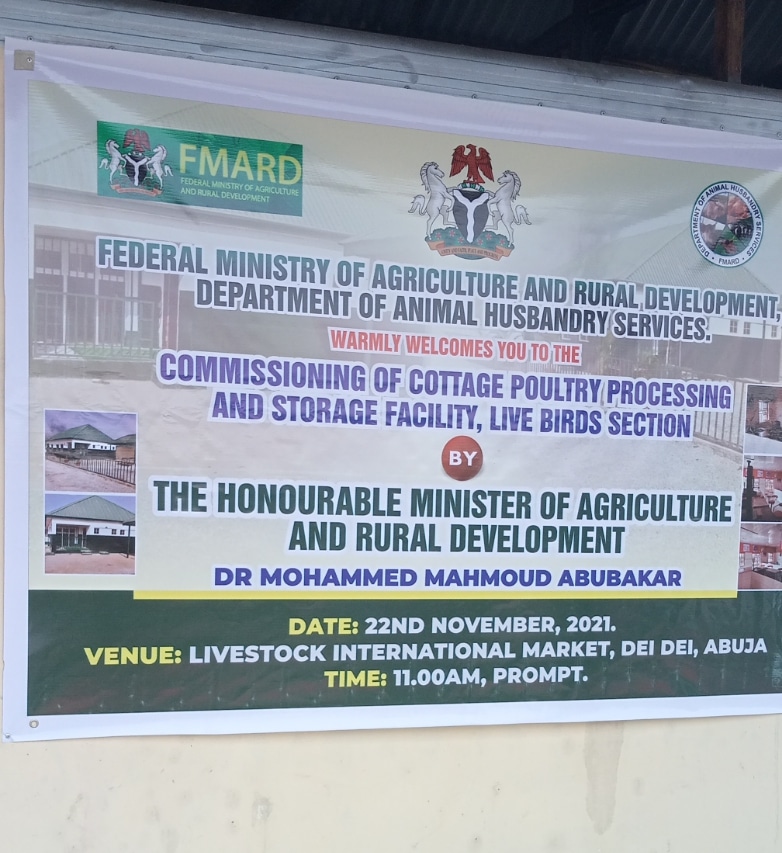
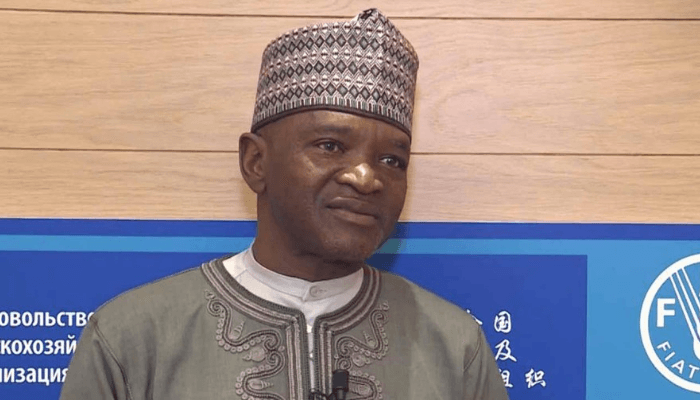
The Minister of Agriculture and Rural Development, Dr. Muhammed Abubakar on Monday established the first poultry cottage in the Livestock International Market Deidei in the Federal Capital Territory.

Abubakar while speaking at the commissioning of the poultry cottage lamented the supply gap of poultry meat of 529,000MT which he described as worrisome.

According to Abubakar, the Federal Ministry of Agriculture and Rural Development, puts 2019 projection of poultry meat output and demand put the National output at 551,000 MT and demand at 1,080,000 MT.

He further explained that Nigeria is the largest annual egg producer with the second largest chicken population in Africa amounting to about 180 million birds in which about 44% are raised in extensive systems, 33% in semi-intensive and 23% in intensive systems.

Abubakar noted that over 85 million Nigerians are currently involved in one form of poultry business or the other making intervention in the poultry sector imperative for the job creation and income generation for farmers, processors and marketers as well as for the country.

The Minister noted that the establishment of the cottage poultry processing facility which is in line with the Federal Government effort desire at transforming the livestock industry is to bring best practices closer to the beneficiaries and the market community at large.
He added that the facility will also provide a prototype for others to emulate which would be utilized for training and empowerment of other poultry processors within and outside the market.

Chairman, House Committee on Agric Institute and Colleges, Hon. Dan Agundi, noted that the cottage poultry will create lots of opportunities for producers of poultry birds that will be produced and processed in an hygiene manner.

Director, Livestock, FMARD, Mrs Winnie Sholarin on her part noted that the establishment of the cottage is a dream come true considering the foot dragging process of the establishment of the cottage.

Sholarin commended the transformation by the FMARD for the establishment of the cottage, the first in the Federal Capital Territory.

The District Head, Dei-Dei International Livestock Market, Alu Kusada commended the federal government’s initiative on the provision of the cottage and requested that more facilities in such regard should be provided.
November 22, 2021 0 comments
0 FacebookTwitterPinterestThreadsBlueskyEmail
Headlines

Agribusiness: Massive Livestock Feed Production will transform Animal Feed Sector – FG

by Folarin Kehinde September 23, 2021
written by Folarin Kehinde

Kenny Folarin, Abuja

The Minister of Agriculture and Rural Development, Muahammed Mahmood Abubakar, Thursday, said that for Nigeria to champion agribusiness worldwide and transform the animal feed sector, the nation must embark on livestock feed production.

Delivering his keynote address at the 1st National Animal Feed Summit with the theme: “Developing a Road Map for Animal Feed Security,” in Abuja, Abubakar stated that Nigeria must embark on livestock, industrialization, feed value chain development to transform agribusiness.

He also opined that development of national animal feed and feed safety policy, establishment of national strategic feed and feed ingredient reserve centre, national alternative feed ingredient development, promotion and commercialization of ruminant and micro-livestock feeds, will create platforms to transform animal feed sector.

Read Also: CBN needs bankable policy to reduce Nigeria’s $1.5 billion import bill on Wheat

Abubakar who was represented by the Permanent Secretary, Federal Ministry Of Agriculture and Rural Development, Dr Ernest Umakhihe, highlighted that animal feed accounts for over 70 percent of the cost of animal production, adding that it engages over five million Nigerians directly and indirectly as technical or skilled personnel, distributors, fabricators of tools and machinery, input suppliers.

According to him, investments in livestock feed production generates massive employment across various value chains and strengthens the national social safety net with copious contributions to food security, household income and poverty reduction.

He said: “According to 2016 data, Nigeria feed industry produces an average of 5.5million metric tonnes of animal feed per annum comprising 85% poultry feeds, and with commercial ruminant and swine feed coming up in the industry, it will produce not less than 50 million metric tonnes per annum.

“Even with this, feed sector has the potential to engage over 20 million Nigerians, as the industry is yet to reach 25% of its market size.”
He further noted that from the year 1957, Nigeria had only two feed mills, saying that the country now has over 1,000 feed mills and is recognized as the 40th leading country in livestock feed production in the world.

“This potential notwithstanding, the industry expansion remains tilted to the South West which accounts for not less than 75 percent of total installed and operating feed mills in Nigeria.

“The importance of nutritious animal feeds for full development and productivity of animals cannot be overemphasized. Nigeria’s animal feed sector is faced with non readily available feed resources, largely due to high cost of production, which in turn makes feed almost unaffordable by an average farmer,” he stressed.

To this end, Abubakar lamented the impact of COVID 19 pandemic, stating that it has negatively affected many sectors particularly the livestock sub-sector, through reduced availability of animal feed ingredients, labour, processing facilities, inputs and services.

“The pandemic reduced access of animal feed to markets and consumers. This is why the National Animal Feed Summit, a platform to engage key players and major stakeholders in the feed industry to develop a roadmap for animal feed security in the country at a time like this is apt,” he added.

Speaking in the same vein, Permanent Secretary, Federal Ministry of Agriculture and Rural Development, Dr Ernest Umakhihe, said for the nation to recover fully from the coronavirus pandemic, government must be ready to embrace livestock feed production.
Umakhihe, who was represented by the Director Special Duties, Federal Ministry of Agriculture and Rural Development, Fausat Lawal said

“As you are all aware, there is the dictum of ‘we are what we eat’. Nutritious animal feeds are essential for development and productivity of animals, especially food animals.

“In Nigeria, the animal feed sector remains a challenge to animal husbandry practices, largely due to high cost of animal feeds, which are not readily available and where they are, they are not easily affordable by an average farmer.”

September 23, 2021 0 comments
0 FacebookTwitterPinterestThreadsBlueskyEmail
Business

CBN needs bankable policy to reduce Nigeria’s $1.5 billion import bill on Wheat

by Leading Reporters May 27, 2021
written by Leading Reporters

Nigeria boasts of 34 million hectares of arable land area, with about 6.5 million hectares for permanent crops. Little wonder, Agriculture serves as the country’s main driver of the economy after oil.

But despite the goodies in the sector, the country imported wheat worth N2.2 trillion in the last four years.

According to data from the Food and Agriculture Organization (FAO) of the United Nations, Nigeria has witnessed low wheat yields amidst declining production in the last ten years. Within the period, the wheat area harvested reduced significantly. It also propelled the wheat yield to drop to the level of 10,678 hectograms (100 grams) per hectare (Hg ha) in 2018, the lowest since 1991 and one of such decline ever.


Between 2010 to 2019, wheat production was also on free fall, dropping to the range of 60,000 tonnes per annual from 165,000 tonnes production capacity in 2011. These staggering statistics (area farmed, yield, production) are the reasons why the country imported about 98 per cent of its total consumption. By implication, there are a vast population (market) but less capacity to produce one of its significant interest crops.

Why so much dependence on import Nigeria’s Minister of Agriculture and Rural Development, Mr Sabo Nanono, recently identified seeds’ unavailability as one major factor hampering investment and low production in the wheat value chain. He, however, said the ministry would provide quality seeds and agricultural inputs to Nigerian farmers.

Challenges facing the value chain include limited access to improved seed varieties, high production cost, inadequate irrigation infrastructure, insufficient funding systems, lack of a cohesive national strategy on wheat development, and unclear role of government and other stakeholders. These challenges factored in how Africa’s biggest economy managed to produce an average of 107,000 tonnes of wheat between 2001-2014. Africa produces more than 25 million tons of wheat on 10 million hectares (Mha) of land area, per FAO. Ethiopia and South Africa account for the largest production area with 1.7 Mha and 0.5 Mha, respectively.

Nigeria ranks low compared to other African peers in area harvested, yield, and production of wheat. While South Africa, Kenya and Ethiopia harvested hundreds of thousands of arable land, Nigeria only harvested on an average of 70,000 to 80,000 per annum.

What factors responsible for low local production
The reasons for low local production can be categorised into two main areas; technical and economic challenges. Analysis of the FAO data for sub-Saharan Africa showed that these factors influence farmers’ low yields in Nigeria’s wheat market. In 2011, when Nigeria harvested 128,992 hectares, its recorded peak production levels at 165,000 tonnes.

On the technical side, farmers in Nigeria have limited access to improved seed varieties, fertilizers & chemicals, high cost of production, and inadequate irrigation infrastructure, often leading to low yields. On the economic side, lack of investment opportunities, insufficient funding systems for research, and lack of a coordinated national strategy resulted in Nigeria’s dependence on imported wheat to meet its large population’s growing demands.

A Financial Derivatives Company’s report cited insecurity in Nigeria’s wheat belt, the lack of mechanized and modernized farming techniques, and uncompetitive pricing as challenges facing low wheat production.

Similarly, the International Food Policy Research Institute attributed a lack of policy support and support from international organisations to be responsible for low domestic production.

Low yield propels lack of investment despite the massive market for wheat in Nigeria, a perennial low yield often leads to low revenue and profits. This situation discourages the cultivation of wheat by farmers.

They instead divert their funds into more rewarding agricultural produce. Several reports, including direct comments from farmers, have decried the government’s lack of commitments as one significant factor. Due to this, farmers have shifted focus towards the cultivation of rice, while bakers go after imported wheat because it is cheaper.


A look at the 2011 figure of the FAO data showed that yield dictates the propensity for investment (Area farmed/harvested). Also, the area planted, in turn, determines output (production). A classic case is Ethiopia’s wheat value chain, which shows consistency in growth in the last decade. The country’s healthy production is influenced by its continued investment in seeds, fertilizers, and mechanization, according to the OECD-FAO Agricultural Outlook 2018-2027.


Presently, Nigeria has no actionable policy for its wheat market. The Anchor Borrowers’ Programme (ABP) captured wheat production, but the approach was mere paperwork for wheat farmers. Alhaji Salim Mohammed, the National President of the Wheat Farmers Association of Nigeria (WFAN), told Dataphyte that there is no specific outlined policy for Nigeria’s wheat market. He said both the FMA&RD and CBN have no serious concern about it. Wheat is an essential grain belonging to the grass family. When milled into flour, it makes a wide range of foods, including bread, noodles, pasta, biscuits, cakes, cookies, pastries, cereal bars, sweets and crackers. On another aspect, it is one of the most common grains which serve as feed for livestock. Research also suggests grain improves the calcium and energy status of cows to help them in transition.

Per a report by Emerald, Nigeria’s wheat importation stood at 4.2 MMT on average annually, costing $1.5 billion in import bill. For Nigeria to grow its wheat market, it needs to close the production gap and reduce the import bill as essential ingredients for best agric practices. These include improvement in seedlings, mechanizations, commercial agriculture, addressing insecurity in the North-East, a significant zone for Nigeria’s wheat.

The central bank and policymakers can also learn from Ethiopia and Egypt’s wheat value chain by giving full attention to crop production to ensure food security. The Nigerian Bureau of Statistics (NBS) recent report shows that crop production remains a significant portion of Nigeria’s GDP. In the fourth quarter, the Nigerian economy grew by 0.11% (year-on-year) in real terms, representing the first positive quarterly growth in the last three quarters. Quarter-on-quarter, crop production grew by 3.42 per cent compared to 1.39 per cent in Q3, nearly double the increase.

Investment and funding are also critical factors in expanding the wheat value chain, especially by supporting Lake Chad Research Institute in research and development to improve wheat seeds.

May 27, 2021 0 comments
0 FacebookTwitterPinterestThreadsBlueskyEmail

Recent Posts

  • BREAKING: DSS Sues El-Rufai for Intercepting NSA Ribadu’s Phone

    February 16, 2026
  • APC Senator Seeks 16-Year Single Tenure for Nigeria’s President

    February 16, 2026
  • Major Health Crisis Plagues Dape, Karmo Residents As Dust Pollution From AMAC Road Project Chokes Residents

    February 16, 2026
  • BREAKING: INEC announces timetable, schedule of 2027 elections

    February 13, 2026
  • Aso Rock to disconnect from nat’l grid in March – Perm Sec

    February 12, 2026

Usefull Links

  • Contact Page
  • About Leading Reporters
  • Contact Us
  • Headlines
  • Investigation
  • Exclusives
  • Opinion
  • Business
  • Facebook
  • Twitter
  • Instagram
  • Linkedin

@2021 - All Right Reserved. Designed and Developed by PenciDesign


Back To Top
Leading Reporters
  • Featured
  • Politics
  • Opinion
  • Business
  • Entertainment
  • Sports
  • About Us
  • Contact