
Leading Reporters
  • Headlines
  • Health
  • Business
  • Exclusives
  • Investigation
  • Entertainment
  • Opinion
Tuesday, January 27, 2026
Hot
FCTA Workers, NLC Storm Industrial Court, Demand Wike...
DisCos reject FG’s free meter plan
Nigerian-born nurse loses licence in Australia for sleeping...
BREAKING: Kano Gov Abba Yusuf dumps NNPP
National Grid Collapse For First Time in 2026
BREAKING: Tinubu approves posting of Ambassadors to U.S.,...
Insecurity: Kidnappers demand 17 motorcycles for release of...
FG to Abolish Hnd-Degree Dichotomy, Allow Polytechnics to...
AFCON Initiative drives stronger Nigeria Morocco cooperation
Obasanjo: I’ll Never Stop Having Children
  • About Leading Reporters
  • Contact Us
Leading Reporters
Advertise With Us
  • Headlines
  • Health
  • Business
  • Exclusives
  • Investigation
  • Entertainment
  • Opinion
Hot
FCTA Workers, NLC Storm Industrial Court, Demand Wike...
DisCos reject FG’s free meter plan
Nigerian-born nurse loses licence in Australia for sleeping...
BREAKING: Kano Gov Abba Yusuf dumps NNPP
National Grid Collapse For First Time in 2026
BREAKING: Tinubu approves posting of Ambassadors to U.S.,...
Insecurity: Kidnappers demand 17 motorcycles for release of...
FG to Abolish Hnd-Degree Dichotomy, Allow Polytechnics to...
AFCON Initiative drives stronger Nigeria Morocco cooperation
Obasanjo: I’ll Never Stop Having Children
Leading Reporters
Leading Reporters
  • Headlines
  • Health
  • Business
  • Exclusives
  • Investigation
  • Entertainment
  • Opinion
Copyright 2024 - All Right Reserved
Home > insecurity > Page 2
Tag:

insecurity

Headlines

President Buhari state among northern states declared highly unsafe by Britain

by Leading Reporters April 4, 2022
written by Leading Reporters

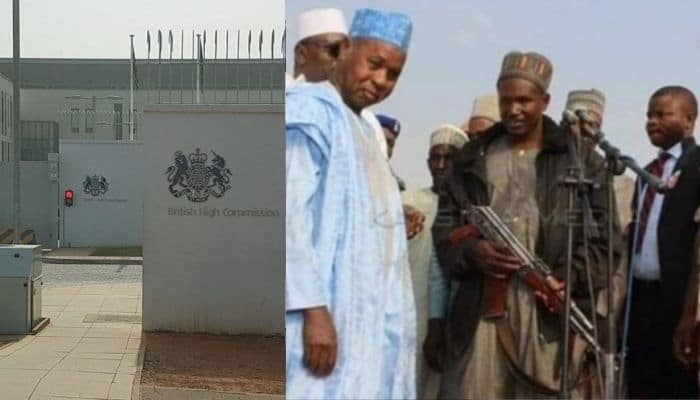
Katsina State, the home state of Nigeria’s President Muhammadu Buhari is among the northern states in Nigeria the United Kingdom has warned its citizens to extensively avoid, describing it as highly unsafe

Other states include Yobe, Borno, Adamawa, Zamfara, Gombe and Kaduna state where suspected terrorists bombed an Abuja- Kaduna moving passenger train on Monday.

The terror attack left in its wake over 20 persons dead, several wounded and many kidnapped by the criminals who planted explosives on the rail track and later shot at stranded passengers.
Few days before the train bombing, suspected bandits had also attacked an international airport in Kaduna.

President Muhammadu Buhari has since ordered security agencies to hunt down the terrorists.

In spite of this, the UK government said in a travel advisory on Thursday that the designated states are not safe because of the rising level of insecurity.

The directory issued by the Foreign Commonwealth and Development Office FCDO, warned that the states any high risk areas where criminal group are still kidnapping people and killing others.

Part of the directory reads in parts: “The FCDO advise against all travel to Borno State, Yobe State, Adamawa State, Gombe State, Kaduna State, Katsina State, and Zamfara State. Violent attacks are frequent and there is a high threat of kidnap,” the post read.

“On 26 March 2022, gunmen launched an attack against Kaduna airport, killing at least one airport official in the latest in a series of attacks by gunmen in the north of Nigeria. On the evening of 29 March 2022, an apparent Improvised Explosive Device attack took place against a train travelling from Abuja to Kaduna. Reports suggest that a number of people were killed and that others were abducted by gunmen. Train services are now suspended between Abuja and Kaduna.”

“The threat level in North-East Nigeria, including around Maiduguri is increasing, particularly around transport hubs, religious areas, and large gatherings. Kidnaps have taken place on the roads in and out of Maiduguri. As the dry season starts in October, this risk is expected to increase even further,” the advisory further said.

“If the security situation in Maiduguri were to deteriorate any further, there is a significant likelihood that it could be extremely difficult for you to leave the city. We do not advise travelling by road.”

“If you’re in the North East against FCDO advice, keep in touch with the authorities and the wider community on the security situation and make sure your procedures and contingency plans are up to date. If you are working in the North East of Nigeria you should be fully confident in your employer’s ability to extract you from the North East in the event of any emergency,” FCDO said
April 4, 2022 0 comments
0 FacebookTwitterPinterestThreadsBlueskyEmail
OpinionHeadlines

What Soludo should avoid as Anambra Governor

by Leading Reporters March 20, 2022
written by Leading Reporters

By Tonnie Iredia

Charles Chukwuma Soludo, the new governor of Anambra state is a well-known reformer in Nigeria’s public sector. He had served creditably as governor of the Central Bank of Nigeria (2004-9) and only those who refused to renew his appointment after the Obasanjo years know what criteria they used to stop Nigeria from continuing to benefit from the services of pragmatic Soludo.

Each time I met him in those days when we were in government, I always subconsciously imagined that he deservedly possessed what Warren Bennis identified as features of strategic leadership, namely: Vision, Passion and Integrity. Bennis was the man who invented leadership as a business idea and whose legacy has since been honored with a prize for the best articles on leadership every year in the Harvard Business Review. If nothing else, Soludo showed ample visionary leadership in his reformist agenda at the CBN. Will he be able to extend same to Anambra state?

Listening to his inauguration speech last Thursday, it was obvious that Governor Soludo had mastered the strategy for arriving at the location he envisages Anambra ought to be some 4 years ahead. A few minutes after the inauguration, he began an active governance project starting appropriately from Okpoko – a local community empirically determined as the weakest link in the state which had been abandoned over the years.

Part of those who waited to receive the new governor there were: several heaps of refuse along with street traders and sweepers who could not immediately fathom what sanctions their lethargy would attract. The starting point no doubt resonated a number of institutional statements; first, that everywhere will be touched and second that it was time for everyone to work in view of the transparent leadership by example posture of the first 48 hours of Soludo’s tenure.

The governor’s occupational antecedents of executing every project with a commercial mindset would certainly impact greatly on the state. One obvious advantage of the mindset is that just as an increase in revenue generation would be easily quantifiable, many intangible goals would similarly be transparently recorded as profits in the sense of democracy dividends. Under the circumstance, there are a legion of things governor Soludo needs to watch or avoid.

The first is that although the ‘spoils system’ which patronizes party members who played active roles in elections is followed across the globe, Governor Soludo must not allow his party to pressure him to appoint unqualified persons into critical positions in which they can hardly add value to society. The same is true of the awards of contracts for several works which must be channeled to only persons and firms that have cognate experience in each venture. This would encourage first class jobs.

One way of doing this is to sensitize party leaders on the qualifications and competences for each position/project so as to drastically reduce the nomination of misfits for any assignment. An area where party members often agitate to make contributions centres around arrangements for internally generated revenue. Here, the ingenuity of officials at all levels should never be underrated. For example, the existence of receipts for payments does not in our system guarantee the destination of the payments. They may still end up (in the case of markets and parks), in private pockets of individuals and union officials. In today’s world of technology, Soludo is certainly fully aware of the many platforms devoid of bureaucracy that can secure revenue because funding is key to successful project execution

Anambra is one of the states greatly affected by insecurity hence Soludo’s determination to work towards ending senseless killings of his people particularly able-bodied youths. But while his plan to aggregate the efforts of all stakeholders in the attainment of peace is salutary, he should avoid making the mistake of some of his colleagues who converted state security to individual affair.

Government must at all times be seen to be playing the pivotal role because that is its primary purpose. Arguments such as everyone should defend himself does not only validate state abdication from its primary responsibility, it also gives an impression that the state has tacitly emboldened criminal elements to freely operate. In addition, political leaders must stop showing more interest in political meetings and social events while overlooking security breaches that result in fatalities. The life of every citizen should matter.

Most importantly, Soludo should avoid distractions. For example, he should be cautious about the numerous meetings of the Nigerian Governors’ Forum which as a body has long lost its usefulness. Since when Jonathan’s government recognized the governor with 16 followers as the leader of the forum instead of the one with 19 followers, the forum has been distracted from its original goal of serving as a tool for peer review. It has indeed broken into partisan segments. However, the All Progressives Grand Alliance (APGA) to which Soludo belongs, does not have other governors and as such will not be tempted to create an APGA Governors’ Forum for partisan politics. Besides, the governor has no business serving as the leader of the party which would pull him unnecessarily into the unending Nigerian electioneering during governance. As soon as a candidate is elected governor, he translates into a statesman and the father of the entire state and not a leader of his party which in any case is merely a design for channelling government funds into party coffers.

It is logical to assume that having served as CBN governor, the quest by Soludo to become a state governor was altruistically to make his state – Anambra, greater than it has been. He is therefore in a different position from many politicians who struggle to become senators after having served as governors or ministers. Thus, Soludo has no business distracting himself. As Anambra governor, it would be a tragedy if Soludo later defects to another party so as to win a second term election or to get any corrupt practices covered for him as we see of many defectors who proffer absurd reasons for such conduct. A governor who performs brilliantly in his first term, hardly needs a second term to put his name in gold; his salary is free for him, so is his feeding and accommodation. He therefore has no need to run from pillar to post for reelection because with a sincere performance, a second term is virtually guaranteed.

The nation certainly looks forward to standards to be set in Anambra during Soludo’s tenure. Unlike many political leaders, he needs to abide by the letter and spirit of the constitution. He should avoid the practice of frustrating the existence of a local government system of government. Accordingly, it is wrong to do as many others have done to constitute party loyalists into the state’s “independent” electoral commission to conduct fake elections just as it is immoral to use whatever strategy to divert local government funds. Anambra state legislature as a distinct arm of government should be allowed to function freely. Consequently, there would be no need to bribe the legislators to pass any bills. If these are followed and Anambra becomes a reference point in our clime, credit would go to governor Soludo.

It is also important to draw attention to the need for the governor to be on top of state issues. Many officials would bring up very articulate narratives which if not properly interrogated could turn out to be incorrect. For instance, on a lighter note, last Thursday, two over-grown girls virtually marred Soludo’s inauguration through fisticuffs. The narrative to the whole world was that one of them, the immediate governor’s wife slapped the wife of the former warlord. When a video coverage later showed that it was the reverse, the narrative changed to ‘the slap was due to provocation.’ The lesson here is that our narratives are usually never detailed and are always affected by prejudice. A last minute disruption to great efforts introduced by someone close can take the shine off great achievements. So Chukwuma Soludo must beware.

March 20, 2022 0 comments
0 FacebookTwitterPinterestThreadsBlueskyEmail
Business

CBN needs bankable policy to reduce Nigeria’s $1.5 billion import bill on Wheat

by Leading Reporters May 27, 2021
written by Leading Reporters

Nigeria boasts of 34 million hectares of arable land area, with about 6.5 million hectares for permanent crops. Little wonder, Agriculture serves as the country’s main driver of the economy after oil.

But despite the goodies in the sector, the country imported wheat worth N2.2 trillion in the last four years.

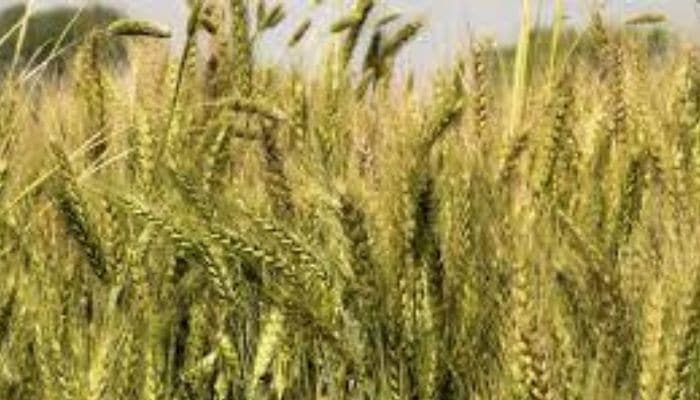
According to data from the Food and Agriculture Organization (FAO) of the United Nations, Nigeria has witnessed low wheat yields amidst declining production in the last ten years. Within the period, the wheat area harvested reduced significantly. It also propelled the wheat yield to drop to the level of 10,678 hectograms (100 grams) per hectare (Hg ha) in 2018, the lowest since 1991 and one of such decline ever.


Between 2010 to 2019, wheat production was also on free fall, dropping to the range of 60,000 tonnes per annual from 165,000 tonnes production capacity in 2011. These staggering statistics (area farmed, yield, production) are the reasons why the country imported about 98 per cent of its total consumption. By implication, there are a vast population (market) but less capacity to produce one of its significant interest crops.

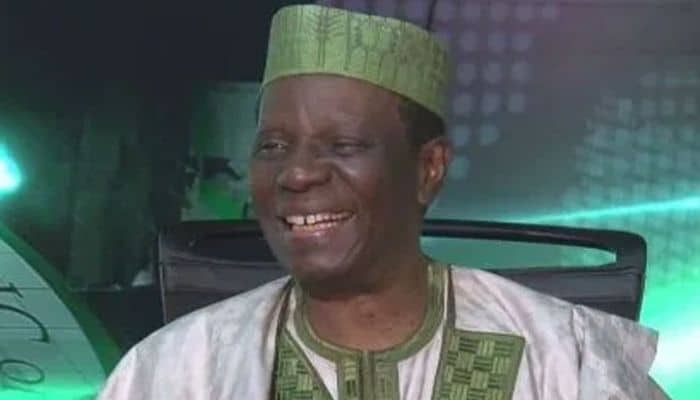
Why so much dependence on import Nigeria’s Minister of Agriculture and Rural Development, Mr Sabo Nanono, recently identified seeds’ unavailability as one major factor hampering investment and low production in the wheat value chain. He, however, said the ministry would provide quality seeds and agricultural inputs to Nigerian farmers.

Challenges facing the value chain include limited access to improved seed varieties, high production cost, inadequate irrigation infrastructure, insufficient funding systems, lack of a cohesive national strategy on wheat development, and unclear role of government and other stakeholders. These challenges factored in how Africa’s biggest economy managed to produce an average of 107,000 tonnes of wheat between 2001-2014. Africa produces more than 25 million tons of wheat on 10 million hectares (Mha) of land area, per FAO. Ethiopia and South Africa account for the largest production area with 1.7 Mha and 0.5 Mha, respectively.

Nigeria ranks low compared to other African peers in area harvested, yield, and production of wheat. While South Africa, Kenya and Ethiopia harvested hundreds of thousands of arable land, Nigeria only harvested on an average of 70,000 to 80,000 per annum.

What factors responsible for low local production
The reasons for low local production can be categorised into two main areas; technical and economic challenges. Analysis of the FAO data for sub-Saharan Africa showed that these factors influence farmers’ low yields in Nigeria’s wheat market. In 2011, when Nigeria harvested 128,992 hectares, its recorded peak production levels at 165,000 tonnes.

On the technical side, farmers in Nigeria have limited access to improved seed varieties, fertilizers & chemicals, high cost of production, and inadequate irrigation infrastructure, often leading to low yields. On the economic side, lack of investment opportunities, insufficient funding systems for research, and lack of a coordinated national strategy resulted in Nigeria’s dependence on imported wheat to meet its large population’s growing demands.

A Financial Derivatives Company’s report cited insecurity in Nigeria’s wheat belt, the lack of mechanized and modernized farming techniques, and uncompetitive pricing as challenges facing low wheat production.

Similarly, the International Food Policy Research Institute attributed a lack of policy support and support from international organisations to be responsible for low domestic production.

Low yield propels lack of investment despite the massive market for wheat in Nigeria, a perennial low yield often leads to low revenue and profits. This situation discourages the cultivation of wheat by farmers.

They instead divert their funds into more rewarding agricultural produce. Several reports, including direct comments from farmers, have decried the government’s lack of commitments as one significant factor. Due to this, farmers have shifted focus towards the cultivation of rice, while bakers go after imported wheat because it is cheaper.


A look at the 2011 figure of the FAO data showed that yield dictates the propensity for investment (Area farmed/harvested). Also, the area planted, in turn, determines output (production). A classic case is Ethiopia’s wheat value chain, which shows consistency in growth in the last decade. The country’s healthy production is influenced by its continued investment in seeds, fertilizers, and mechanization, according to the OECD-FAO Agricultural Outlook 2018-2027.


Presently, Nigeria has no actionable policy for its wheat market. The Anchor Borrowers’ Programme (ABP) captured wheat production, but the approach was mere paperwork for wheat farmers. Alhaji Salim Mohammed, the National President of the Wheat Farmers Association of Nigeria (WFAN), told Dataphyte that there is no specific outlined policy for Nigeria’s wheat market. He said both the FMA&RD and CBN have no serious concern about it. Wheat is an essential grain belonging to the grass family. When milled into flour, it makes a wide range of foods, including bread, noodles, pasta, biscuits, cakes, cookies, pastries, cereal bars, sweets and crackers. On another aspect, it is one of the most common grains which serve as feed for livestock. Research also suggests grain improves the calcium and energy status of cows to help them in transition.

Per a report by Emerald, Nigeria’s wheat importation stood at 4.2 MMT on average annually, costing $1.5 billion in import bill. For Nigeria to grow its wheat market, it needs to close the production gap and reduce the import bill as essential ingredients for best agric practices. These include improvement in seedlings, mechanizations, commercial agriculture, addressing insecurity in the North-East, a significant zone for Nigeria’s wheat.

The central bank and policymakers can also learn from Ethiopia and Egypt’s wheat value chain by giving full attention to crop production to ensure food security. The Nigerian Bureau of Statistics (NBS) recent report shows that crop production remains a significant portion of Nigeria’s GDP. In the fourth quarter, the Nigerian economy grew by 0.11% (year-on-year) in real terms, representing the first positive quarterly growth in the last three quarters. Quarter-on-quarter, crop production grew by 3.42 per cent compared to 1.39 per cent in Q3, nearly double the increase.

Investment and funding are also critical factors in expanding the wheat value chain, especially by supporting Lake Chad Research Institute in research and development to improve wheat seeds.

May 27, 2021 0 comments
0 FacebookTwitterPinterestThreadsBlueskyEmail
Newer Posts
Older Posts

Recent Posts

  • FCTA Workers, NLC Storm Industrial Court, Demand Wike Sack

    January 26, 2026
  • DisCos reject FG’s free meter plan

    January 26, 2026
  • Nigerian-born nurse loses licence in Australia for sleeping on duty

    January 24, 2026
  • AI may outsmart humanity in five years — Musk

    January 24, 2026
  • BREAKING: Kano Gov Abba Yusuf dumps NNPP

    January 23, 2026

Usefull Links

  • Contact Page
  • About Leading Reporters
  • Contact Us
  • Headlines
  • Investigation
  • Exclusives
  • Opinion
  • Business
  • Facebook
  • Twitter
  • Instagram
  • Linkedin

@2021 - All Right Reserved. Designed and Developed by PenciDesign


Back To Top
Leading Reporters
  • Featured
  • Politics
  • Opinion
  • Business
  • Entertainment
  • Sports
  • About Us
  • Contact