
Leading Reporters
  • Headlines
  • Health
  • Business
  • Exclusives
  • Investigation
  • Entertainment
  • Opinion
Tuesday, December 2, 2025
Hot
Tinubu Nominates Ex-CDS Christopher Musa As Defence Minister
BREAKING: FG Publishes List of 15 Alleged Terrorist...
FG Proposes 40% Salary Increase for ASUU Lecturers
Northern Governors Host Emergency Meeting Over Escalating Security...
Tinubu appoints ex-INEC Chair Yakubu, Fani-Kayode, Reno Omokri,...
Niger Delta Boss Jennifer Adighije Accused of Corruption,...
India Orders $570 Million Payout in Major Fraud...
Dangote Refinery Saves Nigeria over ₦10bn Annually in...
Bandits Abduct 16-year-old boy, six girls in FCT...
Social Security: A Missing Link in Nigeria’s Search...
  • About Leading Reporters
  • Contact Us
Leading Reporters
Advertise With Us
  • Headlines
  • Health
  • Business
  • Exclusives
  • Investigation
  • Entertainment
  • Opinion
Hot
Tinubu Nominates Ex-CDS Christopher Musa As Defence Minister
BREAKING: FG Publishes List of 15 Alleged Terrorist...
FG Proposes 40% Salary Increase for ASUU Lecturers
Northern Governors Host Emergency Meeting Over Escalating Security...
Tinubu appoints ex-INEC Chair Yakubu, Fani-Kayode, Reno Omokri,...
Niger Delta Boss Jennifer Adighije Accused of Corruption,...
India Orders $570 Million Payout in Major Fraud...
Dangote Refinery Saves Nigeria over ₦10bn Annually in...
Bandits Abduct 16-year-old boy, six girls in FCT...
Social Security: A Missing Link in Nigeria’s Search...
Leading Reporters
Leading Reporters
  • Headlines
  • Health
  • Business
  • Exclusives
  • Investigation
  • Entertainment
  • Opinion
Copyright 2024 - All Right Reserved
Home > India
Tag:

India

HeadlinesAfrica & World

India Orders $570 Million Payout in Major Fraud Case Against Nigeria’s Sterling Oil

by Leading Reporters November 27, 2025
written by Leading Reporters

In a sweeping move, India’s Supreme Court has allowed billionaire siblings Nitin and Chetan Sandesara to evade full prosecution in a massive alleged bank-fraud scheme if they settle with a payment equal to about one-third of their assessed debt.

The ruling, which allows the pair to settle for about $570 million on liabilities pegged at $1.6 billion, could end years of criminal proceedings that New Delhi has pursued across multiple jurisdictions.

The ruling could open the way for economic offenders to strike similar settlements, leaving lenders struggling to recover their entire dues, said Debopriyo Moulik, a Supreme Court lawyer in independent practice, told Reuters.

“This is very similar to the approach adopted in foreign countries where fines are an alternative to facing trial,” Moulik said.

For the industrialists, the decision marks the closest India has come to resolving a scandal that has stretched from Mumbai to Abuja and into the offshore oil fields of West Africa.

Yet the brothers’ fortunes have never been brighter.

Far from the Indian courts that have hounded them since 2017, the Sandesaras have built one of Nigeria’s largest independent oil producers, turning a once-minor set of onshore licenses into a sprawling African energy empire delivering tens of thousands of barrels of crude a day.

Their success in Africa, combined with Nigeria’s persistent refusal to extradite them, has long frustrated Indian authorities and underscored how geopolitical and commercial interests have shielded the pair from consequences at home.

Nigeria, Africa’s top crude producer, has embraced the Sandesaras even as India brands them fugitives responsible for what investigators call “one of the largest economic scams in the country.”

Their flagship companies, Sterling Oil Exploration & Production Co. and Sterling Global Oil Resources Ltd, pump roughly 50,000 barrels of crude daily, according to a 2023 Bloomberg report, operating under contracts with the Nigerian National Petroleum Company.

The brothers’ rise in Nigeria accelerated after they pivoted away from India in the mid-2010s. What began almost 20 years earlier with two modest onshore licences in the Niger Delta matured into a vertically integrated drilling and crude-export business.

The Sandesaras transferred operations to Lagos, hired the former head of Nigeria’s petroleum regulator to oversee their expansion, and secured major state contracts that cemented their standing in the country’s energy sector.

Their companies now rank among Nigeria’s top oil exporters, and in 2019 the government said taxes and royalties paid by Sandesara-linked entities accounted for 2 percent of national revenue.

According to the Indian Times, their operations have also cleverly sidestepped the endemic sabotage of Nigeria’s pipeline network by shipping crude via barges to a floating offshore storage vessel. The approach has allowed them to keep exports steady even as peers disrupted by oil theft and militant activity scaled back.

Nigeria has also doubled down on the Sandesaras’ involvement in its future oil ambitions. Government officials last year announced the discovery of as many as 1 billion barrels of crude in the country’s arid northeast, part of a multi-billion-dollar hydrocarbons push that relies partly on drilling contractors connected to the brothers.

To New Delhi, the brothers are not pioneers but perpetrators of a sweeping financial fraud. Indian agencies allege the Sandesaras built their now-collapsed domestic conglomerate, Sterling Group, with the help of fabricated documents, inflated valuations, and an intricate network of shell structures designed to siphon overseas cash.

The brothers deny any wrongdoing and say they are victims of political persecution.

The Central Bureau of Investigation (CBI) claims the group owed more than 140 billion rupees ($1.7 billion) to state-owned lenders, including State Bank of India, Union Bank of India, and Bank of Baroda.

A 2019 charge sheet accused the family of channeling loan proceeds into offshore ventures, including their Nigerian oil operations.

The same banks later pursued the group abroad, winning two UK High Court rulings in 2018 and 2021 that ordered Sandesara-linked companies to repay nearly $60 million after defaulting on obligations related to the Sterling Oil business.

India also sought the brothers’ extradition from Nigeria. But in a blow to New Delhi’s efforts, Nigerian officials in 2018 refused to arrest them, saying India’s allegations “appeared to be political in nature,” according to correspondence published by the Organised Crime and Corruption Reporting Project and reviewed by Bloomberg.

The brothers subsequently applied for Nigerian citizenship, according to CBI filings.

November 27, 2025 0 comments
0 FacebookTwitterPinterestThreadsBlueskyEmail
India-Pakistan Conflict
Africa & World

Tensions Escalate Between Nuclear-Armed India and Pakistan After Cross-Border Strikes

by Nelson Ugwuagbo May 7, 2025
written by Nelson Ugwuagbo

India said on Wednesday it had carried out military strikes on multiple targets in Pakistan, citing retaliation for a recent terrorist attack in Indian-administered Kashmir that killed 26 civilians.

According to the Indian government, the strikes were conducted on nine locations, including sites in Pakistan-administered Kashmir and Punjab Province. The government stated that the operation was based on intelligence linking Pakistan-based militants to the Kashmir attack, which occurred two weeks ago in a popular tourist area.

“The military actions were measured, responsible, and designed to be non-escalatory in nature,” India said in an official statement, adding that only “known terror camps” were targeted.

Pakistani military officials reported that six locations had been hit, resulting in more than 20 fatalities and dozens of injuries. The Pakistani government condemned the strikes, describing them as “an unprovoked and blatant act of war” and a violation of its sovereignty.

In response, Pakistan said it had begun a “measured but forceful” military reaction and vowed to retaliate “at a time and place of its own choosing.”

The developments have heightened tensions between the two nuclear-armed neighbours, both of whom claim the disputed Kashmir region.

May 7, 2025 0 comments
0 FacebookTwitterPinterestThreadsBlueskyEmail
Africa & World

India’s Modi makes first Russia visit since Ukraine invasion

by Folarin Kehinde July 8, 2024
written by Folarin Kehinde

India’s Prime Minister Narendra Modi has arrived in Moscow for a two-day visit, his first since Russia sent troops into Ukraine – an action that has complicated the relationship between the longtime partners and pushed Russia closer to India’s rival, China.

Modi was set to have dinner with Russian President Vladimir Putin on Monday, followed by talks at the Kremlin on Tuesday.

“I look forward to reviewing all aspects of bilateral cooperation with my friend President Vladimir Putin and sharing perspectives on various regional and global issues,” said Modi in a statement.

“We seek to play a supportive role for a peaceful and stable region.

Modi last travelled to Russia in 2019, when he attended a forum in the far eastern port of Vladivostok and met with Putin. The leaders also saw each other in September 2022 at the Shanghai Cooperation Organisation summit, held in Uzbekistan.

Moscow remains a key supplier of cut-price oil and weapons to India, especially following sanctions on Russia imposed by the United States and its allies that came in response to the Russia-Ukraine war and that shut most Western markets off to Russian exports. According to analysts, India now gets more than 40 percent of its oil imports from Russia.

But the Kremlin’s isolation from the West and blooming friendship with Beijing have impacted Moscow’s time-honoured partnership with New Delhi.

Western powers have in recent years also cultivated ties with India as a bulwark against China and its growing influence in the Asia-Pacific, while pressuring it to distance itself from Russia.

Modi last visited Russia in 2019 and hosted Putin in New Delhi two years later, weeks before Russia began its offensive against Ukraine in February 2022. However, the partnership between Moscow and New Delhi has become fraught as Russia has moved closer to China.

July 8, 2024 0 comments
0 FacebookTwitterPinterestThreadsBlueskyEmail
Headlines

Here is a list of countries that remain untouched by Covid with zero cases so far

by Leading Reporters February 19, 2022
written by Leading Reporters

The world is battling the deadly coronavirus pandemic for over two years now. However, there are a few countries that remain completely untouched by the pandemic. 

The WHO has released a list that shows a couple of countries that have zero cases of the virus. Most of these countries and territories are islands in the Pacific and Atlantic oceans. Here is the list:

Micronesia: This country is spread across the western Pacific Ocean comprising more than 600 islands. However, Micronesia is made up of 4 island states: Pohnpei, Kosrae, Chuuk and Yap.

Nauru: Located in Oceania, the country features a coral reef and white-sand beaches. As per the WHO list, nearly 68 people per 100 are fully vaccinated here. 

Niue: It is a small island nation in the South Pacific ocean. Over 79 people per 100 are fully vaccinated against Covid here.

Pitcairn Islands: This comprises the islands of Pitcairn, Henderson, Ducie and Oeno. It is a small volcanic region situated in the South Pacific at latitude 25.04 south and longitude 130.06 west. 74 people per 100 are fully vaccinated here.

Saint Helena: Known as the place of Napoleon Bonaparte’s exile and death, this is a remote volcanic outpost in the South Atlantic Ocean. WHO claims that 58.16 persons per 100 are fully vaccinated here.

Tokelau: Located near New Zealand, this place has a single airport. It only has a population of about 1,500 people. 

Tuvalu: This is a group of three reef islands and six atolls. Tuvalu closed its borders and mandated quarantine. As per WHO, nearly 50 people are fully vaccinated per 100 population.

Turkmenistan and North Korea have also been listed as being free of the deadly coronavirus. These countries have not yet acknowledged any case officially. 

The WHO list also mentions countries that have been the worst hit by the deadly virus. The United States tops the list with 77,521,589 cases, followed by India with 42,780,235 cases. 

February 19, 2022 0 comments
0 FacebookTwitterPinterestThreadsBlueskyEmail
Headlines

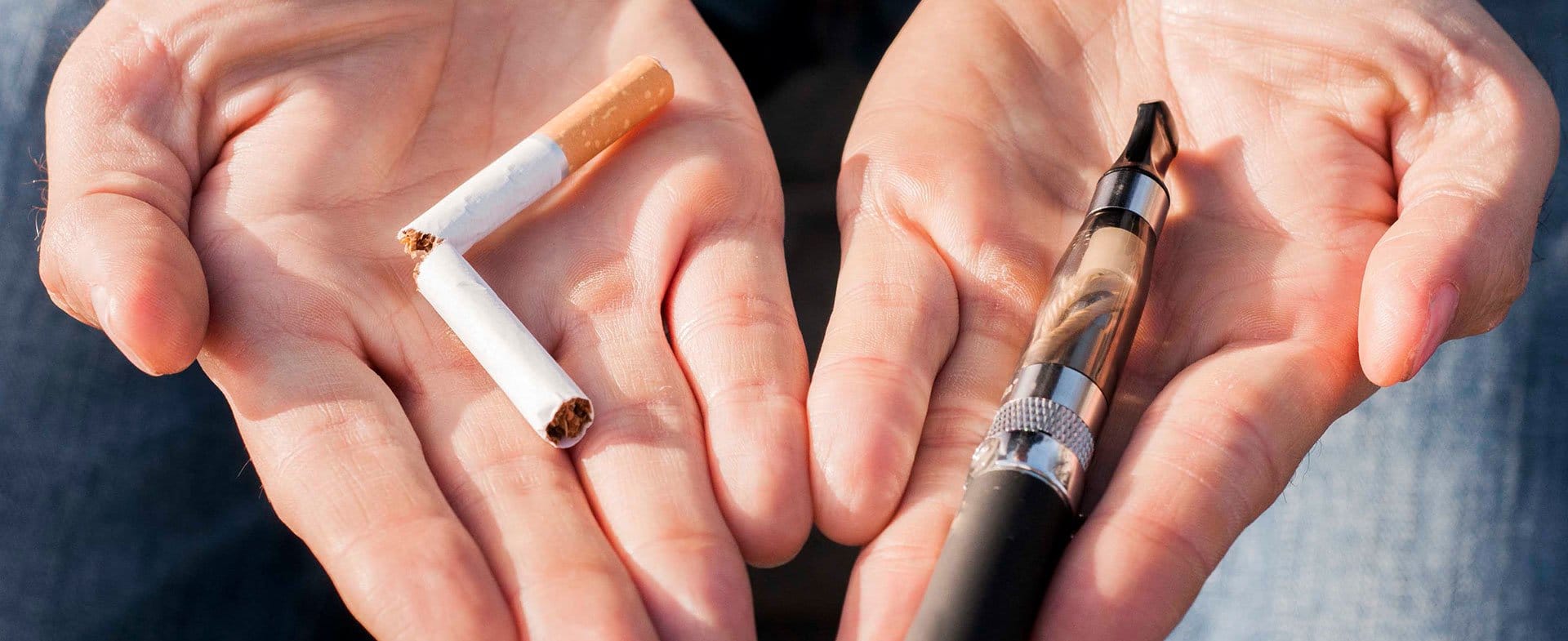
WHO Move Against E-Cigarettes, Vows to take action

by Leading Reporters July 28, 2021
written by Leading Reporters

The World Health Organisation, on Tuesday, urged governments to regulate the use of electronic cigarettes as they pose great dangers to human health.

The WHO Director-General, Tedros Adhanom Ghebreyesus, said nicotine was highly addictive and must be regulated to curb the tobacco industry’s “criminal” tactics to get young people hooked on the substance.

Ghebreyesus made the appeal in a WHO report titled ‘Global Tobacco Epidemic 2021”.

He warned that electronic nicotine delivery systems (ENDS) are harmful and should be regulated for maximum public health protection.

The report also showed that tobacco leads to eight million deaths annually, adding that over one million die from second-hand smoking.

“Where they are not banned, governments should adopt appropriate policies to protect their populations from the harms of ENDS, and to prevent their uptake by children, adolescents and other vulnerable groups,” it said.

According to the report, the manufacturers of these products often target youths with thousands of tantalising flavours and reassuring statements.

‘It’s The Most Criminal Act…We Can’t Let That Happen’

Leader of WHO Tobacco Free Initiative, Vinayak Prasad, also noted that targeting children with toxic and poisonous products is a criminal action.

“It’s the most criminal act. And it’s a human rights violation. They run the risk of being addicted for the rest of their lives,” he said.

He further noted that following the huge drop in the sales of cigarette, tobacco companies have developed new products like e-cigarettes and heated-tobacco products while lobbying governments to limit their regulation.

“Their goal is simple: to hook another generation on nicotine. We can’t let that happen.

“Distinguishing the nicotine-containing products from the non-nicotine, or even from some tobacco-containing products, can be almost impossible. This is just one way the industry subverts and undermines tobacco control measures,” he said.

According to the report, the sales of ENDS have been banned in 32 countries including Argentina, Brazil, Egypt, Ethiopia, India, Iran, Iraq, Mexico, North Korea and Singapore.

It also stated that 79 countries have adopted measures to either prohibit the use of such products in public places, prohibit their advertising, promotion and sponsorship or require the display of health warnings on packaging.

“This still leaves 84 countries where they are not regulated or restricted in any way,” the WHO said.

The report noted that there were still over billion active smokers around the world.

July 28, 2021 0 comments
0 FacebookTwitterPinterestThreadsBlueskyEmail
Africa & WorldHealth

Nigerian govt to travellers from “South Africa Don’t come”

by Leading Reporters June 29, 2021
written by Leading Reporters

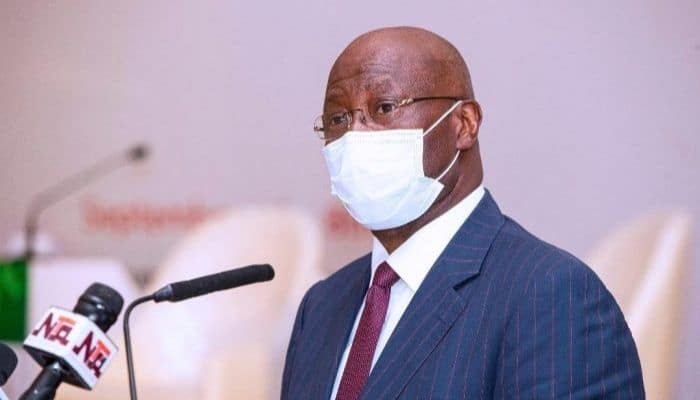
The Chairman of Presidential Steering Committee (PSC) on COVID-19 pandemic, and Secretary to Government of the Federation (SGF) Boss Mustapha, on Monday, announced the addition of South Africa to the list of countries from where travellers are banned because of the growing cases of COVID-19 in the country.

Mustapha made the announcement during a media briefing of the Committee in Abuja.

It could be recalled that the Federal Government had in May handed a similar ban on travellers from India, Brazil and Turkey over similar concerns.

He said: “A few weeks ago, we announced additional measures to be met by passengers arriving from Brazil, Turkey and India. This action was due to the prevalence of variants of concern and the dangers associated with the importation of the such virulent strain.

“The PSC has been reviewing these restrictions and is of the opinion that they should remain for another four weeks before it is further reviewed. South Africa, has, however, been added to this category once more.

“In addition to these three countries, the PSC has also shifted its focus on some African countries. South Africa, Zambia, Rwanda, Namibia and Uganda fall in this category.

“South Africa for example, recorded over 100, 000 cases in the last one week while 20,000 was recorded in the last 24 hours. The four major variants of concern are now classified as Alpha (UK), Beta (SA); Gamma (Brazil) and Delta (India).

“The Delta variant which has wreaked devastating havoc is not yet found in Nigeria hence the need to tighten our borders and be more vigilant.”

Concerning Emirates flights in and out of Nigeria, he noted that: “In all circumstances, however, conditions placed on such flights must conform with international civil aviation standards and must not be discriminatory and must respect our sovereignty.”

While noting that the PSC has escalated surveillance and risk communication, he added that it has similarly paid close attention to the issue of vaccination, especially matters relating to access and acquisition of vaccines.

The SGF urged members of the public not to lower their guards yet because of continued spikes in some countries (including African countries) and the emergence of variants of concern in several jurisdictions where the third wave has occurred.

Speaking on violators of COVID-19 travel protocol, he stated: “About six months ago, following the violation of protocols by some inbound passengers to Nigeria, travel documents were barred for a period of 6 months.

“We have received several appeals from those affected while we counselled on the importance of compliance with rules and regulations.

“The six-month period of ban for the first batch of 100 is almost complete and we use this opportunity to reassure Nigerians that sanctions will be imposed on violators of measures put in place to protect them and safeguard our nation.

“You will recall that Nigeria introduced the first international travel portal in September last year to facilitate the travel protocols. Following observations by users, the PSC took steps to improve the performance of the travel portal so as to ease the bottlenecks experienced by travellers.”

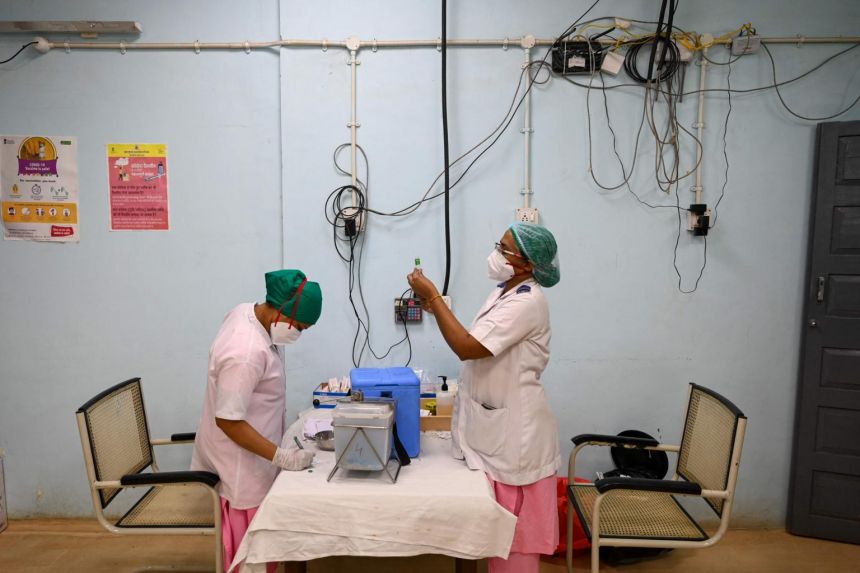
“Additional improvements have been recorded. The vaccination programme has progressed into the second phase for those who took the first jab. However, the sources and access to vaccines constitute major challenges given the developments in India, the attendant scarcity and the rise of vaccines nationalism.

“The PSC through the NPHCDA has continued to intensify efforts to acquire vaccines for the next phase.

“For over six months Federal Government employees on GL 12 and below have been observing work-from-home instructions. This restriction remains in place until further notice in order to avert a third wave.”

By John Chukwu…

June 29, 2021 0 comments
0 FacebookTwitterPinterestThreadsBlueskyEmail
Headlines

Do you know Government Interventions In Agriculture May Not Yield Any Positive Result?

by Leading Reporters May 22, 2021
written by Leading Reporters

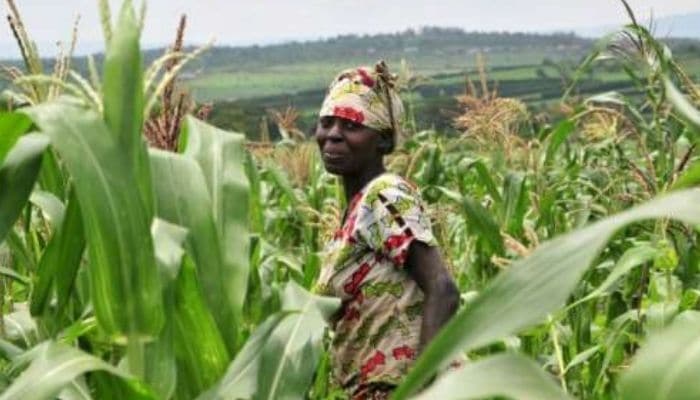
That scares right? Nigeria Governments at Federal and State levels are desirous of feeding its exploding population and earn from export.

But all that may still equal zero despite hundreds of Billions of Naira Government has plunged into agriculture through NIRSAL/CBN. 

Have you wondered why despite all the intervention policies, prices of food are skyrocketing and shortage of food still persist? The answer is simple. Government is facing only a side of what needs to be done. We’re just scratching around the solutions. We’ve not fully delved into the solutions proper.

Perennially, our interventions have been that of brigade-approach without proper and result-oriented planning. We are trying to grow AGRIC sector without efforts at growing the technology that drives the desired growth.

I’m awed at how much India is leveraging technology to solve most of its problems. We just tidied up a two-week training on Disruptive Agri-Tech Initiatives, sponsored by African Asian Rural Development Organization New Delhi and National Institute for Micro Small and Medium Enterprises NiMSME Hyderabad.

It was 8 days of interactive session with presentation from some of the best tech-companies in India.  Today, you can have a clue of what the next farming season looks like vis-a-vis the soil texture, weather condition,  your farm vulnerability in terms of pest and bacterial attack and what the yield will look like even before you till the ground.

There are other simple technology in form of Apps that can increase growth by over 40%. Indian rural farmers are becoming players in the international market and export. All thanks to disruptive Agri-Tech and many interventions by the Indian Government. Agric sector contributes over 21% of Indian export of these AGRIC produce are coming from rural farmers in India.

In Nigeria, the Government is doing great in supporting farmers with low interest loans ans other forms of intervention policies. But Government intervention in Agri-Tech is almost zero. Most of the start-ups in Agri-Tech are private sector driven and they’re walking okay silken soft thread, all by themselves. 

21st century is a technology-driven century. Billions of Dollars intervention in agric will equate nothing if there’s no technology driving growth in AGRIC sector.

May 22, 2021 0 comments
0 FacebookTwitterPinterestThreadsBlueskyEmail
Africa & World

Global Covid-19 vaccine crisis sends ominous signal for fighting climate change

by Leading Reporters May 7, 2021
written by Leading Reporters

The stark gap in vaccination rates between the world’s rich and poor countries is emerging as a test for how the world responds to that other global challenge: Averting the worst effects of climate change.

Of the more than 1.1 billion vaccinations administered globally, the vast majority have gone into the arms of people who live in the wealthiest countries. The United States, where nearly half the population has received at least one dose, sits on millions of surplus doses, while India, with a 9 per cent vaccination rate, shatters records in new daily infections. In New York City, you hear cries of relief at the chance to breathe free and unmasked; in New Delhi, cries for oxygen.

The vaccine gap presents an object lesson for climate action because it signals the failure of richer nations to see it in their self-interest to urgently help poorer ones fight a global crisis. That has direct parallels to global warming. Poor countries consistently assert that they need more financial and technological help from wealthier ones if the world as a whole is going to avoid the worst consequences of climate change. So far, the richest countries – which are also the biggest emitters of greenhouse gases – haven’t come up with the money.

More immediately, this year’s vaccine shortages in the nations of the global South could hinder their ability to participate in the United Nations-led climate talks in Glasgow set for November, minimising their voice in critical policy decisions about how to wean the global economy away from fossil fuels.

“Equity is not on the agenda,” said Gregg Gonsalves, assistant professor of epidemiology at the Yale School of Public Health and a veteran activist for global access to AIDS drugs. “If we can’t do it for the worst pandemic in a century, how are we going to do it for climate change?”

The case for sharing technology

Prof Gonsalves is among those who favour waiving drug-company patents for Covid-19 vaccines, sharing technology with vaccine manufacturers and ramping up production around the world. Pharmaceutical industry groups and their backers in the White House have opposed freely sharing intellectual property with rival drugmakers, and some in the administration have argued that vaccine raw materials are needed for production of vaccines for Americans.

India has pushed to relax Covid-19 vaccine patents and United States export rules on vaccine raw materials to allow Indian companies to ramp up production. In Brazil, several lawmakers have recently sought to suspend patents for Covid-19 vaccines and medicines. The US has so far blocked efforts at the World Trade Organisation to relax patent rules.

Of course, the devastation of the pandemic in countries like Brazil and India can’t be laid at the feet of rich-world patent holders alone.

Brazil’s right-wing populist president, Mr Jair Bolsonaro, scorned public health guidance and insisted that lockdowns and mobility restrictions would be a bigger threat to the country’s weak economy. Brazil now has one of the world’s highest death tolls and its economy is in tatters.

India’s right-wing populist prime minister, Mr Narendra Modi, who earlier this year boasted of conquering the virus, allowed large religious and political gatherings. And instead of securing vaccines for India’s 1.4 billion citizens, India began exporting Indian-made doses to other countries. Today, India has become the worst-hit country in the world, with close to 380,000 new infections daily over the past seven days.

The long-running global battle over intellectual property rights to medicines has a parallel to climate action, too, with the Paris climate agreement explicitly calling for the transfer of technology to develop clean energy infrastructure. Developing countries have long said they cannot cope with the effects of climate change if the rich world does not share money and technology, and that problem is only made more acute by the economic collapse brought on by the pandemic and the inequitable access to vaccines.

Not least, the consequences of global warming are unequal, hurting the poorest people in poor countries hardest.

“If this is the way rich countries conducted themselves in a global crisis – where they took care of their own needs first, took care of companies, did not recognise that this is an opportunity to reach out and demonstrate solidarity – then there’s no good track record for how they will conduct themselves in the face of other global crises, such as the climate crisis, where poorer countries will bear the highest burdens,” said Mr Tasneem Essop, a former government official from South Africa who is now executive director of Climate Action Network, an advocacy group.

Money is at the heart of the distrust.

The Biden administration promised to double grants and loans to developing countries to US$5.7 billion (S$7.6 billion) a year, a target that is widely seen as both insufficient and lagging behind the pledges of other wealthy industrialised nations, notably in Europe. Many low- and middle-income countries are carrying so much debt, they say it leaves them nothing left to retool their economies for the climate era. In addition, the rich world has yet to fulfill its promise to raise US$100 billion a year that could be used for green projects, whether solar farms or mangrove restoration.

“In both cases, it’s about a willingness to redistribute resources,” said Ms Rohini Pande, a Yale University economist.

In the case of coronavirus response, it’s about helping vaccine makers around the world manufacture billions of doses in a matter of months. In the case of climate change, huge sums of money are needed to help developing countries retool their energy systems away from dirty sources like coal.

The next few weeks will be critical, as world leaders gather for meetings of the seven richest countries, the Group of 7, in June and then of the finance ministers of the world’s 20 biggest economies, the Group of 20, in July. Those meetings will then be followed by the UN-led climate negotiations in Glasgow in November.

Those negotiations, known as the 26th Conference of the Parties to the Paris Agreement, or COP26, to a significant degree could determine whether the world can slow down the rate of warming that is already causing Arctic ice melt, worsening wildfires and other crises. At that meeting, countries big and small are set to present more ambitious plans to keep the average global temperature from rising past 1.5 degrees Celsius compared with preindustrial times.

“We will not have a successful outcome at COP26,” said Ms Christiana Figueres, a former UN climate diplomat who helped negotiate the Paris Agreement in 2015, “unless we have financial commitments that are commensurate with the impacts that many developing countries are feeling.”

credit: .straitstimes.com

May 7, 2021 0 comments
0 FacebookTwitterPinterestThreadsBlueskyEmail
Opinion

Nigeria’s perennial recession; a result of policy somersault.

by Leading Reporters May 1, 2021
written by Leading Reporters

Nigeria will predictably be in recession for a long time. When you keep doing the same thing and expect different results, you will need to check yourself. It appears we are not in a hurry to live in the reality of the 21st century with others.

I sometimes wonder why we like to put the cart before the horse as a country. There  has never been a time when we did anything that was not opposite of what everyone else was doing. Fundamental economics teaches that before you stop importation, you need to have put in place import substitution strategy, and get them working properly before attempting any grandstanding.

Then again, timing is very important in making policy decisions. You cannot wake up from the wrong side of the bed and declare things banned. It is as insensitive as it is unconstructive.  People have often questioned the reasons for some government policies in Nigeria.

What is more heart breaking is where some ‘supporters’ get the kind of shameless illiteracy with which they defend retrogressive policies. Let us start with the Covid-19 decisions of the government.  As the pandemic was biting hard, incomes were shrinking. That was when we suddenly woke up to ban in a commando style,  a whopping 41 imported items, among which were foodstuff and other consumer goods critical to every day survival.

That is not all o. The people were losing jobs in droves. That means that purchasing power was falling rapidly and the country trapped itself in stagflation. Prices were skyrocketing and there was no purchasing power in the hands of the people. To my surprise, some people who I thought ‘know book’ were  just falling my hands in the halleluyah praise singing in honour of the courage with which the government was ‘tackling’ the economy. We would argue it until I had a headache. At some point I couldn’t tell if it was the argument that caused the headaches or the useless virus that trapped all of us in our homes.

Puerile arguments were advanced in support of the government. I took a look at my then none months old baby and asked her if at that age she could disgrace her father by saying such a meaningless thing. One of the headless statements was that China closed their borders and started agriculture. And boom! They became greater, the China you know today. I was torn between laughter and sorrow. 

The story that they did not verify is that China’s maximum ruler, chairman Mao Zedong, threaded the communist path. He closed the boarders and decided on a pilot execution of certain apocryphal economic policies. He closed the Chinese borders to neighbouring countries. And then starvation set in.

Chairman Mao’s decision led to one of the most catastrophic man made starvation in human history which left between 15 to 55 million people dead, and hundreds of people malnourished. That happened between 1959 and 1961. Zedong had no choice but to immediately take steps to reverse the policy.

But ridiculously, that policy was what Zedong called the Great Leap. By 1962, China having seen nwe, reversed themselves and opened their borders. They started an industrialization policy that embraced the domestication of technology. They started to produce for export.

It is the same as Nigeria’s great leap that happened in the midst of a world wide devastation. But wait, who exactly did Nigerians offend that is so unforgiving? Nigeria wanted to leap. Two things happened. She leaped in the darkness of a pandemic with its eyes wide shut! Where did we land? In a circle of inflationary pressures.

First, we ought to have had a solid import substitution plan before talking of shutting down importation. We do not have mechanised agriculture. We want to produce rice for a population of 200 million people with hoes and cutlasses on an unyielding soil. We have no reservoirs where we store excess grains for time of scarcity. What am I even saying, we do not even have enough. Where are we getting the excess from? We might as well be wasting money building silos.

Even the ones planted are being eaten by the holy cows. Private investors in agriculture have had their farms vandalised by cattle which roam across the country. The famine loving government has encouraged the increased devastation of the farms by failing to call the vandals and bandits to order.

People have abandoned the farms and run away to join the army of the hungry parading the streets in the cities to hustle for the little that’s available. That’s a double whammy. No money and the prices of food are high.

The north east and north west of Nigeria used to be the producer of grains and spices. But not anymore. Boko Haram has killed and maim many a farmer, destroyed promising Micro, Small and Medium Scale businesses like sales of rice, onions, fish etc that accompany farming. They have turned large swaths of thriving villages and towns into desolate, uninhabited lands. The best you get in such places in Borno, Yobe and environs are Internally Displaced People’s camps. Even when those at the camps Internally Displaced People’s camps. Even when those at the camps attempt to do little fishing here and farming there, they are traced to the camps and killed. The survivors have become dependent on the lean resources instead of the contributors that they used to be.

On all fronts, Nigeria is scoring abysmally low. In the midst of the confusion called policy, the youths decided to make themselves happy by trading in cryptocurrencies.  The government, like the proverbial village people, followed them there and blocked the channel.

Foreign exchange from that sector has been blocked. This is while the entire world is running towards digital currencies o. Big companies have started accepting Bitcoin as payment for their products, the risks not withstanding. Tesla is a major example. Nigeria nko? They banned it. This is digital currency. Then we have a Digital Economy ministry which knows next to nothing about how to rein in the volatility of digital currency. And some bishops, youths etc had the effrontery to carry placards under the hot Abuja sun to assault our collective intelligence that Pantami is doing well as the head of that ministry.

Nigeria will continue in this damnable trajectory unless things change from the anachronism it has adopted as a state policy to what the world has embraced. The worldview of the government is annoyingly too narrow.

May  Nigeria quickly realise that like the ostrich, it is burying its head in the sand while the entire body is outside. Very soon we will be forced to look inwards. The increase in prices are eroding profits and people are getting thrown out of jobs. The current unemployment rate in Nigeria is 33%. Nigeria is among the first three most terrorised country in the world. Nigeria took over from India as the poverty capital of the world in 2019, according to the Austria based World Poverty Clock and The World Bank in separate reports, with 1 person sliding into abject poverty every six minutes.

To be continued.

Alex Agbo is a writer and an economic researcher based in Lagos.

May 1, 2021 0 comments
0 FacebookTwitterPinterestThreadsBlueskyEmail

Recent Posts

  • Tinubu Nominates Ex-CDS Christopher Musa As Defence Minister

    December 2, 2025
  • Poor Toilets Driving GBV, School Dropouts – Wateraid

    December 2, 2025
  • BREAKING: FG Publishes List of 15 Alleged Terrorist Financers in Nigeria [SEE LIST]

    December 1, 2025
  • FG Proposes 40% Salary Increase for ASUU Lecturers

    December 1, 2025
  • Northern Governors Host Emergency Meeting Over Escalating Security Concerns

    December 1, 2025

Usefull Links

  • Contact Page
  • About Leading Reporters
  • Contact Us
  • Headlines
  • Investigation
  • Exclusives
  • Opinion
  • Business
  • Facebook
  • Twitter
  • Instagram
  • Linkedin

@2021 - All Right Reserved. Designed and Developed by PenciDesign


Back To Top
Leading Reporters
  • Featured
  • Politics
  • Opinion
  • Business
  • Entertainment
  • Sports
  • About Us
  • Contact