Leading Reporters
  • Headlines
  • Health
  • Business
  • Exclusives
  • Investigation
  • Entertainment
  • Opinion
Tuesday, January 27, 2026
Hot
FCTA Workers, NLC Storm Industrial Court, Demand Wike...
DisCos reject FG’s free meter plan
Nigerian-born nurse loses licence in Australia for sleeping...
BREAKING: Kano Gov Abba Yusuf dumps NNPP
National Grid Collapse For First Time in 2026
BREAKING: Tinubu approves posting of Ambassadors to U.S.,...
Insecurity: Kidnappers demand 17 motorcycles for release of...
FG to Abolish Hnd-Degree Dichotomy, Allow Polytechnics to...
AFCON Initiative drives stronger Nigeria Morocco cooperation
Obasanjo: I’ll Never Stop Having Children
  • About Leading Reporters
  • Contact Us
Leading Reporters
Advertise With Us
  • Headlines
  • Health
  • Business
  • Exclusives
  • Investigation
  • Entertainment
  • Opinion
Hot
FCTA Workers, NLC Storm Industrial Court, Demand Wike...
DisCos reject FG’s free meter plan
Nigerian-born nurse loses licence in Australia for sleeping...
BREAKING: Kano Gov Abba Yusuf dumps NNPP
National Grid Collapse For First Time in 2026
BREAKING: Tinubu approves posting of Ambassadors to U.S.,...
Insecurity: Kidnappers demand 17 motorcycles for release of...
FG to Abolish Hnd-Degree Dichotomy, Allow Polytechnics to...
AFCON Initiative drives stronger Nigeria Morocco cooperation
Obasanjo: I’ll Never Stop Having Children
Leading Reporters
Leading Reporters
  • Headlines
  • Health
  • Business
  • Exclusives
  • Investigation
  • Entertainment
  • Opinion
Copyright 2024 - All Right Reserved
Home > Independent National Electoral Commission (INEC)
Tag:

Independent National Electoral Commission (INEC)

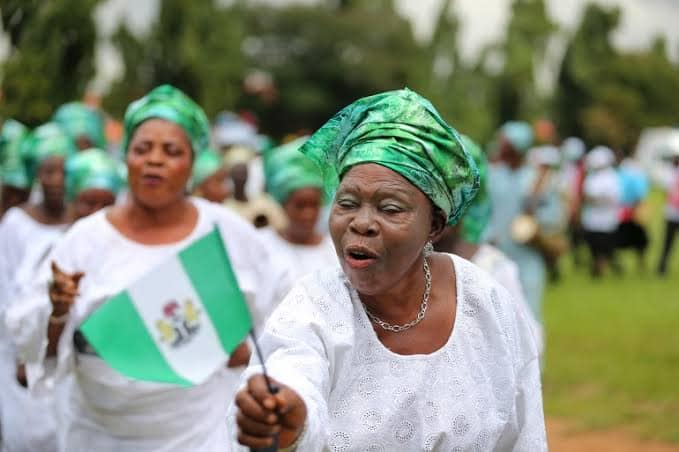
Leading Reporters Nigeria doesn’t need government of national unity Image
HeadlinesOpinion

Nigeria doesn’t need government of national unity

by Leading Reporters March 19, 2023
written by Leading Reporters

By Tonnie Iredia

Between Saturday, February 25, 2023 when the presidential and national assembly elections were held in Nigeria and today, the mass media have been replete with calls for the next president to compose a government of national unity (GNU).

The argument is that such a strategy could calm frayed nerves and create some measure of unity between winners and losers of elections.  However, an overview of elections in Nigeria does not reveal the commitment of our politicians to national unity.

What history seems to attribute to them is the propensity to always get into one office or the other only to perpetrate their hobby of primitive appropriation and accumulation of public funds. In which case, the call for unity government which is usually instigated by the political class is essentially to keep on course opportunities for their personal gains.

 
For example, in 2003, when General Muhammadu Buhari the then presidential candidate of the defunct All Nigeria Peoples Party ANPP was at the middle of an election petition to claim his mandate, officials of his party were scrambling to share the few positions allocated to their party in the government of national unity instituted by the victorious PDP.

The greedy officials neither put their presidential candidate into confidence nor did they follow the guidelines of the party for aligning with another party. The decision to be part of the so-called unity government was made by the party officials whose basic motivation was the material benefit they looked forward to from the arrangement.

In 2007, many of those who accused President Olusegun Obasanjo of a third term ambition were leading politicians from outside the PDP who had hoped that the third term government would be that of national unity that would include them.  In 2011, opposition parties didn’t show much interest in Goodluck Jonathan’s proposed unity government but ample background work was done concerning the idea.   
 
One of the pillars of democracy is majority rule. Consequently, good democrats have no business in a government formed by a political party to which they do not belong. Except a political system provides for proportional representation in which seats in the legislature are awarded to political parties in proportion to their strength in an election, government of national unity is unnecessary.

It is only in Nigeria where politicians seek to function as permanent state actors that those who lost elections always agitate for a government of national unity. After 24 years of continuous democratic rule, it is time for Nigerian politicians to grow up and allow the majority party to form a government which should be placed on its toes by a viable opposition. Otherwise, we shall continue to have a pseudo-democracy in which everyone bows to a ruling party so as to be appointed into some government position. It is for the same reason that the 9th national assembly under the guise of collaborative federalism functioned all through from the pocket of the executive.   
 
Luckily for our commercial politicians, the so-called victorious parties are always favourably disposed to the institution of a government of national unity because the acclaimed winners feel the way out is to placate owners of stolen mandate. Indeed, in many constituencies in the past, votes were swapped to make losers become winners while in some other locations, election results were simply procured for polling booths where voting did not happen.

Following the failure to put a halt to election rigging, it will certainly be difficult to stop the agitation for government of national unity. It is true that smooth talkers who can fluently defend our bogus elections abound in the nation but such partisan orators often look at election rigging from a narrow perspective.

Those who give pass marks to INEC and the election process often focus on the pictorial display of election materials arriving in different states in the country; orderly queuing and ballot casting in voting centres and the beautifully adorned conference centre where results are cosmetically finalized.
 
If the truth must be told, Nigerian elections have not been good. Our people should not allow themselves to be misled by the diplomatically coated reports of international election monitors and observers. What should always be noted is the unending caution which the same observers always put in an idiom that “the devil of Nigeria’s elections is in the details.”

What this idiom means is that Nigerian elections look simple on the surface but the details are usually convoluted and problematic. Our elections are likely to remain knotty if we continue to overlook the fraudulent details of the collation of results that are hurriedly declared with fanfare. Of course if the right process is followed, we could easily move one step away from incessant and selfish calls for government of national unity after every election. Such a trend would ensure good elections which are more likely to produce visionary leaders that would initiate and implement good public policies capable of improving the living standards of the people
 
The point that is being made is that what can best unite a given society is good governance and not the struggle for power by politicians. This presupposes that those declared winners of elections must be prepared to bring on board only persons who can add value to governance. Whereas a new president is free to appoint some of his supporters into his government, such appointees must first and foremost be visibly capable of doing the job.

Critical offices ought not to be used just for rewarding party supporters. A new president or governor must remember that many people who voted for them are not necessarily members of their party. In other words, being a member of the victorious party should essentially serve as an added advantage for appointing people. Governance is a tough task that requires the best hands, otherwise success may be hard to achieve.
 
In the case of heterogeneous societies such as Nigeria, the old order of emphasis on state of origin should change to a clear understanding of the expedience of good management of diverse cultures. One reason Nigeria wins more awards in sports than governance is because only the very best find their way into our sports teams while everyone no matter their visible deficiencies get into our governance teams. Today, Nigeria does not have a state which lacks strong hands, why not bring into government the best hands of every state as a double advantage that reduces the cry of marginalization and enhances the quality performance of officials? Nothing else can engender unity more than such an inclusive approach to governance which was in the first instance the framework which the federal principle in our constitution was designed to achieve. 
 
Nigeria had in the 1970s worked assiduously towards national unity by formulating strategic policies such as the National Youth Service Corps programme. Until quite recently, the NYSC served as tool for national unity and integration. But like many Nigerian policies, most of the lofty ideas of its founders have been greatly diluted.

The federal character principle on its part has been politicised and poorly managed. In fact, the commission which was set up to ensure the smooth implementation of the principle by other societal institutions has itself been found wanting in upholding the same principle. This is where elected leaders should pay greater attention to because what the nation desires is unity among its disparate groups and not the class unity which the politicians harp upon.  
 
In summary, Nigeria is in dire need of national development which can only be attained through the instrumentality of visionary leaders that are freely elected by voters. For this to happen, ruling parties must stop appointing partisan officials into INEC that is supposed to be an impartial umpire.

The electoral process must be credible and not the charade we watched on national television during yesterday’s governorship and houses of assembly elections in well-known volatile areas like Lagos. Painfully, the credibility of our security agencies who had earlier read riot acts while claiming to be battle ready to stop all disruptions was rubbished.  If this culture of electoral malpractices continues, government of national unity as a damage control strategy cannot help Nigeria to grow.
 
March 19, 2023

March 19, 2023 0 comments
0 FacebookTwitterPinterestThreadsBlueskyEmail
Leading Reporters INEC lied, documents show APC candidate on CAC filing of firm awarded contract to print sensitive election materials Image
Headlines

INEC lied, documents show APC candidate awarded contract

by Leading Reporters March 17, 2023
written by Leading Reporters

The Independent National Electoral Commission (INEC) lied in its claim that APC governorship candidate Aishatu Dahiru was not listed as a director in Binani Printing Press, a company awarded the contract of printing sensitive election materials, Leading Reporters can confirm.

According to documents seen by Leading Reporters, Ms Dahiru alias Binani, who is running for governor in Adamawa on the platform of the All Progressives Congress (APC), is named as a director of Binani Printing Press with RC-816807,No 17 Atiku Abubakar Road Jimeta, Adamawa Yola and established on May 11 2009.

On Thursday, INEC defended the deal with Binani Press, insisting the commission was certain the printing press could deliver following an inspection of the company’s facility and the completion of additional due diligence by the Corporate Affairs Commission.

“After inspecting the company’s facility and carrying out due diligence at the Corporate Affairs Commission (CAC), the Commission was satisfied that they are qualified printers with the requisite technical capacity, security consciousness and expertise in printing security documents,” INEC had claimed in a statement on Thursday.

It then issued a verdict, declaring, “Aishatu Dahiru Ahmed was not listed as one of the Directors of Binani Printing Press Limited.” 

INEC lied, documents show APC candidate on CAC filing of firm awarded contract to print sensitive election materials

INEC issued the statement after a Sahara Reporters’ story that uncovered how Nigeria’s electoral body awarded a N434 million election materials printing contract to a company owned by Ms Dahiru, incumbent senator of Adamawa Central.

The documents revealing the company’s records and expressly naming Ms Dahiru as a director have cast aspersions on INEC’s statement and further tainted the commission’s credibility to conduct free and fair elections in Nigeria, particularly under the leadership of its current chair, Mahmood Yakubu.

The electoral commission’s spokesman Festus Okoye did not immediately respond to telephone calls to seek comments on the CAC findings.

March 17, 2023 0 comments
0 FacebookTwitterPinterestThreadsBlueskyEmail
Leading Reporters INEC move to reconfigure BVAS for gubernatorial elections Image
Headlines

Confusion as INEC reconsider March 11 Election date

by Leading Reporters March 8, 2023
written by Leading Reporters

The Independent National Electoral Commission (INEC) is considering the postponement of this weekend’s Governorship elections nationwide.

Though the commission has not announced the postponement officially, sources said the body may have agreed to shift the election to March 18, 2023.

Already, INEC chairman, Prof. Mahmood Yakubu is currently in a closed-door meeting with the National Commissioners and others.

The meeting was said to have begun around 7.00pm on Wednesday.

The meeting might not be unconnected with this weekend’ governorship election nationwide.

Sources said the planned postponement is due to the Commission’s inability to promptly commence reconfiguration of the Bimodal Voter Accreditation System (BVAS) machines utilized during the February 25 presidential election to enable their use in the state elections.

The commission was earlier restrained from tampering with the information embedded in the BVAS machines until the due inspection was conducted and Certified True Copies (CTC) issued to candidates who are challenging the outcome of the presidential election.

March 8, 2023 0 comments
0 FacebookTwitterPinterestThreadsBlueskyEmail
Leading Reporters Six States Ask Supreme Court To Cancel Presidential Election Image
Headlines

Supreme Court to abrogate presidential election

by Leading Reporters March 3, 2023
written by Leading Reporters

Adamawa, Akwa-Ibom, Bayelsa, Delta, Edo and Sokoto states have dragged the Federal Government before the Supreme Court over the conduct of the February 25, 2023 presidential and National Assembly elections.

The suit filed by the Attorneys General of the six states has the Attorney General of the Federation as sole respondent.

The plaintiffs on February 28 predicated their case on the grounds that, “The collation of the national election results from the 36 states of the Federation, and that of the Federal Capital Territory, for the said 2023 presidential and National Assembly elections have not been carried out in compliance with the mandatory provisions of relevant sections of the Electoral Act, 2022; the INEC Regulations and Guidelines for the Conduct of Elections, 2022, made pursuant to the provisions of the Electoral Act, 2022; and the INEC Manual for Election Officials, 2023.”

In the suit filed by their lawyer, Mike Ozekhome, SAN, the states said the agents and officials of the Federal Government and INEC failed to transmit the collated result as prescribed by the provisions of the Electoral Act, 2022; the INEC Regulations and Guidelines for the Conduct of Elections 2022; and the INEC Manual for Election Officials requiring transmission of the results by the use of Bimodal Voter Accreditation System in flagrant breach of the relevant provisions of the Electoral Act, 2022; the INEC Regulations and Guidelines for the Conduct of Elections, 2022; and the INEC Manual for Election Officials, 2023.

They stated that, “non-compliance with the due process of law has led to a widespread agitation, violent protests, displeasure, and disapproval from a wide spectrum of the Nigerian populace, including international observers, political parties, well-meaning Nigerians and former Head of States of the Federal Republic of Nigeria”.

The plaintiffs argued that the federal government through INEC, “is empowered by law to correct the elections due to technical glitches and errors arising from the conduct of the elections with substantial effect on the electoral process in line with the provisions of Section 47 (3) of the Electoral Act, 2022; and other relevant sections thereof.

“Whilst queries were being raised as to the failure or deliberate refusal of INEC to transmit the results electronically, INEC suddenly pulled down its portal harbouring the Regulations and Guidelines, thus leaving the plaintiffs in the dark

“Most Nigerians, including the governments and peoples of Adamawa State, Akwa Ibom State, Bayelsa State, Delta State, Edo State, and Sokoto State, are entitled to a proper and electoral lawful process and procedure that guarantees a free, fair, transparent and credible election”.

Amongst the issues raised for determination by the apex court were: Whether having regard to the provisions of the Electoral Act, 2022, governing the 2023 nationwide general elections, particularly paragraphs 38 of the INEC Regulations and Guidelines for the Conduct of Elections, 2022; and paragraphs 2.8.4; 2.9.0; and 2.9.1 of the INEC Manual for Election Officials, 2023 thereof, the electronic transmission of votes collated at polling units and the use of the Bimodal Voter Accreditation System (BVAS) in the transmission of collated result is made mandatory.

“Whether the Federal Government of Nigeria through presiding officers of its executive body, Independent National Electoral Commission was bound to electronically transmit or transfer Polling Unit Results in Form EC8A using BVAS by uploading Scanned Copy of the said Unit Results to the Independent National Electoral Commission Result Viewing Portal (IReV) in the course of the General Elections held on the 25th of February, 2023 throughout the Federation.

“Whether the Federal Government of Nigeria in the recently held Presidential and National Assembly elections conducted nationwide on 25th February, 2023 through INEC, complied with the mandatory provisions of extant laws, INEC Regulations and Guidelines for the Conduct of Presidential Elections, 2022″.

“Whether the failure of the Federal Government of Nigeria through the Defendant and INEC to electronically transmit or transfer Polling Unit Results in Form EC8A using BVAS by uploading Scanned Copy of the said Unit Result to the Independent National Electoral Commission Result Viewing Portal (IReV) after the counting and announcement of the Polling Units results on 25th of February, 2023, violates the provisions of Sections 25; 47(2); 60 (1), (2), (4) & (5); 62; 64(4)(a) & (b); 70; and 148 of the Electoral Act, 2022, governing the 2023 nationwide general elections, particularly paragraphs 38 of the INEC Regulations and Guidelines for the Conduct of Elections, 2022; and paragraphs 2.8.4; 2.9.0; and 2.9.1 of the INEC Manual for Election Officials, 2023, for the conduct of the presidential election.

“Whether the failure of the Federal Republic of Nigeria through INEC to comply with the provisions of Section 60 of the Electoral Act, 2022 and the Regulations and Guidelines for Conduct of Elections, 2022 made pursuant to the Electoral Act and the Constitution of the FRN, 1999, as amended, in collating and announcing the results of the Presidential and National Assembly Elections render the already announced results and the elections conducted as a whole a nullity”.

“Whether the entire results of the presidential election conducted on the 25th of February, 2023, as announced by the Chairman of INEC at the National Collation Centre, Abuja in flagrant provision of Sections 25; 47(2); 60 (1), (2), (4) & (5); 62; 64(4)(a) & (b); 70; and 148 of the Electoral Act, 2022, governing the 2023 nationwide general elections, particularly paragraphs 38 of the INEC Regulations and Guidelines for the Conduct of Elections, 2022; and paragraphs 2.8.4; 2.9.0; and 2.9.1 of the INEC Manual for Election Officials, 2023, for the conduct of the Presidential Election, were valid.”

The plaintiffs urged the apex court to declare, “that the Federal Government of Nigeria, through INEC was bound to electronically transmit or transfer Polling Unit Results in Form EC8A using BVAS by uploading Scanned Copy of the said Unit Result to the Independent National Electoral Commission Result Viewing Portal (IReV) in the course of the General Elections held on the 25th of February, 2023 throughout the Federation in compliance with the provision of Sections 25; 47(2); 60 (1), (2), (4) & (5); 62; 64(4)(a) & (b); 70; and 148 of the Electoral Act, 2022, governing the 2023 nationwide general elections, particularly paragraphs 38 of the INEC Regulations and Guidelines for the Conduct of Elections, 2022; and paragraphs 2.8.4; 2.9.0; and 2.9.1 of the INEC Manual for Election Officials, 2023, for the conduct of the presidential election.”

They are seeking “A declaration that the entire results of the Presidential Election conducted on the 25th of February, 2023 announced by the Chairman of INEC at the National Collation Centre, Abuja, in flagrant violation of the provisions of Sections 25 of the Electoral Act, 2022, governing the 2023 nationwide general elections, particularly paragraphs 38 of the INEC Regulations and Guidelines for the Conduct of Elections, 2022; and paragraphs 2.8.4; 2.9.0; and 2.9.1 of the INEC Manual for Election Officials, 2023, for the conduct of the Presidential Election, were invalid, null and void, and of no effect whatsoever.

“A declaration that the fundamentally flawed electoral process through the non-uploading of the results of each of the 176,974 Polling Units nationwide, in respect of the presidential election and National Assembly Elections held on Saturday, 25th February 2023 were not in accordance with the provisions of Sections 25; 47(2); 60 (1), (2), (4) & (5); 62; 64(4)(a) & (b); 70; and 148 of the Electoral Act, 2022, governing the 2023 nationwide general elections, particularly paragraphs 38 of the INEC Regulations and Guidelines for the Conduct of Elections, 2022; and paragraphs 2.8.4; 2.9.0; and 2.9.1 of the INEC Manual for Election Officials, 2023, for the conduct of the presidential election.

“The plaintiffs also brought an application praying the apex court for an order directing a departure from the rules of the apex court in the interest of justice by directing for accelerated hearing of the substantive suit. Besides, plaintiffs also filed another application seeking for an order for abridging time for parties to file and serve responses for and against the suit. No date has been fixed for hearing.

March 3, 2023 0 comments
0 FacebookTwitterPinterestThreadsBlueskyEmail
Headlines

INEC Identifies 2.7 Million Unqualified Registered Voters

by Folarin Kehinde November 18, 2022
written by Folarin Kehinde

The Independent National Electoral Commission, on Thursday, at the end of Automated Biometric Identification System, identified 2,780,756, as the number of ineligible registrants in Kano State.

The new Resident Electoral Commissioner in Kano, Zango Abdu, during a meeting with members of election stakeholders said at the end of the exercise, 12,298, 944 Nigerians successfully completed the registration as new voters.

He said, “The preliminary register of voters in Kano State currently stands at 5,927,565.

“It is preliminary because Section 19 (1) and (2) of the Electoral Act 2022 requires the Commission to display the hard copies of the register of voters for each registration area (Ward) and Local Government Area (and simultaneously publish the entire register on the Commission’s website) for a period of two weeks for scrutiny, claims and objections, by citizens not later than 90 days to a general election.”

Also, the REC reiterated that the commission, as mandated by law, would continue to monitor the activities of political parties, as well as track the campaign finances of all political parties as provided by Sections 83, 85, 87, 88, 90, 91,92 and 95 of the Electoral Act of 2022.

To this end, he urged politicians to critically study and pay attention to the provisions of the constitution, the Electoral Act, The Police Act and Public Order Act for the proper and peaceful conduct of political party campaigns, rallies and processions, adding that the commission would continue to track the campaign finances and its activities, as mandated by the law.

Similarly, the REC stressed that there would be no going back on deployment of Bimodal Voter Accreditation System for voter accreditation and the transmission of results to the INEC Result Viewing Portal on Election Day.

On a last note, he pointed out that there would be no incident form that allowed ineligible persons to vote using other person’s Permanent Voters Card during elections.

November 18, 2022 0 comments
0 FacebookTwitterPinterestThreadsBlueskyEmail
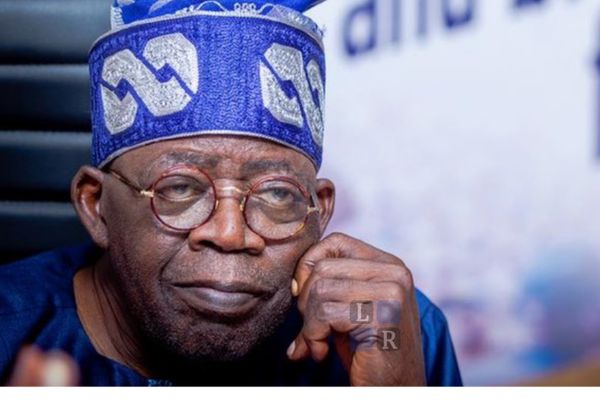
Tinubu & Obi: Reconsider your campaign posture
HeadlinesOpinion

Tinubu & Obi: Reconsider your campaign posture

by Leading Reporters November 15, 2022
written by Leading Reporters

The Independent National Electoral Commission (INEC) on September 28, 2022, formally gave an approval signal to all political parties and their candidates to embark on electioneering campaign for the 2023 general elections.

We are now in the seventh week of campaigns, but most political parties are yet to make any impact in explaining their manifestos to the public. The mundane scheme of renting a crowd for rallies is what appears to be occupying the attention of our politicians. Painfully, messages delivered at rallies and processions are characterized by merrymaking, acrobatic displays and political violence making it difficult for people to easily assimilate whatever is said at such venues.

While the abolition of rallies may not be directly advocated because they too produce unique results, rallies should not be used to discard other strategies particularly debates and public enlightenment. All candidates must spend ample time to explain their manifestos for voters to easily identify who can best represent them.

Although there have been interactive sessions with some interest groups, political broadcasts through radio and television that are designed to breakdown the promises of the candidates to the understanding of all and sundry using mass media organs ought to be prioritized in line with current global realities.

The preference for rallies is not surprising though because as history tells us, many  candidates seeking to be elected into political offices are either personally unfit or have no viable programmes to present to the public. Understandably therefore, it is getting clearer that debates which are the most potent of all political broadcasts may not hold in Nigeria this year.

Instead, our political parties are more comfortable with simple straight party talks which are never interrogated. This is because Nigerian politicians detest debates which clearly bring out visionary and knowledge-driven candidates. It has been so since 1999, as one candidate or the other gives some flimsy excuses for declining to participate.

For example, the nation waited in vain for the candidate of the then ruling Peoples’ Democratic Party (PDP) in 1999, 2003, 2007 and 2011 to participate in organized Presidential debates. The 2011 edition, took the format of drama as 3 of the candidates appeared in one debate at one platform while the then President Goodluck Jonathan undertook a one-man debate in his preferred platform. In 2019, the candidates of the two major parties including the incumbent president did not show up.

Already, the Nigerian Economic Summit Group, organizers of this year’s debates have cancelled the event. The group in an official statement said it took the decision after “a critical assessment of events surrounding recent engagements with the presidential candidates as well as subsequent statements from political parties.”

The APC had indicated during the week that its flagbearer, Bola Ahmed Tinubu might not honour invitations for debates with other candidates. In reaction, the Labour Party said its candidate, Peter Obi will no longer show up for debates if his counterparts in the other parties are not forthcoming. Certainly, Nigeria should frown at the continuation of such a retrogressive disposition.

We cannot claim to be running the presidential system of government fashioned after the American type and be avoiding political debates which the same American system have shown to be the best way to compare contestants.

In fact, the United States of America has a long history of political broadcasts; the presidential debate serving as the most popular. The practice is that three days are set aside before any presidential election for the candidates contesting the election to engage one another in a series of debates.

The debates are usually broadcast LIVE to the nation on Radio and Television. As far back as 1960, when Nigeria was only just becoming an independent country, America could boast of exciting presidential debates.  Candidate John F. Kennedy who won the American election of that year, achieved the feat because of what was generally believed to be his superior performance over his rival, Richard Nixon during the debates. Some 62 years later, Nigeria is still unable to guarantee a presidential debate because some of the candidates are anxious to cover-up some deficiencies.

Of all the parties, the APC appears to be the greatest culprit in this game of dodging debates. This is surprising because from what I knew of Tinubu when I had cause to relate with him while I ran the NTA, he was quite proactive. Why is APC shielding him from the debates? One can only hope that some ‘eye-service’ officials are not as usual doing a disservice to the man.

I recall during the Jonathan years when I ran into a forum where his officials, aides etc. spent ample time convincing him to not attend the 2015 debate simply because they believed it would give an opportunity to all other contestants to rudely relate to the then president during a debate. From my experience as an election observer across jurisdictions, I can testify that each time a candidate is absent from a debate, the conclusion of the audience is that such candidate has something to hide. This is why I call on Tinubu today to listen to the voice of a few of his admirers who support debates and use the opportunity to engage with voters. The story out there that Tinubu intends to ignore his opponents who are said to be wasting their time discussing rumours about him is a puerile route.

I recommend to the APC candidate and indeed all his fellow presidential contestants that information is power and communication is empowerment. I also call on the PDP candidate Atiku Abubakar to take advantage of the presidential debates to dwell more on his lofty promises such as his plan to strengthen ECOMOG to effectively patrol Nigerian borders and promptly halt invaders who are the alleged champions of insurgency in Nigeria.

One successful political debate is better than 5 rallies and 5 chats with some interest groups combined. As a result, candidates should displace other engagements for the debate. After all, organizers are expected to find a convenient date for all before fixing it. PDP should desist from sending a representative to whatever is called a presidential media forum as it did to the Arise Town hall meeting. And because there would also be a vice presidential forum, the running mate cannot be at all events. In any case, Arise and partners should not have allowed the representation.

In the case of the Labour Party candidate, Peter Obi, many people appear to easily reason with his new stand of not attending debates where some of his colleagues are absent. But that protocol is only good for an office-holder and not for a candidate. Having used all the events, he attends to underscore his visible competence, it would be self-stabbing for him to shoot down his strength. It is for this reason that he too needs to revisit his decision to shun any debate.

Again, it is expedient to say to all candidates that some of us and our few friends and families will not in this modern age vote for anyone who does not see the importance of persuading and convincing us about his capacity to change Nigeria’s stunted growth. We dare say that lovers of issue-based campaigns and persuasive manifestos are not as few as is usually imagined in Nigeria. Of course, candidates who will not engage in issue-based campaigns will be the very first suspects wherever there are reports of political violence at rallies or cases of vote buying and rigging of elections.

In all that has been said above in favour of political debates, Nigeria still needs to depart from the obsolete order where party attack-dogs in the name of spokespersons attack their party’s opponents. Debates should no longer be venues for abuses and every form of intemperate language. Rather, everyone must be allowed to explain what he wants to do for the country. It is the failure of Nigerians to insist on decent political debates that has made it impossible over the years for the nation to pick visionary leaders who can implement viable programmes and remove Nigeria from underdevelopment.

By Tonnie Iredia

November 15, 2022 0 comments
0 FacebookTwitterPinterestThreadsBlueskyEmail
HeadlinesOpinion

Rigging local elections in Nigeria: Where next?

by Leading Reporters August 21, 2022
written by Leading Reporters
By Tonnie Iredia  

One failed aspect of democracy in Nigeria is the conduct of elections into the country’s 774 local government councils. In most cases, the contests are handled by electoral commissions that are usually made up of cronies of the ruling party who are brought on board to ensure that their party` ‘sweeps’ the polls. Consequently, our local areas have remained undeveloped because persons that can evolve and implement viable socio-economic projects, are usually displaced through election chicanery.

Painfully, there are no visible prospects in the horizon to suggest that the trend might change soon. This completely reverses the goal of establishing a third tier of government which by virtue of its closeness to the grassroots should best meet the immediate needs of the locals. Based on this, whenever an election is fixed to hold in any local government area in the country, the expectation is that it would be rigged in favour of the ruling party.   Many have thus been taken aback by the decision of the outgoing Osun State Government to, in the guise of holding an election, instal its puppets as others do across the nation. Already, the chairman of the state electoral commission, Otunba Olusegun Oladuntan has announced October 15, 2022 for the contest across the state.

Surprisingly, his team seems to be going ahead with arrangements for the exercise not withstanding a case in court against it. As expected, the two leading political parties, the All Progressives Congress APC and the Peoples Democratic Party PDP are for and against the proposed elections respectively. While the latter alleges that the outgoing ruling APC is bent on holding the election at the eve of its departure so as to install those who can cover-up its alleged corrupt activities, the APC says for as long as governor Gboyega Oyetola’s tenure has not ended, his government has a legal right to hold local elections.  

But why did Oyetola not organize any local election until the last few weeks of his tenure? Why can’t he focus on proper handing-over notes to his successor instead of starting a fresh event at the 24th hour? Is the outgoing government unaware of the legal position that when a matter is pending in court, a notice of such matter acts as a stay of any action that may prejudice the matter in court? An objective answer to these questions would support the point that the government is anxious to empower its lackeys as alleged. Again, why is the PDP so bothered about an election that an electoral commission described as independent is proposing to conduct? While the PDP is skeptical about the performance of a tainted electoral body, would she herself not have done what the APC is about to do? If the truth must be told, the PDP only wants the election pushed forward to when her own Ademola Adeleke assumes office so that the PDP can magically ‘sweep’ the polls at that point.  

To understand the underlining theory that all ruling political parties are experts in rigging local elections, a review of the situation in Benue state would illuminate the subject. In 2017, when Governor Samuel Ortom was in the APC, his party swept the local elections held in the state. Although John Tsuwa who was chairman of the Benue state electoral commission could not convince people that the results he announced were not cooked-up, he did declare that the APC won ALL the 23 chairmanship seats as well as ALL the councillorship positions contested. However, the Conference of Nigeria Political Parties CNPP insisted that no local election took place anywhere in Benue on Saturday, June 03, 2017 for which landslide victories were announced. Some three years later, that is, May 2020 another local election took place.

This time around, the Peoples Democratic Party, to which Governor Ortom had defected won all the 23 chairmanship and 276 councillorship positions.   In seeking to underscore the unwholesome behavior of the political class at elections, it is important to note that the situation in Benue represents what happens in many other locations nationwide. In Ebonyi and Taraba states, the ruling PDP similarly swept the polls. The All Progressives Congress, APC also scored 100 percent in the elections held in states controlled by her. In Kogi state for example, the party reportedly won all the 21 chairmanship and 239 councillorship positions in the local government elections held in December 2020. 

In Jigawa state, the same APC was declared winner of all the 27 chairmanship positions in the State in the election held in 2021. But the PDP was allowed to take hold of just one ward – Kiyako, in Birninkudu local government area which happens to be the Ward of the PDP former governor of the state, Alhaji Sule Lamido. Even at that, voters in the area reportedly held the electoral officials hostage to stop them from changing the outcome of the results. All the other 286 councillorship positions were cleared by the ruling APC. The use of fake elections is not the only strategy political parties employ to emasculate the local government system. Quite often, elections are not held at all; instead, the ruling party merely appoints caretaker committees to manage the system in breach of the constitutional provision for local government councils to be democratically elected.

In Cross River state, it was an endless waiting game. Although the state electoral commission headed by Mike Ushien collected non-refundable deposits of N200,000 and N100,000 from chairmanship and councillorship candidates respectively for the election fixed for June 2017, no contest took place and monies were not refunded to the candidates. So, can anyone blame those who have no faith in local elections? Indeed, the fear of the PDP about the hurried attempt to organize an election in Osun state on the eve of the departure of Gboyega Oyetola who only realized the need for a local government election after he lost his reelection bid is not irrational. If the election holds on October 15, 2022 as proposed, the next rigging will most likely happen in Osun state.  

Another state which needs to be watched is Edo, where the state electoral commission is set to hold local government elections on January 14, 2023. With the tenure of governor Godwin Obaseki still beyond one full year to go, we cannot accuse him of the same hidden agenda that appears to be playing out in Osun. Besides, Obaseki’s consummate appetite for the use of technology can thwart any rigging plans in his state. But considering that many politicians around the governor are products of the “cut-for- me- cut-for-me” political culture in the state ingenious politicians in the ruling party may still use their ingenuity to adversely interfere with the proposed January 15, 2023 contest.

Here, one can recall that some years back when the officially endorsed candidate could not win the Esan North East chairmanship election, the contest had to be put off twice. When it eventually held and all relevant stakeholders were awaiting the collation of votes at Eguare Primary School Uromi – the designated centre, results against the run of play were announced from the seat of power in Benin, over 100 kilometres away.   The point that must be made is that it is time to end fake local elections in Nigeria.

Accordingly, all well-meaning citizens should prevail on governor Gboyega Oyetola of Osun state to concentrate on his election petition and discard the hurriedly arranged local elections fixed for October 15, 2022. At the same time, we call on governor Godwin Obaseki of Edo state to make it difficult for any of his overzealous aides to push the state electoral commission into any ignoble role during the proposed January 14, 2023 local elections in the state. It is also important to remind all politicians that by virtue of the new Electoral Act 2022 the procedure regulating elections conducted by INEC to Area Councils in the Federal Capital Territory now apply with equal force and sanctions as the procedure regulating elections conducted to Local Government Areas by any state electoral commission. August 21, 2022

Prof Tonnie Iredia  

August 21, 2022 0 comments
0 FacebookTwitterPinterestThreadsBlueskyEmail
HeadlinesOpinion

The beauty of Nigeria’s recent delegate elections

by Leading Reporters June 19, 2022
written by Leading Reporters

Tonnie Iredia

The pain of Femi Gbajabiamila, Speaker of the House of Representatives that many of his colleagues would be unable to return to the National Assembly is with due respect misplaced. While Femi as an individual is free to miss some of his close friends who could not secure their party tickets to run in next year’s general election, their loss was not against the run of play.

Indeed, failure of many lawmakers to return to the legislature has been the trend since 1999 when democracy was restored in Nigeria. At each election season, the competition to get into office grows more intense progressively. To start with, Nigerians who thought politics was a dirty game have since changed their minds by discarding the fear of political violence because of the transparent evidence that nothing in the country is as lucrative as politics. Thus, with increased interest in politics, electioneering has assumed a fiercer dimension capable of unseating several incumbents.
 
The Speaker’s conclusion that loopholes in the delegate system caused the loss of his colleagues at the party primaries is also not entirely accurate. The system may have played a role; but if the truth must be told, many legislators are undeserving of reelection. They really have no business in the legislature because they are only there to pick-up ‘basic’ salaries and humongous allowances.

Their incapacity is aggravated by their omission to appoint competent legislative aides to assist them perform their duties satisfactorily. For inexplicable reasons, they also have no viable constituency offices as demanded by law which would have positioned them to get acquainted with the real preferences of the people they represent. Many are in fact unknown to their constituents. The contributory negligence of passing a poorly worded Electoral Act 2022 was essentially the last self-inflicted injury. Just before that, there were bills with unpardonable typographical errors and sheer contradictions of the provisions in different sections that no one detected.
 
In fairness, national legislators are by far better than their colleagues in the Houses of Assembly in the states – a good example being the 24-member Kwara state legislature in which virtually every bill passed since 2019 was sponsored by the state governor. Accordingly, Nigerians should not bemoan the inability of certain legislators to return to base in 2023. The argument about continuity is essentially feeble. What should bother us now, is how to raise the level of political awareness among our people to vote for persons of substance that are passionate about making laws for good governance of society. Of course, some legislators have endeavoured to acquit themselves creditably. Gbajabiamila is in fairness one of such dutiful lawmakers, hence he got back his party ticket unopposed to contest the seat of his Surulere, Lagos constituency notwithstanding the contentious electoral bill which targeted members of the executive branch of government.
 
From the events of the last few months, the new electoral law has inadvertently helped to get many incumbents out of the legislature. In a country like Nigeria with stunted growth, it is unfair for certain persons to be in power for too long to the detriment of other citizens. It was therefore almost like a divine intervention that made the lawmakers by their own volition to pass a bill to their own disadvantage, just as it blinded them from some rather unintended errors until it was too late to act. The ‘wisdom-after-event’ thought of overriding the president was probably for self-consolation as the present legislature had no capacity during its potent days to contemplate such no-go area, let alone now that many members are nursing heart-broken injuries while vibrancy has been adjourned till after the 2023 election.      
 
One of the gains of the new Electoral Act is that it has emboldened hitherto timid people to rise up to challenge the self-made emperors in our democracy. It was quite interesting to learn that our senate president among a few others who lost out in the recent political intrigues had attempted but failed to coerce winners to step down for them. That was obviously a tall order within the context of the new circumlocutory electoral law. According to media reports, Bashir Sheriff Machina, the winner of the All Progressives Congress APC Yobe North Senatorial District primaries has said that rather than step down for Ahmed Lawan, he himself intends to become the senate president having served as a law maker earlier in 1990. Machina confirmed that it was because he never intended to step down for anyone that he declined to complete the withdrawal form attached by the party to the nomination package. Now, with the new Electoral Act, the Machinas of this world appear invigorated. 
 
As proof of the growing awareness of the muscle of the new law, aggrieved supporters of certain flagbearers in Kogi state who were being cajoled to step down stormed the APC national secretariat last Thursday, to protest attempts to substitute winners with favoured aspirants. Protesters from Abia and Ondo states had earlier demonstrated against same allegations. In the case of Enugu state, some aspirants claimed the party denied them the necessary forms to fill for the submission of candidates. They also alleged that the party instead offered them ‘withdrawal concession forms’ which they reportedly rejected. In the past, party executives implemented such anti-democratic behaviour with ease. There is doubt now if the party would not end up losing as the oppressed have provisions of the new electoral law to proceed with.
 
The situation in Akwa Ibom North-west Senatorial District does not appear different from that of Yobe state where a retired Deputy Inspector-General of Police, Udom Ekpoudom who won the party primaries has rejected pleas for him to step down for Senator Godswill Akpabio. There are few high points in the Akwa Ibom situation. First, the party having failed to get the cooperation of Udom claimed to have organized fresh primaries which Akpabio allegedly won. Second INEC monitored the first and not the second primaries. Third, the Akwa Ibom office of INEC disowned the second primaries thereby strengthening the resolve of the former police boss to hold-on to the ticket. The old attitude of putting blames on electoral officials didn’t succeed because INEC headquarters aptly discountenanced attempts to blackmail its Resident Electoral Commissioner in Uyo who testified that the only primaries monitored by his office was the one which produced the former police boss.
 
However, the development was not restricted to the ruling party. The main opposition Peoples Democratic Party PDP has had its share of the trend. Last week, the party’s candidate for the Kebbi Central Senatorial District, Haruna Dandio Saidu denied stepping down for the former Kebbi governor, Adamu Aliero who recently defected from the APC to the PDP. In a petition to INEC, Haruna warned that he was prepared to institute legal proceedings against any person who forges any document which purports that he accepted to withdraw his candidature. But for the new law, the underdogs in the two political parties would probably have been sacrificed to suit the wishes of party caucuses. This development therefore underscores the beauty of the recently conducted party primaries across the country.
 
Nigerians can now hope that elections in the country would depart, even if slightly, from the old order where we hosted failed elections. For example, the opportunity for the voices of the underprivileged people to be heard will at least stop the fake landslide victories of ruling parties whose members value party interests more than the wishes of those they are supposed to represent. In addition, our youths are now persuaded to pick up their permanent voters’ cards and vote out non-performing office holders. With this development, many contending national issues will be appropriately determined. One such issue is whether the nation is comfortable with a Northern candidate taking over from the outgoing President from the same region. This burning issue in addition to another one concerning whether a Muslim-Muslim ticket does not matter will all be determined not by political gladiators who are currently debating the issues but by eligible voters.                                                                                       

June 19, 2022 0 comments
0 FacebookTwitterPinterestThreadsBlueskyEmail
Headlines

Implications of attacking prospective Alaba voters

by Leading Reporters June 12, 2022
written by Leading Reporters

Tonnie Iredia

Last Thursday, some hoodlums reportedly attacked traders who had shut down their shops at the Alaba International Market, Ojo, Lagos to register to collect their permanent voters’ cards (PVC). According to reports, officials of the market had instructed that all shops be shut to allow their members ample time to get their PVCs at the INEC office in the Igbede area of Ojo.

Following this directive, there was massive turnout of traders, mostly of Igbo extraction at the registration point. But while the exercise was ongoing, thugs armed with machetes, sticks and clubs allegedly stormed the venue to disrupt the process and also made moves to cart away INEC machines. Luckily, the traders were able to stop the thugs from having their way.
 
The incident immediately sent disturbing signals nationwide particularly because the traders were said to have earlier given notice to the electoral body on their plans. While many condemned the attacks, some blamed the traders for mobilizing mammoth crowds capable of overwhelming the available INEC logistics on ground. There are a few reasons why the condemnation is feeble. First, until the period of registration expires, INEC ought to be fully ready for any person or group that comes up for registration, no matter how small or large. Second, after making several appeals to Nigerians to be patriotic enough to perform their civic duty of determining the country’s new political office holders at all levels, it would be unfair to blame certain large groups for presenting themselves for registration. The argument that the traders would have been better treated if they didn’t constitute a large crowd, may have a point but it cannot criminalize large crowds seeking to register as voters especially if all those in the group were qualified to be registered
 
Those who deserve blame are thugs who attack persons seeking to be registered. As usual, the recent discussion has been about the large crowd and how members of the group recognized as mostly Igbo traders ought not to have waited till now before wanting to register. But who were the thugs that attacked the prospective voters? Have they been apprehended? If so, how has the case been handled? In addition, what was the motivation for the attacks and for whose sake did the thugs engage in such illegal behaviour?  Except steps have since been taken to penalize such thugs and their sponsors, no one should pretend to be surprise if they repeat the same behaviour during the forthcoming general elections. After all, although pictures of previous attacks on certain voting centres which had many Igbo voters during the 2019 general elections were in the public domain, the perpetrators were not apprehended. Indeed, there was public belief at the time that the thugs had official backing because armed security officials present at the affected centres merely looked the other way.
 
The idea of preventing some Nigerians from collecting their PVCs so as to make it impossible for them to vote or other efforts at rendering the votes of others invalid through thuggery must be discouraged. If not, some shrewd politicians would be emboldened to impose on the voting process, an electoral malpractice known as gerrymandering. This is a term used to describe the carving out of fake electoral wards as well as ‘dilution’ which means to subtract from the voting capacity of a targeted population. Lagos politicians are known to have always done this over the years by disrupting locations where their opponents are popular. It is therefore not irrational to imagine that last Thursday’s thugs were strategically organized to disenfranchise persons they assumed may not vote for their preferred parties/candidates. The practice of seeking to put some parties at an advantage well before voting day should be discouraged if we are really interested in strengthening Nigeria’s democracy
 
A major reason why this caution must be well sounded now is to avoid violence which may arise from reprisal attacks by those shortchanged by official or ‘unknown’ thugs in the 2023 election. In the case of the attack on the Alaba market traders which is the main concern of this piece, their plan to present themselves before INEC last Thursday had been made public since the beginning of the week. There was thus enough time for the police to mobilize to ensure peace at the event in view of the numerical strength of the traders. The inability of the police to do anything until a clash occurred was poor forecasting. If it had been youths or students who similarly got together to protest certain societal ills, the police would have stopped the meeting ‘with immediate alacrity’ as if democracy abhors protests. Perhaps there is need to inform our law enforcement agencies that election security is not just a voting day affair but an all-time surveillance strategy all through the process.
         
Not surprisingly, the police issued a statement that hardly diffused public apprehension. They said nothing about whether or not the thugs were apprehended and held to account. Instead, they observed that the crowd was too large adding that registration in phases would have been better. The typical police statement read as follows: “One of the people who came for registration made trouble and was challenged by those around. Going by simple probability, the attacker or the attacked is very likely to be Igbo. They were simply large in number. However, giving this incident ethnic coloration would not help matters. The entire episode lasted a few minutes. Sadly, recordings from those few minutes are still traveling far and wide. Normalcy has since returned and the Divisional Police Officer there is fully in charge of the security situation.”
 
But at the Tafawa Balewa Square in the Lagos Island area of the state, INEC recorded hundreds of youths who besieged the centre to register for their PVCs on the same Thursday. During the exercise, it was observed that security agents including the army, police and private security personnel had to arrange the youths in batches to control the crowd.  What this suggests is that the Alaba traders were differently handled perhaps because it was suspected that they may massively vote against the ruling party. In a democracy everyone should be allowed to decide whether to vote for the old or new order. Fortunately, reliable sources at INEC have revealed that more registration machines would be available this new week to seamlessly register the traders and other qualified Nigerians.  
 
However, it is important to call on the leaders of the traders to appropriately organize their members to for once, take one or two days off from trading to understand the electoral process which they are now seeking to participate in. First, they need to know that no one is allowed to register more than once. So, those of them who registered before should not get into a fresh registration process because it is a punishable crime. Any person who for instance has lost his or her PVC should merely seek a replacement for that. But more importantly, it is unwise for the traders to register around their shops which they may not be able to access on voting day because of the usual restrictions to movement.  
 
In the last couple of years, the Nigerian nation has gone through a low era – one of insurgency, weak economy and high prices that have combined to make life in the country unbearable. In the recent past also, events have shown that there is hardly any difference between the major political parties who have virtually shortchanged the people. This is therefore not a time for voting for candidates on political party basis. All Nigerians are thus enjoined to convince themselves that their preferred candidates are quite capable of altering the nation’s precarious circumstances. For this to happen, all citizens who are qualified to vote should endeavour to use their ballots wisely. Accordingly, no one should stand in the way of those seeking to get their PVCs for purposeful and informed decisions.
June 12, 2022

June 12, 2022 0 comments
0 FacebookTwitterPinterestThreadsBlueskyEmail
HeadlinesOpinion

Politics 2023: We are all delegates

by Leading Reporters May 29, 2022
written by Leading Reporters

By Tonnie Iredia

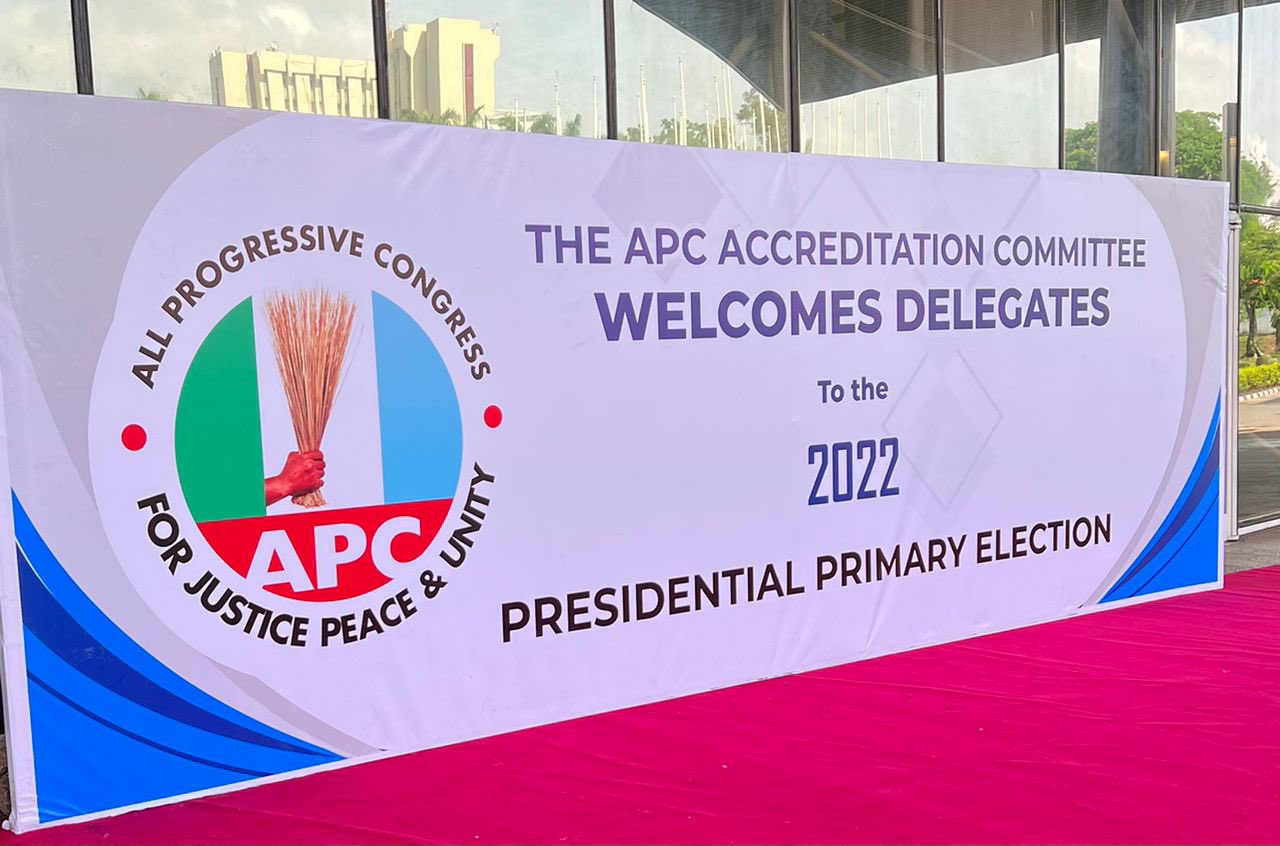
The presidential primaries of the main opposition party, the Peoples Democratic Party (PDP), was scheduled to hold on Saturday and Sunday May 28 and 29, 2022. On its part, the ruling All Progressives Congress (APC) had planned to hold hers 24 hours later. As I began putting this article together on the eve of the primaries, a news break indicated that the Independent National Election Commission (INEC) had extended the deadline for the conclusion of the events by one week. Before commenting on the implication of that, let’s not lose focus of the main issue in this article which is the role of delegates in the selection of party flagbearers for elections in Nigeria. So far, the delegates have had a great time deciding those that voters are allowed to choose from.  However, not many believe they have done well or would conclude it successfully. For me, I think the general condemnation of delegates is not well thought out because it seems many citizens expect the delegates to act against the run of play. The pointing of accusing fingers is not a surprise anyway because many citizens are used to raising the bar for other people above their own behaviour in similar circumstances.
 
For governorship and legislative primary elections which have already been concluded, aspirants were blamed for not only bribing delegates but for using foreign currency instead of our blessed naira to get the votes of delegates. Is it only political aspirants that should be condemned for this? Those we empowered to manage our economy, that is, economic delegates who ended up making the naira less attractive in value must share in the blame. Whereas to bribe delegates with whatever currency is a condemnable crime, it makes little sense for anyone to carry huge naira notes around instead of small sized dollars of same value for the same purpose. Even the argument that many of the delegates were making huge demands must be viewed against facts on ground. What is the current standard of doing any transaction in Nigeria? Is the percentage increase of delegates’ demand higher than the percentage increase of the cost of nomination forms? Are we able to quarrel with air flights that now cost over N100,000 per person for a trip from nearby Kaduna to Abuja?
 
The two major political parties which charged as much as N40million and N100million respectively for presidential nomination had also, even if inadvertently, set a standard for the charges of their delegates.  Indeed, the National Assembly had hugely raised the threshold for election expenses. So, if raising inducement charges by delegates is attributed to profiteering, both their leaders and political parties have not shown dissimilar inclination. A further evidence that everyone has a delegate’s attitude, is seen in the argument of the ruling party that she charged high nomination fees so as to harvest enough resources for a non-stop implementation of party programmes for a long time.  In the same way, delegates demanded huge inducement so that for the next four years, they can have enough resources to live on, while those they elected become inaccessible. It can therefore be imagined that if those pursuing huge sums of money are delegates, then Nigeria has, by far, too many types of delegates.
 
One error which many appear to be making is the impression that many delegates are not well educated or exposed enough for what they have become. Interestingly, Nigerian political delegates are not dull at all as we have seen in some locations such as Kaduna where a cerebral personality like senator Shehu Sani could not outsmart them. According to media reports, for refusing to bribe the delegates, he got only two votes but later received calls from no less than 300 delegates who claimed they are the two who voted for him pushing Sani to simply equate them with bandits who demand ransom. They are thus not dullards but smart speculators like other politicians who virtually hypnotize anyone. Here, the experience of a former Inspector General of Police, Mike Okiro is instructive. Okiro revealed that after his retirement, he was swindled of his savings having been persuaded to contest election to the senate. That unfortunately is the nature of the zero-sum political system we run and if the nation cannot rise in unison to condemn it and demand reforms, we are all delegates.
 
The only political group whose members are not delegates in Nigeria are state governors. Understandably, they cannot be delegates because they are the proprietors of delegates, akin to king makers. And because they spend much to make and sustain the delegates which is called political investment, whatever anyone pays to a delegate is immaterial, what matters the most is what his governor decides. Naturally, delegates know that “one good turn deserves another” hence, they make no serious demands of aspirants installed by governors. The delegates have fellows who have different titles. One group is called screening committee whose role as the name implies is to screen-in aspirants in the favoured list and screen-out competitors. This seems to explain why in places like Lagos, Ogun etc. other governorship aspirants, on the day of the primaries, still didn’t know why they were screened out. Some didn’t even know they needed to demand for certificate of clearance.
 
There are a few delegates in the judiciary and that is a big plus because there is no human institution without its bad eggs. When a court deliberately entertains only political cases for which it has no jurisdiction, despite repeated warnings from the highest professional level, it is hardly an innocent mistake because what each court in Nigeria has powers to handle are well-spelt out.  There are other delegate-judges whose pronouncements are usually capable of more than one meaning thereby leaving stakeholders in confusion. Some elements in the judiciary probably warm themselves up to opposite parties in a case thereby making factional-delegates from some states to continue to debate the authenticity of each other until after the primaries.
 
But is there a possibility that there are delegates in our electoral body? For two reasons, I personally admire the posture of the current INEC. First, I like the way the commission handled the issue of electronic transmission of election results and second, her firm stand in declining the request of the political parties for alteration to the election time table. Therefore, I had discountenanced earlier rumours that there are a few persons in the commission that have not fully had non-partisan background. This faith was shaken yesterday when I heard that INEC had caved-in to the extension request though for only a couple of days. Why can’t election timelines be sacrosanct as in other climes after they are published? I pray there are no delegates in INEC as the new development occurred hours to the national convention of the main opposition party. If the PDP can keep to her date of May 28, 2022, is it the ruling party whose convention is to come a day after, that cannot cope?
 
It is however gratifying to learn that irrespective of where delegates are hibernating, one day the aspirants who bribed them will take back their booty. Already, there are reports that the process has begun. Adam Namadi, son of former vice president Namadi Sambo has developed a strategy for retrieving the N2million he allegedly paid to each delegate who did not vote for him in the election to the Kaduna North Federal constituency of the House of Representatives. A serving Senator, Ayo Akinyelure from Ondo state has also reportedly retrieved vehicles given to some party leaders and he is now making efforts to get back monies given to seven delegates for failing to vote for him. What remains now is for Nigerians to stand firmly against vote trading as youths of Ibarapa, in Oyo state did the other day when they discovered that a delegate list prepared for their area was fake. It is only such efforts that can stop us all from becoming delegates.      

May 29, 2022

May 29, 2022 0 comments
0 FacebookTwitterPinterestThreadsBlueskyEmail
Newer Posts
Older Posts

Recent Posts

  • FCTA Workers, NLC Storm Industrial Court, Demand Wike Sack

    January 26, 2026
  • DisCos reject FG’s free meter plan

    January 26, 2026
  • Nigerian-born nurse loses licence in Australia for sleeping on duty

    January 24, 2026
  • AI may outsmart humanity in five years — Musk

    January 24, 2026
  • BREAKING: Kano Gov Abba Yusuf dumps NNPP

    January 23, 2026

Usefull Links

  • Contact Page
  • About Leading Reporters
  • Contact Us
  • Headlines
  • Investigation
  • Exclusives
  • Opinion
  • Business
  • Facebook
  • Twitter
  • Instagram
  • Linkedin

@2021 - All Right Reserved. Designed and Developed by PenciDesign


Back To Top
Leading Reporters
  • Featured
  • Politics
  • Opinion
  • Business
  • Entertainment
  • Sports
  • About Us
  • Contact