Leading Reporters
  • Headlines
  • Health
  • Business
  • Exclusives
  • Investigation
  • Entertainment
  • Opinion
Monday, February 16, 2026
Hot
BREAKING: INEC announces timetable, schedule of 2027 elections
Aso Rock to disconnect from nat’l grid in...
Valentine’s Day: FG bans money bouquets, warns against...
INEC Proposes ₦873.78 Billion Budget for 2027 General...
Engine Failure: Passengers escape death as Arik Air...
Senate adopts electronic, manual transmission of election results
BURSTED: NSITF CEO MOVES On ₦297Billion Fund, Operates...
Peter Obi joins #OccupyNationalAssembly protest over electronic transmission...
Tension As Popular Gospel Singer, 3 crew members...
2027: Wike Establishes Radio Station For Tinubu Campaign...
  • About Leading Reporters
  • Contact Us
Leading Reporters
Advertise With Us
  • Headlines
  • Health
  • Business
  • Exclusives
  • Investigation
  • Entertainment
  • Opinion
Hot
BREAKING: INEC announces timetable, schedule of 2027 elections
Aso Rock to disconnect from nat’l grid in...
Valentine’s Day: FG bans money bouquets, warns against...
INEC Proposes ₦873.78 Billion Budget for 2027 General...
Engine Failure: Passengers escape death as Arik Air...
Senate adopts electronic, manual transmission of election results
BURSTED: NSITF CEO MOVES On ₦297Billion Fund, Operates...
Peter Obi joins #OccupyNationalAssembly protest over electronic transmission...
Tension As Popular Gospel Singer, 3 crew members...
2027: Wike Establishes Radio Station For Tinubu Campaign...
Leading Reporters
Leading Reporters
  • Headlines
  • Health
  • Business
  • Exclusives
  • Investigation
  • Entertainment
  • Opinion
Copyright 2024 - All Right Reserved
Home > Global Rights
Tag:

Global Rights

Headlines

Tuition Hike: Global Rights charges UI to jettison move to expel students over peaceful protest

by Folarin Kehinde July 4, 2024
written by Folarin Kehinde

Global Rights, a non-governmental organization has charged the management of the University of Ibadan (UI) to immediately rescind its expulsion of 3 students – namely Olamide Gbadegeshin, Aduwo Ayodele, and Nice Linus for engaging in a peaceful protest against the sudden hike in tuition fees by the University’s management.

The 3 students, alongside one Olorunfemi Adeyeye, were apprehended by army officers while protesting the fee increase at the inauguration of the Student Union government on May 13, 2024.

The organization made this known in a press release made available to LEADING REPORTERS on Thursday stated that while the action of the students have posed an inconvenience to the administration of the university, extant laws clearly prescribe their right to protest peacefully.

Global Rights explained that it is a well-recognized fact that peaceful protests, especially by young people, have often been an effective means of bringing about positive social change in democratic societies all over the world hence university of Ibadan should therefore not be averse to its students exercising this right.

They maintained that University of Ibadan has a duty to maintain its educational standards and responsibilities to its tutors while navigating the harsh economic terrain, but surely, the university should understand why students will feel the need to protest a significant increase in tuition fees.

Global Rights further advocated that any plans to expel Olamide Gbadegeshin of the Institute of African Studies, Aduwo Ayodele of the History Department (200 level) and Nice Linus from the University of Ibadan be immediately jettisoned.

Also the students should be allowed to resume their studies without any fear of intimidation, harassment, or reprisals from the management and staff of the University of Ibadan.

They added that the security agents who arrested them and Olorunfemi Adeyeye on May 13, 2024, because they peacefully protested, should issue them a swift and unreserved apology.

“The University of Ibadan lead the way for other tertiary educational institutions in Nigeria by engaging mechanisms that encourage ample and robust interactions with students.

“On our part, we stand solidly behind dissenting voices who choose to participate in their governance and seek social justice utilizing their freedom of expression through peaceful protests.”

July 4, 2024 0 comments
0 FacebookTwitterPinterestThreadsBlueskyEmail
Headlines

Global Rights to FG: Draconian Laws, threat to our Civic Space, Security, and Nationhood

by Folarin Kehinde July 29, 2022
written by Folarin Kehinde

Kenny Folarin, Abuja

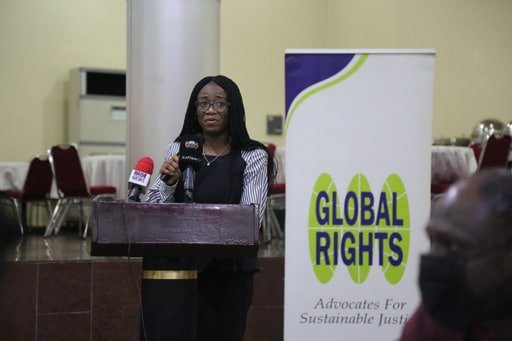
The Executive Director, Global Rights, Abiodun Baiyewu has expressed displeasure over draconian laws which is a threat to not just the civic space but security and nationhood.

Baiyewu while speaking in Abuja on Wednesday at a dialogue on Solution Lab: Resisting Draconian Laws and Regulations on Civic Freedoms in Nigeria noted that the civic space in Nigeria is being repressed by many laws.

According to Baiyewu, more than 426 infractions on the civic space by the government has been recorded, with more than 112 against the media.

She disclosed that their are currently 9 draconian bills at the national assembly that are threat not just to the civic space but the security and the upholding of our nationhood but cannot be allowed to continue.

Baiyewu however implore Nigerians as the 2023 elections approaches to hold the government accountable by laws and policies imposed on them.

“We are going into 2023 and we must begin to know how to engage beyond just the voting and politics around election but to ensure that we are able to hold government accountable to the laws and policies that they profer to our civic space”.

“The civic space belongs to the people of Nigeria and not just a hidden group of people, so we must protect it”.

She however noted that the solution lab has identified role of citizens as important and draconian laws which are more prominent in states should be addressed by civil societies while ensuring that they state assemblies are held accountable to human right norms

Corroborating, one of the speakers Maxwell Kadiri stated it is important that draconian laws are challenged and to have a concerted level of advocacy, and continuous engagement with the legislative come 2023 is germane.

July 29, 2022 0 comments
0 FacebookTwitterPinterestThreadsBlueskyEmail
Headlines

Global Rights Fumes Over Subjective Sections of Amended CAMA Act 2020

by Folarin Kehinde June 19, 2022
written by Folarin Kehinde

Kenny Folarin, Abuja

The Executive Director, Global Rights, Abiodun Baiyewu has expressed concern over the subjective section (Part F) of the Amended Companies and Allied Matters Act 2020, of Section 8(1)(C)which gives the Corporate Affairs Commission (CAC), the powers to investigate the affairs of incorporated trustees and allows the government through the CAC to threaten the affairs and activities of civil society organisations.

Abiodun while speaking in Abuja on Thursday at a strategic meeting on the provision of “Part F” of the Amended Companies and Allied Matters Act (CAMA) 2020 noted that there are so many subjective sections to the CAMA and this means that the CAC can at anytime step in as long as politically exposed people are not happy with the activities of civil society organizations.

Read Also: Global Rights Lament Lapses On Regulations, Revenue in Mining Sector

Abiodun noted that civil society are duty bound to collectively think about these issues and challenge them headlong.

According to the Act, Section 839, which vests the CAC with the powers to suspend the trustees of an association and appoint interim managers to run its affairs under the Commission’s supervision, “This is a flagrant attempt by the government to stifle the voices of civil society organisations”. Abiodun posited.

Read Also: Over 6,000 Nigerians Killed in Mass Atrocities – Global Rights

Meanwhile, she advised that as the 2023 elections approaches, civil society must begin to ask political aspirants questions on what will become of the shrinking civic space and who will build a society where the voices of the society can be heard rather than surpressd.

Professor Chidi Odinkalu

Meanwhile, Professor of Practice in International Human Rights, Chidi Odinkalu stated that there has been a concerted, consistent and deliberate effort by the government to incapacitate civil society, render it so incapable that they do not become a force and alternative to political voices.

Explaining, Chidi said “So if we are in a situation where the political opposition is weak, the citizens are mostly popularized and improvised and therefore there concern is more about what they eat and the civil space of an active organized civic sector is itself endangered, organized labour is discredited and bereft of money, what we have is an authoritarian state”.

Read Also: Insecurity: Stop Extrajudicial Killings in Northeast— CSO tells FG

He opined that civil society needs to be more conscious, more up-to-date and articulate a national agenda that is neither partisan nor parochial.

“The first thing that we need to do is to create a Nigerian Civil Society identity that transcends all these polarities and make us to confront the dangers that civil society faces because for me, we have got to recognize the issue that matters to our people.

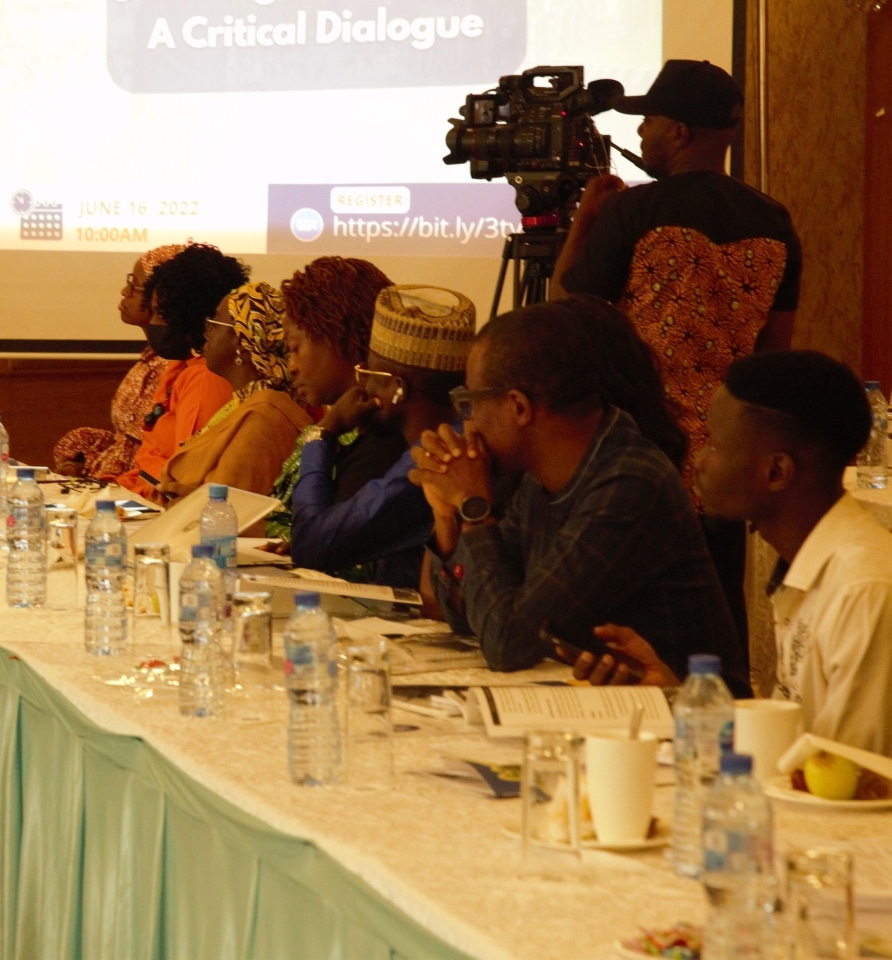
Participants at the event

“We have got to retrace our steps and do the job of advocating for a better society, involves personal credibility, institution credibility, connected to ideal if we want a Nigeria that can be trusted”. He added.

June 19, 2022 0 comments
0 FacebookTwitterPinterestThreadsBlueskyEmail
Headlines

Over 6,000 Nigerians Killed in Mass Atrocities – Global Rights

by Folarin Kehinde May 27, 2022
written by Folarin Kehinde

Kenny Folarin, Abuja

Global Rights in its 2021 Mass Atrocities Casualties Tracking report has identified that 6,895 Nigerians were killed due to mass atrocities in 2021.

The Executive Director, Global Rights, Abiodun Baiyewu while speaking at a press briefing in Abuja on Friday to mark the National Day of Mourning 2022 noted that there has been at least 14,641 killings as a result of mass atrocities between January 2019 to December 2021.

According to Bayeiwu, of the at least 6895 persons killed in 2021, 844 of them were state security officers which military officers killed by Boko Haram/ISWAP (277), terrorist bandits (111), Secessionist rebels in the Southwest (200), while the other are in other parts of the country, including 6051 Civilians.

Read Also: Insecurity: Stop Extrajudicial Killings in Northeast— CSO tells FG

Similarly, Baiyewu added that the North-West maintained its lead in the number of atrocious killing with 2,900 persons, followed by the North Central with 1523, the North East 937, South East 707, South West with 439 and South South 391 respectively.

Baiyewu explained that abduction which remained a significant indicator of mass atrocities in Nigeria have increased exponentially as the nation tilted from at least 2002 abductions in 2020 to at least 5,663 in 2021.

She noted that other series of mass atrocities experienced across the country include killings resulting from cult gangs clash, ritual killings, and violence from prison attacks.

Baiyewu however recommended that the Nigeria’s State Institutions and governance must be strengthened, the government should invest in human development, there should be an efficacious resource governance with an improved welfare and work condition of security forces.

Others include, the reduction in arms proliferation across the country, Disincentivizing Electoral Violence, protection of civic rights and freedoms, respect the rule of law, End impunity and ensure the security of borders and ungoverned spaces.

Read Also: Global Rights Lament Lapses On Regulations, Revenue in Mining Sector

Meanwhile, Executive Director Civil Society Legislative Advocacy Centre, (CISLAC) Auwal Rafsanjani on his own part noted that Nigeria has laws but our greatest challenge is impunity.

Rafsanjani Explaining noted that “if government can wake up to lapses here, it will be difficult for mass atrocities to occur, our government has not prioritize the protection of our lives and properties, if there people were involved reversed would have been the case”.

“If we keep quiet, the impunity will continue, we are not confrontational, we just want our citizens and her country to be safe”.

“You can see clearly from the report how much we are loosing as a nation and our political actors are not deterred, because of the love for corruption it has become difficult for them to protect us”. He added.

May 27, 2022 0 comments
0 FacebookTwitterPinterestThreadsBlueskyEmail
Headlines

Global Rights Lament Lapses On Regulations, Revenue in Mining Sector

by Folarin Kehinde March 2, 2022
written by Folarin Kehinde

The Executive Director, Global Rights, Abiodun Baiyewu has expressed worry over lapses in regulations and unaccounted revenue experienced in the mining sector.

Abiodun while speaking in Abuja on Wednesday at a stakeholders workshop on improving fiscal transparency in Nigeria’s mining sector organized by Global Rights in partnership with the Nigeria Extractive Industries Transparency Initiative, NEITI called for transparency in the sector and charged the federal government to execute every project in the pipeline, intensify efforts on going reforms, and ensure that the sector is resuscitated.

According to her, “With more than 40 minerals in commercial quantities thrown across the country paradoxically, the solid mineral sector contributes less than one percent of our national GDP, this is worrisome.

“More than 80 percent of the sector particular in artisanal mining is unregulated and its revenue unaccounted for. We live with the environmental, security and socio-economic consequences of lax oversight and worst still our children will pay the price.

“The big question that we are taking a pause to answer is are we connecting the right dots for the fulfilment of Nigeria’s economic growth and development through solid mineral development. Is our mining road map leading us in the right direction?

Governor of Ekiti State, Kayode Fayemi while delivering his keynote address on the topic, “The Roles of States in Enhancing Transparency and Fiscal Justice in the Nigeria’s Mining Sector,” said one of the challenges confronting Nigeria is the operations of illegal miners.

Read Also: Insecurity: Stop Extrajudicial Killings in Northeast— CSO tells FG

He said, “According to report, the Nigerian government may have lost trillions in revenue, owing to illegal practices and corrupt activities of companies operating in the mining sector in Nigeria.

“Many schemes through which some companies or miners have defrauded the Nigerian government include non-remittance of revenues, unlicensed mining and evasion of taxes, illegal practices, and incessant smuggling of solid minerals out of the country.

“The need to strengthen the solid minerals sector for improved revenue generation, job creation, and overall value addition, cannot be overemphasized. The devastating impact of the coronavirus pandemic and dwindling oil prices has forced a strategic focus on other sectors considered as having high growth prospects, particularly the mineral resources, which had been neglected for decades.”

He assured that the federal government is not going to sleep on ensuring the mining sector is resuscitated and jobs, employment opportunities are created for youths.

In his remarks, the Minister of Mines and Steel Development, Olamilekan Adegbite, bemoaned the amount of gold leaving the country, explaining that more efforts is needed to leverage on adding value locally.

“Gold leaves the country, after that we loose billions of naira. We don’t know the exact figure because all these are illegal activities and you cannot measure those things. Yes, people do smuggle gold out illegally. We are making a lot of efforts to stop that. Because our border is so vast. We are going beyond the Ministry itself to monitor that.

“The whole idea is to add value to the minerals. We don’t want to go the route of the oil and gas where we just export crude oil and bring in the refined products. We want to add value locally. Let people add value, we will be able to create jobs, create wealth and create revenue for government.

“What we are promoting essentially is value addition locally. It is not just for us to mine, it is for us to process locally, retain the jobs, retain the value in Nigeria and that’s what the Ministry is pursuing which is also in line with the African Mining Vision,” he said.

March 2, 2022 0 comments
0 FacebookTwitterPinterestThreadsBlueskyEmail
Headlines

Insecurity: Stop Extrajudicial Killings in Northeast— CSO tells FG

by Folarin Kehinde February 23, 2022
written by Folarin Kehinde

… says Zamfara accounts for 10,000 deaths since 2017

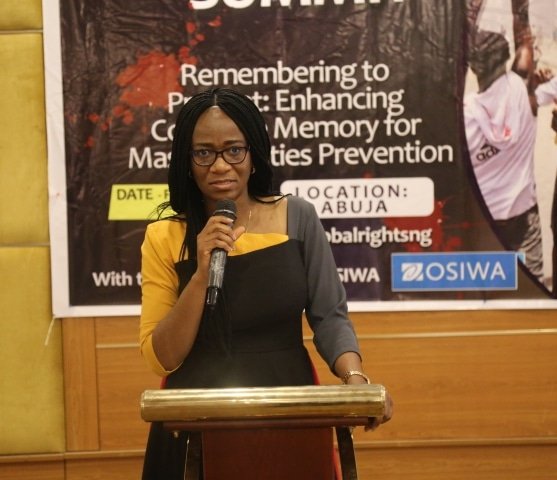
Following the rising cases of habituated banditry, bloodletting in the northeast, a Civil Society Organisation, CSO, Global Rights, Wednesday called on the federal government to bring to a halt extrajudicial killings in the country.

Executive Director, Global Rights, Abiodun Baiyewu, made the call at the Mass Atrocities Summit with the theme: “Remembering to Prevent: Enhancing Collective Memory for Mass Atrocities Prevention,” in Abuja.

She lamented the mass killings of innocent Nigerians in the northeast and many other parts of the country, urging the federal government to rise to the occasion of stemming the tide of insecurity.

“Since 2010, we seem to have turned a precarious curve – the numbers of victims from each year has exceeded the last in our rapidly metastasizing scope and nature of violence.

“Mob killings, herdsmen attacks, banditry, terrorist, secessionist related massacres, targeted killing of security personnel, communal attacks, pillages, extra-judicial killings, kidnappings, sextortion, ritual killings, politically motivated assassinations, security forces’ brutality, forced disappearances, arbitrary arrests, and an endless list of horrors, each worse than the last and for which there has hardly been any redress,” she added.

Baiyewu further bemoaned the extrajudicial killings in the middle belt and the northwest, stating that 125,000 and 10,000 deaths were reported from the states.

Read Also: Silence Of Rape Victims Helping Sexual Violence Boom In Nigeria – NHRC

She said, “The periodic episodes of violence in the Middle Belt have also shifted to accommodate larger swats of communities and greater intensity in the nature of violence, with over 125,000 killed since the Jos killings in 2001.

“In many of the states of the region, especially Plateau, Nassarawa, Taraba and Kaduna States in particular, a succession of judicial commissions of inquiry have examined discrete situations of mass killings in these respective states without providing any redress or remedy. Far from assuaging the killings, these inquiries over the years appear to have created a narrative of government incapacity to ensure accountability.

“More recently it would appear that some of the violence are not just state acquiesced but politically motivated and state-sponsored. In the period since 2015, the killings in the Middle Belt have escalated to a point where, by 2016, more people were being killed in the conflict in the region than in the conflict over Boko Haram. In 2018, over 2,000 people were killed in the Middle Belt alone, more than double the number that were killed in all of 2017.

“In North-West Nigeria, a crisis of governance has now snowballed into mass atrocities attributed in the narrative of government to people described as ‘bandits’ and ‘cattle rustlers.’ In Zamfara State alone, for instance, over 10,000 have been killed by these bandits since 2017. The State Government has confessed to being incapable of managing the situation.

“In 2017, the Zamfara State government resorted to an arms amnesty as its way of managing this situation. One bandit alone known as Buharin Daji (Buhari of the Forest), reportedly received N350,000 for each assault rifle he surrendered. Considering that he surrendered 9,250, a sum of about N3.24 billion. Far from diminishing mass atrocities, these kinds of measures have made violence and mass killings so attractive, that by 2021, the entire region had combusted into the daily mix crises of pillage, kidnappings and terror attacks.”

The Executive Secretary, National Human Rights Commission (NHRC), Tony Ojukwu, represented by the Deputy Director Legal, Civil and Political Right Department, NHRC, Halalu Adamu noted the nation was unable to formally use the Oputa Panel as a method of documentation of past atrocities and as a means of reconciliation.

Ojukwu explained that given the recent conflict manifestations in the country, there is no better time than now for the nation to begin to seriously consider the use of collective memory as a conscious national effort to prevent mass atrocities.

He opined that the outcome of the summit will lead to deliberate and conscious efforts on the part of opinion leaders to devise an appropriate strategy resulting in national documentation of past atrocities in Nigeria.

February 23, 2022 0 comments
0 FacebookTwitterPinterestThreadsBlueskyEmail

Recent Posts

  • BREAKING: INEC announces timetable, schedule of 2027 elections

    February 13, 2026
  • Aso Rock to disconnect from nat’l grid in March – Perm Sec

    February 12, 2026
  • Valentine’s Day: FG bans money bouquets, warns against currency abuse

    February 12, 2026
  • INEC Proposes ₦873.78 Billion Budget for 2027 General Elections

    February 12, 2026
  • Engine Failure: Passengers escape death as Arik Air makes emergency landing

    February 11, 2026

Usefull Links

  • Contact Page
  • About Leading Reporters
  • Contact Us
  • Headlines
  • Investigation
  • Exclusives
  • Opinion
  • Business
  • Facebook
  • Twitter
  • Instagram
  • Linkedin

@2021 - All Right Reserved. Designed and Developed by PenciDesign


Back To Top
Leading Reporters
  • Featured
  • Politics
  • Opinion
  • Business
  • Entertainment
  • Sports
  • About Us
  • Contact