
Leading Reporters
  • Headlines
  • Health
  • Business
  • Exclusives
  • Investigation
  • Entertainment
  • Opinion
Tuesday, February 17, 2026
Hot
BREAKING: DSS Sues El-Rufai for Intercepting NSA Ribadu’s...
Major Health Crisis Plagues Dape, Karmo Residents As...
BREAKING: INEC announces timetable, schedule of 2027 elections
Aso Rock to disconnect from nat’l grid in...
Valentine’s Day: FG bans money bouquets, warns against...
INEC Proposes ₦873.78 Billion Budget for 2027 General...
Engine Failure: Passengers escape death as Arik Air...
Senate adopts electronic, manual transmission of election results
BURSTED: NSITF CEO MOVES On ₦297Billion Fund, Operates...
Peter Obi joins #OccupyNationalAssembly protest over electronic transmission...
  • About Leading Reporters
  • Contact Us
Leading Reporters
Advertise With Us
  • Headlines
  • Health
  • Business
  • Exclusives
  • Investigation
  • Entertainment
  • Opinion
Hot
BREAKING: DSS Sues El-Rufai for Intercepting NSA Ribadu’s...
Major Health Crisis Plagues Dape, Karmo Residents As...
BREAKING: INEC announces timetable, schedule of 2027 elections
Aso Rock to disconnect from nat’l grid in...
Valentine’s Day: FG bans money bouquets, warns against...
INEC Proposes ₦873.78 Billion Budget for 2027 General...
Engine Failure: Passengers escape death as Arik Air...
Senate adopts electronic, manual transmission of election results
BURSTED: NSITF CEO MOVES On ₦297Billion Fund, Operates...
Peter Obi joins #OccupyNationalAssembly protest over electronic transmission...
Leading Reporters
Leading Reporters
  • Headlines
  • Health
  • Business
  • Exclusives
  • Investigation
  • Entertainment
  • Opinion
Copyright 2024 - All Right Reserved
Home > Democratic Republic of Congo
Tag:

Democratic Republic of Congo

Africa & World

Tensions Rise With the GERD Water

by Leading Reporters May 4, 2021
written by Leading Reporters

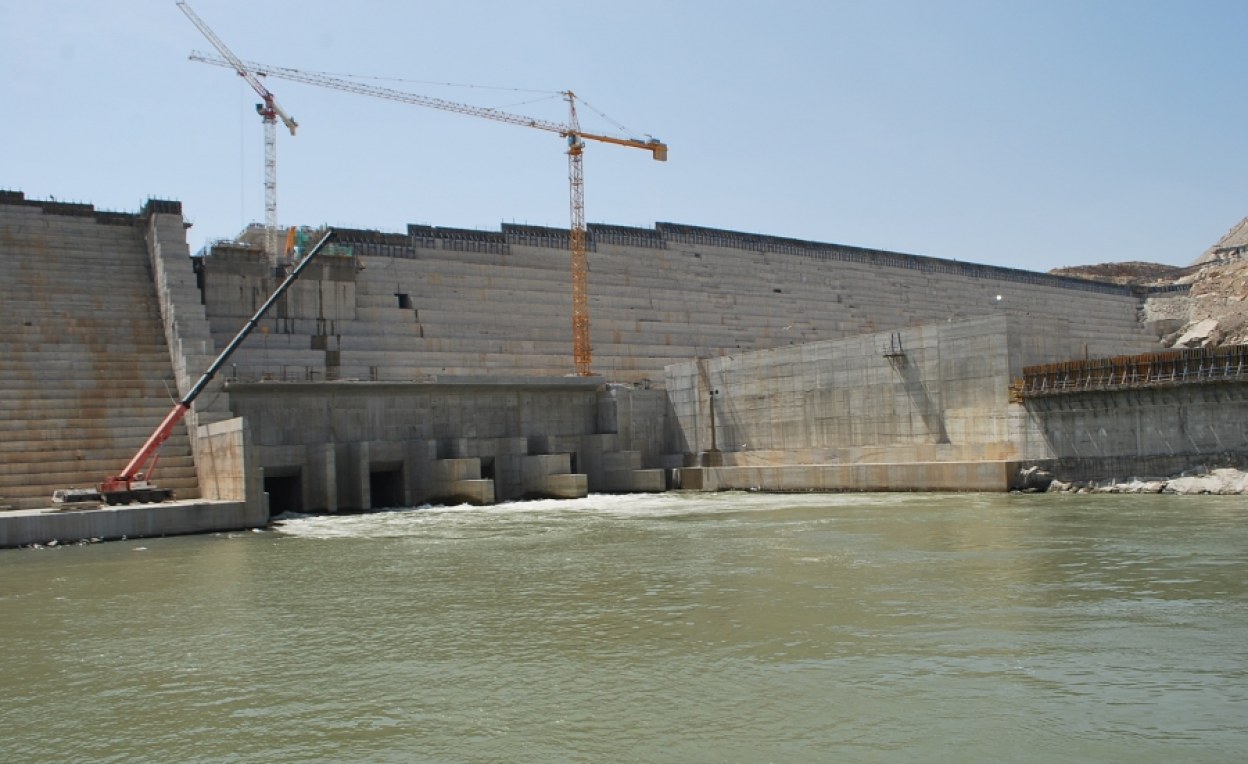
Tensions are once again rising among Ethiopia, Egypt and Sudan, along with the water in the Grand Ethiopian Renaissance Dam (GERD). The annual rainy season is fast approaching. Ethiopia will almost certainly undertake a second filling of the 74 billion cubic metre capacity reservoir if there is no prior agreement otherwise among the three disputants.

A deal seems remote, as there are no signs of even an imminent resumption of negotiations. The last round of African Union-led negotiations ended in Kinshasa on 5 April, without any glimpse of an accord on how to manage the huge dam Ethiopia is building on the Blue Nile, upstream of Egypt and Sudan, to generate 6.45 gigawatts of hydro-electric power.

Last week Egyptian Foreign Affairs Minister Sameh Shoukry travelled to six African countries – South Africa, Tunisia, Kenya, Senegal, the Democratic Republic of the Congo (DRC) and Comoros – to present Egypt’s case. Cairo is almost wholly dependent on the Nile for its fresh water and fears the GERD will significantly reduce its supply.

Egypt indicated before Shoukry’s tour that it might refer the dispute to the United Nations Security Council as it tried to do last July before South African President Cyril Ramaphosa intervened. As African Union (AU) chair at the time, he persuaded the parties to accept the AU as mediator. But Ramaphosa failed to clinch a deal in some six months of negotiations – and now his successor as AU chair, DRC President Félix Tshisekedi, has also failed.

The hints of Egypt’s intentions to try to go back to the Security Council included some sabre-rattling from President Abdel-Fattah el-Sisi, who warned Ethiopia not to ‘touch a drop of Egypt’s water, because all options are open.’ Another clue was a letter Shoukry wrote to the Security Council, urging it to persuade Ethiopia not to take any action on the dam before reaching a legally binding agreement with Egypt and Sudan.

He warned that failure to reach consensus would harm Egypt and Sudan’s water interests and security, increase tensions throughout East Africa and the Horn, and ‘constitute a serious threat to international peace and security.’ It is precisely the mandate of the Security Council to address such threats, so Shoukry appeared to be setting the stage to seek council intervention.

Sudan’s irrigation minister Yasser Abbas also mentioned referring the dispute to the Security Council if Ethiopia started a second filling of the dam without agreement among the three countries.

However at their meeting last week, Shoukry didn’t lobby Ramaphosa to support a Security Council referral. Instead he said Egypt would ask Tshisekedi to convene a special meeting of the AU Bureau to plot a path forward. There are no signs that such a meeting is imminent, despite the second filling’s looming deadline. Presumably, though, Egypt could still use the AU Bureau meeting to raise a request for the Security Council intervention.

Maybe that would provide the catalyst to kickstart the stalled negotiations. Or perhaps the parties should consider a different configuration. There seems little point in including the US and EU in a formal mediation role, but it might make sense to bring in the UN as co-chair with the AU. That could address Egypt’s apparent suspicion that the AU favours Ethiopia – while also addressing Ethiopia’s anxieties by keeping an AU hand in the process.

It’s hard to say where the standoff might end if no agreement is reached. El-Sisi’s sabre-rattling has been echoed by some Egyptian military analysts. They also point to recent joint military exercises between Egypt and Sudan as a warning that the two countries could resort to force if Ethiopia proceeds with the second filling.

Clearly the dispute is souring relations among three important African countries, and there is a danger of a flashpoint. This suggests the GERD dispute is a legitimate subject for Security Council attention, and that this option may be needed if negotiations don’t succeed soon.

Peter Fabricius, ISS Consultant

Read the original article on ISS.
May 4, 2021 0 comments
0 FacebookTwitterPinterestThreadsBlueskyEmail
Headlines

World Bank: name Nigeria as Africa’s poorest supplier of electricity with unending power outage

by Leading Reporters April 26, 2021
written by Leading Reporters

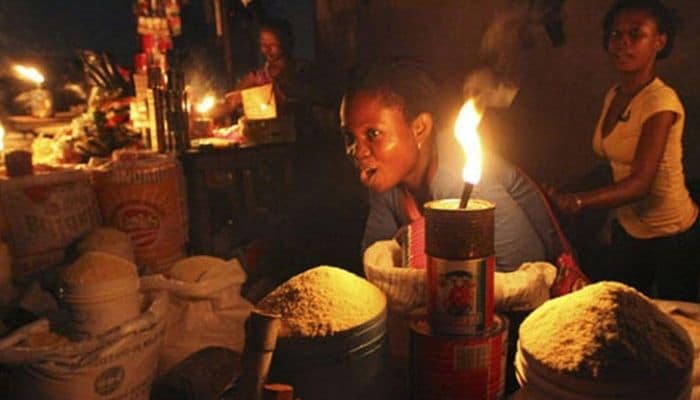
Nigeria now has the highest percentage of the population without access to electricity globally, overtaking the Democratic Republic of Congo, according to the World Bank reports.

In a virtual engagement with reporters in Abuja on the Power Sector Recovery Programme (PSRP), the bank officials said 25 per cent of Nigeria’s population do not have access to electricity supply.

The Word Bank also stated that many of the over 200 million Nigerian population with access to electricity had battled prevalent blackouts and defective electricity supply for years with Billions injected to the failed sector.

“Nigeria now has the largest number of unelectrified people globally, and the trend is worsening; of the electrified, the supply is very unreliable with widespread blackouts,” it said.

The financial institution observed that the electricity supply had risen from 1.1 per cent yearly since 2010 but at a slow pace compared to the population growth of three per cent annually.

“Nigeria now has 25 per cent more unelectrified people than the second most unelectrified country (DRC – in absolute terms). For the bottom, 40 per cent of the population (mostly rural), access to grid electricity is even lower at about 31 per cent nationwide. Regionally, only South-West has access of over 50 per cent (except Kano),” it said.

In his presentation, Ashish Khanna, the WBG Practice Manager, West, and Central Africa Energy, noted, “The power sector is operationally inefficient with unreliable supply exacerbated by high losses and lack of payment discipline.”

Mr Khanna explained that many businesses had lost their prospects due to the erratic power supply in Africa’s most populous country.

“Businesses in Nigeria lose about $29 billion annually because of unreliable electricity while Nigerian utilities get paid for only a half of electricity they receive,” he added.

The bank further stated that 80 per cent of grid-connected households have less than six hours of electricity daily, while 40 per cent of those with access to power depend on other means.

It, however, pointed out that the PRSP intended to foster a change in the electricity situation while disclosing that $1.25 billion was approved by the board between June 2020 and February 2021 to reset the power sector.

April 26, 2021 0 comments
0 FacebookTwitterPinterestThreadsBlueskyEmail

Recent Posts

  • BREAKING: DSS Sues El-Rufai for Intercepting NSA Ribadu’s Phone

    February 16, 2026
  • APC Senator Seeks 16-Year Single Tenure for Nigeria’s President

    February 16, 2026
  • Major Health Crisis Plagues Dape, Karmo Residents As Dust Pollution From AMAC Road Project Chokes Residents

    February 16, 2026
  • BREAKING: INEC announces timetable, schedule of 2027 elections

    February 13, 2026
  • Aso Rock to disconnect from nat’l grid in March – Perm Sec

    February 12, 2026

Usefull Links

  • Contact Page
  • About Leading Reporters
  • Contact Us
  • Headlines
  • Investigation
  • Exclusives
  • Opinion
  • Business
  • Facebook
  • Twitter
  • Instagram
  • Linkedin

@2021 - All Right Reserved. Designed and Developed by PenciDesign


Back To Top
Leading Reporters
  • Featured
  • Politics
  • Opinion
  • Business
  • Entertainment
  • Sports
  • About Us
  • Contact