
Leading Reporters
  • Headlines
  • Health
  • Business
  • Exclusives
  • Investigation
  • Entertainment
  • Opinion
Tuesday, January 27, 2026
Hot
FCTA Workers, NLC Storm Industrial Court, Demand Wike...
DisCos reject FG’s free meter plan
Nigerian-born nurse loses licence in Australia for sleeping...
BREAKING: Kano Gov Abba Yusuf dumps NNPP
National Grid Collapse For First Time in 2026
BREAKING: Tinubu approves posting of Ambassadors to U.S.,...
Insecurity: Kidnappers demand 17 motorcycles for release of...
FG to Abolish Hnd-Degree Dichotomy, Allow Polytechnics to...
AFCON Initiative drives stronger Nigeria Morocco cooperation
Obasanjo: I’ll Never Stop Having Children
  • About Leading Reporters
  • Contact Us
Leading Reporters
Advertise With Us
  • Headlines
  • Health
  • Business
  • Exclusives
  • Investigation
  • Entertainment
  • Opinion
Hot
FCTA Workers, NLC Storm Industrial Court, Demand Wike...
DisCos reject FG’s free meter plan
Nigerian-born nurse loses licence in Australia for sleeping...
BREAKING: Kano Gov Abba Yusuf dumps NNPP
National Grid Collapse For First Time in 2026
BREAKING: Tinubu approves posting of Ambassadors to U.S.,...
Insecurity: Kidnappers demand 17 motorcycles for release of...
FG to Abolish Hnd-Degree Dichotomy, Allow Polytechnics to...
AFCON Initiative drives stronger Nigeria Morocco cooperation
Obasanjo: I’ll Never Stop Having Children
Leading Reporters
Leading Reporters
  • Headlines
  • Health
  • Business
  • Exclusives
  • Investigation
  • Entertainment
  • Opinion
Copyright 2024 - All Right Reserved
Home > Democracy
Tag:

Democracy

HeadlinesOpinion

The beauty of Nigeria’s recent delegate elections

by Leading Reporters June 19, 2022
written by Leading Reporters

Tonnie Iredia

The pain of Femi Gbajabiamila, Speaker of the House of Representatives that many of his colleagues would be unable to return to the National Assembly is with due respect misplaced. While Femi as an individual is free to miss some of his close friends who could not secure their party tickets to run in next year’s general election, their loss was not against the run of play.

Indeed, failure of many lawmakers to return to the legislature has been the trend since 1999 when democracy was restored in Nigeria. At each election season, the competition to get into office grows more intense progressively. To start with, Nigerians who thought politics was a dirty game have since changed their minds by discarding the fear of political violence because of the transparent evidence that nothing in the country is as lucrative as politics. Thus, with increased interest in politics, electioneering has assumed a fiercer dimension capable of unseating several incumbents.
 
The Speaker’s conclusion that loopholes in the delegate system caused the loss of his colleagues at the party primaries is also not entirely accurate. The system may have played a role; but if the truth must be told, many legislators are undeserving of reelection. They really have no business in the legislature because they are only there to pick-up ‘basic’ salaries and humongous allowances.

Their incapacity is aggravated by their omission to appoint competent legislative aides to assist them perform their duties satisfactorily. For inexplicable reasons, they also have no viable constituency offices as demanded by law which would have positioned them to get acquainted with the real preferences of the people they represent. Many are in fact unknown to their constituents. The contributory negligence of passing a poorly worded Electoral Act 2022 was essentially the last self-inflicted injury. Just before that, there were bills with unpardonable typographical errors and sheer contradictions of the provisions in different sections that no one detected.
 
In fairness, national legislators are by far better than their colleagues in the Houses of Assembly in the states – a good example being the 24-member Kwara state legislature in which virtually every bill passed since 2019 was sponsored by the state governor. Accordingly, Nigerians should not bemoan the inability of certain legislators to return to base in 2023. The argument about continuity is essentially feeble. What should bother us now, is how to raise the level of political awareness among our people to vote for persons of substance that are passionate about making laws for good governance of society. Of course, some legislators have endeavoured to acquit themselves creditably. Gbajabiamila is in fairness one of such dutiful lawmakers, hence he got back his party ticket unopposed to contest the seat of his Surulere, Lagos constituency notwithstanding the contentious electoral bill which targeted members of the executive branch of government.
 
From the events of the last few months, the new electoral law has inadvertently helped to get many incumbents out of the legislature. In a country like Nigeria with stunted growth, it is unfair for certain persons to be in power for too long to the detriment of other citizens. It was therefore almost like a divine intervention that made the lawmakers by their own volition to pass a bill to their own disadvantage, just as it blinded them from some rather unintended errors until it was too late to act. The ‘wisdom-after-event’ thought of overriding the president was probably for self-consolation as the present legislature had no capacity during its potent days to contemplate such no-go area, let alone now that many members are nursing heart-broken injuries while vibrancy has been adjourned till after the 2023 election.      
 
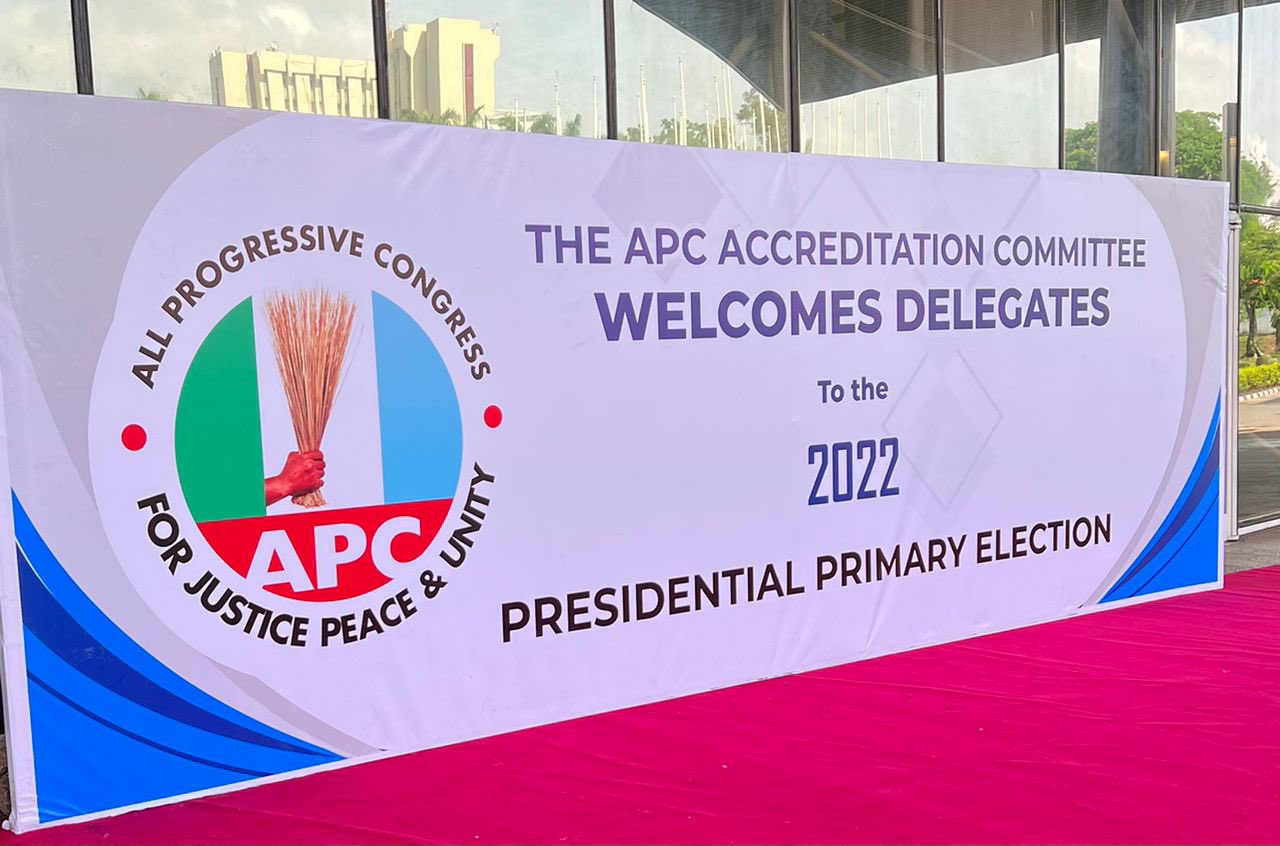
One of the gains of the new Electoral Act is that it has emboldened hitherto timid people to rise up to challenge the self-made emperors in our democracy. It was quite interesting to learn that our senate president among a few others who lost out in the recent political intrigues had attempted but failed to coerce winners to step down for them. That was obviously a tall order within the context of the new circumlocutory electoral law. According to media reports, Bashir Sheriff Machina, the winner of the All Progressives Congress APC Yobe North Senatorial District primaries has said that rather than step down for Ahmed Lawan, he himself intends to become the senate president having served as a law maker earlier in 1990. Machina confirmed that it was because he never intended to step down for anyone that he declined to complete the withdrawal form attached by the party to the nomination package. Now, with the new Electoral Act, the Machinas of this world appear invigorated. 
 
As proof of the growing awareness of the muscle of the new law, aggrieved supporters of certain flagbearers in Kogi state who were being cajoled to step down stormed the APC national secretariat last Thursday, to protest attempts to substitute winners with favoured aspirants. Protesters from Abia and Ondo states had earlier demonstrated against same allegations. In the case of Enugu state, some aspirants claimed the party denied them the necessary forms to fill for the submission of candidates. They also alleged that the party instead offered them ‘withdrawal concession forms’ which they reportedly rejected. In the past, party executives implemented such anti-democratic behaviour with ease. There is doubt now if the party would not end up losing as the oppressed have provisions of the new electoral law to proceed with.
 
The situation in Akwa Ibom North-west Senatorial District does not appear different from that of Yobe state where a retired Deputy Inspector-General of Police, Udom Ekpoudom who won the party primaries has rejected pleas for him to step down for Senator Godswill Akpabio. There are few high points in the Akwa Ibom situation. First, the party having failed to get the cooperation of Udom claimed to have organized fresh primaries which Akpabio allegedly won. Second INEC monitored the first and not the second primaries. Third, the Akwa Ibom office of INEC disowned the second primaries thereby strengthening the resolve of the former police boss to hold-on to the ticket. The old attitude of putting blames on electoral officials didn’t succeed because INEC headquarters aptly discountenanced attempts to blackmail its Resident Electoral Commissioner in Uyo who testified that the only primaries monitored by his office was the one which produced the former police boss.
 
However, the development was not restricted to the ruling party. The main opposition Peoples Democratic Party PDP has had its share of the trend. Last week, the party’s candidate for the Kebbi Central Senatorial District, Haruna Dandio Saidu denied stepping down for the former Kebbi governor, Adamu Aliero who recently defected from the APC to the PDP. In a petition to INEC, Haruna warned that he was prepared to institute legal proceedings against any person who forges any document which purports that he accepted to withdraw his candidature. But for the new law, the underdogs in the two political parties would probably have been sacrificed to suit the wishes of party caucuses. This development therefore underscores the beauty of the recently conducted party primaries across the country.
 
Nigerians can now hope that elections in the country would depart, even if slightly, from the old order where we hosted failed elections. For example, the opportunity for the voices of the underprivileged people to be heard will at least stop the fake landslide victories of ruling parties whose members value party interests more than the wishes of those they are supposed to represent. In addition, our youths are now persuaded to pick up their permanent voters’ cards and vote out non-performing office holders. With this development, many contending national issues will be appropriately determined. One such issue is whether the nation is comfortable with a Northern candidate taking over from the outgoing President from the same region. This burning issue in addition to another one concerning whether a Muslim-Muslim ticket does not matter will all be determined not by political gladiators who are currently debating the issues but by eligible voters.                                                                                       
June 19, 2022 0 comments
0 FacebookTwitterPinterestThreadsBlueskyEmail
Opinion

Code of Conduct in the Market-place

by Leading Reporters April 6, 2021
written by Leading Reporters
Tonnie Iredia

The Chairman of Nigeria’s Code of Conduct Tribunal CCT, Danladi Umar was for wrong reasons in the news for much of last week. Interestingly, the issue at stake had nothing to do with his assignment of determining the level of adherence of public officers to the official code of conduct required of them.

Instead, the story was about his interaction in a market-place, with one Clement Sargwak, a security guard at the Banex Plaza in Abuja. Umar had gone there in his private capacity as a citizen to transact some business which ended up in a case of assault. Several analysts who have dwelt extensively on the story have placed sufficient focus on blame game, making it superfluous to further engage in a rehash of that line of thought. What is yet to be done, is to enumerate the effects of the story on our nation’s growth and development. This is precisely what this piece seeks to do today in the hope that some useful lessons can be learnt by us all.

The first and perhaps the most important issue which the story throws up is the inability of powerful Nigerians especially policy makers to comprehend and appreciate not just the power of the social media but the role it can play in reforming society. With increasing population and corresponding increases in societal activities, the under-equipped, under-staffed and under-remunerated conventional media can hardly cover a substantial portion of daily events. Much of what happens in the country is thus under-reported. In which case, were it not for the social media, not many would have had the privilege of knowing what transpired at Banex Plaza last week. What this suggests is that contrary to the belief of many highly placed individuals, especially some legislators who have been anxious to make laws against what they see as the evils of the social media, the platform has its own advantages.

For its interactivity, portability, speed of information dissemination and international context, Nigeria certainly needs the social media. Of what use is any medium of communication which covers only segments of a few events that the people may, as a result of many challenges, never get to know about? Yet, ours is a developing society that is in dire need of public enlightenment. Indeed, but for the social media which enabled the instantaneous dissemination of how the entire Banex Plaza incident happened, denials, claims and counter claims would have completely rendered the event incomprehensible. We can only hope therefore, that our leaders will begin to see the need to depart from the desire to kill the social media which in every other nation is employed as a veritable tool for development communication. This underscores this column’s earlier submission that replicating harsh regulations as well as increasing the powers of regulatory bodies can only impede information management, they can neither resolve nor alter the propensity for fake news.

The viewpoint that Nigeria’s current information management framework is probably not far above the stone age level is visibly represented by the press statement issued by the CCT to ‘inform’ Nigerians on the incident through a narration of the version of its boss. The statement left people to wonder about the briefing or induction course designed by the Ministry of Information for press officers assigned to government organizations. At what point are they to speak and what format is devised for the statements they issue about their organizations and their activities? There are two speculations provided by the statement issued by Ibraheem Al-Hassan, the Head of the Press and Public Relations Unit of the CCT. The first is that the press officer is probably not a professional. The second is that in line with what happens in many parts of our country, where everyone thinks that the job of information management is an all-comers’ game, the press officer was told what to write and in fact how to write it, without regards for the absurdity that such statements may convey.

Another interesting dimension of the story is the light which it has thrown on what Governor Bala Mohammed of Bauchi state, rightly decried the other day as ethnic profiling. Attributing the source of conflict to those the Umar side described as ‘Biafran boys’ clearly illuminates the dangers of condemning one ethnic group because of the actions of one or a sub-group of the relevant ethnic category. By resorting to profiling, the story-teller instinctively gave the impression that the disagreement was premeditated; and that the so-called Biafra boys knew the movement of the CCT boss and actually awaited his arrival to unleash an attack on him. If so, how often is such behaviour portrayed in that location and how many Umars have been so attacked to justify the generalisation? The truth in our considered opinion is that the incident was a petty conflict concerning the management of space in the crowded Plaza.

It has however served to remind us of the challenges of maintaining the Master Plan of Abuja. One of the factors which informed the decision to build a new federal capital was the intolerable congestion of Lagos – the old capital city. In the last few years, the fear that the congestion of Lagos can easily be surpassed has become a possibility that Abuja residents are imagining every day. Commercial businesses have sprung up so rapidly beyond what was planned for the spaces available. Banex Plaza and other locations now accommodate far more persons and activities than envisaged. What happened to the CCT chair was an everyday occurrence to virtually anyone visiting the place where traffic control is left in the hands of young persons who have little regard for anyone. In the circumstance, it is likely that Sargwak, the guard may have been annoyingly rude to a big man who thinks his status can be used to alter the established order of human and vehicular movement anywhere, Banex Plaza inclusive. Hence the incident in which one of the parties inflicted injury on the other.

On the issue of law enforcement, the narrative was that the guard who happened to be the injured party was the one arrested by the police and held until a bail was granted. Who reported the matter to the police and how was guilt established to warrant the detention of Sargwak? If no one is surprised at the turn of events, what light does it throw on Nigeria’s type of rule of law? Who was the agent provocateur? Who injured the other? Why was it only the guard and not the two parties that were summoned to the police station to write statements which can assist the police in its investigations? Answers to these questions are likely to confirm that the Banex Plaza incident is a typical true story of daily living in our clime in which there is hardly any room for accountability by the highly placed. To those who are unable to understand our type of democracy, the Banex Plaza incident is a sad reminder that the people who should be sovereign and ministered unto by those elected or appointed to serve them have remained for longer than makes sense, the object rather than the subject of democracy.

April 6, 2021 0 comments
0 FacebookTwitterPinterestThreadsBlueskyEmail

Recent Posts

  • FCTA Workers, NLC Storm Industrial Court, Demand Wike Sack

    January 26, 2026
  • DisCos reject FG’s free meter plan

    January 26, 2026
  • Nigerian-born nurse loses licence in Australia for sleeping on duty

    January 24, 2026
  • AI may outsmart humanity in five years — Musk

    January 24, 2026
  • BREAKING: Kano Gov Abba Yusuf dumps NNPP

    January 23, 2026

Usefull Links

  • Contact Page
  • About Leading Reporters
  • Contact Us
  • Headlines
  • Investigation
  • Exclusives
  • Opinion
  • Business
  • Facebook
  • Twitter
  • Instagram
  • Linkedin

@2021 - All Right Reserved. Designed and Developed by PenciDesign


Back To Top
Leading Reporters
  • Featured
  • Politics
  • Opinion
  • Business
  • Entertainment
  • Sports
  • About Us
  • Contact