Leading Reporters
  • Headlines
  • Health
  • Business
  • Exclusives
  • Investigation
  • Entertainment
  • Opinion
Tuesday, January 27, 2026
Hot
FCTA Workers, NLC Storm Industrial Court, Demand Wike...
DisCos reject FG’s free meter plan
Nigerian-born nurse loses licence in Australia for sleeping...
BREAKING: Kano Gov Abba Yusuf dumps NNPP
National Grid Collapse For First Time in 2026
BREAKING: Tinubu approves posting of Ambassadors to U.S.,...
Insecurity: Kidnappers demand 17 motorcycles for release of...
FG to Abolish Hnd-Degree Dichotomy, Allow Polytechnics to...
AFCON Initiative drives stronger Nigeria Morocco cooperation
Obasanjo: I’ll Never Stop Having Children
  • About Leading Reporters
  • Contact Us
Leading Reporters
Advertise With Us
  • Headlines
  • Health
  • Business
  • Exclusives
  • Investigation
  • Entertainment
  • Opinion
Hot
FCTA Workers, NLC Storm Industrial Court, Demand Wike...
DisCos reject FG’s free meter plan
Nigerian-born nurse loses licence in Australia for sleeping...
BREAKING: Kano Gov Abba Yusuf dumps NNPP
National Grid Collapse For First Time in 2026
BREAKING: Tinubu approves posting of Ambassadors to U.S.,...
Insecurity: Kidnappers demand 17 motorcycles for release of...
FG to Abolish Hnd-Degree Dichotomy, Allow Polytechnics to...
AFCON Initiative drives stronger Nigeria Morocco cooperation
Obasanjo: I’ll Never Stop Having Children
Leading Reporters
Leading Reporters
  • Headlines
  • Health
  • Business
  • Exclusives
  • Investigation
  • Entertainment
  • Opinion
Copyright 2024 - All Right Reserved
Home > Covid-19 > Page 2
Tag:

Covid-19

Headlines

Agribusiness: Massive Livestock Feed Production will transform Animal Feed Sector – FG

by Folarin Kehinde September 23, 2021
written by Folarin Kehinde

Kenny Folarin, Abuja

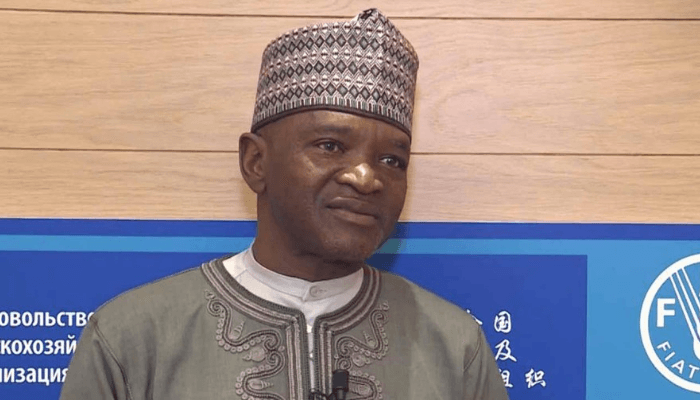
The Minister of Agriculture and Rural Development, Muahammed Mahmood Abubakar, Thursday, said that for Nigeria to champion agribusiness worldwide and transform the animal feed sector, the nation must embark on livestock feed production.

Delivering his keynote address at the 1st National Animal Feed Summit with the theme: “Developing a Road Map for Animal Feed Security,” in Abuja, Abubakar stated that Nigeria must embark on livestock, industrialization, feed value chain development to transform agribusiness.

He also opined that development of national animal feed and feed safety policy, establishment of national strategic feed and feed ingredient reserve centre, national alternative feed ingredient development, promotion and commercialization of ruminant and micro-livestock feeds, will create platforms to transform animal feed sector.

Read Also: CBN needs bankable policy to reduce Nigeria’s $1.5 billion import bill on Wheat

Abubakar who was represented by the Permanent Secretary, Federal Ministry Of Agriculture and Rural Development, Dr Ernest Umakhihe, highlighted that animal feed accounts for over 70 percent of the cost of animal production, adding that it engages over five million Nigerians directly and indirectly as technical or skilled personnel, distributors, fabricators of tools and machinery, input suppliers.

According to him, investments in livestock feed production generates massive employment across various value chains and strengthens the national social safety net with copious contributions to food security, household income and poverty reduction.

He said: “According to 2016 data, Nigeria feed industry produces an average of 5.5million metric tonnes of animal feed per annum comprising 85% poultry feeds, and with commercial ruminant and swine feed coming up in the industry, it will produce not less than 50 million metric tonnes per annum.

“Even with this, feed sector has the potential to engage over 20 million Nigerians, as the industry is yet to reach 25% of its market size.”
He further noted that from the year 1957, Nigeria had only two feed mills, saying that the country now has over 1,000 feed mills and is recognized as the 40th leading country in livestock feed production in the world.

“This potential notwithstanding, the industry expansion remains tilted to the South West which accounts for not less than 75 percent of total installed and operating feed mills in Nigeria.

“The importance of nutritious animal feeds for full development and productivity of animals cannot be overemphasized. Nigeria’s animal feed sector is faced with non readily available feed resources, largely due to high cost of production, which in turn makes feed almost unaffordable by an average farmer,” he stressed.

To this end, Abubakar lamented the impact of COVID 19 pandemic, stating that it has negatively affected many sectors particularly the livestock sub-sector, through reduced availability of animal feed ingredients, labour, processing facilities, inputs and services.

“The pandemic reduced access of animal feed to markets and consumers. This is why the National Animal Feed Summit, a platform to engage key players and major stakeholders in the feed industry to develop a roadmap for animal feed security in the country at a time like this is apt,” he added.

Speaking in the same vein, Permanent Secretary, Federal Ministry of Agriculture and Rural Development, Dr Ernest Umakhihe, said for the nation to recover fully from the coronavirus pandemic, government must be ready to embrace livestock feed production.
Umakhihe, who was represented by the Director Special Duties, Federal Ministry of Agriculture and Rural Development, Fausat Lawal said

“As you are all aware, there is the dictum of ‘we are what we eat’. Nutritious animal feeds are essential for development and productivity of animals, especially food animals.

“In Nigeria, the animal feed sector remains a challenge to animal husbandry practices, largely due to high cost of animal feeds, which are not readily available and where they are, they are not easily affordable by an average farmer.”

September 23, 2021 0 comments
0 FacebookTwitterPinterestThreadsBlueskyEmail
Headlines

Covid-19: FG Takes Vaccination Exercise To Private, Govt Offices

by Folarin Kehinde September 7, 2021
written by Folarin Kehinde

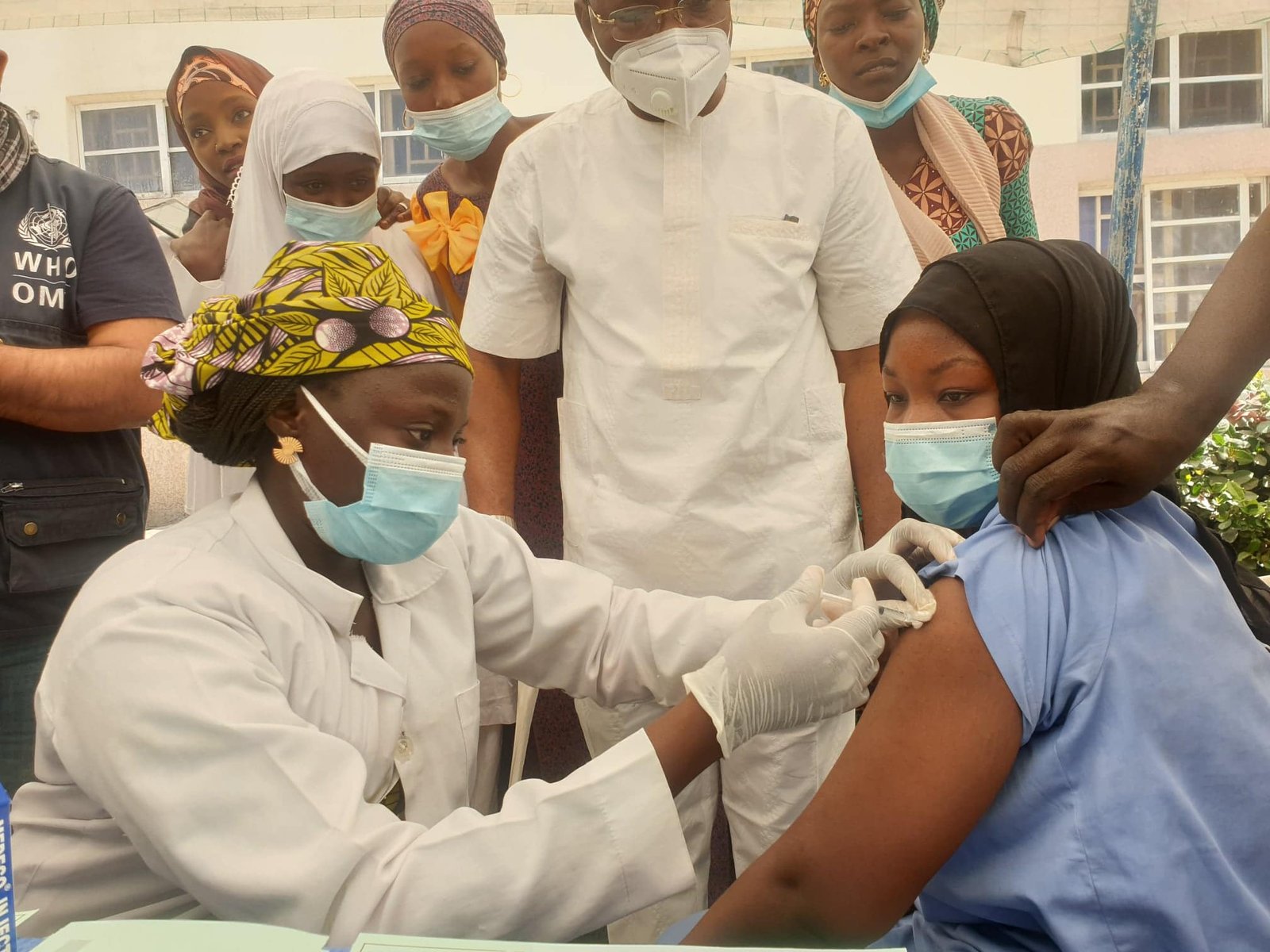
The Federal Government has introduced a special vaccination exercise that will enable members of staff and retirees of public and private sector firms to be vaccinated in their office premises.

This was disclosed by the Executive Director of the National Primary Health Care Development Agency, Faisal Shuaib in Abuja on Tuesday.

Read Also: COVID-19: Nigerians risk sanctions for refusing vaccine – FG

According to him, the platform was created in pursuant of the government’s mandate of making vaccination compulsory for all civil servants, as well as in recognition of the fact that some workers may find it difficult to leave their duty post to vaccination sites.

“We have introduced and expanded in-situ corporate vaccination. This entails making special arrangement for eligible staff, dependents and retirees of Ministries, Departments and Agencies of Government (MDAs) and the private sector to get vaccinated in their office premises.

“MDAs, public and private corporate organization that require staff to be vaccinated should visit www.nphcda.gov.ng to fill the request form. These services would be provided at no cost to the Ministries, agency/cooperate bodies,” he said.

Read Also: Over 70 Nigerians missed Pilgrimage Due To COVID-19 Test Results

Shuaib, speaking further disclosed that Nigeria has been categorized as an ‘amber’ country by the government of United kingdom based on the number of populations immunized and incidence rates of COVID-19 infection.

Travellers from Amber’s countries, according to him are placed under compulsory isolation by the UK government, whether or not such has been vaccinated.

He said, “We have been inundated with questions about why the UK insists Nigerians who have been fully vaccinated are still required to isolate upon arrival in the UK.

“Nigeria alongside countries like France and the Netherlands are listed as amber countries by the UK Government based on criteria such as the number of populations immunized and incidence rates of COVID-19 infection.

“Individuals from Countries listed as amber countries are required by the UK Government to take a COVID-19 test upon arrival and be quarantined for a few days,” he said.

He also noted that here has been report of cases where individuals contracted the virus 14 days after being fully vaccinated.

This according to him, is termed breakthrough infection.

“The observation is that in these individuals, the disease is usually milder than those who were unvaccinated. Vaccination prevents one from severe disease, hospitalization and death.

“If our communities continue to remain unvaccinated, we will keep endangering our citizens most especially those who are vulnerable, ” he said.

Read Also: COVID-19: 18 Corps Members Test Positive in Niger

According to the Agency, as of 6th September 2021, a total of 3,600,858 Nigerians have received their 1st dose of COVID-19 vaccine.

This is made up of 2,551,738 persons vaccinated with AstraZeneca vaccine and 1,049,120 persons vaccinated with Moderna vaccine, bringing the total number of persons vaccinated with AstraZeneca vaccine to 1,576,011.

September 7, 2021 0 comments
0 FacebookTwitterPinterestThreadsBlueskyEmail
Headlines

Over 70 Nigerians missed Pilgrimage Due To COVID-19 Test Results

by Folarin Kehinde September 3, 2021
written by Folarin Kehinde

Over 70 pilgrims have been denied pilgrimage to Jordan due to late release of COVID-19 test results.

This is coming shortly after the National Primary Health Care Development Agency warned that Holy cities such as Saudi Arabia and Jerusalem have made it mandatory for pilgrims to provide proof of vaccination before they can be granted access for pilgrimage.

The Executive Director, Faisal Shuaib on Tuesday had disclosed that many countries have made vaccination a requirement to gain access to their country as the COVID-19 vaccines have become available worldwide.

He said, “I would like to remind all Nigerians that evidence of vaccination against COVID-19 is now mandatory for all pilgrims to the holy cities of Saudi Arabia and Jerusalem.

Read Also: COVID-19: Nigerians risk sanctions for refusing vaccine – FG

“I therefore urge adherents of both religions who are planning to perform pilgrimage next year or in the future, to get vaccinated now to avoid any delays.”

However, the Delta State Government on Friday decried the decision of the Nigerian Christian Pilgrims Commission to centralise COVID-19 tests for intending pilgrims in the state, as 77 pilgrims from the state were not airlifted.

The State government through the Commissioner for Information, Charles Aniagwu, said that the centralised COVID-19 test as directed by the NCPC had caused untold hardship to the intending pilgrims.

“Because of in the haphazard release of the test results, 77 of them were not airlifted to Jordan.

“It was disappointing for the intending pilgrims especially as the State had accredited centres to carry out the COVID-19 test in the state,” he said.

According to him, a total of 315 Deltans were supposed to have been airlifted to Jordan from the Port Harcourt International Airport.

He said 223 eventually travelled as 15 reportedly tested positive for the virus and 77 could not travel due to late release of their results.

September 3, 2021 0 comments
0 FacebookTwitterPinterestThreadsBlueskyEmail
Headlines

COVID-19: Nigerians risk sanctions for refusing vaccine – FG

by Folarin Kehinde September 1, 2021
written by Folarin Kehinde

The Federal Government may sanction eligible Nigerians who refuse COVID-19 vaccination.

The Executive Director of the National Primary Healthcare Development Agency, Faisal Shuaib, gave the hint at a press briefing briefing in Abuja on Tuesday.

In Edo and Ondo States, the state governments had already announced restrictions regarding some public places that those who have not taken COVID-19 vaccine cannot have access to.

Shuaib said the government may “apply the basic rule of law” against such people because they will be endangering the lives of other people.

Read Also: COVID-19: 18 Corps Members Test Positive in Niger

He said, “he Presidential Steering Committee and the Federal Ministry of Health is exploring ways of making vaccines more available to all Nigerians including federal civil servants and corporate entities.

“Once these vaccines are made equitably available to all Nigerians, then we would need to have a frank discussion about justice, fairness and liberty that exist around vaccine hesitancy.

“If some individuals refuse to take the vaccine, hence endangering those who have or those who could not due to medical exemptions, then we have to apply the basic rule of law which stipulates that your human right stops where mine begins.

“So, you have a right to refuse vaccines, but you do not have the right to endanger the health of others.”

September 1, 2021 0 comments
0 FacebookTwitterPinterestThreadsBlueskyEmail
Headlines

Organized Labour Begs FG to Shelve Increase Plan on Electricity, Petrol Price

by Folarin Kehinde August 31, 2021
written by Folarin Kehinde

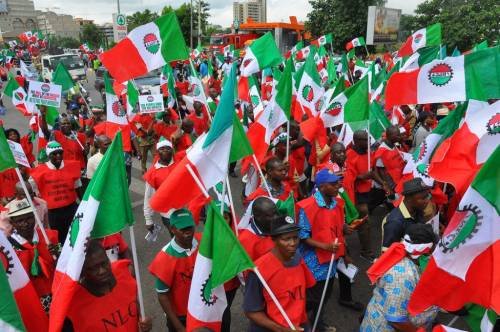
The organised labour has appealed to the Federal Government against any plan to increase the price of electricity or petrol to avert crisis in the economy.

Mr Babatunde Olatunji, President, National Union of Chemical, Footwear Rubber Leather and Non-Metallic Product Employees (NUCFRLANMPE), made the appeal at 29th Annual Industrial Relations seminar of the union in Ibadan on Monday.

According to Olatunji, any plan to increase electricity or petrol will be a wrong step and the organised labour will do everything within its capacity to resist it.

He said that currently, power supply in Nigeria stood at 4,000 megawatts for about 200 million population compared to South Africa with 58,000 megawatts and has 50 million population.

”Industrialisation cannot take place in the absence of power. Inadequate infrastructure like bad road network is also a challenge. From the source of raw material to the market areas is dilapidated, the roads network are no longer motorable,” he said.

Read Also: Flash Back: Politicians, Celebrities Keeps mum over Fuel Hike

The NUCFRLANMPE president said that governments at different level needed to make the manufacturing sector to thrive by giving attention to factor that promoted industrialisation.

”Government should ensure adequate power, security of lives and properties as well as regulate multiple taxation and charges to allow manufacturing companies survive, thus promote Gross Domestic Products in the country,” he said.

The labour leader further said that the effect of socio-economic crises and COVID-19 pandemic on industrial relations was evidence in high number of job losses arising from redundancy and factory closure.

He said that the management of some organisation in a bid to maximise profit make staff to work for more than eight hours without overtime payment while many permanent employment are converted to casual.

He urged the management of affected organisations to treat all workers with dignity whether casual or permanent employment and also respect the International Labour Organisation’s law on workers right to form or join a union irrespective of their status.

Mr Femi Oke, Secretary, Chemical and Non-Metallic Product s Employers Federation (CANMPEF), advised the government to prioritise the sale of foreign exchange for manufacturers to boost production.

Oke advised the government to curtail inflation rate, stop multiplicity of levies, prioritise infrastructure and improve security for development of the nation.

He also called for collaboration and communication between employers and employees to ensure the survival of organisation.

August 31, 2021 0 comments
0 FacebookTwitterPinterestThreadsBlueskyEmail
Headlines

COVID-19: 18 Corps Members Test Positive in Niger

by Folarin Kehinde August 27, 2021
written by Folarin Kehinde

Kenny Folarin, Abuja

Eighteen National Youth Service Corps (NYSC) members posted to Niger State have been confirmed to have exhibited COVID-19 symptoms.

The Corps members were said to have tested positive, following a test conducted on them by the state Ministry of Health.

Information Commissioner Sani Idris, who announced this while addressing reporters yesterday in Minna, the state capital, said the development had spurred the state to resuscitate its COVID-19 task force and ensure the observance of all safety protocols.

Read Also: 11 Staff of water resources Ministry tests positive to Covid-19

“We agreed that the state government would resuscitate the task force on COVID-19 to restore the COVID-19 protocols as an immediate action.

“Nobody would have access to all public offices without wearing of facemasks. All heads of Ministries, Departments and Agencies (MDAs) have been directed to provide hand-washing facilities,” he said.

Also, the management of Stella Obasanjo Hospital on Sapele Road in Benin, the Edo State capital, has discharged 15 of the 17 Corps members deployed in the State for their mandatory one-year national service but showed signs of COVID-19 symptoms.

Another person, who was not a Corps member, was among the patients.

The 18 patients, including the 17 corps members, were brought to the government hospital for treatment on July 27.

According to report, the remaining three patients – two Corps members and the other patient – were responding to treatment and would be discharged soon.

August 27, 2021 0 comments
0 FacebookTwitterPinterestThreadsBlueskyEmail
HeadlinesHealth

BREAKING: Nigeria Shuts UK Mission As Diplomats Test COVID-19 Positive

by Leading Reporters August 17, 2021
written by Leading Reporters

Reports reaching LeadingReporters that the Nigerian High Commission in London in the United Kingdom has been shut after officials tested positive for COVID-19.

Sources within the commission confirmed the letter informing of the closure, which will last 10 days beginning from Thursday, when the strains of the deadly disease were detected in the Diplomats.

Their infection with COVID-19 came to light when the Nigerian officials visited the UK Home office for a meeting and upon being subjected to mandatory tests at the entrance, they were found to be afflicted.

However, the High Commission did not name the concerned officials nor their ranks.

In the 12th August 2021 memo, titled, “Closure of Nigeria High Commission, London,” the country’s High Commission to UK detailed circumstances leading to the move.

It said: “This afternoon, the Head of Immigration Section and two other officials went for a meeting at the Home Office.

“At the entrance, COVID test was administered on them and one of them tested positive to COVID-19. The affected officer immediately isolated while the other officials, who tested negative, will also isolate for the next 10 days.

“In response to this challenge, the Mission embarked on testing all officials of the mission, after which another official of the Mission tested positive.

In line with COVID-19 regulation and the need to adhere to the rules and regulations of the host country, the Mission will close down for the next 10 days, in order to observe the mandatory isolation of those who were in contact with the affected officials.

“While the High Commission regrets any inconvenience that this may have caused, we solicit the cooperation of the general public.”

August 17, 2021 0 comments
0 FacebookTwitterPinterestThreadsBlueskyEmail
Health

Donate COVID-19 Vaccine To Poor Countries Or Risk Resurgence UNICEF Ambassadors Tell G7 Countries

by Leading Reporters June 11, 2021
written by Leading Reporters

Ahead of G7 Leaders Summit in the UK this weekend, joint letter urges G7 leaders to share at least 20 per cent of available COVID-19 vaccine doses

UNICEF Goodwill Ambassadors Priyanka Chopra Jonas, David Beckham, Katy Perry, Orlando Bloom, Whoopi Goldberg, Angélique Kidjo, and Liam Neeson have joined an extraordinary call by 28 high-profile UNICEF Ambassadors and Supporters demanding that G7 leaders commit to donating doses of COVID-19 vaccines to poorer countries now.

The open letter, published today ahead of the three-day G7 Leaders’ Summit (Friday 11-Sunday 13 June) in Cornwall, UK, urges G7 leaders to commit to sharing a minimum of 20 per cent of COVID-19 vaccine dose supply urgently, to reduce the risk of the virus spreading further and the threat of mutant strains.

Ramla   Ali, Fernando Alonso, David Beckham, Orlando Bloom, José Manuel Calderón, Sofia Carson, Gemma Chan, Priyanka Chopra Jonas, Olivia Colman, Billie Eilish, Pau Gasol, Whoopi Goldberg, David Harewood, Sir Chris Hoy, Angelique Kidjo, Téa Leoni, Lucy Liu, Juan Manuel López Iturriaga, Ewan McGregor, Alyssa Milano, Andy Murray, Liam Neeson, Liam Payne, Katy Perry, Sergio Ramos, Claudia Schiffer, Teresa Viejo and P!nk joined UNICEF in calling on G7 world leaders to donate doses and ensure fair and equitable vaccine supply to low- and middle- income countries.

“The world has spent a year and a half battling the COVID-19 pandemic, but the virus is still spreading in many countries and producing new variants with the potential to put us all back where we started,” the letter reads. “This means more school closures, more healthcare disruptions, and greater economic fallout – threating the futures of families and children everywhere.”

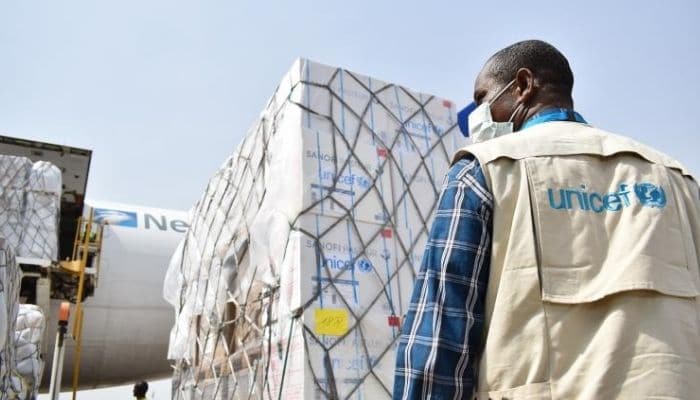
The letter goes on to warn that COVAX, the global initiative supporting poorer countries in gaining access to vaccines, is already facing a shortfall of 190 million doses, and proposes that, in order to help cover this shortfall, G7 countries donate 20 per cent of their vaccines between June and August – over 150 million doses – as a temporary stopgap measure to compensate for this shortfall.

Recent data analysis provided by Airfinity, the life sciences research facility, and commissioned by the UK Committee for UNICEF (UNICEF UK), indicates that G7 nations could do so without significant delay to current plans to vaccinate domestic adult populations.

“As a UNICEF Goodwill Ambassador I believe in the crucial benefit of vaccinations,” said David Beckham, UNICEF Goodwill Ambassador. “The pandemic won’t be over until it’s over everywhere, so it’s vital that all communities around the world have fair access to Covid-19 vaccines urgently.”

UNICEF is also warning that without urgently ensuring fair and equitable access supply, the world will continue to be at risk of deadly virus mutations – like the devastating second wave of COVID-19 sweeping across India and other South Asian countries including Nepal, Pakistan and Afghanistan.

“The crisis at home in India and across the region of South Asia is devastating. This deadly surge of Covid-19 is placing an enormous strain on health facilities across India, with hospital beds, essential medical supplies and oxygen running out. It’s also of huge concern to all of us at UNICEF to hear about children falling ill with this new variant – while many are also losing parents and left alone and at risk, unable to access critical health care, vaccinations and education,” said Priyanka Chopra Jonas, UNICEF Goodwill Ambassador.

“The crisis in India shows why we must act now to avoid further deadly mutations ravaging low- and middle- income nations around the world. UNICEF and its COVAX partners are ensuring vaccines and treatments reaches the world’s most vulnerable populations, but cannot do it alone. A clear solution to this is G7 countries committing to sharing their surplus COVID-19 vaccine doses immediately with the countries whose health workers and vulnerable populations need them the most,” said Priyanka Chopra. “That’s exactly why I’ve joined my fellow UNICEF Goodwill Ambassadors in signing this letter, urgently asking G7 leaders to make this commitment at the UK summit this week, to keep families and children everywhere safe from COVID-19.”

Finally, the letter argues that “this weekend’s G7 Summit is a vital opportunity for you to agree the actions that will get vaccines where they are most needed, fast…” and urges leaders to set out a roadmap to scale-up donations as supplies increase, noting that forecasts suggest as many as one billion doses may be available for donation by year end.

“Countries need not choose between fighting the disease at home or fighting it abroad. We can, and must, do both simultaneously – and immediately,” said Henrietta Fore, UNICEF Executive Director.

“This is a pivotal time in the fight against COVID-19, as leaders meet to set priorities for what form this fight will take in the coming weeks and months. I am pleased so many UNICEF supporters are joining our call for emergency support for COVAX, so we can continue to wage this fight globally. After all, the disease is not respecting boundaries on a map. Our fight to get ahead of the virus, and its variants, should not either,” said Henrietta Fore.

June 11, 2021 0 comments
0 FacebookTwitterPinterestThreadsBlueskyEmail
Health

If poor countries go unvaccinated, rich ones will pay, says study

by Leading Reporters May 7, 2021
written by Leading Reporters

In monopolising the supply of vaccines against Covid-19, wealthy nations are threatening more than a humanitarian catastrophe: The resulting economic devastation will hit affluent countries nearly as hard as those in the developing world.

This is the crucial takeaway from an academic study to be released Monday (Jan 25). In the most extreme scenario – with wealthy nations fully vaccinated by the middle of this year, and poor countries largely shut out – the study concludes that the global economy would suffer losses exceeding US$9 trillion (S$12 trillion), a sum greater than the annual output of Japan and Germany combined.

Nearly half of those costs would be absorbed by wealthy countries like the United States, Canada and Britain.

In the scenario that researchers term most likely, in which developing countries vaccinate half their populations by the end of the year, the world economy would still absorb a blow of between US$1.8 trillion and US$3.8 trillion. More than half of the pain would be concentrated in wealthy countries.

Commissioned by the International Chamber of Commerce, the study concludes that equitable distribution of vaccines is in every country’s economic interest, especially those that depend most on trade. It amounts to a rebuke to the popular notion that sharing vaccines with poor countries is merely a form of charity.

“Clearly, all economies are connected,” said Professor Selva Demiralp, an economist at Koc University in Istanbul who previously worked at the Federal Reserve in Washington, and is one of study’s authors. “No economy will be fully recovered unless the other economies are recovered.”

Prof Demiralp noted that a global philanthropic initiative known as the ACT Accelerator – which is aimed at providing pandemic resources to developing countries – has secured commitments for less than US$11 billion toward a US$38 billion target. The study lays out the economic rationale for closing the gap. The remaining US$27 billion may, on its face, look like an enormous sum but is a pittance compared with the costs of allowing the pandemic to carry on.

The commonplace idea that the pandemic respects neither borders nor racial and class divides has been promoted by corporate chief executives and pundits. This comforting concept has been belied by the reality that Covid-19 has trained its death and destruction of livelihoods on low-wage service workers, and especially racial minorities, while white-collar employees have been able to largely work safely from home, and some of the world’s wealthiest people can ride out the pandemic on yachts and private islands.

But in the realm of international commerce, there is no hiding from the coronavirus, as the study brings home. Global supply chains that are vital to industry will continue to be disrupted so long as the virus remains a force.

A team of economists affiliated with Koc University, Harvard University and the University of Maryland examined trade data across 35 industries in 65 countries, producing an extensive exploration of the economic impacts of unequal vaccine distribution.

If people in developing countries remain out of work because of lockdowns required to choke off the spread of the virus, they will have less money to spend, reducing sales for exporters in North America, Europe and East Asia. Multinational companies in advanced nations will also struggle to secure required parts, components and commodities.

At the centre of the story is the reality that most international trade involves not finished wares but parts that are shipped from one country to another to be folded into products. Of the US$18 trillion worth of goods that were traded last year, so-called intermediate goods represented US$11 trillion, according to the Organisation for Economic Cooperation and Development.

The study finds that the continued pandemic in poor countries is likely to be worst for industries that are especially dependent on suppliers around the world, among them automotive, textiles, construction and retail, where sales could decline more than 5 per cent.

The findings add a complicating layer to the basic assumption that the pandemic will leave the world economy more unequal than ever. While this appears true, one striking form of inequality – access to vaccines – could pose universal problems.

In an extraordinary testament to the innovative capacities of the world’s most skilled scientists, pharmaceutical companies produced life-saving vaccines in a small fraction of the time thought possible. But the wealthiest countries in North America and Europe locked up orders for most of the supply – enough to vaccinate two and three times their populations – leaving poor countries scrambling to secure their share.

Many developing countries, from Bangladesh to Tanzania to Peru, will likely have to wait until 2024 before fully vaccinating their populations.

The initiative to supply poor countries with additional resources gained a boost as US President Joe Biden took office. The Trump administration did not contribute to the cause. Mr Biden’s chief medical officer for the pandemic, Dr Anthony Fauci, promptly announced that the United States would join the campaign to share vaccines.

In contrast to the trillions of dollars that governments in wealthy countries have spent to rescue companies and workers harmed by the health emergency and the wrenching economic downturn, developing countries have struggled to respond.

As migrant workers from poor countries have lost jobs during the pandemic, they have not been able to send as much money home, levelling a major blow to countries that have relied on these so-called remittances like the Philippines, Pakistan and Bangladesh.

The global recession has slashed demand for commodities, decimating copper producers like Zambia and Congo, and countries dependent on oil exports like Angola and Nigeria. As Covid-19 cases have soared, that has depressed tourism, costing jobs and revenue in Thailand, Indonesia and Morocco.

Many poor countries entered the pandemic with debt burdens that absorbed much of their government revenue, limiting their spending on healthcare. Private creditors have refused to participate in a modest debt suspension programme forged by the Group of 20. The World Bank and the International Monetary Fund both promised major relief but failed to produce significant dollars.

This, too, appears to be changing as new leadership takes over Washington. The Trump administration opposed a proposed US$500 million expansion of so-called special drawing rights at the IMF, a reserve asset that governments can exchange for hard currency. Mr Biden’s ascent has bolstered hopes among fund members that his administration will support the expansion. Democrats in Congress – now in control of both chambers – have signalled support for a measure that would compel the Treasury to act.

Still, in capitals like Washington and Brussels, the discussion about support for the developing world has been framed in moral terms. Leaders have debated how much they can spare to help the planet’s least fortunate communities while mostly tending to their own people.

The study challenges that frame. In failing to ensure that people in the developing world gain access to vaccines, it concludes, leaders in the wealthiest nations are damaging their own fortunes.

“No economy, however big, will be immune to the effects of the virus until the pandemic is brought to an end everywhere,” said Mr John Denton, secretary-general of the International Chamber of Commerce. “Purchasing vaccines for the developing world isn’t an act of generosity by the world’s richest nations. It’s an essential investment for governments to make if they want to revive their domestic economies.”

May 7, 2021 0 comments
0 FacebookTwitterPinterestThreadsBlueskyEmail
Africa & WorldHealth

New EU Covid-19 vaccine setback as AstraZeneca announces shortfall

by Leading Reporters March 14, 2021
written by Leading Reporters

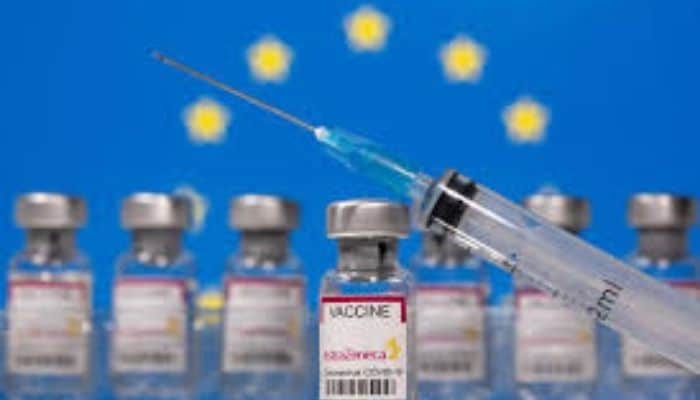
The European Union was faced with another setback in its coronavirus vaccination programme after AstraZeneca announced a shortfall, as countries across the world try to step up their Covid-19 immunisation drives.

The pharmaceutical company’s image had already taken a hit, with several countries suspending the roll-out of its vaccine over blood clot fears, though the World Health Organisation (WHO) said there was no reason to stop using it in the fight against the pandemic.

Mass vaccinations are considered critical to ending the pandemic, which has claimed more than 2.6 million lives globally, and the AstraZeneca announcement was another blow for EU leaders, who have already faced criticism for the stumbling start to the jab drive on the hard-hit continent.

“AstraZeneca is disappointed to announce a shortfall in planned Covid-19 vaccine shipments to the European Union… despite working tirelessly to accelerate supply,” the firm said on Saturday (March 13).

It previously warned of shortfalls from its European supply chain due to lower-than-expected production output, and was hoping to compensate by sourcing shots from its global network.

“Unfortunately, export restrictions will reduce deliveries in the first quarter, and are likely to affect deliveries in the second quarter,” the company said.

AstraZeneca’s shot is among the cheapest available, and forms a bulk of deliveries to poorer nations under the WHO-backed Covax initiative, which aims to ensure the equitable global distribution of vaccines.

The supply issues added to the firm’s troubles, with some countries including Denmark, Norway and Iceland suspending the use of its shot over concerns over side effects such as blood clots.

The WHO, which said its vaccines advisory committee was examining the safety data, stressed that no causal link has been established between the clots and the jab. AstraZeneca has also insisted that the shot is safe.

Global coronavirus infections are approaching 120 million and even as nations around the world ramp up vaccinations, social distancing and movement restrictions are being used at varying levels to counter the spread of Covid-19.

French Prime Minister Jean Castex did not rule out a new lockdown in the region that is home to the capital Paris, describing the situation as “on a razor’s edge”, while the head of Germany’s disease control agency warned that “the third wave has already started” there.

Italy had already announced new restrictions on Friday, with schools, restaurants, shops and museums ordered to close across most regions.

In Africa, Tunisia and Ethiopia both launched vaccination campaigns on Saturday, but Ethiopian officials flagged an alarming rise in cases too.

The drives are crucial in reviving the global economy, which was battered by the pandemic as most travel was curbed and people forced to stay home, with no nation spared the impact.

Millions were left jobless in the United States, the world’s biggest economy, and those who could not work from home had to balance the risk of Covid-19 with the need to make ends meet.

For Mr Matt Valentin, who worked at a cafe in the state of Michigan, the job became an increasingly anxiety-ridden environment last year as the pandemic worsened.

“It went from ‘get these drinks and orders done as fast as possible’ to ‘do all of that, and try not to bring a deadly virus home to your vulnerable family,'” the 21-year-old told AFP.

After a much-criticised start to its vaccination programme, the US has accelerated the roll-out of shots, with the Centre for Disease Control and Prevention saying 100 million doses have been administered.

That is just less than a third of the total given worldwide so far.

There was also a sign of recovery at American airports, which saw their largest number of passengers in a year.

Just over 1.35 million travellers were checked in at US airports on Friday, the most since March 15 last year, according to the Transportation Safety Administration.

And hopes for international travel were boosted as officials said Australia and Singapore were working to create a travel bubble as early as July, which would allow travellers between the two countries to avoid quarantine.

March 14, 2021 0 comments
0 FacebookTwitterPinterestThreadsBlueskyEmail
Newer Posts
Older Posts

Recent Posts

  • FCTA Workers, NLC Storm Industrial Court, Demand Wike Sack

    January 26, 2026
  • DisCos reject FG’s free meter plan

    January 26, 2026
  • Nigerian-born nurse loses licence in Australia for sleeping on duty

    January 24, 2026
  • AI may outsmart humanity in five years — Musk

    January 24, 2026
  • BREAKING: Kano Gov Abba Yusuf dumps NNPP

    January 23, 2026

Usefull Links

  • Contact Page
  • About Leading Reporters
  • Contact Us
  • Headlines
  • Investigation
  • Exclusives
  • Opinion
  • Business
  • Facebook
  • Twitter
  • Instagram
  • Linkedin

@2021 - All Right Reserved. Designed and Developed by PenciDesign


Back To Top
Leading Reporters
  • Featured
  • Politics
  • Opinion
  • Business
  • Entertainment
  • Sports
  • About Us
  • Contact