
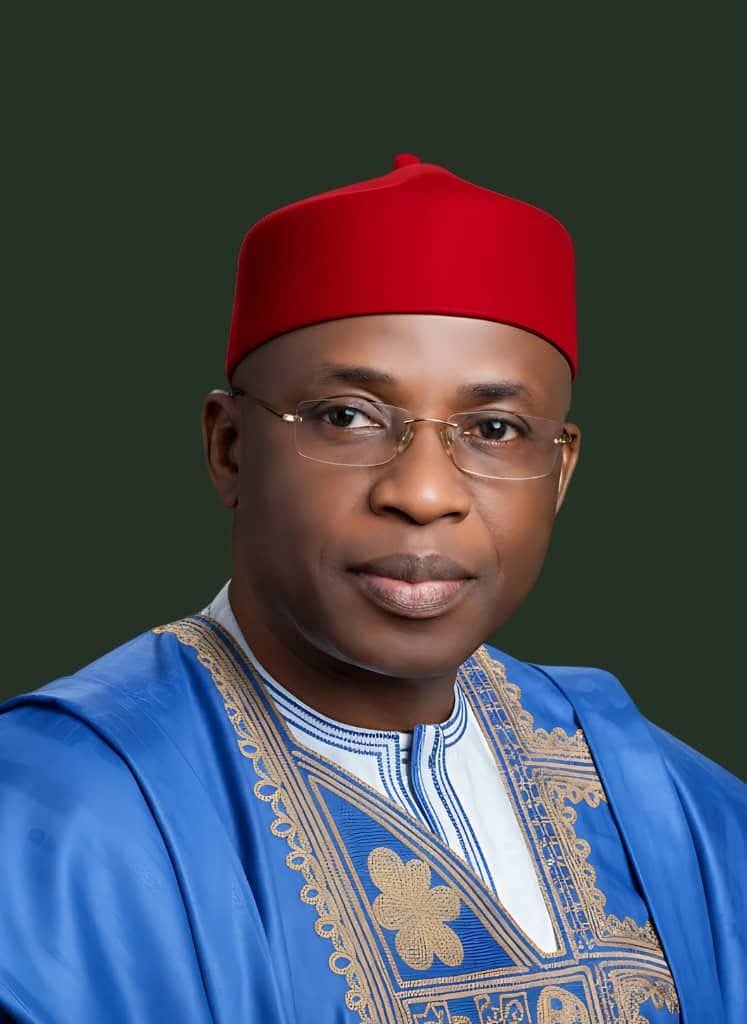
As political activities gradually gather momentum ahead of another electoral cycle in Imo State, the development record of former governor, Chief Ikedi Godson Ohakim, has again come under public scrutiny, with supporters arguing that his administration offers a template for the state’s future growth.
The renewed conversation, which coincides with Ohakim’s 69th birthday on August 4, has seen fresh comparisons between his governance approach and the development model that transformed Singapore from a resource-poor city-state into one of the world’s most prosperous economies.
Supporters say that between 2007 and 2011, Ohakim pursued a governance philosophy built on infrastructure expansion, youth employment, fiscal discipline, decentralised administration and environmental renewal, insisting that the policies produced measurable results that have remained reference points in the state’s political discourse.
During the period, about 450 kilometres of roads were constructed or rehabilitated, including major sections of the Owerri-Orlu-Okigwe road corridor, through the Imo Road Maintenance Agency, IROMA.
The agency, according to records from the administration, directly employed more than 30,000 workers while decentralising road maintenance across communities instead of concentrating the responsibility in government ministries.
Supporters also point to the administration’s policy of awarding contracts largely to indigenous contractors and community-based firms, arguing that the approach kept resources circulating within the state and strengthened local technical capacity.
Employment was another major focus of the administration, with about 10,000 graduates recruited into the state civil service in 2008 and another 5,000 teachers employed.
The government also revived more than 1,300 water schemes across the state and restored the Imo Water Corporation to operational status as part of efforts to improve access to potable water.
Environmental management featured prominently through the Clean and Green Imo initiative, which combined sanitation exercises, tree planting and urban renewal. Owerri was during the period widely regarded as one of Nigeria’s cleanest cities.
The administration equally introduced monthly town hall meetings across the state, a policy supporters say deepened citizens’ participation in governance by providing direct access to government officials.
On the financial front, the administration raised N18.5 billion through the bond market to fund infrastructure projects and reportedly left office with state reserves of N46.6 billion, a development supporters describe as evidence of prudent fiscal management.
Agriculture and rural development also formed part of the administration’s economic agenda, with investments designed to spread development beyond the state capital.
Although opinions remain divided over aspects of the administration, political observers acknowledge that Ohakim’s tenure continues to feature prominently in discussions on governance and development in Imo State.
His administration ended after the 2011 governorship election, while he returned to contest the office again in 2019. Since then, he has continued to advocate a governance model anchored on continuity, local content, youth empowerment, agricultural development and environmental sustainability.
With another election cycle approaching, renewed attention to Ohakim’s record has once again shifted public debate from campaign promises to questions about whether Imo should revive an earlier development trajectory or pursue a different path.