Leading Reporters
  • Headlines
  • Health
  • Business
  • Exclusives
  • Investigation
  • Entertainment
  • Opinion
Wednesday, December 3, 2025
Hot
Tinubu Nominates Ex-CDS Christopher Musa As Defence Minister
BREAKING: FG Publishes List of 15 Alleged Terrorist...
FG Proposes 40% Salary Increase for ASUU Lecturers
Northern Governors Host Emergency Meeting Over Escalating Security...
Tinubu appoints ex-INEC Chair Yakubu, Fani-Kayode, Reno Omokri,...
Niger Delta Boss Jennifer Adighije Accused of Corruption,...
India Orders $570 Million Payout in Major Fraud...
Dangote Refinery Saves Nigeria over ₦10bn Annually in...
Bandits Abduct 16-year-old boy, six girls in FCT...
Social Security: A Missing Link in Nigeria’s Search...
  • About Leading Reporters
  • Contact Us
Leading Reporters
Advertise With Us
  • Headlines
  • Health
  • Business
  • Exclusives
  • Investigation
  • Entertainment
  • Opinion
Hot
Tinubu Nominates Ex-CDS Christopher Musa As Defence Minister
BREAKING: FG Publishes List of 15 Alleged Terrorist...
FG Proposes 40% Salary Increase for ASUU Lecturers
Northern Governors Host Emergency Meeting Over Escalating Security...
Tinubu appoints ex-INEC Chair Yakubu, Fani-Kayode, Reno Omokri,...
Niger Delta Boss Jennifer Adighije Accused of Corruption,...
India Orders $570 Million Payout in Major Fraud...
Dangote Refinery Saves Nigeria over ₦10bn Annually in...
Bandits Abduct 16-year-old boy, six girls in FCT...
Social Security: A Missing Link in Nigeria’s Search...
Leading Reporters
Leading Reporters
  • Headlines
  • Health
  • Business
  • Exclusives
  • Investigation
  • Entertainment
  • Opinion
Copyright 2024 - All Right Reserved
Home > Borrowing
Tag:

Borrowing

President Tinubu
Headlines

FG Borrows N17.36tn in 10 Months, Exceeds 2025 Target by 55.6%

by Nelson Ugwuagbo November 10, 2025
written by Nelson Ugwuagbo

The Federal Government (FG) has borrowed N17.36 trillion from domestic and foreign sources in the first 10 months of 2025, N6.06 trillion (55.6%) above the prorated N10.9 trillion borrowing limit set in the 2025 Appropriation Act.
Domestic borrowing hit N15.8 trillion by October, while external loans reached N1.56 trillion in the first half.
An additional $2.35 billion (N3.384 trillion) Eurobond issuance, initiated last week, will push total borrowing to N20.74 trillion.

Projections based on current trends estimate full-year borrowing at nearly N23 trillion, N10 trillion (80%) over the N13.08 trillion annual budget ceiling.

The 2025 budget projected N54.99 trillion in expenditure against N41.91 trillion in revenue, leaving a N13.08 trillion deficit to be financed through borrowing.

Breakdown of Domestic Borrowing (Jan–Oct 2025):

Treasury Bills: N11.43tn (+4.6% YoY)

FGN Bonds: N4.042tn (-22% YoY)

FGN Savings Bonds: N40.19bn (+5.6% YoY)

Sukuk Bonds: N300bn (from zero in 2024)

Financial analysts warn that persistent overshooting amid weak revenue performance risks a debt trap, crowds out private sector credit, and undermines IMF-backed fiscal reforms.

Andrew Uviase, Managing Partner at Ecovis OUC, called it “a clear reflection of fiscal indiscipline and poor expenditure control,” urging drastic cuts in governance costs and improved transparency.

He noted that despite FIRS gains, non-oil revenue remains disappointing, fueling reliance on borrowing.
November 10, 2025 0 comments
0 FacebookTwitterPinterestThreadsBlueskyEmail
HeadlinesBusiness

Nigeria may be Broke but don’t need Money to Turn the Tide

by Leading Reporters February 10, 2022
written by Leading Reporters

Nigeria has continued to borrow money to fund its budgets, the 2022 budget, and the country does not plan to stop borrowing soon, as details on its Medium Term Expenditure Framework show that between 2022 and 2024, the country will borrow N14.8 trillion.

Debt servicing, a consequence of the heavy borrowing, continues to gulp huge amounts and between 2022 and 2024, debt servicing will take a total of N14.6 Trillion.

To put it concisely Nigeria is broke, maybe not in the same way Musa or Nkechi are broke two days after receiving a salary, but broke all the same. 

President Muhammadu Buhari told the global community that the country needs $1.5 Trillion to bridge its infrastructure gap.

However, has more money always translated into more development for Nigeria?

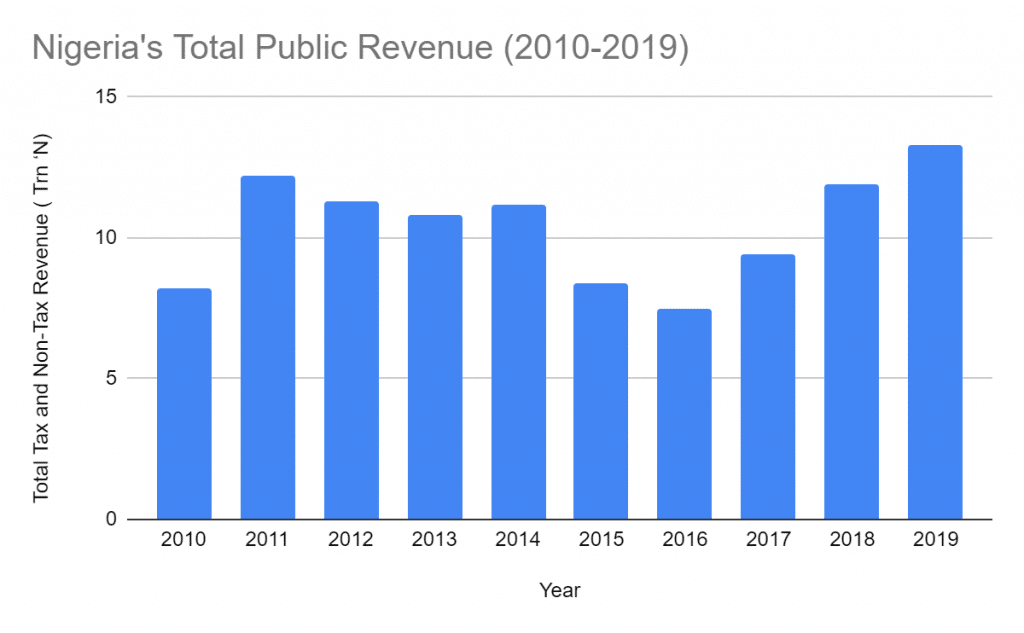
Figures available on the Organization for Economic Cooperation and Development portal show the total public revenue of the country. 

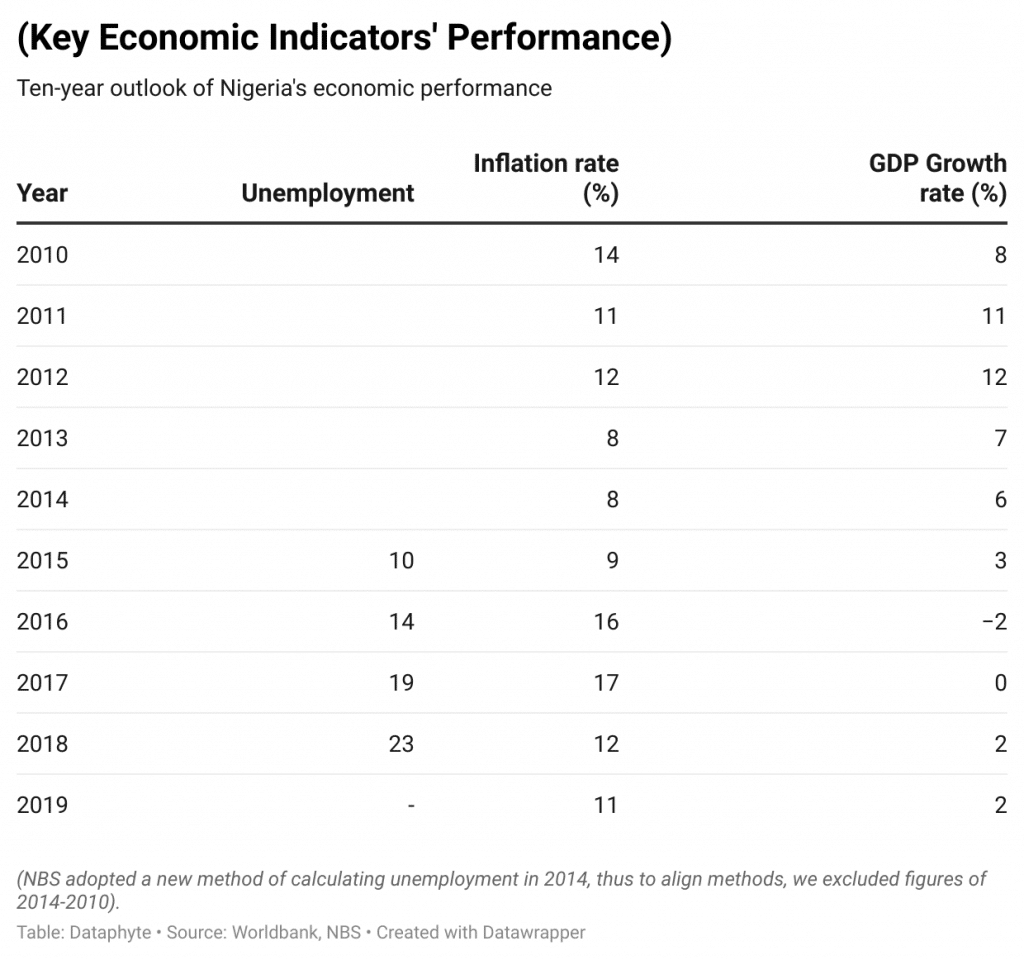
Key Economic Indicators

(The public revenue of the country for 2020 and 2021 was not added due to the COVID-19 pandemic which altered financial demands and spending of the country and all countries across the globe.)

Between 2018 and 2019, public revenue increased with the revenue hitting N13 Trillion. Unfortunately, increased revenues have not always guaranteed better economic outcomes. Economic indicators showed that GDP growth remained at 2% in both years.

The inflation figures of the country have remained in double digits impacted by both demand-pull and cost-push forces. Dependency on imports has also put pressure on the country contributing to inflation especially when the increase in the price of imported goods may also drive up prices of goods and services in the country. The naira has continued to reduce in value as exchange rates makes the country’s dependence on imported goods near suicidal. Yet in 2019, importation figures increased up to N5.3 trillion, an increase of 49.34% over the 2018 figure. 

The various policies of the government have failed to reduce the food importation bill. Importation of agricultural products rose by 6.6% between Q4 2018 and Q4 2019. Wheat importation bill stood at $1.48billion as of 2019, according to the Observatory of Economic Complexity.  Although the country’s rice production increased, the country has yet to achieve self-sufficiency.

Nigeria has also battled with poverty, with the World Bank noting that over 40% of Nigerians representing 83 million persons live below the poverty line while another 25% (53 million people) were vulnerable.

Food insecurity is heightened as the country has struggled in recent times to meet its local demand for food. Scarcity occasioned by insufficiency and strengthened by insecurity has led to a surge in food prices. Although the country has recorded some increase in the Agricultural sector’s contribution to GDP over the years, in real-time, the results have not translated to a positive effect on final economic indicators nor the country’s food security positioning.

In 2016, the country introduced N-power to tackle unemployment but the unemployment figure has not dropped since then, growing from 14%, 19% to 23% respectively in 2016, 2017 and 2018. The N-power intervention and other related policies of the government did not reduce the unemployment percentage.

Recurrent, Capital Expenditure Ratio, Corruption May be Denying Nigeria Adequate Results of Increased Revenue

Nigeria has over the years experienced high recurrent expenditure over capital expenditure across key sectors. The ability to invest in key infrastructures that may have impacted on key indicators by increasing job creation, improving local manufacturing and production etc. have reduced the value of development and increase in public revenue could offer.

Corruption is a significant factor in the loss of development benefits from increased revenue. The corruption perception index of the country stood at 145 of 180 countries in 2020 with the country scoring 25 points out of a possible 100, according to Transparency international. 

Although Nigeria dropped one place in 2020 having ranked 146 in 2019, its record has historically been poor, ranking 1444 in 2018 and 148 in 2017. This is despite the introduction of the Treasury Single Account by the government in 20016 aimed to harmonize financial operations and ensure a transparent public sector. If the Auditor General’s report is anything to go buy, the government and its agencies continue to miss the mark on transparency and accountability

Budget Deficit, Debt Servicing May Deny Nigerians Full benefit of Increased Public Revenue

A report earlier noted the high cost of debt servicing in the country for instance between January to May 2020 Nigeria spent N72 on debt servicing for every N100 earned. The 2022 budget has a 22% debt servicing figure of N3.8 trillion. This means that a substantial part  of Nigeria’s public revenue will be spent on debt servicing, monies that might have aided in boosting key economic indicators.

With Nigeria planning to borrow another N14.8 Trillion between 2022 and 2024, that will shoot up the cost of the country’s debt servicing and is expected to gulp N14.6 Trillion in the same period (2022-2024).

Review of Nigeria’s Current Key Fiscal Policies

Nigeria’s policies on improving the economic outcomes of the country have suffered various handicaps. For instance, the diversification of the economy to Agriculture has been greatly affected by insecurity, climate change, among other issues.

Policies for reducing the unemployment burden have not yielded much results as the figures have continued to grow. 500,000 Nigerians were reported to have benefitted from the N-power program as of 2020, but there has been no impact on the rate of unemployment in the country which ended the year at 32.5% . The president launched another initiative, Nigeria Jubilee Fellows program aimed at employing twenty thousand Nigerians who just graduated from the National Youth Service Corps. Again this is unlikely to affect the employment projected to rise even higher in 2022. 

The country operates the Retail Dutch Auction system for its foreign exchange. What this implies is that the Central Bank sells Forex through Banks to the end-users. The apex bank announced in July 2021, that it was suspending the Bureau-De-Change operators and suspended the issuance of new licenses. This move was perceived by actors as part of a strategy to improve the naira’s positioning but the value of Naira has remained unstable at N414 to $1 as at the time of this report. Not only are import prices  higher which drives up inflation, Nigeria’s debt servicing costs will also increase as the naira weakens. 

Exports, government spending and local manufacturing and production are a major part of increasing Gross Domestic Product but increase in price of raw materials compounded by insecurity and insufficient government investment in capital projects are likely to keep the country’s GDP growth rate nominal. 

Nigeria may need money but clearly mere increase in revenue does not necessarily translate to development and without improving its key economic performance indicators, Nigeria may continue to be in a vicious cycle of lack, dependence and borrowing.

Better policies, a genuine fight against corruption and open and accountable governance are critical to lifting Nigeria out of poverty.

While more money may mean more resources to do more things, the country may need to improve on corresponding effective policies that are commensurate with the growth in public revenue.

The question may be that the value of those monies at that time also determines what they can do, but the value relies on working policies too. (dataphyte)

February 10, 2022 0 comments
0 FacebookTwitterPinterestThreadsBlueskyEmail
Headlines

Nigeria eyes $3 billion Eurobond sale to fund budget deficits after sixth sale

by Leading Reporters May 19, 2021
written by Leading Reporters

Nigeria plans to issue $3 billion or more in Eurobonds as international capital markets (ICM) open up and interest rates decline, the government said on Tuesday, after the coronavirus pandemic disrupted markets last year.

The West African country had planned a Eurobond issue early last year after its sixth sale in 2018, but it decided to defer the 2020 sale due to market turmoil caused by the COVID-19 pandemic.

In April, the head of the debt office told Reuters the government was looking to pick advisers.

“The plan is to raise the sum of $6.183 billion from a combination of sources,” President Muhammadu Buhari said in a letter to parliament seeking approval for the debt raise.

“From recent trends in the ICM, it is now possible for Nigeria to raise funds in the ICM. We estimate that Nigeria may be able to raise $3 billion or more, but not more than $6.183 billion in a combination of tenors between five to 30-years.”

Nigeria emerged from its second recession since 2016 in the fourth quarter, but growth is fragile. The government expects a 2021 budget deficit of 5.60 trillion Naira to be financed largely from foreign and local borrowings.

Buhari said it wanted to moderate debt service costs by accessing relatively cheaper funds abroad, especially as global interest rates fall below 2020 levels while local rates begin to rise.

In February, the West African country said it would trim offshore borrowing to 30% of its total loans from 40% currently, in a bid to strengthen domestic markets.

Nigeria has been in talks with the World Bank for a $1.5 billion loan, but approvals have been delayed due to concerns over reforms to its currency.

Last week, the country let its Naira weaken on the official market against the dollar in a possible move by the central bank to unify its numerous exchange rates.

May 19, 2021 0 comments
0 FacebookTwitterPinterestThreadsBlueskyEmail

Recent Posts

  • Tinubu Nominates Ex-CDS Christopher Musa As Defence Minister

    December 2, 2025
  • Poor Toilets Driving GBV, School Dropouts – Wateraid

    December 2, 2025
  • BREAKING: FG Publishes List of 15 Alleged Terrorist Financers in Nigeria [SEE LIST]

    December 1, 2025
  • FG Proposes 40% Salary Increase for ASUU Lecturers

    December 1, 2025
  • Northern Governors Host Emergency Meeting Over Escalating Security Concerns

    December 1, 2025

Usefull Links

  • Contact Page
  • About Leading Reporters
  • Contact Us
  • Headlines
  • Investigation
  • Exclusives
  • Opinion
  • Business
  • Facebook
  • Twitter
  • Instagram
  • Linkedin

@2021 - All Right Reserved. Designed and Developed by PenciDesign


Back To Top
Leading Reporters
  • Featured
  • Politics
  • Opinion
  • Business
  • Entertainment
  • Sports
  • About Us
  • Contact