

Leading Reporters
  • Headlines
  • Health
  • Business
  • Exclusives
  • Investigation
  • Entertainment
  • Opinion
Tuesday, December 2, 2025
Hot
Tinubu Nominates Ex-CDS Christopher Musa As Defence Minister
BREAKING: FG Publishes List of 15 Alleged Terrorist...
FG Proposes 40% Salary Increase for ASUU Lecturers
Northern Governors Host Emergency Meeting Over Escalating Security...
Tinubu appoints ex-INEC Chair Yakubu, Fani-Kayode, Reno Omokri,...
Niger Delta Boss Jennifer Adighije Accused of Corruption,...
India Orders $570 Million Payout in Major Fraud...
Dangote Refinery Saves Nigeria over ₦10bn Annually in...
Bandits Abduct 16-year-old boy, six girls in FCT...
Social Security: A Missing Link in Nigeria’s Search...
  • About Leading Reporters
  • Contact Us
Leading Reporters
Advertise With Us
  • Headlines
  • Health
  • Business
  • Exclusives
  • Investigation
  • Entertainment
  • Opinion
Hot
Tinubu Nominates Ex-CDS Christopher Musa As Defence Minister
BREAKING: FG Publishes List of 15 Alleged Terrorist...
FG Proposes 40% Salary Increase for ASUU Lecturers
Northern Governors Host Emergency Meeting Over Escalating Security...
Tinubu appoints ex-INEC Chair Yakubu, Fani-Kayode, Reno Omokri,...
Niger Delta Boss Jennifer Adighije Accused of Corruption,...
India Orders $570 Million Payout in Major Fraud...
Dangote Refinery Saves Nigeria over ₦10bn Annually in...
Bandits Abduct 16-year-old boy, six girls in FCT...
Social Security: A Missing Link in Nigeria’s Search...
Leading Reporters
Leading Reporters
  • Headlines
  • Health
  • Business
  • Exclusives
  • Investigation
  • Entertainment
  • Opinion
Copyright 2024 - All Right Reserved
Home > Beans
Tag:

Beans

BusinessOpinion

Why CBN Rice Production Intervention Fund May Prove A Misplaced Priority Overtime

by Leading Reporters January 27, 2022
written by Leading Reporters

 (By Light Shedrack)

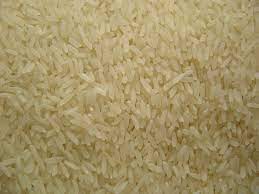
Rice is one of Nigeria’s major staple foods.  Prior to now, Nigeria spent billions of dollars every year on rice importation from Thailand and India, majorly.  To encourage local rice production, the Central Bank of Nigeria CBN came up with intervention schemes, under its Anchor Borrowers Programme (ABP).  The scheme is aimed at increasing local rice production which thus would discourage rice importation.

As much noble as the move by the Central Bank of Nigeria looks, there are lots of questions left unanswered such as the environmental impact of the scheme and looming protein deficiency that may hit the country. 

This could possibly be because Nigeria is a country that hardly makes long term plans or considers the long term effects of certain policies it pursues.  We believe in make-shift and fire-brigade approach to issues of national interest.

While Nigeria sees local rice production as the next big thing, some countries that are hitherto major rice farmers are considering divesting from commercial rice production.  India is one of such countries.  Priority may soon leave rice for other crops with higher economic value and better environmental impact.  India knows that if it continues its commercial rice farming, in the nearest future it would be hit by acute water shortage, or worse still water scarcity.

Research has shown that rice cultivation and production is a major water consumer.  Rice must be planted in areas with body of water.  Nigeria consumes about 7million tons of rice annually. To produce just one kilogram of rice, about 2500 liters of water is required.  Nigeria rice revolution is targeted majorly in the Northern Nigeria, and that axis is currently witnessing acute desert encroachment, untamed insecurity resulting in lull in economic activities.  There is as well the case of diminishing water level in Lake Chad, which has not only fueled insecurity but would sure worsen agro-allied businesses and farming.

2022 would witness protein deficiency among Nigerians, especially children.  The rising cost of beef and egg would sure mean that most families may not be able to afford these sources of protein.  What next could come as the handiest alternative?  Beans!  Beans are relatively affordable food that are considered rich in protein, carbohydrate and fibre. But how much has Nigeria Government and by extension the Central Bank of Nigeria invested in beans production.  Beans production in Nigeria has received little or no government attention or intervention.  This could partly be because beans are not elites’ preferred food.  Rice is.

Common sense should have revealed to us that Nigerians need more beans than rice now.  This is because there is deficiency of protein among the greater number of Nigerians. From 2022, protein-deficiency among Nigerians may worsen.  Most people cannot afford beef, egg and other foods rich in protein because of the skyrocketing cost of these essential foods.  To make up for this deficiency, beans can easily come handy. 

Nigeria economic policies have perennially favoured the elites.  In fact, the elites that make up less than ten percent of Nigeria’s population are mostly put into consideration whenever any policy is to be formulated.  Better put, the elites make the laws and initiate policies that favour them. Instead of the Bottom-top approach used in policy formulation in most economically viable countries that run inclusive system, Nigeria policy makers are mostly elites who sit in the comfort of their offices and over feast-like sessions, formulate policies that favour the elites.

There are other factors that may overtime prove that the Central Bank Rice Production Intervention schemes may boomerang and hit us worse than it helps us.  One of such factors is the environmental effect of rice production, when matched with the reality of climate change. Another is the absence of data, the manipulation and fraud that have characterized the scheme. But let this be a discussion for another day.

Light Shedrack is a serial entrepreneur, and an SME ideation specialist.  He writes from Abuja, Nigeria.
January 27, 2022 0 comments
0 FacebookTwitterPinterestThreadsBlueskyEmail
BusinessHeadlines

Hunger ravages Nigerian as consumable cereals record 253%, 51% price jump

by Leading Reporters July 27, 2021
written by Leading Reporters

Farmers decry worsening insecurity, FG promises intervention
The cost of food items in Nigeria has been recording significant increases in the past one year.

A survey carried out by our correspondents in markets across Lagos, Ogun and Federal Capital Territory showed that staple food commodities have witnessed astronomical price hikes.

Findings showed that within a one-year period, the cost of 50kg of beans rose by about 253 per cent, a basket of tomatoes leaped by 123 per cent, while the price of 50kg of rice rose by 51.48 per cent.

Other commodities such as bread, garri and onions also witnessed sharp increases in their prices during the period under review.

The food commodities surveyed included rice, beans, garri, maize, tomatoes, onions and bread, while the time frames examined were July 2020, January 2021 and July 2021.

In July 2020, the cost of one mudu of rice was N420.63, while 50kg of rice was between N21,125 and N28,500.

A price increase occurred in January 2021, with one mudu of rice rising to N500, while 50kg of rice was between N23,750 and N24,500.

The increase continued until in July 2021 as one mudu of rice rose to N1,100, while 50kg of rice increased to an average of N32,000.

As of July 2020, one mudu of beans cost N305.48, while 50kg of beans was N12,750.

However, by January 2021, the price of a mudu of beans had climbed to N373, while 50kg of beans was N30,000.

The increase continued in July 2021, with one mudu of beans costing N900, while 50kg of beans had risen to N45,000.

Between July 2020 to January 2021, the cost of a 1kg and onions rose from N180.56 to N411, while one big bag of onions climbed from N17,000 to N21,500.

In July 2020, the cost of one mudu of garri was N247.62, while 50kg of garri was N11,500.

A price increase occurred in January 2021, with one mudu of garri selling for N300, while 50kg of garri sold between N10,750 to N11,125.

The increase continued until in July 2021 with one mudu of garri going for N450 while 50kg of garri sold for N14,500.

In July 2020, a mudu of maize was sold for N186.89 to N184.52, while 50kg of maize was N17,500 to N17,250.

A price increase occurred in January 2021 with one mudu of maize selling for N216 to N230, while 50kg of maize was N20,000 to N20,167.

The increase continued in July 2021 with one mudu of maize selling N400, while 50kg of maize sold between N22,000 and N24,000.

In July 2020, the cost of 1kg of tomatoes was N284.49, while a big basket of tomatoes was N8,500.

A price drop occurred in January 2021 with 1kg of tomatoes going for N152, while a big basket of tomatoes sold for N6,500.

However, as of July 23, 2021 when this report was filed, 1kg of tomatoes cost N1,000, while a big basket of tomatoes was sold for N19,000.

The cost of bread continued to rise steadily within the review period.

As of July 2020, the cost of one loaf of bread was N375. The same unit was sold for N500 in January 2021 and N600 as of July 2021.

The composite food index (a measure of food inflation) rose to 21.83 per cent in June compared to 22.28 per cent in May 2021, according to the National Bureau of Statistics.

This rise was caused by increases in prices of bread and cereals, potatoes, yam and other tubers, milk, cheese and eggs, fish, soft drinks, vegetables, oils and fats, and meat.

In January, food inflation was 20.57 per cent, compared to 19.56 per cent in December 2020. This rise was caused by increases in prices of bread and cereals, potatoes, yam and other tubers, meat, fruits, vegetable, fish and oils and fats.

In June 2020, food inflation was 15.18 per cent. An increase caused by increases in prices of bread and cereals, potatoes, yam and other tubers, fruits, oils and fats, meat, fish and vegetables.

According to the NBS, food inflation on a year-on-year basis was highest in Kogi (30.34 per cent), Enugu (25.18 per cent) and Kwara (24.78 per cent), and lowest in Bauchi (18.97per cent), River (18.92per cent) and Abuja (17.09per cent) in June, 2021.

On month-on-month basis, food inflation was highest in Jigawa (2.67 per cent), Edo (2.43 per cent) and Cross River (2.16 per cent), and lowest in Lagos (0.14 per cent), Borno (0.06 per cent) and Kwara (0.02 per cent) in June, 2021.

July 27, 2021 0 comments
0 FacebookTwitterPinterestThreadsBlueskyEmail

Recent Posts

  • Tinubu Nominates Ex-CDS Christopher Musa As Defence Minister

    December 2, 2025
  • Poor Toilets Driving GBV, School Dropouts – Wateraid

    December 2, 2025
  • BREAKING: FG Publishes List of 15 Alleged Terrorist Financers in Nigeria [SEE LIST]

    December 1, 2025
  • FG Proposes 40% Salary Increase for ASUU Lecturers

    December 1, 2025
  • Northern Governors Host Emergency Meeting Over Escalating Security Concerns

    December 1, 2025

Usefull Links

  • Contact Page
  • About Leading Reporters
  • Contact Us
  • Headlines
  • Investigation
  • Exclusives
  • Opinion
  • Business
  • Facebook
  • Twitter
  • Instagram
  • Linkedin

@2021 - All Right Reserved. Designed and Developed by PenciDesign


Back To Top
Leading Reporters
  • Featured
  • Politics
  • Opinion
  • Business
  • Entertainment
  • Sports
  • About Us
  • Contact