Leading Reporters
  • Headlines
  • Health
  • Business
  • Exclusives
  • Investigation
  • Entertainment
  • Opinion
Monday, January 26, 2026
Hot
Nigerian-born nurse loses licence in Australia for sleeping...
BREAKING: Kano Gov Abba Yusuf dumps NNPP
National Grid Collapse For First Time in 2026
BREAKING: Tinubu approves posting of Ambassadors to U.S.,...
Insecurity: Kidnappers demand 17 motorcycles for release of...
FG to Abolish Hnd-Degree Dichotomy, Allow Polytechnics to...
AFCON Initiative drives stronger Nigeria Morocco cooperation
Obasanjo: I’ll Never Stop Having Children
JUST IN: Bandits abduct over 100 worshippers in...
Nigeria’s Non-oil exports hit record $6.1bn – NEPC
  • About Leading Reporters
  • Contact Us
Leading Reporters
Advertise With Us
  • Headlines
  • Health
  • Business
  • Exclusives
  • Investigation
  • Entertainment
  • Opinion
Hot
Nigerian-born nurse loses licence in Australia for sleeping...
BREAKING: Kano Gov Abba Yusuf dumps NNPP
National Grid Collapse For First Time in 2026
BREAKING: Tinubu approves posting of Ambassadors to U.S.,...
Insecurity: Kidnappers demand 17 motorcycles for release of...
FG to Abolish Hnd-Degree Dichotomy, Allow Polytechnics to...
AFCON Initiative drives stronger Nigeria Morocco cooperation
Obasanjo: I’ll Never Stop Having Children
JUST IN: Bandits abduct over 100 worshippers in...
Nigeria’s Non-oil exports hit record $6.1bn – NEPC
Leading Reporters
Leading Reporters
  • Headlines
  • Health
  • Business
  • Exclusives
  • Investigation
  • Entertainment
  • Opinion
Copyright 2024 - All Right Reserved
Home > Opinion > Page 5
Category:

Opinion

LeadingReporters Demand for Quality Education in Nigeria Image
HeadlinesOpinion

Constructive Dialogues and the Demand for Quality Education in Nigeria

by Leading Reporters March 3, 2023
written by Leading Reporters

Conversations at Education Summits with key stakeholders in Nigerian education revealed the power of inclusion: having been given a voice, these stakeholders now felt a greater sense of agency and a desire to become leaders in education reform.

As an important part of its charge, the RISE Nigeria project attempts to fully understand the nature and dimensions of education demand in the country, to better understand the reasons for where that demand is weak.

The project has meaningfully advanced this inquiry in one of its components, the Political Economy of Education Reform (PE), where it designed an experimental system of organised dialogues between local education stakeholders and government officials around empirically determined education issues, to investigate the impact of these conversations on cumulative attitudes. The conversations have, directly and collaterally, disclosed the underlying aspirations and attitudes that drive and dissuade education demand, and have, importantly, additionally inspired and informed attitudinal transformations towards greater demand for quality education among participating stakeholders.

With these dialogues, the RISE Nigeria project is attempting to ignite a sense of stakeholder agency in the education development process; to build the expectation of, and demand for, quality education; and, crucially, to enable the sharing of knowledge, experiences, and expectations between sides, to strengthen the demand-supply process.

Education demand and quality education in Nigeria

There is clearly a significant education demand problem in Nigeria, as the country presently has the highest population of out-of-school children in the world. Most of these children are in rural areas (almost half the population of children from rural areas who work are out-of-school) and from the poorest households (almost two-thirds of the population of children from the poorest households are out-of-school). Interestingly also, education demand for girls is demonstrably lower than for boys, with 37 percent of school-age girls in Nigeria out-of-school, compared to 27 percent for school-age boys.

Again, the quality of education in Nigeria’s public elementary schools is cumulatively low—as recently as 2017, in the Global Competitiveness Index of the World Economic Forum, Nigeria ranked only 120 out of 137 assessed countries in the quality of elementary school education.

To scrutinise the larger education problem, the RISE Nigeria Project selected representative samples of relevant geographical areas and populations across the country’s geo-ethnic landscape; and here, amongst other studies, vast numbers of respondents were systematically surveyed to investigate human-driven causes of the nation’s education problems.

An instance from one of those studies which is perhaps largely representative of the types of stakeholder mindsets at the heart of poor demand for quality education in these populations, is one where a respondent in a conversation with a project-enumerator had said,

“My eldest boy went to [elementary] school here [in the community] for six years and can barely write his own name. Why should I waste time and my limited funds sending his younger ones [to school]? It is better that they work with me on the farm and make money for us to feed with.”

The objective of the RISE Nigeria project was to investigate and analyse attitudes such as this one, as well as the other intangible drivers, such as aspirations, which shape education demand. Parallelly, the project gauged the quality of education in the study areas, examining how education quality was responsible for those attitudes, was an outcome of them, or both.

In the Political Economy of Education Reform (PE) component of the project, these determinations formed the bases for constructive dialogues, in Education Summits, towards solving the education problems.

The education summits and the post-summit gatherings

The RISE Nigeria Political Economy of Education Reform (PE) experiments, fittingly, put parents and communities at the forefront of the education development discourse. In each of the 3 selected study states—Enugu, Oyo and Jigawa—3 study Local Government Areas (LGAs) and 3 control LGAs were chosen, for a total of 9 study LGAs and 9 control LGAs. In each of the study LGAs, a painstaking stakeholder-mapping process identified the most prominent/influential/representative parents, community members, community leaders, and teachers themselves, to helm the determination of the most pressing constraints of their local education systems, and to subsequently converse with government representatives to address these problems.

In the data-gathering phase of the experiment, in addition to evaluating the state of infrastructure and learning at the study schools, a recorded survey of these stakeholders was used to establish those leading local education problems. The data-collection phase then segued into an Education Summit in each LGA, where these dialogues between education stakeholders and government officials were held.

Outcomes from those deliberations speak to their efficacy in engendering commitment across the aisle to participation in education reform. While government personnel in each of the education summits appended a social contract that articulated the resolutions as a gesture of their intent to facilitate the required improvements, the stakeholders themselves in these and subsequent affiliated gatherings (there were post-summit gatherings in each state, where government officials and the local stakeholders were separately convened, to assess progress on resolutions from the summits) earnestly identified possible areas for their own meaningful participation and intervention, towards quality education (among other goals).

In Enugu state for instance, at the education summits for the 3 study LGAs there—Udi, Nsukka and Nkanu West—Quality of Education was, as determined by the preceding surveys, a priority unanimously brought forward by the local stakeholders to the deliberations. On this issue, they demanded, among other things, more scrutiny of teacher qualifications, regular training, and upskilling of serving teachers, and periodic evaluation of the teachers to guarantee quality learning.

The demand-side post-summit events in Enugu state assembled these previous, and other newly selected stakeholders to measure progress since the summits, and to discuss any possible contributions by them to the development process. As it turned out, the stakeholders were quite eager to make meaningful contributions. For example, some retired teachers pledged to return to the classrooms of their local schools to teach pro-bono and thereby improve the quality of learning there. Some SBMC members volunteered to visit their local schools regularly to check for teacher attendance and punctuality. Also, some stakeholders pledged personal funds, or volunteered to help source donations from local philanthropists, towards improving the quality of education at their schools.

The results

Overall, this opportunity to effectually have a say in education development was something that these stakeholders had mostly not often been given, one that they were immensely appreciative of, and one that they were intent on utilising optimally.

Importantly, these summit and post-summit congresses revealed all the latent and predominant stakeholder attitudes that inform the demand for quality education (or the lack of it), and that weaken or prohibit stakeholder-participation in education-improvement conversations.

Even more significantly, the fact of their inclusion in this important education development process, where heretofore they were typically only disenfranchised bystanders and voiceless observers, roused a firm, collective sense of agency within the study stakeholder groups, and emboldened them to envisage and demand reform that would lead to the quality education that their children deserve but have no access to.

For them, if (as the RISE PE project has pioneered) their opinions and recommendations were fittingly incorporated in the planning of education development and intervention, then they would, as they have done in the RISE dialogues, emphatically assert their claim to needed improvements of their education systems, while conscientiously taking up their own roles in those development processes. If education policy design in Nigeria assimilates this inclusive procedural model, as is the aim of the PE project, then these underserved stakeholders will perhaps lead the charge for a renewed focus on quality education delivery in Nigeria’s public education system.

Going forward

In recognising the effectiveness of the stakeholder dialogues in transmuting attitudes and renewing aspirations towards quality education, the RISE Nigeria project infused its project dissemination with more of these events, in attempting to, with the reiteration of this participatory methodology, start to lend it the visibility that would hopefully catalyse its uptake and spread within the education sector nationwide. Furthermore, as a demonstrated stopgap for the disconnects between policy design and need in education, the dialogues of the RISE Nigeria project may even be replicated beyond that sector.

Hopefully, dialogues like these will quickly become a mainstay and yield better outcomes in Nigeria’s education system, hastening the country’s still stunted advancement towards the 4th Sustainable Development Goal of quality education for all.

Credit: RISE blog posts and podcasts
March 3, 2023 0 comments
0 FacebookTwitterPinterestThreadsBlueskyEmail
Leading Reporters APC’s dilemma on election eve
HeadlinesOpinion

APC’s dilemma on election eve

by Leading Reporters February 19, 2023
written by Leading Reporters

By Tonnie Iredia

Too many things have since shown that in truth, there is not much difference between our ruling party, the All Progressives Congress (APC) and its biggest rival, the Peoples’ Democratic Party (PDP). Both parties have a few decent members but majority are political traders. When in power, the two parties behave exactly the same way. To start with, whereas both parties pretend that the welfare of the people matters to them, they do little or nothing to cover the pretence. Whenever an election is approaching, they create scenarios that automatically frustrate a credible contest thereby retaining office while claiming to have come in through the popular will of the people. But events have shown that the strategy has its limits. On its part, the PDP managed to hold-on for 16 years (1999-2007); but whether the APC will last beyond 8 years is becoming doubtful.

In 2015, everyone saw through the gimmicks of the ruling PDP as it struggled to postpone elections to make room for vote buying and other electoral manipulations when it became evident that it no longer enjoyed the confidence of voters. The change propaganda which thereafter brought the then opposition APC to power virtually waned even before its first term ended. First, the party showed its nervousness over the use of the Card Reader – a technological device which made rigging tedious. Hiding under the judicial ruling that the device was unknown to law, the APC made everyone to discountenance the amendment to the Electoral Act in 2015 which had recognised devices like Card Reader. From then on, the party ensured that a fresh amendment to regularize the situation was not signed into law for the 2019 elections. Although the party was declared winner of that year’s elections, some people had doubts that the victory was real following the server controversy that preceded the declaration of results.

Four years later, it has become quite clear that the APC is in trouble especially in its current atomistic state in which it is now at war with itself on a daily basis. Indeed, the party has become the greatest opposition to its own policies and leadership. Evidence that the APC was visibly scared about its chances of reelection in 2023 was mostly seen in its desperation to frustrate efforts at instituting the electronic transmission of election results – which had become a global reality. The attempt to procure officials of the National Communication Commission (NCC) to virtually commit perjury in their testimony before the legislature on the subject of electoral technology was ridiculed by the public. The electorate similarly rejected the legislature’s kangaroo voting against the innovation making it easy for the new Electoral Act 2022 to be passed along with a number of anti-rigging clauses. Apart from a few party members who remained popular in their constituencies, the ruling party has since been on edge moving from one error to another.

The new Electoral Act did well in the steps it took to sanitize party primaries, even though the ruling party turned out to be the leading culprit in electoral chicanery and the imposition of candidates. Luckily for them, for some inexplicable reasons such as the need to reduce cases in courts, the judiciary was arm twisted to allow for party supremacy in which a party’s nomination needn’t be controverted. Nigerians are however aware of the established canon that as administrative bodies, activities of political parties ought to be subjected to judicial review. This is more so as the Electoral Act had stipulated what must be done or not done to attain credible primaries. In the end, the APC subverted such guidelines only to return to the inglorious past in which a party can elect flag bearers from among party members who did not take part in the primaries and as such could not be described as aspirants. Based on the trend, can we pretend that we are on the way to free and fair elections?

In a democracy, it is the victorious party in an election that forms government; which makes the ruling party to be powerful. In Nigeria, they are not only powerful, they act quite often with impunity. The Goodluck Jonathan-led PDP government had attempted in its days in office to appoint politically tainted persons into the Electoral Commission that is world-wide known as non-partisan. Such nominees were however dropped as a result of public outcry, but the APC did not take cognizance of public outcry. So, with the recent appointment of suspected party loyalists into INEC that is supposed to be an impartial umpire, the public could not have been unaware that the objective was to use such officials to rig the 2023 general elections. This became yet another evidence that the ruling party had lost self confidence that it could win a free and fair contest. Put differently, the APC has inadvertently exposed its fear that it is at the verge of losing public support having failed to perform to public expectation. This has made the ruling party to be a suspect in every policy it enunciates towards the polls – a good example being the new naira programme.

But perhaps the best example of the dilemma of a ruling party on the eve election manifests in the unusual hostility of APC’s leading members towards President Muhammadu Buhari who was himself elected into office through the party’s banner. The severity of the attacks on Buhari’s new naira programme notwithstanding, Nigerians know that the president is the only APC member on ground today who believes in a free, fair and credible contest next Saturday. All others are locked up in schemes to gain political leverage and foreclose a level playing ground for the coming elections. Many Nigerians are persuaded that those engaged in court cases to stop the president’s plan are not doing so to alleviate public suffering as they claim, rather the goal is to buy votes – a popular method by which many elections were ‘won’ in Nigeria. Painfully, the Nigerian elites are grandstanding and eloquently displaying knowledge every evening on national television on the subject of the rule of law. Those media ‘shows’ are redundant because they have not changed the suffering of the people. If only the poor among us can get the N200 Buhari canvassed, the situation would drastically improve.

The on-going debate on the rule of law appears to have successfully diverted attention from the growing political violence in Lagos and some other cities in Nigeria. A few days ago, Usman Alkali Baba, the Inspector General of Police (IGP) did what his predecessors used to do close to elections. He rolled out law enforcement arrangements designed to curtail violence. He even listed all the newly procured modern arms and other facilities to upgrade the police. We must tell him and quickly too that the reading of such riot acts is not new and that we remain scared by daily reports of political attacks about which the police are usually silent. In Lagos, there was the report of a local leader in a community aided by another person described as SSG who allegedly summoned and threatened citizens with eviction if they failed to vote for a particular party. The promise by the police to organize what was described as a forensic analysis of the report is yet to see the light of day.

The week before, members of a political party that held a well-advertised rally at the Tafawa Balewa Square in Lagos were crudely attacked. Where was the police? If half of the people are attacked and scared away from voting which voters would the police guard on voting day with its advertised modern facilities and what evidence is there that the police are not unwittingly supporting one set of politicians against another? If so, what is all the fuss about some jaundiced rule of law principles? Somebody should help us tell our elites that as fundamental as the rule of law is, they are able to partake in the television see debates on it because it is Banks and not the Supreme Court that frustrated citizens attacked. Another well-meaning speaker should tell them that continued suffering of Nigerians cannot stop illegal contraptions such as the Interim National Government and Military rule that we all seem to deprecate

February 19, 2023

February 19, 2023 0 comments
0 FacebookTwitterPinterestThreadsBlueskyEmail
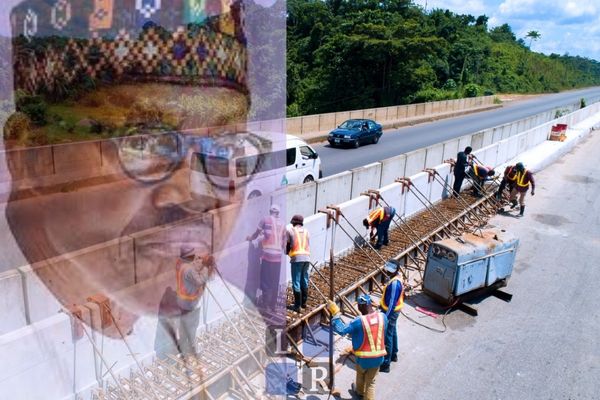
Leading Reporters Buhari's Infrastructural Development: At What Cost and Whose Expense?
HeadlinesOpinion

Buhari’s Infrastructural Development:  At What Cost and Whose Expense?

by Leading Reporters February 19, 2023
written by Leading Reporters

Nigeria has suffered perennial infrastructural deficiency.  From bad road to a near comatose rail transport system.  Former President Goodluck Jonathan started what looked like a revolution in the rail sector.  When President Muhammadu Buhari took over the mantle of leadership in 2015, He placed priority on infrastructural development, with a special interest in the railway, airport and road sectors.  Under his administration, the transport sector (Road, rail and airport) gulped more loans than every other sector and every other government since the advent of the current democratic experience.

There are currently ongoing road projects across many parts of Nigeria.  There is as well the 2nd Niger Bridge within the South East axis.  There are massive road constructions within the Southern and Northern axis in Nigeria. As beautiful as all these seem, the question Nigerians have failed to ask is the cost of borrowing to fund these projects.  Are these loans worthwhile?  Are they deployed for the same purpose for which they borrowed?  What are the terms and conditions of these loans?  What are the sovereign collateral and guarantees?  Are the projects for which they were borrowed feasible to bring enough returns to repay these loans?  What are the qualities and life spans of these infrastructures that we are obtaining loans for?  What effect do these untamed loans have on the economy at least within the medium and long terms?  These are questions every patriotic Nigeria should genuinely ask.

Unlike under previous governments when construction giant like Julius Berger was majorly patronized by the Federal Government, China construction companies are currently dominating construction projects in Nigeria – from rail to road, from airport to other infrastructures.  The reason for this shift is not far-fetched.  Most of the funding for these infrastructures is a “China Loan”. China would not avail of a loan that would benefit other construction companies.  Thus, Chinese Government-owned companies are having a field day in the construction sector in Nigeria.

President Buhari is currently the Nigeria President with the highest loan-take.  While many praise him for several infrastructural projects across Nigeria, others hold the view that the president’s penchant for loans may plunge Nigeria into collecting loans that may never easily be paid back.  China’s loan largesse is not limited to Nigeria.  Report has it that so many other countries have stretched to China for loans, nay, for more loans.  Loans are collected with collateral and other forms of securities and guarantees. Nigerians see roads and other infrastructures, but most Nigerians do not know the terms under which those loans were given to Nigeria. 

President Buhari APC-led government does not seem to understand jack about wealth creation or how the abundant human and natural resources Nigeria has been endowed with could be optimized for national growth and development.  The floral and faunas, the enchanting landscapes and rocks in the North Central region, the green allures of the South-South lands that stretch from land to sea, including the bodies of water that dot up that region, the historical monuments that could create research and historical tourism among countless other touristic elements lay waste without any efforts at exploring and exploiting them as major revenue earner.  What about the arable land that stretches from North to South?  Despite claims of food sufficiency, Nigeria still imports most of the food it consumes.  Where locally-made foods are available, the prices tower higher than the reach of an average Nigerian. Truly, things have fallen apart and all thanks to clueless leadership that have continued to plague Nigeria since her independence.

President Muhammadu Buhari is an expert in negotiating and collecting loans.  His advisers seem to always urge him on. Former Minister of Transport, Rt. Hon. Rotimi Amaechi stood out as one of President Buhari’s ministers who saw China loan as the be-all and did not seem to remember that loans are loans and are repayable. President Buhari believes the only way he could out-perform his predecessors is by collecting more and more loans for infrastructures.  Today in APC, infrastructural development have become a campaign slogan.  They tell Nigeria to embrace roads, and rails that have been built for them.  They however fail to tell Nigerians that their future have been sold for loans.

One of the sectors that has engulfed many loans is the railway facility.  Amaechi has severally and shamelessly portrayed the inevitability of loans for more rail tracks, including running a rail track from Nigeria to the Republic of Niger at no cost to the government and the people of the Republic of Niger. But any right-thinking Nigeria knows that the rail sector is not viable enough to repay the massive loan that has so far been obtained from China.  I do not think that the proceeds from rail transport will ever be enough to run the overhead costs, let alone repay the loans collected to build them. 

Only time will tell the damage these suspicious loans have dealt to the economy of Nigeria.  Only time may prove that these loans and the arrangement behind them were laden with corruption, and manipulation for purpose of self-aggrandizement.  Some of these loans were taken to be stolen.  Time will tell.

But do these loans have a long-term effect on the collective fortune of Nigeria and Nigerians?  It does. A disastrous effect.  Creative leaders are not those who resort to loans to bridge infrastructural deficiencies.  But they are people who optimize resources for growth and development.  Creative leadership provides an enabling environment that attracts the private sector to take infrastructural development.  What President Muhammadu Buhari, his aides and ministers have succeeded in doing in the name of infrastructural development is simply mortgaging the future of Nigerians, including an unborn generation. I am not enthused by several roads, rails and bridges built with Chinese loans, I am rather worried that Nigerians will pay dearly for the greed of a few who sold out this country by collecting loans for which their repayments do not look feasible.  …. To be continued.

Light I. Shedrack is a communication strategist, public issues analyst and an SME ideation specialist.  He writes from Abuja and can be reached via lightsheddie26@gmail.com

February 19, 2023 0 comments
0 FacebookTwitterPinterestThreadsBlueskyEmail
Opinion

Arase as PSC Chairman and Babawale’s unfounded fear

by Leading Reporters February 16, 2023
written by Leading Reporters

At this time and season of our national development, to pay particular interest to a recent letter purportedly written by the Convener, The Think-Tinubu Initiative, 3TI and member of the Policy, Research and Strategy Committee of the APC Presidential Campaign Council, PCC, Omogbolahan L.A. Babawale cannot be a priority to genuine lovers of our beloved country and democracy.

In a manner suggesting that he must have written out of panic and unfounded fear, may be for partisan reasons, Babawale must have been so confused as to be lost to the difference between a call to national service as distinctly far from a call to serve overly partisan interest.

In the letter addressed to his Party’s National Chairman and titled: THERE MAY BE FIRE ON THE MOUNTAIN, LET EVERY LEG RUN, the writer insinuated that the appointment of former Inspector General of Police, Solomon Arase whom he alleged is a card carrying member of “the opposition PDP,” as Chairman of the Police Service Commission, PSC would undermine the stakes of the ruling APC in the forthcoming polls.

As laughable as it is too, Babawale, perhaps out of ignorance or deliberate mischief warned of a “possible plot of internal sabotage against the Party’s presidential candidate, Asiwaju Bola Ahmed Tinubu and his running mate, Senator Kashim Shettima Mustapha” as the appointment of the new Chairman of the PSC will open the floodgate of posting and reposting of Police Commissioners to sooth his whims and caprices for some political gains.

Let’s put the matter straight to the rather diabolical position of Babawale and many of his cohorts.

Contrary to what Babawale will make his fellow ignoramuses believe, IGP Arase‘s father hails from Benin and his beloved mum is from Eme-Ora, both from Edo State and not Agenebode as told by Babawale.

Should the Babawales of this clime care to know, the mandate of the PSC is to ensure fairness, equity and justice in the appointment, promotion and discipline of officers in line with Federal Character principle.

Furthermore, Babawale must be told that the IGP is in charge of the operational arm of Nigeria Police Force and deployment of Commissioners of Police to various State Commands. 

Simply put, Babawale’s fear is misplaced as all relevant and extant laws of the land carefully  highlight the separation of powers between PSC, NPF and the Ministry of Police Affairs in line with the new Police Act 2020 for effective policing of the populace.

A very short recourse to the country’s political cum public service history would have informed the Babawales of this world that Nigeria’s former Director General of the Directorate of State Security, Lawal Daura was Director of Security, APCPCC in 2014. He was later appointed DGSS. Also, Mrs Lauretta Onochie is a renowned card carrying member of APC who was nominated as National Commissioner, INEC and Chairman, NDDC Board at various times, even though she was turned down by the Senate. There are many of such instances.

Most importantly, Babawale shot himself in the foot when he exposed the real real behind his panic letter when he stated inter alia: “The Presidency did not see any non-partisan retired police officer, if not anyone with soft spot for the APC to appoint except a known PDP bigwig. I thought President Muhammadu Buhari said he wanted to leave a lasting legacy on electoral process. Is it by appointing a PDP diehard this can be achieved? Fingers crossed!”

It is tragic that at a time progressive-minded Nigerians are exploring ways and means to jettison the politicisation of every aspect of our national life, Babawale chose to raise an alarm over nothing untoward. If anything at all, his panic letter to the APC Chairman which was copied to all APC PCC members is and remains a figment of his partisan political mindset and self-indicting. It underscores an obvious plot of his Party to employ some underhand tactics to rig their way at the polls. Unfortunately, our electoral process has been so improved upon that the BVAS will not allow for any such plot to succeed.

May be Babawale can reflect on the following worthy commendations by fellow Nigerians following the announcement and further clearance of Arase for the PSC job. The Civil Society Organisation in a statement saying why they must endorse Arase for the job said: “as IGP, he set up the Complaints Response Unit (CRU) which is an improvement on existing public complaints mechanisms by  introducing the use of technology and expanding the platforms through which members of the public could send complaints of police misconduct and receive timely feedback.

“Succeeding IGPs have not given the CRU the support it received under Arase which made it work effectively and efficiently then. The CRU has a committed and professional minded leadership but lacks police management support.

“Arase, upon assuming office as IGP, espoused the vision of modern and democratic policing that is transparent, responsible, accountable and respectful of human rights.

“He initiated the very first set of measures to check police brutality, especially the excesses of SARS. He split SARS into 2 units with one to handle arrest and the other to handle investigation.

“But most of his initiatives and efforts to entrench a culture of discipline and accountability were not sustained by his successors

“We are aware of how his efforts to rein in some notorious SARS commanders against whom were frequent and high numbers of complaints were frustrated by political interference.

Continuing, they said, “We will support Arase to succeed hoping that under him, the urgently needed reforms of the PSC which started last year with a bill to review the establishment Act will be pushed through under his leadership.

“These reforms revolve around leadership qualification and appointment procedure, strengthening the investigative powers and competences of the PSC and streamlining the mandate of the PSC with regards to police recruitment and appointment, discipline and promotion.”

In congratulating President Buhari for Arase’s appointment and consequent clearance by the Senate, the Pan-Niger Delta Forum, PANDEF said: “given the sterling career profile, and wealth of experience, of the former Inspector General of Police, and his commitment to National stability and peace, it is certain that his appointment will be immensely beneficial to the Nigeria Police Force, in particular, and the Country, in general.

“PANDEF notes that Arase has, over the years, established himself as a diligent, dedicated, and patriotic Nigerian.

“While in the Police Service, Dr. Solomon Arase served in various capacities, including Commissioner of Police in Akwa Ibom State and was head of the topmost intelligence gathering unit of the Nigeria Police – the Criminal Intelligence and Investigation Bureau, as Assistant Inspector-General, and, later, DIG, before he was appointed Inspector-General of Police, in April 2015. 

“And, even after he retired from the Police Service, in 2016, Dr. Solomon Arase continued to bestow his knowledge and experience to the Force, and the Nation, in various capacities.

A final word to Babawale and his gang: let the partisan politicians face their politics and leave the new PSC Chairman alone. After all, President Muhammadu Buhari in all his wisdom and patriotic disposition nominated Arase, the Senate confirmed him as the PSC Chairman; and he is ready, able and willing to work for the greater glory of Nigeria.

February 16, 2023 0 comments
0 FacebookTwitterPinterestThreadsBlueskyEmail
Opinion

How Nigerian States Are Breaking Boundaries to Eliminate River Blindness, Elephantiasis Transmission

by Folarin Kehinde February 9, 2023
written by Folarin Kehinde

In many parts of Nigeria, onchocerciasis, also known as river blindness, has been as common as it has been devastating – having stolen the eyesight of an estimated 120,000 Nigerians and causing debilitating complications in many others.

The disease has been so common, that researchers interviewing rural Nigerians in 1991 reported its symptoms, including the impairment of vision, are “believed by Nigerian rural dwellers to be part of the natural vicissitudes of aging.” No other country, in fact, has had more people infected or people at risk of contracting the neglected tropical disease (NTD).

One of the leading infectious causes of blindness in the world, onchocerciasis is caused by a worm transmitted by repeated bites of infected female blackflies. It is notoriously difficult to cure – treatment requires reaching affected communities, often in remote locations, with annual or biannual doses of an anti-parasitical medicine for periods spanning a decade.

It has been such a stubborn scourge that when Nigerian health leaders launched their most recent anti-river blindness effort in 1991, their goal was not elimination – instead their goal was simply to reduce the number of people falling ill.

“We thought we would be treating onchocerciasis indefinitely,” said Dr. Abel Eigege, the program director for The Carter Center in Nigeria for the past 25 years. “It was a daunting challenge that had plagued our forefathers for generations.”But 30 years later, health leaders in Nigeria’s Plateau (population 3 million) and Nasarawa states (population 2.5 million) have achieved what few initially thought possible – they have delivered 27 million doses of medication over more than 20 years, to eliminate transmission of river blindness.

Another four Nigerian states: Abia (population 4.2 million), Anambra (population 6.2 million), Enugu (population 4.8 million), Imo (population 5.8 million) appear close to the same historic milestone.

After molecular testing of more than 52,000 black flies and blood samples from more than 12,000 people, the Ministry of Health has just announced that it will no longer be distributing drugs to stop transmission in those four states and instead will monitor to confirm elimination of transmission.

And another three states, Sokoto (population 6.3 million), Yobe (population 3.6 million), and Gombe (population 4 million), are also suspected of having stopped transmission and are launching the widespread surveying and testing of flies and humans necessary to determine if they can confidently stop distribution of anti-parasitic medicine.

Efforts to control the disease continue across more than 20 other Nigerian states. These efforts are led by health officials like Jacob Danboyi, whose own father lost his vision because of river blindness. Danboyi went on to serve as coordinator of Nasarawa state’s neglected tropical disease elimination program.

“I cannot express how gratifying it is to see millions of Nigerians free from the threat of river blindness,” Professor B.E.B. Nwoke, chair of Nigeria’s Onchocerciasis Elimination Committee said in a statement.

“When we started, many questioned our ambition. Today, I’m proud that Nigeria, once again, serves as a beacon of inspiration.”What’s more, river blindness efforts served as the backbone for historic progress against other NTDs. The same 17,102 community volunteers across the Plateau and Nasarawa states who educated their neighbors about river blindness and delivered the 27 million doses of ivermectin, also educated their neighbors about lymphatic filariasis (also known as elephantiasis) and delivered 36 million ivermectin-albendazole treatments for the disease – eliminating it from Plateau and Nasarawa states in 2012.

This same network of community volunteers also reduced schistosomiasis, commonly known as snail fever, by 62 percent in the two states, and delivered hundreds of thousands of insecticide-treated bed nets to help eliminate lymphatic filariasis and reduce malaria.

This remarkable success demonstrates the potential power of community-based interventions, the benefits that may accrue by breaking down silos in vertical health initiatives, and how leveraging existing health structures can help accelerate progress.

“This success confirms that health interventions that logically fit together should go together,” said Dr. Frank Richards, who served as director of the Carter Center’s River Blindness Elimination Program, Lymphatic Filariasis Elimination Program, and Schistosomiasis Control Program from 2005-2020.

“It shows the benefits of moving away from silos. We can’t have a different vertical team delivering each medicine. There are a lot of logistical, economical, and epidemiological reasons for an integrated approach.”

The effort against river blindness in Plateau and Nasarawa states began in 1987 with a historic announcement: the pharmaceutical company Merck had agreed to donate ivermectin – “as much as needed, for as long as needed” – to help eliminate river blindness.

Nigerian health authorities soon launched a vertical initiative, sending out health workers by foot, in four-wheel drive vehicles, or on motorcycles to deliver the medication to far-flung villages once a year. By the mid-1990s, authorities realized that this approach wasn’t regularly reaching the most remote villages, which often had the highest rates of the disease.

They shifted their approach and, with the support of the Carter Center, established a community-based distribution network.Thousands of community volunteers across both states quickly began conducting annual censuses to determine how many doses of medicine each village would require and followed up by delivering ivermectin to every single household.

Many of these communities had never before been reached by the national health system.Soon, community volunteers across the two states were delivering 2.2 million annual doses to their neighbors. As people’s health improved, communities rallied around the program.

In 2000, efforts to stop the transmission of river blindness were presented with a new opportunity and challenge, when another pharmaceutical company, GSK, formerly known as GlaxoSmithKline, stepped forward with its own historic announcement: it would donate albendazole to be used to treat another neglected tropical disease: elephantiasis. The disease is spread by infected female mosquitos and is often found in many of the same areas where river blindness is endemic.

A single annual dose of albendazole, when used in combination with ivermectin (that was already being delivered to prevent river blindness), can wipe out the parasite that causes elephantiasis.

Rural Nigerians were eager for a treatment for elephantiasis, which often causes heavily swollen legs, disfigurement, and disability. In communities afflicted by this disease in Plateau and Nasarawa states, as many as 10% of residents were affected with heavily swollen limbs and as many as half of men suffered from swollen genitals (hydrocele) from the infection. Authorities estimated that in these two states alone, nearly four million Nigerians would need to be treated for at least 5-6 years to eliminate transmission of the disease.

But there was a serious concern: might integrating the medicines for elephantiasis overburden and derail the successful river blindness program?Authorities cautiously moved forward with the expansion, increasing the footprint of the program in the two states to serve five to six times as many communities.

Program logistics were complicated by the expansion – some communities needed the treatment only for elephantiasis, some only needed the treatment for river blindness, and some needed the medication for both elephantiasis and river blindness.

Dr. Eigege and Dr. Richards, together with their colleagues, noted in follow-up research that rather than dilute the impact of the program, an integrated approach accelerated progress. He and his colleagues wrote in The American Journal of Tropical Medicine and Hygiene that “the integrated concept demonstrated here represented an important opportunity that should be seized by governments and donors alike, as it may ultimately be as important to the public health of Africa as childhood immunization.”Dr. Eigege explained that “integration is better for the patient, better for the community, and reduces costs by about 41%. When you think about sustainability and impact – integration is key.”

Buoyed by successful integration, authorities incorporated the distribution of insecticide-treated bed nets into their program in 2004.

The bed nets not only helped prevent the spread of lymphatic filariasis, but also helped prevent malaria.The Nigeria Federal Ministry of Health and its partners developed co-implementation guidelines for a coordinated effort to eliminate both malaria and lymphatic filariasis.

The guidelines strategically map out shared interventions to maximize impact and reduce redundancies, aligning activities including health education, community-based action, distribution of long-lasting insecticidal bed nets, and mass drug administration.

These guidelines are the first of their kind in Africa.In 2006, authorities further expanded efforts, training the same community volunteers addressing river blindness and elephantiasis to also deliver treatment for schistosomiasis, another common neglected tropical disease caused by a worm that can cause malnutrition, anemia, and organ damage.

Community volunteers provided a single dose of praziquantel to all school-aged children and eligible adults. By delivering the medication outside of schools, community volunteers were able to reach even the poorest families, whose children sometimes never enroll, have poor attendance, or leave school early.

Again, Dr. Eigege, Dr. Richards, and their research colleagues found that integrating schistosomiasis and elephantiasis into the river blindness program improved “the latter’s sustainability, by capitalizing on cost savings and broadening the programs’ benefits and popularity. In fact, the enthusiasm expressed for the expansion of the popular Plateau/Nasarawa state programs during surveys suggests that integration with LF and SH could increase [ivermectin] consumption for [onchocerciasis] rather than decrease it.”

Explained Dr. Richards, “All of this worked because it was community based. You couldn’t achieve this by getting mobile teams into a land cruiser and distributing medicines to thousands of communities.”

February 9, 2023 0 comments
0 FacebookTwitterPinterestThreadsBlueskyEmail
Opinion

How much of Nigeria’s problems is caused by leadership?

by Folarin Kehinde January 9, 2023
written by Folarin Kehinde

By Tonnie Iredia

The writings and teachings of leadership theorists and scholars have over the years established that the best way to achieve the goals of an entity is to hand the entity over to a leader with vision, passion and integrity. This probably explains why many developing countries including Nigeria believe that the only solution to their myriad of developmental challenges is leadership change. Their position is hugely reinforced by the age-long belief that everything whose head is bad is virtually irredeemable. Nigerians have however not bothered to identify and isolate for resolution, other causative factors to their nation’s stunted growth. To make matters worse, it is only political leaders and perhaps some of their close aides that people are blaming. Indeed, some even think, it is only the president that should be blamed for every failure in the country, family disagreements inclusive. In reality, so much is happening in other areas of public affairs that is worth interrogating. Is stinking corruption in our places of worship managed by political leaders or was it political leaders who were dispensing fake COVID 19 cards to unvaccinated citizens?

Bearing in mind that Nigerians have continued to view their country’s problems from only one perspective forgetting that doing the same thing repeatedly can hardly end with a different result, it is time to draw attention to the extent to which several groups of people in Nigeria other than those in the political leadership class have contributed to the nation’s dilemma. There is no better time to do so than this period of political confusion that could blur strategic reasoning. It has in fact, become necessary to make the point that although leadership is always a critical factor, it is also interestingly a dependent variable, subject to factors such as situations and followership. Indeed, that there is a leader, presupposes that there are people – followers, with many of them constantly unwilling to follow the acclaimed leader; opposing leadership on every subject just for the sake of doing so. And as history has shown, many leaders fail or succeed only because of the situation they find themselves.

Another wrong notion of leadership is that it can only be located at the apex of an entity’s hierarchy. This is wrong because there is leadership at all levels. In a typical democracy, the executive, the legislature and the judiciary have different leaders. At the federal, state and local governments levels, there are separate leaders. In the public sector, ministries, departments and agencies have distinct leaders, so do directorates, divisions, sections and units. In truth, messengers, cleaners, typists etc. have their own leaders making it obvious that the concept of leadership is applicable to a large number of people whose activities are usually discountenanced. While citizens in developed economies keep to the established norms of performing their functions diligently without prompting, operatives in Nigeria do not really work well enough to deserve any pay. Why does a people need to be pleaded with to not use impatience to create congestion at every junction of our roads which keep themselves stranded all the time?

Based on greed and a general inclination to profiteer, members of the Nigerian civil society have over the years assisted political leaders to destroy the country. I remember the case of an operative in a government agency who told a disciplinary panel that he declared a brand new vehicle unserviceable so it could be sold to his chief executive. He claimed to have done so because the boss promised to put him in charge of the sale of all the agency’s unserviceable vehicles across the country. In several public offices, many operatives claim huge overtime allowances though they hardly work for as much as the prescribed 8 hours a day. It is only supervisors who approve such illegal claims that are popular in different public organizations in Nigeria. But should such supervisors and their fraudulent staff blame leadership over the poor state of finances in the country? Surprisingly, they do and very loudly too, heaping blame on the proverbial leadership that must be changed. But then, would any improvement be recorded if bad leaders are changed while fraudulent operatives are left to sustain the ‘business-as-usual’ posture to the detriment of the nation?

Another observable problem is the ease with which Nigerians support policies they do not understand. For example, after the civil war, everything in Nigeria was federalized under the guise of furthering national unity. Intellectuals and eloquent activists supported the move thereby helping the military to seamlessly conclude the subject. Today, everyone who wants restructuring, another name for decentralization is blaming leadership for the emergence of our previously preferred almighty federal government. State police that we are agitating for now was loathed then because the regional leaders used them to persecute their opponents. Today, those enjoying the bogus federal police are not willing to let go because they are useful for rigging elections. If only we had critically examined the changes we made then, we could have moderated our support for putting every subject in the exclusive legislative list. We assumed that the parliamentary system of government was our problem, so we quickly adopted the presidential system. Now, how do we get out of the expensive bicameral legislature whose members collude to produce an annual fraudulent budget?

The vocal elites are not only still actively around but have developed expertise in blowing cosmetic issues out of proportion while leaving substance to pursue shadows. Last week, when former president Olusegun Obasanjo announced his support for a particular candidate in the forthcoming presidential election, many people cried foul as if the man has no right to determine his preference on the subject. Some have aggressively argued that Obasanjo having had his time in government should not dabble into the current electioneering process. They refer specifically to how other former leaders stay quiet and dignified. The critics got it all wrong. First, the fact that certain former leaders are quiet does not mean they are impartial. Apart from the fact that each leader is entitled to his mannerism and chosen disposition, nothing suggests that those who are quiet love Nigeria more. But perhaps the most irritating aspect of the attack on Obasanjo is the fact that because many Nigerians never want to be in the bad books of those in government, they say nothing at the right time thereby rendering our democracy impotent. Is it Obasanjo whose tenure ended 16 years ago that we should be holding accountable now?

Every day, ordinary Nigerians who support the present administration are falling on each other publicizing what they call the gigantic achievements of president Buhari. Why not let us feel the achievements ourselves? After May 29th and especially if another party forms the next government we shall begin to hear the same people loudly condemning what they will call the atrocities of the former government. If as it is said everywhere democracy is about people, Nigerians should make their preferences about policies and leaders known as and when due. But if as we did in the past, we are going to vote for the highest spender as the legendary Afe Babalola recently predicted, we should be honest enough to keep shut when an incompetent government emerges. We must put an end to our old practice of ‘wisdom-after-event’ in which we begin to apologize for supposedly being misled in our decision making. Luckily, we are currently at a strategic junction of history, where we must reject the failing-signs of yesteryears

Nigeria’s next president ought to be a person with a strong character that can rescue our dying nation. In other words, the personality should matter more than the sponsoring political party. Our next president must be one who would in real terms win by lawful majority of votes cast in authorized voting centres; and must be prepared to serve as president of Nigeria and not that of his political party. Our next president must employ the best hands for every job from all over the country. Along with the next president, Nigerians must resolve to stop the blame-game and take appropriate steps to build strong institutions that can help the nation to survive over time.
January 08, 2023

January 9, 2023 0 comments
0 FacebookTwitterPinterestThreadsBlueskyEmail
Opinion

Political loyalists: Let Tinubu be himself

by Folarin Kehinde December 12, 2022
written by Folarin Kehinde

By Tonnie Iredia

Each time I come across a statement by the different support groups and campaign managers of some political parties, I am immediately reminded of certain issues that are yet to change in politics and elections in Nigeria. One of them is the ease with which the closest sect of loyalists to Nigerian leaders complicate their tenures. It has become the practice for candidates who had during electioneering campaigns rolled out numerous programmes and policies to renege on or deemphasize them once they assume office. Each of them is always able to do so even without blinking because of the covert influence of ‘cabals’- a recent more popular nomenclature for powerful loyalists who position themselves to call the shots from the corridors of power. Painfully, most of the shots which clearly portray absolute power hardly help the respective principals to sustain the built-up hopes and expectations of the electorate. It is certainly unwise for leaders to allow their followers to drive their dreams or to in any way suggest that they are incapable of making independent decisions.

During the administration of President Goodluck Jonathan such political loyalists were quite active dissuading the then president from decisions he would ordinarily have made; a good example being the cancellation of his planned visit to comfort the Chibok community where hundreds of young female students had been abducted. Indeed, every opportunity was seized at that period of insecurity to use ‘security advice’ to rationalize every action or omission by government. At a point, the nation’s independence anniversary celebrations were moved from the Eagle Square into the Villa. Could it be true that our military were incapable at the time of securing the Square? No one appeared to have fully appreciated the propensity of such decisions underscoring the invincibility of the insurgents and inflicting more fear on the public. When therefore the then opposition party, the All Progressives Congress (APC) promised to change the precarious situation, not many found cause to doubt the party’s campaign team but it didn’t take long for the APC to fully inherit the same trait we had all thought belonged to only the PDP.

Those who have keenly followed the activities of the Buhari administration would readily agree that the president is always patient with his appointees allowing each one, ample opportunity to exercise his or her discretion while implementing their assignments. Despite several public outbursts, he gave the immediate past service chiefs more than enough room to make it. But vice president Osinbajo has not been that lucky. After the opportunity he had during Buhari’s long medical leave to the UK, there was no more. Those who imagine that it was close loyalists of the president that worked against Osinbajo have a point because how he has been handled is not consistent with Buhari’s liberal posture of delegating duties to subordinates. Those who argue that Buhari did not need to handover during trips not exceeding 21 days are probably enjoying the cabal status because everywhere, the standard practice is for a president to handover if he or she would be away for even one day. The 21-day limit in our Constitution is when his refusal to handover is to be formally challenged by the legislature.

Supporters of our current leading candidates for the 2023 elections are already showing signs that they are anxious to set up the dreaded cabal team if their principals are elected. Nowhere else is this more obvious than the ruling APC where handlers of Candidate Bola Ahmed Tinubu are not allowing the man to be himself. Presidential debates, the world over constitute the highest and most exciting form of political broadcasts. Understandably, that is the form which creates room for diametrically opposed viewpoints to be canvassed by candidates in one forum for meaningful comparison by voters for informed decision making. Although some of our candidates in the past, always out of fear, shunned presidential debates, Nigeria cannot continue to replace debates with boring party talks in which everyone makes claims that are not interrogated by others. That format is certainly unexciting, though it can coexist with other forms.

The decision of the APC candidate to shun political broadcasts organized by Arise TV is unfortunate. To start with, Arise TV is today closest in proactive performance to John Momoh’s leading Channels TV, making it obvious that it can easily attract viewers. Besides, the station is just one of the organizers of the programmes which include many other credible organs. As a result, having a misgiving with just one of the organizers is insufficient to deprive Tinubu from using such a popular platform to attract votes through a good debate. The controversy as to whether or not Section 22 of our Constitution compels the candidate to appear in a debate should not be used to hold-on to the letter rather than the spirit of the law. This is because if any candidate is free to ignore any medium, such a candidate would be deliberately stopping the particular medium from performing a constitutional mandate. This is why Tinubu should attend every debate especially where his competitors are present. To be the only absentee among the select few is open to several interpretations by different people.

More importantly, the impression being created that Tinubu cannot stand a debate is not only untrue, it is a seed sown and frequently watered by some of his followers who are probably nursing the secret ambition of serving as cabals. The performance of Tinubu at Chatham House last week shows clearly that he is quite fit to speak to any audience. He even danced with vigour to Kizz Daniel’s ‘Buga’ after the Chatham House outing. Indeed, the question that was best answered at the Chatham forum was the one on his real identity and credentials which he personally answered. His decision to ask one of his followers to answer the question on foreign policy for example was unnecessary having himself in his opening remarks clearly stated the expedience of predicating foreign policy on domestic policy. In other words, his decision to delegate some followers to answer some cheaper questions only showed that he was anxious to formally compliment some of his powerful followers. In fact, the argument that the candidate wanted to show that he is a man who is good at delegating powers is exceedingly weak because before he is elected as president, he has no presidential powers to delegate. This does not derogate from the fact that he has a powerful team of former and present governors etc.

Perhaps it is necessary at this point to draw the attention of the APC to the ‘Uses and Gratification Theory’ in Mass Communication which has since established that people deliberately seek out the particular medium which satisfies their specific needs. Therefore, it is viewers and listeners in the case of broadcasting that ultimately make a choice of which medium to tune to and which of its programmes to get exposed to. For this reason, APC ought to pursue her public enlightenment and voter education schemes by utilizing every opportunity to reach the different segments of the society. It is self-hurting to unwittingly ignore any medium because that would automatically shut out voters who prefer to patronize the particular medium that was so treated.

Undoubtedly, other competitors who do not engage in such discriminating practice would at the end of the day gain more media leverage and greater public attention. The point to be made is that the period of political broadcasts is not a time for fighting media enemies, real or perceived. Rather, it is a time for aggregating all available chances for selling a candidate. The personal appeal by Tinubu on Channels TV for undecided Nigerians to quickly make up their minds and vote for him as the most credible candidate according to him is stronger than several press releases; it would be strongest if made in a debate. As previously articulated by this column, other candidates particularly Peter Obi who has always spoken, should never shun opportunities to further elucidate on their campaign promises and manifestos.

December 11, 2022

December 12, 2022 0 comments
0 FacebookTwitterPinterestThreadsBlueskyEmail
Opinion

Harvest of Contempt of Court Convictions in Nigeria

by Folarin Kehinde December 4, 2022
written by Folarin Kehinde

In quick succession, three chief executive officers of Nigeria’s most power societal institutions were convicted of contempt of court in the last one month. It all started when Justice Chizoba Orji of the Abuja High Court ordered the remand of Abdulrasheed Bawa, chairman of the Economic and Financial Crimes Commission (EFCC) at the Kuje Correctional Centre Abuja for disobeying an earlier order of the court directed at the Commission. A Certified True Copy (CTC) of the judgment dated November 3, 2022 and sighted by the media revealed the directive of the court to the Inspector General of Police to ensure that the order was executed forthwith. Of course, consistent with public expectation, the court order was not executed. What happened was an attempt by the EFCC to establish that the disobedience was neither willful nor in the character of the Commission to so act. EFCC’s point was however superfluous

A few weeks later, another Judge in the Federal Capital Territory FCT, Abuja, Justice Mobolaji Olajuwon sentenced Usman Alkali Baba, the Inspector-General of Police, (IGP) himself to three months’ imprisonment for also disobeying a valid court order which had directed the Police many years ago to reinstate one of its own, Patrick Okoli, who was unlawfully and compulsorily retired from the Nigerian Police Force. The IGP according to Justice Olajuwon would remain in custody until he obeys the subsisting order of the court. The implication of this is that if he fails to purge himself of the contempt at the end of 3months, another order would be made for him to remain there. Like the case of the EFCC chair, the IGP did not obey the order of the court by proceeding to serve the punishment. Instead, he caused a press release to be issued to explain that he had not even joined the Police Force when the order was first made.

Only 4 days back, a High Court sitting in Minna, Niger State, heard a case concerning one Adamu Makama and 42 others against the governor of Niger State and seven others with the Chief of Army Staff, Lt. Gen. Faruk Yahaya, and the Commandant, Training and Doctrine Command, Minna, Major Gen. Stevenson Olabanji, listed as 6th and 7th defendants respectively. Before adjourning the case to December 8, 2022, Justice Halim Abdulmalik who presided found cause to issue a warrant of arrest to remand at the Minna Custodial centre, the two military chiefs for contempt of court. In other words, the military chiefs would remain in custody in the first instance until next Thursday. Unlike the cases of the EFCC chair and the Inspector General of Police, the military had remained silent on the matter from when the order was made till when this piece was being packaged a few hours ago making it difficult to include its reaction in this write-up.

In today’s global village, the 3 cases above successfully inflicted incalculable damage on the nation’s image. Not many Nigerians in diaspora and other people reading the reports would be amused by their bizarre colouration. Quite often, our leaders challenge the Nigerian media to be more patriotic by engaging in development communication while playing down on the nation’s negative stories. But what would the media have done with these three reports which establish beyond reasonable doubt that ours is a nation where public officers disobey court orders with impunity? Interestingly, the three reports are not isolated cases, what seems to make them look like a bang is that they happened at about the same time when some courageous judges were in the mood of standing their grounds. Some of our public bodies are always into contempt of court behaving now and again as if their institutions are officially above the law

Police operatives in particular are notorious for disobeying court orders. In 2018 for example, Justice Sylvanus Oriji sitting at an FCT High Court in Apo, Abuja, insisted that the then Inspector General of Police, IGP, Ibrahim Idris, must appear before him to explain why he should not be committed to prison for flouting court orders that barred the Police from interfering with activities of Peace Corps of Nigeria, (PCN). The head office of the Corps had been unlawfully sealed-off by armed policemen on the directive of their Inspector General. Consequently, the PCN brought an application to court to commit the IGP to prison for flouting the subsisting judgment of the court regarding its activities. Justice Oriji did not only condemn the attitude of the Police but specifically imposed a fine of N25, 000 on the IGP

Other agencies behave similarly. In 2015, contempt proceedings were brought against the then Chief Executive of the FRSC, Boboye Oyeyemi, for allegedly disobeying a court order barring the corps’ imposition of fines on motorists. Justice, John Tosho of the Federal High Court in Lagos, had indeed nullified the powers of the Federal Road Safety Commission (FRSC) to fine motorists for violating traffic rules. The position of the Judge was that only a court of law can pronounce a motorist or driver guilty of violating traffic rules and order him or her to pay a fine. What the FRSC can do is to arrest motorists for traffic offences and take them to the relevant court which has the powers to punish traffic offenders. Despite this ruling, many uniformed officials are seen daily on our roads apprehending and imposing fines on motorists. Under the guise of revenue generation for government, a number of regulatory agencies are continuously usurping judicial functions

Under the rule of law, everyone is equal before the law but well placed office holders seem to behave as if they are among persons who enjoy immunity from prosecution. Some even attempt to direct the judiciary. There is no better way of understanding the posture of the EFCC and the Police bosses who after conviction by courts of competent jurisdiction remain in the comfort of their offices to begin to tell their own side of the story which they would have promptly presented to the courts during trial. The EFCC boss in particular should not have been convicted if the conscious efforts he had made to comply with the order in question had been properly narrated in court. In the case of the Police, the argument that the current IGP had not even joined the service when the order was made and was not personally served are unacceptable technicalities to hamper substantive justice. The current IGP having inherited the case remains liable.

There are several lessons to be learnt from the latest development in which the Judiciary has woken from slumber to insist on the rule of law in Nigeria. First, commendation must go to Justices Orji, Olajuwon and Abdulmalik who had the courage to convict top office holders for contempt of court. From the names of the Judges, it would appear that they are all female which seemingly validates the publicly held belief that they are more committed and forthright in the performance of their duties. It is hoped that other Judges especially those to handle the coming election petitions will keep the flag flying in the interest of the nation. Whereas some of the indicted organizations may feel humiliated, the convictions are more likely to strengthen their processes. They need to note in particular that they were not targetted for harassment. The prompt discharge of the EFCC chair as soon as his efforts at complying with the court orders were made known is instructive.

The 3 memorable cases have also shown that chief executives of agencies mandated by the law to take charge of the day to day running of their organizations must always remember that buck-passing stops at their desks and that quite often they should prepare to take vicarious liability for what their subordinates do. As pointed out in the Peace Corps’ case, the assumption is that the IGP had been duly informed of court papers served through his Commissioner of Police. The cases show the importance of proper handing over notes to successors in office. From now on, many government agencies would hopefully put themselves in check. As the last hope of the common man, Nigerians ought to celebrate the new stance of their Judiciary.

Tonnie O. Iredia
December 04, 2022

December 4, 2022 0 comments
0 FacebookTwitterPinterestThreadsBlueskyEmail
Opinion

Comrade Adams Oshiomhole and Comrade Philip Shuaibu: Unbundling the Betrayal Question!

by Folarin Kehinde November 22, 2022
written by Folarin Kehinde

Money and power are two toxic and very inflammable elements that can usher a man from a supposed humble background into a world of mouthed recklessness, super bloated ego, over damning pride and inexcusable foolishness.

No wonder there’s a local saying that one can’t readily predict a man until he’s handed a money vault and at the same time, robed with power and authority! Such is the case of Comrade Philip Shuaibu, a once upon a time adopted kid of Comrade Adams Oshiomhole; erstwhile governor of Edo state and immediate past National Chairman of the All Progressives Congress.

I watched disgustingly for the umpteenth time on a national television station wherein the Deputy governor of Edo state; just like an ostracized ostrich attempted to downplay and devalue the immeasurable roles and qualitative inputs of his former mentor in his uninspiring life. The heart of man is indeed very wicked!

Firstly, let it be stated in clear terms that I have never been an antagonist of the Deputy governor, but when men of goodwill and strong character continue to conceal truth and turn blind eyes to facts and realities on ground, lies and falsehood will abound. This is the sad reality in the political dismemberment and superiority fight between the disowned father and the disowned son!

Many of us grew up to know Oshiomhole as a social crusader and a dogged fighter especially in his days as the NLC boss when he was even referred to as an alternate President to former President Olusegun Obasanjo because of the absolute trust Nigerian workers and a larger percentage of the voting masses reposed in him at the time. He was resilient, dutiful, vociferous, fearless, dependable and not an easy nut to crack at all! His voice has always been heard by anyone who cared to listen both locally and internationally.

That was the reason why people like us stuck out our necks, and campaigned vigorously for him when he indicated interest to contest the number one political seat in our dear state of Edo, and the testaments of his stewardship abound in all nooks and crannies of the state even up till now as against the infrastructural emptiness and governmental decadence that now pervade the state due to Obaseki/Shuaibu’s hollowness, shallowness, cluelessness, callousness and incongruous recklessness. Edo is on a reverse gear as we speak!

Philip Shuaibu on the other hand; an acclaimed adopted son of Oshiomhole, whose true identify and biological linings have remained grossly unknown and one whose chromosomal circle and genetic history have been a subject of research, is sadly now the privileged child priding himself as the political Lord of his foster father and one who pressurized him to contest the governorship election in 2007 instead of the latter taking a shot at the number one seat of the International Labour Organization (ILO). What a fallacious inuendo!

Let it be firmly stated that Shuaibu’s voice was not at anytime a resonating voice in the political affairs of the state, neither was he also relevant in the minutest term whether politically, socially or otherwise in the period under review. Apart from his uninspiring stint as the former partial President of The National Association of Nigerian Students(NANS), he was just a random guy like me, until Oshiomhole decorated his life and gave him a platform!

How this funny character has now claimed to have brought Oshiomhole into the political firmament of Edo state remains a cartoon series to me.

There’s an addendum that I call consequential retributive justice; and such a weighty consequence awaits Philip Shuaibu and his
likes, no matter how long it takes! You cannot wish a good man evil and expect to reap sweet berries.

Conclusively, let me even accept the fact that oga Shuaibu brought Oshiomhole into politics, and sacrificing so much for him thereafter; while his new found lover and boss; Governor Godwin Obaseki also contributed immensely by organizing a fundraising event for Oshiomhole in the months leading to the gubernatorial election. The question then is; Did he, Oshiomhole repay the duo with ingratitude, wickedness and interloping distrust? None that I know of!

REASONS:

  1. For the eight years Oshiomhole served as governor, Philip Shuaibu was never left idle! As Majority leader in the House of Assembly, he was more powerful than even the Speaker of the House because Oshiomhole created that avenue. He boasted of so much powers and privileges which saw him having loyalists here and there. From the House of Assembly, Oshiomhole catapulted him to the House of Representatives to represent Etsako Federal Constituency. He had barely done two years in the Green Chambers when Oshiomhole withdrew him back to fly the deputy governorship ticket, with Obaseki as the governorship candidate then.
  2. For the eight years Oshiomhole served as governor, Obaseki served as Special Adviser to the governor on Economic matters as well as the Executive Chairman of the State’s Economic team; a position that was more lucrative than the office of the Secretary to State Government even though he was a coopted member of the State Executive Council. His new office saw to the resuscitation of his hitherto bankrupt Afrinvest Ltd, an investment company which he served as a major shareholder.

That was the consultancy firm that Oshiomhole engaged throughout the duration of his administration in executing some of the major contracts that he undertook including the Edo specialist hospital, all in a bid to patronize his friend and supposed (benefactor). Fast forward to 2016, the unknown taunted technocrat was favoured by this same Oshiomhole to succeed him even though he was the least on the party hierarchy as a possible successor, where we had the likes of forceful governorship materials like Oshiomhole’s deputy at the time, Dr. Pius Odubu and his super commissioner for works; Barr. Osarodion Ogie.

All entreaties and advices to Oshiomhole by political pundits and future readers for him to see reasons why he; Obaseki was a very terrible, unreliable, untrustworthy and rotten product to sell to the larger populace, fell on deaf ears as Oshiomhole was hell-bent on making him his successor after all, at least to pay him back for the kind gesture that was rendered to him by the accidental economist if there truly existed any. The rest is history!

Philip Shuaibu has now hurriedly forgotten his base, pitching tent with Obaseki to continually denigrate and assassinate Oshiomhole’s character with the hope that Obaseki in return will support him to become the next governor after their uneventful and failure ridden administration!

With too much money and governmental power at his disposal, Philip Shuaibu is now ‘The god of war’ who’s ever ready to crush his former father and render him voiceless as far as the politics of Edo is concerned. The real betrayers have therefore been exposed! And the corresponding consequences are very dire…..

Nelson Iyore writes from Lagos, Nigeria

November 22, 2022 0 comments
0 FacebookTwitterPinterestThreadsBlueskyEmail
Tinubu & Obi: Reconsider your campaign posture
HeadlinesOpinion

Tinubu & Obi: Reconsider your campaign posture

by Leading Reporters November 15, 2022
written by Leading Reporters

The Independent National Electoral Commission (INEC) on September 28, 2022, formally gave an approval signal to all political parties and their candidates to embark on electioneering campaign for the 2023 general elections.

We are now in the seventh week of campaigns, but most political parties are yet to make any impact in explaining their manifestos to the public. The mundane scheme of renting a crowd for rallies is what appears to be occupying the attention of our politicians. Painfully, messages delivered at rallies and processions are characterized by merrymaking, acrobatic displays and political violence making it difficult for people to easily assimilate whatever is said at such venues.

While the abolition of rallies may not be directly advocated because they too produce unique results, rallies should not be used to discard other strategies particularly debates and public enlightenment. All candidates must spend ample time to explain their manifestos for voters to easily identify who can best represent them.

Although there have been interactive sessions with some interest groups, political broadcasts through radio and television that are designed to breakdown the promises of the candidates to the understanding of all and sundry using mass media organs ought to be prioritized in line with current global realities.

The preference for rallies is not surprising though because as history tells us, many  candidates seeking to be elected into political offices are either personally unfit or have no viable programmes to present to the public. Understandably therefore, it is getting clearer that debates which are the most potent of all political broadcasts may not hold in Nigeria this year.

Instead, our political parties are more comfortable with simple straight party talks which are never interrogated. This is because Nigerian politicians detest debates which clearly bring out visionary and knowledge-driven candidates. It has been so since 1999, as one candidate or the other gives some flimsy excuses for declining to participate.

For example, the nation waited in vain for the candidate of the then ruling Peoples’ Democratic Party (PDP) in 1999, 2003, 2007 and 2011 to participate in organized Presidential debates. The 2011 edition, took the format of drama as 3 of the candidates appeared in one debate at one platform while the then President Goodluck Jonathan undertook a one-man debate in his preferred platform. In 2019, the candidates of the two major parties including the incumbent president did not show up.

Already, the Nigerian Economic Summit Group, organizers of this year’s debates have cancelled the event. The group in an official statement said it took the decision after “a critical assessment of events surrounding recent engagements with the presidential candidates as well as subsequent statements from political parties.”

The APC had indicated during the week that its flagbearer, Bola Ahmed Tinubu might not honour invitations for debates with other candidates. In reaction, the Labour Party said its candidate, Peter Obi will no longer show up for debates if his counterparts in the other parties are not forthcoming. Certainly, Nigeria should frown at the continuation of such a retrogressive disposition.

We cannot claim to be running the presidential system of government fashioned after the American type and be avoiding political debates which the same American system have shown to be the best way to compare contestants.

In fact, the United States of America has a long history of political broadcasts; the presidential debate serving as the most popular. The practice is that three days are set aside before any presidential election for the candidates contesting the election to engage one another in a series of debates.

The debates are usually broadcast LIVE to the nation on Radio and Television. As far back as 1960, when Nigeria was only just becoming an independent country, America could boast of exciting presidential debates.  Candidate John F. Kennedy who won the American election of that year, achieved the feat because of what was generally believed to be his superior performance over his rival, Richard Nixon during the debates. Some 62 years later, Nigeria is still unable to guarantee a presidential debate because some of the candidates are anxious to cover-up some deficiencies.

Of all the parties, the APC appears to be the greatest culprit in this game of dodging debates. This is surprising because from what I knew of Tinubu when I had cause to relate with him while I ran the NTA, he was quite proactive. Why is APC shielding him from the debates? One can only hope that some ‘eye-service’ officials are not as usual doing a disservice to the man.

I recall during the Jonathan years when I ran into a forum where his officials, aides etc. spent ample time convincing him to not attend the 2015 debate simply because they believed it would give an opportunity to all other contestants to rudely relate to the then president during a debate. From my experience as an election observer across jurisdictions, I can testify that each time a candidate is absent from a debate, the conclusion of the audience is that such candidate has something to hide. This is why I call on Tinubu today to listen to the voice of a few of his admirers who support debates and use the opportunity to engage with voters. The story out there that Tinubu intends to ignore his opponents who are said to be wasting their time discussing rumours about him is a puerile route.

I recommend to the APC candidate and indeed all his fellow presidential contestants that information is power and communication is empowerment. I also call on the PDP candidate Atiku Abubakar to take advantage of the presidential debates to dwell more on his lofty promises such as his plan to strengthen ECOMOG to effectively patrol Nigerian borders and promptly halt invaders who are the alleged champions of insurgency in Nigeria.

One successful political debate is better than 5 rallies and 5 chats with some interest groups combined. As a result, candidates should displace other engagements for the debate. After all, organizers are expected to find a convenient date for all before fixing it. PDP should desist from sending a representative to whatever is called a presidential media forum as it did to the Arise Town hall meeting. And because there would also be a vice presidential forum, the running mate cannot be at all events. In any case, Arise and partners should not have allowed the representation.

In the case of the Labour Party candidate, Peter Obi, many people appear to easily reason with his new stand of not attending debates where some of his colleagues are absent. But that protocol is only good for an office-holder and not for a candidate. Having used all the events, he attends to underscore his visible competence, it would be self-stabbing for him to shoot down his strength. It is for this reason that he too needs to revisit his decision to shun any debate.

Again, it is expedient to say to all candidates that some of us and our few friends and families will not in this modern age vote for anyone who does not see the importance of persuading and convincing us about his capacity to change Nigeria’s stunted growth. We dare say that lovers of issue-based campaigns and persuasive manifestos are not as few as is usually imagined in Nigeria. Of course, candidates who will not engage in issue-based campaigns will be the very first suspects wherever there are reports of political violence at rallies or cases of vote buying and rigging of elections.

In all that has been said above in favour of political debates, Nigeria still needs to depart from the obsolete order where party attack-dogs in the name of spokespersons attack their party’s opponents. Debates should no longer be venues for abuses and every form of intemperate language. Rather, everyone must be allowed to explain what he wants to do for the country. It is the failure of Nigerians to insist on decent political debates that has made it impossible over the years for the nation to pick visionary leaders who can implement viable programmes and remove Nigeria from underdevelopment.

By Tonnie Iredia

November 15, 2022 0 comments
0 FacebookTwitterPinterestThreadsBlueskyEmail
Newer Posts
Older Posts

Recent Posts

  • Nigerian-born nurse loses licence in Australia for sleeping on duty

    January 24, 2026
  • AI may outsmart humanity in five years — Musk

    January 24, 2026
  • BREAKING: Kano Gov Abba Yusuf dumps NNPP

    January 23, 2026
  • National Grid Collapse For First Time in 2026

    January 23, 2026
  • BREAKING: Tinubu approves posting of Ambassadors to U.S., UK, others

    January 22, 2026

Usefull Links

  • Contact Page
  • About Leading Reporters
  • Contact Us
  • Headlines
  • Investigation
  • Exclusives
  • Opinion
  • Business
  • Facebook
  • Twitter
  • Instagram
  • Linkedin

@2021 - All Right Reserved. Designed and Developed by PenciDesign


Back To Top
Leading Reporters
  • Featured
  • Politics
  • Opinion
  • Business
  • Entertainment
  • Sports
  • About Us
  • Contact