Leading Reporters
  • Headlines
  • Health
  • Business
  • Exclusives
  • Investigation
  • Entertainment
  • Opinion
Wednesday, March 25, 2026
Hot
I am excelling in my job as minister...
MC Oluomo Visits NURTW National Secretariat After Failed...
JUST IN: Ex-AGF Malami Breaks Silence After EFCC...
Gunmen abduct worshippers during church service in Kwara
Tinubu’s Address at Windsor Castle State Banquet [FULL...
Three security agents collapsed during Soludo’s 2nd term...
Insecurity: Tinubu orders service Chiefs to relocate to...
Petrol Subsidy Removal Pushes 63% of Nigerians Below...
“We Are Not Miyetti Allah” — Plateau Fulani...
Reps prescribe 2-year jail term, 10m fine for...
  • About Leading Reporters
  • Contact Us
Leading Reporters
Advertise With Us
  • Headlines
  • Health
  • Business
  • Exclusives
  • Investigation
  • Entertainment
  • Opinion
Hot
I am excelling in my job as minister...
MC Oluomo Visits NURTW National Secretariat After Failed...
JUST IN: Ex-AGF Malami Breaks Silence After EFCC...
Gunmen abduct worshippers during church service in Kwara
Tinubu’s Address at Windsor Castle State Banquet [FULL...
Three security agents collapsed during Soludo’s 2nd term...
Insecurity: Tinubu orders service Chiefs to relocate to...
Petrol Subsidy Removal Pushes 63% of Nigerians Below...
“We Are Not Miyetti Allah” — Plateau Fulani...
Reps prescribe 2-year jail term, 10m fine for...
Leading Reporters
Leading Reporters
  • Headlines
  • Health
  • Business
  • Exclusives
  • Investigation
  • Entertainment
  • Opinion
Copyright 2024 - All Right Reserved
Home > Opinion > Page 10
Category:

Opinion

OpinionHeadlines

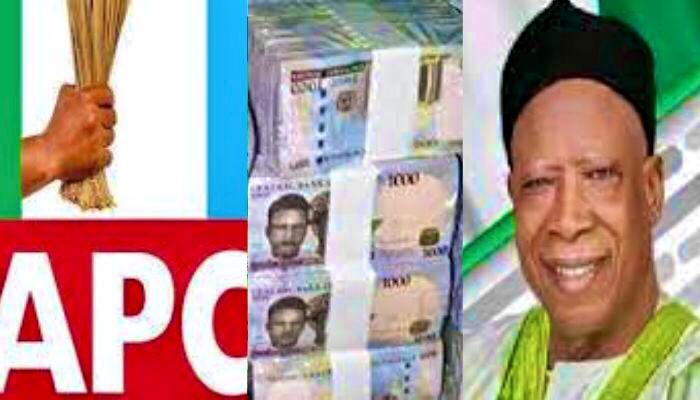
Is N100m for presidential nomination not prohibitive?

by Leading Reporters April 24, 2022
written by Leading Reporters

By Tonnie Iredia

It is futile to argue with some Nigerians on any matter in which they have an interest or which they have cause to suspect might favour them even if tangentially. All that those in doubt of this conclusion need to do is to watch people on television marshaling points in support of any subject. They forcefully leave no stone unturned.

Those who do this are usually talented in public speaking or are senior lawyers especially those who have firm knowledge not only of the provisions of the Nigerian Constitution but the exact sections, subsections and schedules of relevant provisions. For instance, when the issue of defector-governors arose, they argued in support of the defectors eloquently sermonizing on the difference between law and morality adding that what matters is law. Those of us who often drew attention to the spirit of the law in querying unwholesome political behaviours were shocked a few days ago to see the pro-technicality analysts taking sides with us to condemn the decision of government to pardon convicted former governors Dariye and Nyame. It was as if no one remembered that our Constitution provides for state pardon. So, is it all about winning an argument or publicity consciousness?

Against this backdrop, my immediate reaction to the decision of the ruling All Progressives Congress APC to sell its nomination forms to presidential aspirants at the cost of One hundred million naira (N100m), was that it would not be difficult at all to find Nigerians who would instantly generate reasons to justify the apparent prohibitive cost. No surprises as the defences have since begun. To start with, there is already the argument that politics is capital intensive and that anyone who cannot raise the amount would not be strong enough to be President of the largest country in Africa. In fact, the argument that the funds can be raised with ease has already been proven. For example, two Abia state businessmen – Ukaegbu James and Nnanna Kalu have signified their intention to provide N200m to buy forms for two federal legislators, namely, Senate President Ahmad Lawan and the Chief Whip of the Senate, Orji Uzor Kalu. However, the public perception is that the two beneficiaries can afford to buy their own forms because as senators they are among the richest public office holders in the country

One candidate who is not likely to have any problem whatsoever in getting the form is Asiwaju Bola Ahmed Tinubu whose supporters are now competing for who will be the first to raise the amount. As soon as the figure was announced, the Asiwaju Project Beyond 2023 reportedly raised the amount and announced that “we will be storming the secretariat soon to get the form for him.” On his part, the Director General of the Tinubu Support Organization (TSO) Aminu Suleiman said he had already signed a cheque for the amount rendering unnecessary, the previous pledge of N10m made by some youths under the aegis of the Tinubulate Nigeria Agenda (TINA). Senator Kabiru Gaya, Chairman of the Progressive Project (TPP), the umbrella organization of Osinbajo support groups had similarly vowed to purchase the nomination form for Vice President Yemi Osinbajo. A pro-youth group, the North Central Coalition for Leadership (NCCL) had also planned to buy a form for another APC presidential aspirant, Governor Yahaya Bello of Kogi state. It is therefore obvious that the strategy which all the aspirants used in getting different groups to earnestly beg them to show interest in next year’s presidential contest, would be deployed again to make the same support groups to announce their readiness to buy forms for their preferred aspirants. Such donors or perceived fronts are aiming to be the next set of cabals in the corridors of power come 2023.

A second argument put forward in support of the rather high figure of N100m is that the calculation took into account the current realities in which everything has increased. Petroleum products especially kerosene and diesel, foodstuffs, government loans, bandits’ attacks, ASUU strikes, petroleum subsidy, poverty etc. have all gone up astronomically. The fear in some quarters however is that the exorbitant cost of nomination forms for elections can be counter-productive. If nothing else, it will shut out some aspirants with good ideas which are greatly needed for national development. Politicians are probably the only ones comfortable with heavy expenses on politics and elections. Indeed, those of them in the legislature had earlier ensured that they legalized huge election expenses. In the new Electoral Act, they jacked up spending ceilings from between 150 to 400 per cent. Yet, nothing was done to halt the old order where political parties always breached the rule requiring them to disclose their electoral expenditures to the Independent National Electoral Commission (INEC). This brands the advocacy for high cost of nomination forms as self-serving.

Party leaders in particular are quite comfortable with the high cost of nomination forms because it gives them opportunity to generate ample funds for running their political parties. Putting it aptly, the new publicity secretary of the ruling party, Felix Morka had argued that Nigeria was yet to get to the level where party members would faithfully pay membership dues for running the party. It would therefore mean that the costs of nomination forms across board are that high because this is the ideal time for collecting revenues from elusive members. The truth therefore is that party leaders are anxious to secure huge party finances to put an end to the practice of going cap in hand to beg elected office holders to come to their rescue on a monthly basis. The situation could be worse where a party loses an election and would therefore have no elected office holders in their party to look up to for assistance.

The debate on whether the huge cost of nomination forms is prohibitive or not is fruitless because for quite some time nothing has shown that an increase in finances affects our people positively. Even the revenue from nomination forms could be squandered because some party members believe that the struggle for party offices is usually influenced by the desire of party leaders to help themselves to such funds. The same is true of government finances. Only last week, the House of Representatives’ Adhoc Committee investigating the state of the nation’s refineries had to raise an alarm over suspected sharp practices on the subject. The Committee is bothered that after allegedly spending $3.7 billion on repairs, none of the refineries has been restored to any level of functionality. Yet, neither the Minister of State for Petroleum Resource, Timipre Sylva nor the Group Managing Director of the Nigerian National Petroleum Company Limited, Mele Kyari responded to calls by the Committee to throw light on the situation What the above narrative suggests is that instead of bickering over the cost of nomination forms, our civil society groups should rise up now to vote against non-performers. I

t is time to stop playing the victim and behaving as if citizens are hopeless and helpless the way Ekiti state pensioners projected themselves the other day. With an unpaid N37.8billion gratuities and pensions, Ekiti pensioners last Thursday began a prayer session seeking God’s face for swift intervention for the payment of their entitlements. If the pensioners come together to vote against the political party that placed them in their present predicament in the next governorship elections holding two months away, no state government would toy with them in the future. In other words, this is not a time to bother about the cost of nomination forms; it is also not the time for protests concerning poor governance, rather it is time to use the ballot to tell political leaders that they are elected to represent the people and not to turn them into objects instead of the subject of democracy. It is certainly not a time to beg leaders who previously failed to institute good governance to once more join the next race. Nigerians must take their nation’s destiny in their own hands.
April 24, 2022.
April 24, 2022 0 comments
0 FacebookTwitterPinterestThreadsBlueskyEmail
OpinionHeadlines

Many have already missed the road to 2023

by Leading Reporters April 17, 2022
written by Leading Reporters

By Tonnie Iredia

The next general elections in Nigeria are less than a year away, yet it is still difficult to put a finger on its prospects. Many politicians and their supporters are making noise about 2023, but no one knows if they are on the right path. There are people whose dispositions and utterances give the impression that they are still in 2019 which the nation departed from close to four years ago. One of the common commentaries is that political parties should pick their presidential candidates from the zones that can win election.

Even if the Peoples Democratic Party, PDP, the originator of zoning is for the wrong reason no longer certain of the efficacy of the arrangement, I hope those supporting good candidates like Governor Aminu Tambuwal are influenced by his liberal mind and capacity to embrace innovation and not where is from. Those supporting anyone only because of his/her zone are travelling backwards beyond 2015.

If Nigeria must get out of its stunted growth and face brighter days, unnecessary attacks on aspirants should stop. The criticism that Atiku Abubakar is forever a contestant is irrelevant if he is qualified and competent. Those who say Asiwaju Bola Tinubu does not appear strong enough for the office of president should review his response that he is not seeking the office of a brick-layer that calls for physical strength.

Those who are visibly angry that someone has the courage to aspire to contest the 2023 election along with his ‘godfather’ should note that the contest is not reserved for godfathers. When Yemi Osinbajo acted as President in 2017, many who affirmed that he did excellently well are surprisingly against him now as if the man is only good as acting President. In any case, the godfather sentiments cannot be sustained in many parts of Nigeria where tradition behooves a man to be happy if his grandson surpasses his own achievements. Although Tinubu, the acclaimed godfather has publicly testified that he has no son old enough to aspire to be president, the godson is still under fire.

In some commentaries, people suggested that Osinbajo was already a loser for wearing black on the day he declared his interest in the 2023 contest. To such commentators of the stone age, black is meant for burial. One wonders what burial ceremonies are holding in courts everyday across the globe where black is the official colour. What the several criticisms against aspirants suggests is that the authors have missed their way to 2023.

In the new scheme of things, Nigerians who seek to hold political offices should be subjected to intense scrutiny but without being parochial. The only viable criticism against the Vice President was the one made by Prof Farooq Kperogi who felt Osinbajo was part of an RCCG plot for theocratic state capture. The prolific writer scored high by providing verifiable evidence in support of his allegation. Those who have points against any aspirant should do same.

Unfortunately, tangible criticisms which can strengthen democracy are palpably scanty while the media is replete with cosmetic issues of zero value. For example, to attack Rotimi Amaechi for making his declaration public at a crowded stadium under the guise of thanksgiving is no point because there is no standard place for declaration. The same is true of those attacking Nyesom Wike, Rivers state governor as too aggressive as if timidity is a more relevant virtue for political ambition. Going by the current state of the nation, an aggressive leader may be needed. While it is true that some aspirants can easily pass for jokers, it is uncharitable to add Peter Obi, former Anambra state governor to such a list simply because he does not ‘have a bullion van.’ What such contemptible attacks show is that not many are set to positively move to 2023 because it is hard to ignore the visible capability of Obi to manage a troubled economy. Having indicated his current preoccupation, attacks on Central Bank Governor, Godwin Emefiele are superfluous

Mindful that a person coerced into an office is not likely to perform well because he could not have prepared for it, this column had earlier sought to identify the political aspirants who bought nomination forms themselves to contest the 2015 general elections. Findings showed that former Governor Godswill Akpabio’s nomination form was allegedly bought for him by some youths to represent the Ikot Ekpene Senatorial District. It was the Benue Youth in Diaspora Association (BYDA) that pledged to provide money to purchase the senatorial nomination form for former Governor Gabriel Suswam. Some other Youth leaders from Ado Local Government Area of Benue State allegedly besieged Senator David Mark’s home to put pressure on him to contest the Benue South Senatorial seat. Similarly, it was Enugu Professional Forum that kept pushing former Governor Sullivan Chime to contest his senatorial seat against Senator Ike Ekweremadu who was himself pressured by Enugu Concerned Professionals Worldwide.

The implication of this narrative is that the locomotive heading towards 2023 is the same one that has been conveying people to cajole politicians to contest elections since 1979 when a reluctant Shehu Shagari was persuaded to become President. Little wonder that the tricks have not changed. Misguided able-bodied Nigerians are still acting as fronts for old politicians, publicly begging them to show interest in elective positions. More than two years to the end of his first tenure, the Transformation Ambassadors of Nigeria were on the streets distracting President Jonathan with pleas to seek reelection. At other times such as now, unemployed youths argue that they had to put together the little they had to buy nomination forms for billionaire politicians. Whither the new Nigeria of our dreams?

Two weeks ago, Governor Yahaya Bello of Kogi State formally announced his Presidential ambition naming two Nigerians that would help him coast to victory like M.K.O. Abiola did in 1993. First, he picked Senator Jonathan Zwingina former Director General of the Abiola Campaign Organization as his national coordinator. He then named Hafsat Abiola, daughter of the June 12 hero as the Director General of his campaign. A week later, Abiola’s eldest son, Kola, joined politics. With the Social Democratic Party, (SDP) which bears same name as MKO’s winning party, busy acting as the rejuvenated party to beat, the true representative of the legend is no longer clear more so as Kola declared under another platform – the Peoples Redemption Party (PRP). What is clear is that no one has the MKO Abiola’s political spirit of a true patriot and humanitarian warrior who helped all and sundry. The man donated to every good cause unlike now that people donate only close to elections, competing with the trader money scheme.

Nigeria is thus far from the ideals of the past just as her movement ahead is retarded by lethargy in governance and political materialism. Declarations have remained patently promissory – a trend which can do Nigeria no good in 2023. What is needed now is not who can announce what he intends to do, instead all aspirants should be interrogated to explain how they intend to fulfil their electioneering promises. Indeed, when aspirants become candidates ample time must be spent on the details of how each promise would be fulfilled. No one should be allowed to evade election debate, so that each person’s capacity can be sufficiently visible for voters to make informed choices. The strategy, would nullify arguments such as that the true decadence of the nation was not clear when the promises were made.

Every elected candidate must recognize that he/she was voted in to solve problems and not to itemize challenges. In truth, Professor Kingsley Moghalu was a delight to watch on national television two days ago explaining that if elected he would ensure that facilities like good transportation are available before withdrawing on installmental basis, our unsustainable fuel subsidy. That is the narrative for 2023 and those who cannot cope must fall out of the race now.

April 17, 2022

April 17, 2022 0 comments
0 FacebookTwitterPinterestThreadsBlueskyEmail
OpinionHeadlines

What Soludo should avoid as Anambra Governor

by Leading Reporters March 20, 2022
written by Leading Reporters

By Tonnie Iredia

Charles Chukwuma Soludo, the new governor of Anambra state is a well-known reformer in Nigeria’s public sector. He had served creditably as governor of the Central Bank of Nigeria (2004-9) and only those who refused to renew his appointment after the Obasanjo years know what criteria they used to stop Nigeria from continuing to benefit from the services of pragmatic Soludo.

Each time I met him in those days when we were in government, I always subconsciously imagined that he deservedly possessed what Warren Bennis identified as features of strategic leadership, namely: Vision, Passion and Integrity. Bennis was the man who invented leadership as a business idea and whose legacy has since been honored with a prize for the best articles on leadership every year in the Harvard Business Review. If nothing else, Soludo showed ample visionary leadership in his reformist agenda at the CBN. Will he be able to extend same to Anambra state?

Listening to his inauguration speech last Thursday, it was obvious that Governor Soludo had mastered the strategy for arriving at the location he envisages Anambra ought to be some 4 years ahead. A few minutes after the inauguration, he began an active governance project starting appropriately from Okpoko – a local community empirically determined as the weakest link in the state which had been abandoned over the years.

Part of those who waited to receive the new governor there were: several heaps of refuse along with street traders and sweepers who could not immediately fathom what sanctions their lethargy would attract. The starting point no doubt resonated a number of institutional statements; first, that everywhere will be touched and second that it was time for everyone to work in view of the transparent leadership by example posture of the first 48 hours of Soludo’s tenure.

The governor’s occupational antecedents of executing every project with a commercial mindset would certainly impact greatly on the state. One obvious advantage of the mindset is that just as an increase in revenue generation would be easily quantifiable, many intangible goals would similarly be transparently recorded as profits in the sense of democracy dividends. Under the circumstance, there are a legion of things governor Soludo needs to watch or avoid.

The first is that although the ‘spoils system’ which patronizes party members who played active roles in elections is followed across the globe, Governor Soludo must not allow his party to pressure him to appoint unqualified persons into critical positions in which they can hardly add value to society. The same is true of the awards of contracts for several works which must be channeled to only persons and firms that have cognate experience in each venture. This would encourage first class jobs.

One way of doing this is to sensitize party leaders on the qualifications and competences for each position/project so as to drastically reduce the nomination of misfits for any assignment. An area where party members often agitate to make contributions centres around arrangements for internally generated revenue. Here, the ingenuity of officials at all levels should never be underrated. For example, the existence of receipts for payments does not in our system guarantee the destination of the payments. They may still end up (in the case of markets and parks), in private pockets of individuals and union officials. In today’s world of technology, Soludo is certainly fully aware of the many platforms devoid of bureaucracy that can secure revenue because funding is key to successful project execution

Anambra is one of the states greatly affected by insecurity hence Soludo’s determination to work towards ending senseless killings of his people particularly able-bodied youths. But while his plan to aggregate the efforts of all stakeholders in the attainment of peace is salutary, he should avoid making the mistake of some of his colleagues who converted state security to individual affair.

Government must at all times be seen to be playing the pivotal role because that is its primary purpose. Arguments such as everyone should defend himself does not only validate state abdication from its primary responsibility, it also gives an impression that the state has tacitly emboldened criminal elements to freely operate. In addition, political leaders must stop showing more interest in political meetings and social events while overlooking security breaches that result in fatalities. The life of every citizen should matter.

Most importantly, Soludo should avoid distractions. For example, he should be cautious about the numerous meetings of the Nigerian Governors’ Forum which as a body has long lost its usefulness. Since when Jonathan’s government recognized the governor with 16 followers as the leader of the forum instead of the one with 19 followers, the forum has been distracted from its original goal of serving as a tool for peer review. It has indeed broken into partisan segments. However, the All Progressives Grand Alliance (APGA) to which Soludo belongs, does not have other governors and as such will not be tempted to create an APGA Governors’ Forum for partisan politics. Besides, the governor has no business serving as the leader of the party which would pull him unnecessarily into the unending Nigerian electioneering during governance. As soon as a candidate is elected governor, he translates into a statesman and the father of the entire state and not a leader of his party which in any case is merely a design for channelling government funds into party coffers.

It is logical to assume that having served as CBN governor, the quest by Soludo to become a state governor was altruistically to make his state – Anambra, greater than it has been. He is therefore in a different position from many politicians who struggle to become senators after having served as governors or ministers. Thus, Soludo has no business distracting himself. As Anambra governor, it would be a tragedy if Soludo later defects to another party so as to win a second term election or to get any corrupt practices covered for him as we see of many defectors who proffer absurd reasons for such conduct. A governor who performs brilliantly in his first term, hardly needs a second term to put his name in gold; his salary is free for him, so is his feeding and accommodation. He therefore has no need to run from pillar to post for reelection because with a sincere performance, a second term is virtually guaranteed.

The nation certainly looks forward to standards to be set in Anambra during Soludo’s tenure. Unlike many political leaders, he needs to abide by the letter and spirit of the constitution. He should avoid the practice of frustrating the existence of a local government system of government. Accordingly, it is wrong to do as many others have done to constitute party loyalists into the state’s “independent” electoral commission to conduct fake elections just as it is immoral to use whatever strategy to divert local government funds. Anambra state legislature as a distinct arm of government should be allowed to function freely. Consequently, there would be no need to bribe the legislators to pass any bills. If these are followed and Anambra becomes a reference point in our clime, credit would go to governor Soludo.

It is also important to draw attention to the need for the governor to be on top of state issues. Many officials would bring up very articulate narratives which if not properly interrogated could turn out to be incorrect. For instance, on a lighter note, last Thursday, two over-grown girls virtually marred Soludo’s inauguration through fisticuffs. The narrative to the whole world was that one of them, the immediate governor’s wife slapped the wife of the former warlord. When a video coverage later showed that it was the reverse, the narrative changed to ‘the slap was due to provocation.’ The lesson here is that our narratives are usually never detailed and are always affected by prejudice. A last minute disruption to great efforts introduced by someone close can take the shine off great achievements. So Chukwuma Soludo must beware.

March 20, 2022 0 comments
0 FacebookTwitterPinterestThreadsBlueskyEmail
OpinionHeadlines

Police Salary Increase: How IGP Alkali Struck A Gold, Why He Should Be Commended

by Leading Reporters March 15, 2022
written by Leading Reporters


•Why Police Should Jettison The Call For Strike
…His Other Major Milestones In The Nigerian Police


Prior to the time Baba Alkali Usman was made the Inspector General of Police, President Muhammadu Buhari has given the directive for the upward review of police salary; however, when IGP Baba came on board, among the major things in his agenda is the Police Salary upward review. The IGP has left no one in doubt that it was a major priority for him as the nation’s number one police officer.

On so many occasions, IGP Baba has urged Police officers to keep hope alive over salary increment, what this implies is that the issue of salary increase is on the front burner in the IGP’s agenda. He took that demand and pressure to the National Assembly and has pursued it with success.

When he went to Benin, the Edo state Capital last year, the Inspector-General of Police (IGP) Baba Alkali Usman told officers and men of the Nigeria Police Force to keep their hope alive over the proposed review of salaries, saying though delayed but it would be materialized.

He assured: “I want you to take your job very seriously because we are going to work hard to improve on our welfare.

“We are living witness that the Commander in Chief of Armed Forces has graciously asked the salary of the police be reviewed even though it is taking time, it will certainly come.”

The Inspector-General advised policemen not to be discouraged as the pay rise will surely happen.

The issue of salary increase for the men and officers of the force, as he continue to admonish the personnel while working round the clock and behind the scene to see that it was done.

Again while talking while reeling out the his achievements to journalists at the Presidential Villa last, the IGP reiterated the effort of the President, Muhammadu Buhari in seeing that Police Salary is increase as the IGP reechoed again to them that the Salaries and Wages Commission is working out a new salary structure for the NPF as directed by the President, His Excellency Mohammadu Buhari, GCFR.

Yet in another remarks, while addressing the Delta State Police Command, on a visit, there said; the IGP assured officers and men of the command that the police under his leadership is doing all within its powers to boost the morale of the men in terms of better welfare and also assured all that a better insurance scheme is on top gear, adding that the welfare of officers is a priority to his administration.

Indeed all through the while, the issue of Police Salary increase has been a top burner before IGP Alkali, his effort in lobbying the National Assembly and the Presidency which culminated in its subsequent approval by the Federal Executive Council, shows that he is not resting, as he is working hard to make sure that the Police rank and file receives their new salary increase as soon as possible.

Even as it is, one may say that he is not the one causing the delay of the payment of the new salary increase , but the truth is that he at the moment working round the clock and working behind the scene to make sure that those concerned have finish all their official formalities and releases the money for the payment of the new salaries to Police Officers. The IGP it should be noted has no power over official processes that is needed and being done at the moment to ensure the increase takes effect.

However, after much lobbying by IGP Akali, his effort paid off, as in December 2021, the Federal Executive Council approved the Police Salary increase by 20 percent and which will take effect from January this year 2022. It is the delay in effecting the payment that others wants to take advantage to sabotage the peace and security of the nation. If IGP Alkali had been reluctant and failed to pursue it the manner he vigorously did, the good story of the approval of the salary increase and even expectations of commencement of payment of the new package wouldn’t have arisen.

Just like Femi Adesina, the Special Adviser to President Buhari on Media and Publicity, said in his article which he titled: ‘Buhari’s Christmas Bonus for Police,’ it was indeed a Christmas Bonus for the Police, which the IGP Alkali was behind it.

The Minister of Police Affairs, Maigari Dingyadi, made this known to State House correspondents at the end of the Council meeting presided over by President Muhammadu Buhari.

According to him, major highlight of the increase is the provision of a 20 per cent peculiar allowance for the police.

He said: “I am particularly very happy today to inform Nigerians that the Federal Executive Council has approved the review and upgrading of the take home pay of police personnel in this country.

“You recall that in Oct. 2020 this country was rocked with End SARS protests and the president addressed the nation appealing for calm, after which he promised that the salary of the police will be reviewed in recognition of the services they have been rendering to the country – maintaining peace and tranquility.

“So, FEC has today approved a proposal for the review of their salaries, which will take effect from January 2022.

“We have tried to create a situation where their take home pay will be enhanced through the improvement of issues such as duty tour allowance, which has been reviewed to six per cent of their new take home pay,” he stated.

The minister also revealed that the Council approved N1.1billion for the payment of outstanding uninsured benefits of the police.

“Council has also approved the payment of N1,120, 172,150.00 as outstanding benefits of personnel for uninsured period of 2013-2020.

“It has also approved N127,972,269.20 for payment as outstanding death benefits of 5,472 personnel for the uninsured period of 2013-August 2021, not covered under the group life assurance.

“Council has also approved N1.2 billion as outstanding burial expenses of personnel for a period of January 2012-2021,’’ he said.

According to the minister, the Council also approved the annual insurance premiums of N750 million as well as the payment of N4, 812,500,000 for repairs and replacement of damaged Police infrastructure in future budgets, starting from 2022.

He said the Council also approved a tax waver in the sum of N18.6 billion for junior officers of the Police in order to increase their take home pay with effect from Oct. 2021.

“Similarly government has approved an increase of the current rent subsidy, which is currently between 15-20 percent, amounting to N61 billion.

“With the increase, it is now 40 percent of the Consolidate Police Salary Structure (CONPOSS), in the sum of N78.3 billion.

“It has also approved payment of an additional six per cent shift duty allowance for officers on Grade Level 01-14 and supervisors allowances for officers on Grade Level 15 and above, totalling about N10.038 billion with effect from 2022.

“Most importantly, government has also approved payment of 20 per cent of CONPOSS as a peculiar allowance to boost morale and take home pay of the Nigeria Police personnel,” he said.

The minister stated that the Auditor General of the Federation had been directed to cross check the template and claims approved by Council, after which a clean salary structure would be computed and introduced by the Salaries and Wages Commission, which would be adopted as soon as possible.

He said with the new development, government would expect the police to redouble their efforts to justify the confidence reposed in them.

Minister of Finance, Budget and National Planning, Dr Zainab Ahmed, who fielded questions on the salary increase, revealed that the increment was not captured in the 2022 budget. Perhaps that explains the little delay behind the commencement of full implementation.

She, however, stated that after computations and approval, a supplementary budget would be sent to the National Assembly to that effect, to pave way for the payment of arrears and full implementation of the new salary.

With the approval for the salary increase, indeed the IGP struck gold, made available by his strong efforts.

PROBLEMS OF OFFICERS AND MEN PREDATES THE APPOINTMENT OF IGP ALKALI


Majority of things stated in the report published by some national dallies and online medium which include morale of police officers said to be at a low ebb, with many grumbling about poor salaries, a lack of genuine welfare benefits and outdated weapons, are things that are already being taken care of by the IGP, or/and currently being given necessary attention by IGP Alkali. Nigerians are very much aware about the kind of leadership offered in the past that has failed to address critical issues related to police welfare and provision of arms and facilities. Unknown to many, under IGP Alkali and for the first time in many years the Police is now being supplied with armoury and other latest policing devices. This milestone will soon be demonstrated to Nigerians to appreciate the President for supporting the IGP to perform.

Take on the issue of welfare benefits for instance, the Inspector General of Police has since assumption of office made the welfare of the Police his paramount and key issue.

The Inspector-General of Police, IGP Usman Alkali Baba, recently ordered the immediate distribution of Police Uniforms, Kits and accoutrements which the Force recently procured, to various Zones, Commands and Formations in the Nigeria Police Force (NPF) for onward issuance to personnel of the Force. Before now, Police officers are very much aware that they used to buy their uniforms themselves even as there is supposed to be provisions for them.

According to the Acting Force Spokesperson, CSP Olumuyiwa Adejobi in a press release, the resuscitation of the quarterly issuance of uniforms and other accoutrements to members of the Inspectorate, Non-Commissioned Officers (NCOs) and Constable Cadres in the Police Force is in furtherance of the ongoing efforts by the IGP to engender reforms and evolve a new people-friendly Police Force.

The issuance of the new uniforms and accoutrements, which is a continuous exercise, is free of charge to all Inspectors and members of the Rank-and-File of the Force as provisions have been made for the continuous procurement in the Police budget.

A nationwide distribution on police uniforms, shoes, belts, berets, and other accessories was ordered by the inspector General of Police. In a move last seen during the 1990s, Zones, Commands and Formations in the Nigeria Police Force (NPF) have since the 4th of March 2022 have issued out hundreds of thousands of camouflage, blue and black uniforms to police officers across the country.

In the same vein, the IGP has approved the creation of First Aid Unit to be domiciled under the Nigeria Police Medical Service (NPMS), Force Headquarters, Abuja, and the inclusion of advanced First Aid Training to substitute the basic training available in the Nigeria Police Force Training Curriculum.

The Police, in partnership with the International Committee of the Red Cross (ICRC), held a train-the-trainers workshop that started from the 23rd through Friday 25th February, 2022, for personnel of the newly created unit, who would be deployed to all Commands and Formations across the nation, and in turn train cadets and recruits at the various Police training institutions.

The IGP equally noted that the establishment of the First Aid Unit would enhance the capacity of the Police Emergency Response System, reiterated the unwavering commitment of the Force leadership to bequeathing to the nation a professional, dependable and responsive policing system.

Furthermore, an Echo Cardio Machine was installed and inaugurated at the Muhammadu Buhari Medical Centre in Garki Abuja while an integrated First Aid Unit was added to the Force Medical Services for training and easy deployment on the field at the Nigeria Police Medical Service (NPMS), Force Headquarters, Abuja, and the inclusion of advanced First Aid Training to substitute the basic training available in the Nigeria Police Force Training Curriculum.

On this, he emphasized the premium value he places on the welfare and general wellbeing of officers and men of the Nigeria Police Force. He noted that it is boondoggle, emphasizing the hazardous conditions Police officers are exposed to on a daily basis.

To alleviate the effect of such hazards on officers and men, the IGP observed that it is imperative to establish a First Aid Unit that will be the first responder to personnel in need of emergency and less complicated medical care.

The IGP equally noted that the establishment of the First Aid Unit would enhance the capacity of the Police Emergency Response System.

According to the IGP, during a recent visit to the Federal Capital Territory Command, Abuja, the IGP restated his commitment towards an improved welfare for officers and men across board. The IGP noted that the issuance of uniforms and accoutrements, which will cut across the Inspectorate and Rank-and-File cadre, will be a continuous quarterly exercise free of charge, as provisions have been made for the continuous procurement in the Police budget.

This, he said is in furtherance of his ongoing efforts to engender reforms and evolve a new people-friendly Police Force.

IGP Alkali declared that the commitment of the Force to constantly providing NPF personnel with better welfare will go a long way to boosting their morale.

While he reiterated the unwavering commitment of the Force leadership towards bequeathing to the nation a professional, dependable and responsive policing system, the IGP enjoined the citizens to never give up on the Force. He urged every individual to make it a point of duty to help the Police by providing accurate and timely information about crime and criminalities to their local Police, so as to help the Force secure the public space in a more proactive manner.

Aside the issue of Welfare, the Inspector-General of Police, IGP Usman Alkali Baba, has revised the Housing SCHEME of the Nigeria Police Force.

A significant amendment to the Housing Policy is the slashing of Equity payments or deposits by Police Officers before acquiring houses financed by the Nigeria Police Cooperative and Multipurpose Society.

Hitherto, officers of the rank of Assistant Superintendent of Police to the rank of Inspector General of Police were required to pay 20 percent of the property value while officers below the rank of ASP were required to pay 10 percent.

The revised equity now requires officers from the rank of ASP to IGP to pay 10 percent as equity while junior Officers pay 5 percent. Other revisions include a downward review of the life of the payment schedule from five (5) to seven (7) years on all properties. A Police Wireless Signal to that effect was issued and circulated in 2021 announcing the change.

It is on note, the IGP’s Policy on Housing has revived the housing scheme as more Police officers are now rushing to the Cooperative to enjoy the opportunities that is abound there now.

The Executive Secretary of the Nigeria Police Cooperative, AIG Adamu Usman told this paper “that the IGP believes that housing is more important to the lives of Police Officers than any other thing.”

“He wants it to be affordable and acquirable through a seamless process.”

The report shows that several housing estates relevant to the achievement of this policy are being completed on the orders of the Inspector-General of Police, while new ones are being developed. Houses range from one-bedroom, to duplex; there are detached and semi-detached and are available in all the geo-political zones of the country.

As it is the welfare of Police Officers is a cardinal policy of the Inspector-General of Police. IGP Usman Alkali Baba which reechoed and reassured Officers during his recent familiarization tour to Akwa Ibom and Cross River States, that his administration will put the welfare of Police Officers first while working hard to ensure that working tools and equipment are available to provide professional and quality policing services to Nigerians while protecting officers and their families.

In an extensive interaction with police officers in Cross River State, the IGP commended them for their dedication and professionalism and assured them of improved welfare and working conditions.

He reiterated the importance of training and retraining as a key strategy of his administration to ensure policing in contemporary Nigeria is propped up to manage effectively the ever dilating and dynamic nature of crimes and criminality in the country.

For instance, Vehicles, equipment and accommodation were provided in January 2022 by the Police Trust Fund, Akwa Ibom and Cross Rivers states’ governments.

The IGP’s Legacy on Police Housing reforms, has continued to soar high as the Assistant Inspector-General of Police in charge of NPF Cooperative Society, AIG Usman Adamu has driven IGP Usman Alkali Baba’s legacy to an enviable height which has been seen in the way the NPF Cooperative Society is providing improved facilities, equipped, cutting-edge and modern Police Post (with patrol van) in one of its estates at Karasana, off Gwarinpa Estate, Abuja. It is pertinent to note that provision of standard, habitable and affordable houses for Officers of the Force is one of the key mandates of the IGP.

In line with the IGP’s mandate, the NPF Cooperative Society under the leadership of AIG Adamu has undertaken viable projects to ensuring adequate housing in the NPF.

The new phase of the organization is headed by the Chairman – Board of NPF Cooperative Society, DIG Folawiyo (rtd), mni and the Executive Secretary, AIG Usman Adamu.

The leadership of the Board has further promised that in addition to the existing facilities in all its estates, it will extend the cutting-edge security system and improved facilities to other police estates to boost the standard therein.

Now the average Police officer, can breathe a sign of relieve as Police officers are advised to key into the scheme and secure their dream houses.

The housing section is an off-shoot of Nigeria Police Cooperative Multi-Purpose Society Limited which provide housing scheme to her Cooperators. This section derived her establishment as contained in part 11; section 6 of the Society’s Bye-law 2014 as amended. It provides that the Society shall “undertake Housing Projects either by developing new estates and constructing new houses or buy over existing estate or houses for allocation to its members.”

Part of the IGP Alkali’s act of reform within the Nigerian Police includes the passage of the Police Act, 2020, his sure protocol is to identify, elevate and position professionally competent officers to strategic positions, general and specialized trainings for officers, which many of those trainings has been ongoing while some have been concluded.

Again, the Inspector-General of Police recently in line with international best practices while addresses the growing concern for gender mainstreaming and respect for culture and diversity, approved a new and improved dress code for Women Officers which permits them to wear stud earrings, and headscarf under their berets or peak caps as the case may be while in uniform. The dress code was unveiled at the IGP’s meeting with Strategic Police Managers on March 3, 2022.

The IGP noted that the Nigeria Police workforce has officers from every local government in the country with a variety of ethnic and religious backgrounds, and an increased inclusion of female folks. This therefore brings the need to guarantee inclusion, gender mainstreaming, ethnic and religious diversity in the work place for optimum output and professionalism. This has informed the improvement for effective global workforce diversity management. Other countries that have adopted same dress code include Canada, the United States of America, Sweden, Turkey, Australia and the United Kingdom amongst others.

The dress code is optional and Senior Women Police Officers have been tasked by the IGP to ensure compliance with the approved standard for women police officers who have opted to adopt the dress code.

With all the enumerated key issues handled by IGP Alkali including the case of Salary increase for the officers and men, it is noteworthy to state that the IGP is working hard to achieve a 21st century policing for the Nigerian Police officers where issues such as their Salaries, Housing, Welfare, safety and others are top of his agenda for an effective 2ist Century Police officer.

By: Adebayo Mashood

March 15, 2022 0 comments
0 FacebookTwitterPinterestThreadsBlueskyEmail
HeadlinesOpinion

Sacking Defecting Governors Deserves Supreme Court’s Support

by Leading Reporters March 13, 2022
written by Leading Reporters

By Tonnie Iredia

On March 08, 2022, a federal High Court sitting in Abuja sacked the governor of Ebonyi state and his deputy as well as a number of state legislators for defecting from the party on whose platform they were elected. Reactions to the judgment have been overwhelming.

While most people found no fault with removing the law makers from office because it tallies with the express provisions of the Constitution, opinions are divided as to the legality of the judgment concerning the governor and his deputy whose defection the same Constitution is silent on. In 2018, when the governors of Benue, Sokoto and Kwara states similarly defected, what carried the day was the argument that the Constitution did not include defection among the factors for which governors can leave office. The implication of this is that how to handle a defecting governor will for some time to come remain an unresolved issue in Nigeria’s democracy. But bearing in mind that the occurrence is patently repugnant, one would have thought that steps would have since been taken to resolve the issue, but that has not happened.

A critical objective of this piece is to draw attention to the need to punish the wrong of defection by those who appear to be inadvertently protected by the law when they are in the wrong. Perhaps an appropriate take off point is to establish that political defection is a wrong which is not a difficult task to handle because as stated earlier, there is a consensus that it is a wrong on the part of law makers. But is it not curious to describe the act of transferring votes by some actors from one political party to another as a wrong and pretend that the same act is probably not a wrong when perpetuated by another set of actors? Luckily, most people deprecate the act of political defection which short-changes a particular set of voters irrespective of who the wrong-doers are. Unfortunately, whereas the law prescribes punishment for law makers involved in the act, it does not similarly do so for governors. But considering that the failure to punish a wrong does not cure the wrong of its defects, the best way to go seems to be to seek to punish every wrong doer on the basis that under the rule of law, everyone is supposedly equal before the law.

Against this backdrop, there are several issues calling for attention. The first of such issues is ownership of votes cast in a Nigerian election; is it the property of a candidate or his/her political party or both? The Constitution has left no one in doubt that political parties are the most important actors in the nation’s electoral process. To start with, the Constitution provides that only aspirants sponsored by political parties can be candidates in an election. Put differently, no one can dispense with political parties which is why it is impossible to be an independent candidate in any Nigerian election. Besides, the Judiciary has consistently held that votes at an election belong to political parties notwithstanding that the charisma of individual candidates may have helped a party to secure victory. In recent contests (Imo North Senatorial and local elections in Abaji-FCT) INEC declared specific political parties as winners pending the determination of their authentic candidates.

The second issue of importance is the power to transfer votes from one party/candidate to another. Here, it is obvious that in view of the strategic position of political parties as owners of votes cast in elections, a candidate who has been declared winner of an election cannot later transfer his votes to another party/candidate. Anyone who does so, is involved in the wrong of defection which can hurt the interests of some persons or groups. Based on this reasoning, the logical necessary follow-up question would take this form. Is it in order for the relevant societal institution – the Judiciary to overlook the wrong of such transfer of votes which a defection of an elected office-holder may have caused? If not, how best can the subject be handled?

For long, very many senior lawyers have continued to argue that removing a defecting governor from office is unconstitutional. However, they have all been silent on the propriety of leaving a wrong without a remedy. Here, it is apt to recall the Latin maxim ‘ubi jus ibi remedium’ which is an age-long philosophy meaning “for every wrong the law provides a remedy.” It is therefore not enough to lament the failure of the Nigerian Constitution to provide a remedy for the wrong of political defection by a governor because it is not only a Constitution that has the duty to provide every remedy; in what is known as judge-made law, a Court can also interpretatively prescribe a remedy to a wrong. Surprisingly, no effort has been made in recent years to follow the clear path identified by the greatest Nigerian judges of all times on what the nation should do when confronted by the issue of lack of provisions for an inevitable cause of action. In other words, Nigerian Courts ought to inventively dispense substantive justice instead of allowing a wrong to persist without sanctions because of over-reliance on technicalities.

As Karibi-Whyte a one-time famous justice of Nigeria’s Supreme Court once explained, “… it is erroneous to assume that the maxim ubi jus ibi remedium is only an English Common Law principle. It is a principle of justice of universal validity couched in Latin and available to all legal systems involved in the impartial administration of justice. It enjoins the courts to provide a remedy whenever the Plaintiff has established a right…” Although some analysts have criticised the decision of the Supreme Court in the famous Rotimi Amaechi’s case, it is quite hard to disagree with the proactive posture of the Justices that if a court is satisfied that a person has suffered a legal injury it ought to do justice by providing “a remedy irrespective of the fact that no remedy is provided either at common law or by statute.” Indeed, a court needs to do this so as to be able to follow the persuasive dictum of another legal luminary: Justice Katsina-Alu who opined that “the law is an equal dispenser of justice which leaves no one without a remedy for his right.”

With this clear line of thought provided by judges of old, no one can defend the
current conservative approach which gives an impression that the judiciary in Nigeria has been subdued by the other arms of government. The situation is more worrisome because defecting governors have never proffered any rational motivation for their behaviour other than personal materialistic interests. For example, Governor Ben Ayade of Cross River State defected because he reportedly wanted to support the President to provide good governance. Dave Umahi of Ebonyi State on his part defected to the ruling party because he doubted if his original party would zone the presidency to the South East. In the case of Zamfara State, Governor Bello Matawalle defected to a political party which the judiciary ruled was not in existence in the eyes of the law. These bizarre defections ought not to be protected through judicial over-reliance on technicalities which can encourage other actors into seeking extra-judicial means of ventilating political grievances.

As if to reiterate the definition of law by the legendary English jurist, Lord Denning which sees law as what the Judge says it is, Justice Inyang Ekwo has taken the first crucial step in bringing to an end, the notorious wrong of Nigeria’s political defections. All Higher Courts should support him by disallowing the perpetrators from using the protection offered them by the Constitution to hide behind fraudulent activities. Any defector-governor should not be seen as someone removed from office; but one who worked away from a mandate. He should thus not be allowed to transfer the same mandate elsewhere because its owners – the electorate had instinctively determined where the mandate should be.

……..Professor Iredia, a former Director-General of the NTA, media law teacher, communication expert and broadcast manager wrote from Abuja.

March 13, 2022 0 comments
0 FacebookTwitterPinterestThreadsBlueskyEmail
Opinion

Air Peace, Kano Emir and Unwarranted Attacks

by Leading Reporters March 4, 2022
written by Leading Reporters

By Yushau A. Shuaib

Beyond theory, strategic communication doesn’t seek publicity in whatever ways through the media. It considers the dynamics of the environment, the target audiences, their behaviours, and trending issues for effective messaging.

Creative thinking is crucial in strategic communication, towards offering better ideas, and sound judgment in responding to issues in the most responsible manner.

Sometime in 2021, my mother was denied boarding on an Air Peace plane going from Ilorin to Abuja, even though she was among the first set of passengers who arrived at the airport very early that morning. Apart from frustrating her attempt to board the aircraft, the airline further charged her exorbitantly for the use of the same ticket for the next day’s flight.

I was so bitter that I posted her plight on Facebook. As usual, while some friends expressed concern about the situation, others had contrary views. Meanwhile, the notorious social media hecklers and agents provocateur descended on the issue on the platform, spewing their routine ethnic chauvinism and religious bigotry, while misinterpreting a simple case that could be effectively addressed by the customer care service of the airline.

Meanwhile, a few hours after my post, one Mrs Olubunmi Korede, who I later learnt was the Air Peace Manager at the airport, reached out to my siblings and later called me privately and narrated what had really transpired that day.

“We discovered that Mama came early but was on the wrong queue at a counter of another airline. By the time she realised the mistake, the Air Peace Counter had been closed. We deeply regret what happened, especially to an innocent aged mother.”

Not only that, the Manager also personally received Mama the following day at the airport and courteously processed her travel, while still offering the airline’s apologies for the incident of the previous day. That single episode influenced my loyalty to Air Peace, which then became my preferred airline on some select routes.

I also developed an interest in the business model of the owner of the airline, Allen Onyema, a Nigerian to the core, who strongly believes in a united and prosperous nation devoid of the divisive sentiments that are unfortunately attendant upon a prejudicial national outlook. During the inaugural Spokesperson’s Communication award, Air Peace, as a corporate citizen, was honoured for its nationalistic no-city-left-behind initiative, which interconnects various Nigerian cities by air, and its various citizen engagement efforts and conversations.

The expansion of its different routes across diverse national and international spaces has equally been a big relief to its teeming users, in a manner that has favourably coupled with the airline’s huge reductions of its fares to make them highly affordable. The activities of Air Peace also strengthen and enhance the economy of many of its beneficiary cities/states in the North and South, as it truly connects Nigerians in Nigeria, giving access to safe and best-in-class air connectivity.

It was, therefore, not surprising that during the faceoff between the airline and the government of the United Arab Emirates (UAE) over the discriminatory international airport slot and frequency allocation to it, the Federal Government of Nigeria stood firmly behind the Onyema-led business organisation, in supporting one’s own against injustice.

While retaliating the ill-treatment of Air Peace in Dubai, the Buhari administration also cut down on the frequency and slots allocated to Emirate Airlines in Nigeria, to mirror the stringent measures meted out to the Nigerian carrier in the Arab country. The UAE eventually capitulated to the demands of the government and rescinded its decision to deny Air Peace the stipulated number of slots and frequencies for reciprocity and fairness in the bilateral air service agreement between the two countries.

Therefore, it was quite shocking when the same airline was reported to have treated the Emir of Kano, Alhaji Aminu Ado Bayero, unfairly by not enabling him and his entourage the opportunity of taking a connecting local flight from Lagos to Kano, after having initially created a situation that led to the delay of his international flight, on another Air Peace aircraft, from Banjul to Lagos.

The Chief Protocol Officer to the Emir Isa Bayero thereafter wrote a letter of complaint to the Nigerian Civil Aviation Authority (NCAA), seeking punitive actions against Air Peace Airline for missing their connecting flight.

The leaked letter subsequently attracted needless attacks and counterattacks between the admirers of the Emir of Kano and supporters of Air peace’s stance on the ensuing imbroglio.

It is unfortunate that many are not aware of the enviable qualities and personality of the Emir of Kano. A graduate of Mass Communication from Bayero University, the Emir had worked in the aviation sector as a spokesperson and a Flight Officer, where he earned respect as a customer-friendly, empathetic, and cultured official.

An urbane and cosmopolitan personality, whose mother was a princess of Ilorin Emirate in Kwara State, Aminu had held top traditional titles in Kano, the most populous and heterogeneous city in Nigeria, before ascending to the throne of his forebears. With friends from different backgrounds and classes, the unassuming and humble Emir has consistently demonstrated great awareness of and sensitivity in dealing with people of sundry multicultural identities and religious beliefs, which have earned him tremendous respect for his capacity to engage with diversity in a positive manner.

The so-called leaked memo from the Palace to the NCAA, which has attracted all the unnecessary bickering and unwarranted attacks, ought to have been handled more professionally and strategically from the outset of the situation.

Traditional institutions deserve respect and aides of revered personages like Emirs need to be a lot more mindful of the statements they make on behalf of their principals, particularly the tone and language of communications that could ultimately become public documents, which can either enhance or tar reputations.

On the other hand, Air Peace needs to be aware of the position it has attained as a respected national brand and not a regional enterprise that could yield to egocentric displays and stoke unnecessary controversy. The airline has grown to become a Nigerian business for Nigerians and not a parochial powerhouse that can engage in some form of chest-beating.

Sometimes silence can be golden in strategic communication. Weighing a situation very carefully before venturing a statement is essential, rather than the haste for justification that can unnecessarily escalate a crisis. Spokespersons should realise that PR is not about issuing boisterous and confrontational releases but the creation of channels of mutual understanding, in a way that strengthens and further builds relationships.

Yushau A. Shuaib
Author of “Award-Winning Crisis Communication Strategies”
www.YAShuaib.com

March 4, 2022 0 comments
0 FacebookTwitterPinterestThreadsBlueskyEmail
Opinion

How the Ukraine Crisis Ends, By Henry Kissinger

by Folarin Kehinde March 1, 2022
written by Folarin Kehinde

Public discussion on Ukraine is all about confrontation. But do we know where we are going? In my life, I have seen four wars begun with great enthusiasm and public support, all of which we did not know how to end and from three of which we withdrew unilaterally. The test of policy is how it ends, not how it begins.

Far too often the Ukrainian issue is posed as a showdown: whether Ukraine joins the East or the West. But if Ukraine is to survive and thrive, it must not be either side’s outpost against the other – it should function as a bridge between them.

Russia must accept that to try to force Ukraine into a satellite status, and thereby move Russia’s borders again, would doom Moscow to repeat its history of self-fulfilling cycles of reciprocal pressures with Europe and the United States.

The West must understand that, to Russia, Ukraine can never be just a foreign country. Russian history began in what was called Kievan-Rus. The Russian religion spread from there. Ukraine has been part of Russia for centuries, and their histories were intertwined before then. Some of the most important battles for Russian freedom, starting with the Battle of Poltava in 1709, were fought on Ukrainian soil.

The Black Sea Fleet – Russia’s means of projecting power in the Mediterranean – is based by long-term lease in Sevastopol, in Crimea. Even such famed dissidents as Aleksandr Solzhenitsyn and Joseph Brodsky insisted that Ukraine was an integral part of Russian history and, indeed, of Russia.

The European Union must recognize that its bureaucratic dilatoriness and subordination of the strategic element to domestic politics in negotiating Ukraine’s relationship to Europe contributed to turning a negotiation into a crisis. Foreign policy is the art of establishing priorities.

The Ukrainians are the decisive element. They live in a country with a complex history and a polyglot composition. The Western part was incorporated into the Soviet Union in 1939, when Stalin and Hitler divided up the spoils. Crimea, 60 per cent of whose population is Russian, became part of Ukraine only in 1954 , when Nikita Khrushchev, a Ukrainian by birth, awarded it as part of the 300th-year celebration of a Russian agreement with the Cossacks. The West is largely Catholic; the East largely Russian Orthodox.

The West speaks Ukrainian; the East speaks mostly Russian. Any attempt by one wing of Ukraine to dominate the other – as has been the pattern – would lead eventually to civil war or breakup. To treat Ukraine as part of an East-West confrontation would scuttle for decades any prospect to bring Russia and the West – especially Russia and Europe – into a cooperative international system.

Ukraine has been independent for only 23 years; it had previously been under some kind of foreign rule since the 14th century. Not surprisingly, its leaders have not learned the art of compromise, even less of historical perspective.

The politics of post-independence Ukraine clearly demonstrates that the root of the problem lies in efforts by Ukrainian politicians to impose their will on recalcitrant parts of the country, first by one faction, then by the other. That is the essence of the conflict between Viktor Yanu­kovych and his principal political rival, Yulia Tymo­shenko. They represent the two wings of Ukraine and have not been willing to share power. A wise U.S. policy toward Ukraine would seek a way for the two parts of the country to cooperate with each other. We should seek reconciliation, not the domination of a faction.

Russia and the West, and least of all the various factions in Ukraine, have not acted on this principle. Each has made the situation worse. Russia would not be able to impose a military solution without isolating itself at a time when many of its borders are already precarious. For the West, the demonization of Vladimir Putin is not a policy; it is an alibi for the absence of one.

Putin should come to realize that, whatever his grievances, a policy of military impositions would produce another Cold War. For its part, the United States needs to avoid treating Russia as an aberrant to be patiently taught rules of conduct established by Washington. Putin is a serious strategist – on the premises of Russian history. Understanding U.S. values and psychology are not his strong suits. Nor has understanding Russian history and psychology been a strong point of U.S. policymakers.

Leaders of all sides should return to examining outcomes, not compete in posturing. Here is my notion of an outcome compatible with the values and security interests of all sides:

• Ukraine should have the right to choose freely its economic and political associations, including with Europe.

• Ukraine should not join NATO, a position I took seven years ago, when it last came up.

• Ukraine should be free to create any government compatible with the expressed will of its people. Wise Ukrainian leaders would then opt for a policy of reconciliation between the various parts of their country. Internationally, they should pursue a posture comparable to that of Finland. That nation leaves no doubt about its fierce independence and cooperates with the West in most fields but carefully avoids institutional hostility toward Russia.

It is incompatible with the rules of the existing world order for Russia to annex Crimea. But it should be possible to put Crimea’s relationship to Ukraine on a less fraught basis. To that end, Russia would recognize Ukraine’s sovereignty over Crimea. Ukraine should reinforce Crimea’s autonomy in elections held in the presence of international observers. The process would include removing any ambiguities about the status of the Black Sea Fleet at Sevastopol.

These are principles, not prescriptions. People familiar with the region will know that not all of them will be palatable to all parties. The test is not absolute satisfaction but balanced dissatisfaction. If some solution based on these or comparable elements is not achieved, the drift toward confrontation will accelerate. The time for that will come soon enough.

March 1, 2022 0 comments
0 FacebookTwitterPinterestThreadsBlueskyEmail
HeadlinesOpinion

Buhari and his National Assembly friends

by Leading Reporters February 20, 2022
written by Leading Reporters

By Tonnie Iredia

Mutual distrust and suspicion between the Saraki-led 8th National Assembly and the Buhari-led Executive arm of government was an open secret.

However, the problem did not begin with delayed passage of annual budgets as some people tended to amplify; it was there from the very beginning because Bukola Saraki, the then Senate President and Yakubu Dogara, Speaker of the House of Representatives got into office against the arrangement of their party, the All Progressives Congress APC. If the 8th National Assembly was recalcitrant, the APC and the Presidency did much to hurt the leadership of the legislature. The case against Saraki at the Code of Conduct Tribunal and the refusal of the Senate to clear certain presidential nominees for critical political offices and many other antagonistic acts were all perceived as part of the cat and rat game which characterized the era. It was obviously not the best environment for good governance and President Muhammadu Buhari never missed any opportunity to denounce the development. Indeed, it was not a conducive option for attaining national development which the different of arms of government must be collaboratively committed to.

The end of tenure of the 8th Assembly presented to a reelected President an opportunity to ensure that the rancour of the last 4 years did not recur. So, the reelected ruling APC stringently avoided the elements that prompted the unnecessary bitterness of the past. The leadership of the National Assembly had greater personal reasons to act as good party members. The new Senate President Ahmad Lawan and his colleague in the House of Representatives Femi Gbajabiamila, were the same two party members previously anointed for their jobs which were overturned. They were thus not positioned to exhibit any headstrong signs. It was therefore a good beginning for both arms of government. The lack of understanding of this background was what made some analysts to express apprehension over a likely rubberstamp legislature – an apprehension exacerbated by the publicized manifesto of the leadership of the legislature as a team prepared to support anything from the Presidency.

The current National Assembly has understandably been run like what may go down in history as the most cooperative relationship with the Presidency in Nigeria. But how genuine is this friendship between both arms? This question is relevant because while many see the National Assembly as malleable, others suspect the deliberate underdog position as a ploy to insulate its members from public scrutiny of hidden illicit gains. None of the two elements can help the country’s growth because a positive aspect of the separation of powers is the opportunity the design gives to all arms of government to function together in the interest of the people. In other words, wherever one arm goes wrong should be corrected by the other; none should by commission or omission facilitate the perpetuation of any wrong by the other. This may not be easy to attain as both parties may not wish to roughen the feathers of the other even where the silence hurts society.

The 2022 Budget and the Electoral Act Amendment Bill have however left gaps for criticisms of a supposed cooperative relationship between arms of government that is hardly beneficial to the public. At the signing of this year’s budget into law, President Muhammadu Buhari was constrained to deprecate what he called “worrisome changes” to the budget by the National Assembly. We disagree with those who misunderstood the President as envisaging a situation where the legislature would pass the budget without ensuring that it would facilitate good governance. What should bother anyone is the scope of the changes whose numerical strength could derail governance. As Buhari disclosed, as many as 6,576 new items (not previously discussed behind closed doors by the two arms) were suddenly inserted into the budget as if it was a very poorly written report by a junior staff which his supervisor had to virtually rewrite.

The President does not appear to be the only one who is worried, BudgIT, a foremost civic-tech organization engaged in the advocacy for fiscal transparency and public accountability in Nigeria has explicitly expressed greater worries on behalf of many. From BudgIT we are able to learn that there are 460 duplicated items amounting to N378.9billion in budget 2022. Worse still is that several projects were inexplicably assigned to Ministries, Departments and Agencies (MDAs). For example, the National Agency for Great Green Wall, set up to prevent land degradation and desertification afflicting parts of the country is to get N1.3 billion for purchasing motorcycles, street lights and other projects which are outside its mandate. The Ministry of Environment, which is not a security agency reportedly has N67.8million to construct ‘Gun Armouries.’ This trend ought to worry any well-meaning Nigerian more so as this is not the first time of its occurrence in our budgets. Last year, as many as 316 duplicated projects were inserted into the 2021 Budget approved by the National Assembly.

The point must be made again that the ample time which our legislature spends on scrutinizing the budget is commendable because that is more likely to bring out the best of the budget. Interestingly, they do not appear to subject the request for loans by the executive to the same type of scrutiny. This is particularly curious because despite the very loud public disapproval of the numerous loans incurred by this government, none of the requests for loans is ever rejected and no changes are ever made either to the amount needed or the nature of its components. Yet, the National Assembly is made up of the same professionals of different academic and occupational backgrounds who always pick holes in budget estimates. Could it be that the Executive arm is never able to deploy the same expertise it puts into working on loans into the preparation of budgets or are presidential liaison officers not the same for budgets and loans?

The absence of a unity of direction between the Presidency and the National Assembly on the subject of the Electoral Act Amendment Bill is even more complicated. The refusal of the President to assent to the bill because of its anti-democratic feature of disallowing our political parties from having options of primary election modes cannot be faulted. But it is obvious that some legislators may have felt bad because as friends who speedily approve executive requests, Buhari should have also reciprocated by accepting the wishes of his friends to reduce the powers of governors. But then by refraining from perpetuating what is wrong, the President taught his friends a huge lesson that it makes more sense for a leader to support his friends only when their viewpoint will not hurt the public. Whereas legislators who are lawyers are fully aware that a law which is targeted at a specified group is bad law, both themselves and their other colleagues who are not learned should hereafter realize that to blindly support a friend can be injurious to both a policy and many innocent persons involved in the process.

Accordingly, our legislators who are mandated to ensure that nominees to certain public offices are fit and proper persons should stop the ‘bow and go’ contrived scheme which allows nominees with poor baggage to assume offices. The power to screen a person for an office, as we have always argued in this column, cannot be logically extended to include the power to exempt some from screening. If the Presidency nominates people for offices, the constitution requires the senate to reject those who are unfit such as partisan politicians nominated to the electoral body because the contrary would amount to perpetuation of wrong and would in turn hurt the electoral process. As President Buhari is currently struggling to reduce both our numerous institutions and government’s inability to meet University teachers’ requirements, this is not the time for friends in the legislature to be making fresh laws to create more institutions. People must learn to support their friends in office to end well.

Tonnie Iredia
February 20, 2022.

February 20, 2022 0 comments
0 FacebookTwitterPinterestThreadsBlueskyEmail
OpinionHeadlines

Matawalle’s judicial victory: Matters arising

by Leading Reporters February 13, 2022
written by Leading Reporters

By Tonnie Iredia

The Federal High Court, Gusau Division last week, was reported to have affirmed Bello Matawalle as governor of Zamfara state. The verdict of the case which was to oust Matawalle for defecting to another party did not surprise many because the reason for it is not new.

One point that has been consistently canvassed is that the defection of a governor from one party to another is not one of the conditions listed in our constitution for the removal of a governor from office. As a result, anyone who is eager to remove governor Matawalle or any of his colleagues from office has to follow the legal and appropriate provisions of the law. If so, why were very senior and respected lawyers part of the move by the Peoples Democratic Party (PDP) to use the judiciary to sack the Zamfara governor for an offence that is said to be unknown to the law? Were they testing the waters or hoping that some activist judge might be swayed by the need to help society attain good public policy? However, the last may not have been heard of the case because only last Thursday, the Federal High Court Abuja granted a plea by the PDP to join governor Matawalle as a defendant in another suit seeking his removal.

While we are confident that the judiciary would in due course deal with the issues raised, many politicians and perhaps some curious individuals are becoming more concerned about how best to deal with many subjects which are also reportedly not known to the law but from which some people are reaping legal fruits. One such subject is what now looks like the participation of a non-existent entity in the government of Zamfara state.

The story behind it all is not difficult to recall. During the last general elections in the country, the ruling party in the state, the All Progressives Congress (APC) was declared winner of both the governorship and majority of the seats at the House of Assembly by the Independent National Electoral Commission (INEC). The judiciary however over-turned the verdict having found the APC guilty of breaching the rules of the game. In other words, in the eyes of the law, the APC did not participate in the election and was even asked to pay a fine of N10million. From nowhere, some politicians have ‘circumlocuted’ to now conceive an inexplicable idea that some people answering the same name of APC and recognized by the national leadership of the APC now constitute the state government.

Expectedly, people are now asking a series of questions: (a) Can the APC which in the eyes of the law was non-existent in a state produce a governor for such a state? (b) Should the law recognize anyone who purports to be an APC governor in Zamfara state? (c) Should we discountenance those who think Matawalle should not be assisted to sustain such weird claim? (d) Are such persons, not raising a fundamental poser which public policy actors should ponder over quickly and seriously too? While not discussing the rationality of the judicial affirmation of Matawalle as governor especially because this column is not the correct location for that, it seems obvious that the judicial pronouncement has a technical foundation. In which case, the scenario may not be the fault of the judiciary as it is not expected to base its decisions on issues of morality or emotions and pressures of the moment. If so, it is time to begin to consider the other options that can be employed to make our democracy have a proper character.

In fact, like many other defects such as the issue of fake credentials by candidates which we have since been dealing with, it is also critical to identify strategies by which society can stop unstable actors who jump from one political divide to another from spending precious governance time on politicization. While it is likely that the Zamfara case would have been easily handled if it had arisen during the electioneering era especially during election petitions, time cannot legitimize inappropriate behaviour.

If it is allowed to remain, the contradictions it poses for the political system can pollute our democracy. To start with, it overturns the wishes of the people. During the 2019 general elections, the people of Cross River and Ebonyi states voted for the PDP. The defections of Governors Ben Ayade and Dave Umahi respectively from the people’s party of choice to their newly found party of interest, are quite capable of negating the democratic tenet of the sovereignty of the people. The governors neither sponsored themselves nor were they voted to represent themselves. They were supposed to be in office to represent the people.

As i have argued at some other fora in the past, the sovereignty of the people is the prime tenet of democracy. In every society, power belongs to the people because they are the source of political power. Everything in politics is supposedly done on their behalf by their representatives. When it is the other way round as happens in parts of Nigeria, it merely reverses the legitimacy of government which ought to be premised on the consent of the people. It is perhaps for this reason that many scholars have continued to argue that electoral victory is superior to judicial victory.

We need to take a more critical look at the subject and return power to the Nigerian people. While the power of the judiciary to settle election disputes has been helpful, the judiciary should not have the last say in determining the wishes of the people. A re-run election which gives the people the last say might be better. For instance, there is no proof that such a fresh exercise in Zamfara state which would have excluded APC having been disqualified would have been won by PDP that was second in the first exercise.

In Nigeria, party supremacy may be a myth in practice but in law it is real because the Nigerian constitution provides that only persons sponsored by political parties can contest elections in the country. To further confirm this privileged position of Nigeria’s political party system, the judiciary has consistently held that it is political parties that win elections and not their candidates.

As stated earlier, elections that were won by PDP in Cross River and Ebonyi states can at no point in time become APC victories simply because their governors found cause to change ship. It is worse in Zamfara, where APC was not one of the contesting parties in both the governorship elections and in the entire general elections of 2019. We cannot continue to criticise our parties as having no distinct manifestos and at the same time pretend not to know that politicians who can switch parties at will cannot in truth stand for anything distinct or original.

I consider it simplistic to argue that the defection of a governor is in line with the principle of freedom of movement. My position is that there is time for everything. A decent governor can resign at any time to join another party which he suddenly finds more appealing but it certainly amounts to usurpation for such a governor to hold-on to the mandate of another party while moving to a new party. Such a governor betrays the people who voted for him because he was known as the candidate of their preferred political party.

He also betrays many others such as those who stood as his nominees as part of the requirement for eligibility to contest elections in Nigeria. What the unending issues of materialistic defections suggest is that the constitutional provision which bars individuals from contesting elections as independent candidates has since become superfluous. Too many of such contradictions in our system ought to be expunged. They are the real issues which our law makers should put in the front burner of our so-called constitution amendment instead of issues of personal and party interest.

February 13, 2022 0 comments
0 FacebookTwitterPinterestThreadsBlueskyEmail
HeadlinesOpinion

The Menace of “New Year Prophesies” And Aura of Negativity (Part 1)

by Folarin Kehinde February 7, 2022
written by Folarin Kehinde

By: Light Shedrack

The trend of “New Year Prophesies” by different religious leaders is fast becoming a norm, especially among the Christian community in Nigeria. While it is believed that God truly speaks to people, the prophecies and visions about Nigeria mainly border on social frivolities.

It mostly foretells what does not bear relevance to the growth and development of the country – Something like which politician and party stand a chance to win elections. It predicts doom and gloom and hardly points to a way out of Nigeria perennial crises.

Our prophecies, just like our religion hardly encourage hard work and creativity as antidotes to poverty and crime. It hardly calls out leaders by their names and rebukes them for squandering our national and state treasury.

In the scriptures, we read about prophets who, against all odds, called out leaders for their evil and wicked acts. Prophet Nathan and Prophet Elijah in the Bible come to mind. Prophet Nathan rebuked powerful King David for causing the death of Uriah while Prophet Elijah, despite the danger of being killed by wicked Queen Jezebel continued to speak against the evil of his time perpetrated by King Ahab and his wife, Jezebel. But today in Nigeria, we only have so-called prophets and seers who prophetically align with politicians and political parties of their choice for material benefits.

These religious leaders are beneficiaries of the prevailing corruption and untamed looting of the nation and state’s treasury by the public and civil servants.

Despite these “thus-says-the-lord” claims that spring from our religious places every year, Nigeria is still worse off in all its socioeconomic facets. Despite the presence of these so-called God’s advocates, Nigerians have continued to experience bad leadership. Ironically, while the people plunge further into abject poverty, these religious leaders continue to garner fortune, mostly from the very corrupt political elites. Who pays tithes and gives generous offerings from which massive cathedrals are built? Who patronizes the expensive schools owned by religious leaders? Your guess is as good as mine.

These ‘prophesies’ usually reach their peak when elections are around the corner. In some cases, Nigerians choices of voting those who will lead them are shaped by deceptive prophesy and visions of Nigeria religious leaders. An average Nigerian is religiously vulnerable making them easy preys in the hands of Nigerian politicians and the so-called prophets. Nothing sways an average Nigerian as claims of prophecies and visions. The religious leaders understand this susceptibility and they are cashing in and out.

Most deceptions perpetrated by religious leaders in Nigeria and Africa at large started in form of prophecy and vision. Once caught in the web of their ‘thus-said-the-lord’ visions, one becomes like a caged bird in the hands of these religious elements. But how far has all these prophesies stirred growth and development in the polity? How far has the prophesies shaped the morality and integrity of those saddled with leadership positions in the country? We have never been better off with the crop of leaders we have in Nigeria and the “prophecies” that bring them to power have never helped matters either. Rather this “yearly prophesy trend” has grown the “Prophesy Industry” more than it has grown the country’s collective fortune.

At the end of every year, Nigerians wait eagerly to hear from those who claim they have heard from God. Interestingly most of these prophesy only point to looming dangers and doom. From politics to the economy, we hear all manners of so-called negative prophesies. Esoterically, negative prophecies connote the presence and influence of the negative spirit. We have seen situations where a particular prophet claimed God told him a particular politician would win an election, while another prophet would claim that God prefers a different politician. The same God, different prophesies!

In 2015 when the likes of Rev. Father Ejike Mbaka and other pro-Buhari prophets claimed to have heard from God that the then President Goodluck Jonathan has been rejected by God. In his stead, that God has “anointed” the current Nigeria President Muhammadu Buhari as President Goodluck’s successor and the person to bring the good luck he claimed eluded Nigerians under former President Goodluck Jonathan.

Using a pigeon as a symbol of his spiritual experiment, Rev. Mbaka claimed that “Jonathan’s pigeon” refused to fly; an indication that President Jonathan would not make any headway in the general election that was then around the corner. In the same vein, he claimed: “Buhari’s pigeon” soared to the skies, an indication that God has chosen Buhari as the “Messiah” of the time and the next president of Nigeria.

That prophesy from a popular preacher like Mbaka was among the many factors that aided President Muhammadu Buhari’s in winning the 2015 Presidential Election. President Buhari eventually won the election as predicted, but unfortunately, Nigerians are yet to see the messiah in him as the economy keeps plunging under his watch, and insecurity worsening. This is simple to interpret. People should be wary of prophecies. Most prophesies are products of the mind of the prophets.

This brings us to the question, who truly hears from God? Who is God’s mouthpiece? Who has He sent and who has He not sent to speak?

….….. To be Continued
Light Shedrack is a public issue commentator. He writes from Abuja, Nigeria Federal Capital Territory. He could be reached via lightsheddie26@gmail.com

February 7, 2022 0 comments
0 FacebookTwitterPinterestThreadsBlueskyEmail
Newer Posts
Older Posts

Recent Posts

  • I am excelling in my job as minister of power – Adelabu

    March 24, 2026
  • MC Oluomo Visits NURTW National Secretariat After Failed Takeover Attempt

    March 24, 2026
  • JUST IN: Ex-AGF Malami Breaks Silence After EFCC Takes Over Abuja Residence

    March 24, 2026
  • Gunmen abduct worshippers during church service in Kwara

    March 23, 2026
  • REA, NDDC partner to boost electricity in Niger Delta

    March 22, 2026

Usefull Links

  • Contact Page
  • About Leading Reporters
  • Contact Us
  • Headlines
  • Investigation
  • Exclusives
  • Opinion
  • Business
  • Facebook
  • Twitter
  • Instagram
  • Linkedin

@2021 - All Right Reserved. Designed and Developed by PenciDesign


Back To Top
Leading Reporters
  • Featured
  • Politics
  • Opinion
  • Business
  • Entertainment
  • Sports
  • About Us
  • Contact