
Leading Reporters
  • Headlines
  • Health
  • Business
  • Exclusives
  • Investigation
  • Entertainment
  • Opinion
Saturday, April 11, 2026
Hot
U.S. Evacuates Staff, Suspends Visa Processing in Abuja
Multiple Factions Emerge in Ruling APC Sparking Leadership...
Dangote Refinery Slashes Petrol Price to N1200
FG Budgets N135bn For 2027 INEC Lawsuits
New Terror Group, Mamudawa, Kills 4 in Kebbi...
BREAKING: Kebbi assembly speaker dies in Egypt
Exposed: Investigation Reveals Questionable Direct Payments in Nigeria...
Easter: Student playing Jesus hospitalised after intense Good...
Easter: NSCDC deploys 57,000 personnel nationwide
Tinubu summons Plateau governor over Jos attack
  • About Leading Reporters
  • Contact Us
Leading Reporters
Advertise With Us
  • Headlines
  • Health
  • Business
  • Exclusives
  • Investigation
  • Entertainment
  • Opinion
Hot
U.S. Evacuates Staff, Suspends Visa Processing in Abuja
Multiple Factions Emerge in Ruling APC Sparking Leadership...
Dangote Refinery Slashes Petrol Price to N1200
FG Budgets N135bn For 2027 INEC Lawsuits
New Terror Group, Mamudawa, Kills 4 in Kebbi...
BREAKING: Kebbi assembly speaker dies in Egypt
Exposed: Investigation Reveals Questionable Direct Payments in Nigeria...
Easter: Student playing Jesus hospitalised after intense Good...
Easter: NSCDC deploys 57,000 personnel nationwide
Tinubu summons Plateau governor over Jos attack
Leading Reporters
Leading Reporters
  • Headlines
  • Health
  • Business
  • Exclusives
  • Investigation
  • Entertainment
  • Opinion
Copyright 2024 - All Right Reserved
Home > Business > Page 29
Category:

Business

Business

CBN needs bankable policy to reduce Nigeria’s $1.5 billion import bill on Wheat

by Leading Reporters May 27, 2021
written by Leading Reporters

Nigeria boasts of 34 million hectares of arable land area, with about 6.5 million hectares for permanent crops. Little wonder, Agriculture serves as the country’s main driver of the economy after oil.

But despite the goodies in the sector, the country imported wheat worth N2.2 trillion in the last four years.

According to data from the Food and Agriculture Organization (FAO) of the United Nations, Nigeria has witnessed low wheat yields amidst declining production in the last ten years. Within the period, the wheat area harvested reduced significantly. It also propelled the wheat yield to drop to the level of 10,678 hectograms (100 grams) per hectare (Hg ha) in 2018, the lowest since 1991 and one of such decline ever.


Between 2010 to 2019, wheat production was also on free fall, dropping to the range of 60,000 tonnes per annual from 165,000 tonnes production capacity in 2011. These staggering statistics (area farmed, yield, production) are the reasons why the country imported about 98 per cent of its total consumption. By implication, there are a vast population (market) but less capacity to produce one of its significant interest crops.

Why so much dependence on import Nigeria’s Minister of Agriculture and Rural Development, Mr Sabo Nanono, recently identified seeds’ unavailability as one major factor hampering investment and low production in the wheat value chain. He, however, said the ministry would provide quality seeds and agricultural inputs to Nigerian farmers.

Challenges facing the value chain include limited access to improved seed varieties, high production cost, inadequate irrigation infrastructure, insufficient funding systems, lack of a cohesive national strategy on wheat development, and unclear role of government and other stakeholders. These challenges factored in how Africa’s biggest economy managed to produce an average of 107,000 tonnes of wheat between 2001-2014. Africa produces more than 25 million tons of wheat on 10 million hectares (Mha) of land area, per FAO. Ethiopia and South Africa account for the largest production area with 1.7 Mha and 0.5 Mha, respectively.

Nigeria ranks low compared to other African peers in area harvested, yield, and production of wheat. While South Africa, Kenya and Ethiopia harvested hundreds of thousands of arable land, Nigeria only harvested on an average of 70,000 to 80,000 per annum.

What factors responsible for low local production
The reasons for low local production can be categorised into two main areas; technical and economic challenges. Analysis of the FAO data for sub-Saharan Africa showed that these factors influence farmers’ low yields in Nigeria’s wheat market. In 2011, when Nigeria harvested 128,992 hectares, its recorded peak production levels at 165,000 tonnes.

On the technical side, farmers in Nigeria have limited access to improved seed varieties, fertilizers & chemicals, high cost of production, and inadequate irrigation infrastructure, often leading to low yields. On the economic side, lack of investment opportunities, insufficient funding systems for research, and lack of a coordinated national strategy resulted in Nigeria’s dependence on imported wheat to meet its large population’s growing demands.

A Financial Derivatives Company’s report cited insecurity in Nigeria’s wheat belt, the lack of mechanized and modernized farming techniques, and uncompetitive pricing as challenges facing low wheat production.

Similarly, the International Food Policy Research Institute attributed a lack of policy support and support from international organisations to be responsible for low domestic production.

Low yield propels lack of investment despite the massive market for wheat in Nigeria, a perennial low yield often leads to low revenue and profits. This situation discourages the cultivation of wheat by farmers.

They instead divert their funds into more rewarding agricultural produce. Several reports, including direct comments from farmers, have decried the government’s lack of commitments as one significant factor. Due to this, farmers have shifted focus towards the cultivation of rice, while bakers go after imported wheat because it is cheaper.


A look at the 2011 figure of the FAO data showed that yield dictates the propensity for investment (Area farmed/harvested). Also, the area planted, in turn, determines output (production). A classic case is Ethiopia’s wheat value chain, which shows consistency in growth in the last decade. The country’s healthy production is influenced by its continued investment in seeds, fertilizers, and mechanization, according to the OECD-FAO Agricultural Outlook 2018-2027.


Presently, Nigeria has no actionable policy for its wheat market. The Anchor Borrowers’ Programme (ABP) captured wheat production, but the approach was mere paperwork for wheat farmers. Alhaji Salim Mohammed, the National President of the Wheat Farmers Association of Nigeria (WFAN), told Dataphyte that there is no specific outlined policy for Nigeria’s wheat market. He said both the FMA&RD and CBN have no serious concern about it. Wheat is an essential grain belonging to the grass family. When milled into flour, it makes a wide range of foods, including bread, noodles, pasta, biscuits, cakes, cookies, pastries, cereal bars, sweets and crackers. On another aspect, it is one of the most common grains which serve as feed for livestock. Research also suggests grain improves the calcium and energy status of cows to help them in transition.

Per a report by Emerald, Nigeria’s wheat importation stood at 4.2 MMT on average annually, costing $1.5 billion in import bill. For Nigeria to grow its wheat market, it needs to close the production gap and reduce the import bill as essential ingredients for best agric practices. These include improvement in seedlings, mechanizations, commercial agriculture, addressing insecurity in the North-East, a significant zone for Nigeria’s wheat.

The central bank and policymakers can also learn from Ethiopia and Egypt’s wheat value chain by giving full attention to crop production to ensure food security. The Nigerian Bureau of Statistics (NBS) recent report shows that crop production remains a significant portion of Nigeria’s GDP. In the fourth quarter, the Nigerian economy grew by 0.11% (year-on-year) in real terms, representing the first positive quarterly growth in the last three quarters. Quarter-on-quarter, crop production grew by 3.42 per cent compared to 1.39 per cent in Q3, nearly double the increase.

Investment and funding are also critical factors in expanding the wheat value chain, especially by supporting Lake Chad Research Institute in research and development to improve wheat seeds.


May 27, 2021 0 comments
0 FacebookTwitterPinterestThreadsBlueskyEmail
Africa & WorldBusiness

Among 20 Companies Behind World Environmental Pollution, One Operates in Nigeria

by Leading Reporters May 20, 2021
written by Leading Reporters

In 2019, more than 130 million metric tons of single-use plastics were thrown away, with most of that waste burned, buried in a landfill or dumped directly into the ocean or onto land.

Now, a new report finds that just 20 companies account for more than half of all single-use plastic waste generated worldwide. One of the companies, according to the study is Exxon Mobil, an oil exploration company operating in Nigeria through its affiliate company, Mobil Producing Nigeria Unlimited.

The report, published Tuesday by Australia’s Minderoo Foundation, offers one of the fullest accounting, to date, of the companies behind the production of single-use plastics that researchers believe could account for as much as 10% of global greenhouse emissions by 2050.

Single-use plastics are meant to be thrown out immediately after use, such as bags, drinking straws, bottles and packaging.

The study identifies 20 companies as the source of 55% of the world’s single-use plastic waste, while the top 100 companies account for more than 90%.

Nearly all the single-use plastic manufactured by these companies — 98% according to the report — is made from ” ‘virgin’ (fossil-fuel-based) feedstocks” rather than recycled materials.

At the top of what the foundation calls its “Plastic Waste Makers Index” is the energy giant Exxon Mobil, followed by the Dow Chemical Co. and China’s Sinopec. The report found that Exxon Mobil was responsible for 5.9 million metric tons of such waste in 2019, while Dow and Sinopec contributed 5.6 million and 5.3 million, respectively. Taken together, the three companies account for 16% of all waste from single-use plastics such as bottles, bags and food packaging, according to the report.

In a statement, Exxon Mobil said it “shares society’s concern about plastic waste.” The company said it is “taking action to address plastic waste” but said the problem requires collective action from “industry, governments, nongovernmental organizations and consumers” alike.

The report also traced the money invested in the production of single-use plastics, finding that 20 institutional asset managers hold shares worth close to $300 billion in the parent companies that make up the foundation’s rankings. The top three investors are U.S.-based Vanguard Group, BlackRock and Capital Group, which according to the report have an estimated $6 billion invested in the production of single-use plastics.

“The trajectories of the climate crisis and the plastic waste crisis are strikingly similar — and increasingly intertwined,” former Vice President Al Gore said in a statement that accompanied the report.

“Since most plastic is made from oil and gas — especially fracked gas — the production and consumption of plastic are becoming a significant driver of the climate crisis, already producing greenhouse gas emissions on the same scale as a large country and causing the emission of other harmful toxins from plastics facilities into nearby communities — disproportionately harming people of color and those in low-income communities,” he wrote.

The report warned that in the next five years, the global capacity to produce the materials needed for single-use plastics could grow by more than 30%.

“An environmental catastrophe beckons: much of the resulting single-use plastic waste will end up as pollution in developing countries with poor waste management systems,” according to the report.

Solving the issue will require drastic changes from producers, investors and banks, the authors wrote. The report said that producers of polymers — known as the building blocks of plastics — should begin disclosing their single-use plastic waste “footprint,” while banks and investors should move to “phase out entirely” any financing that goes toward the production of single-use plastics.

But confronting the challenge will also require “immense political will,” according to the authors, who noted that roughly 30% of the sector, by value, is state-owned.

May 20, 2021 0 comments
0 FacebookTwitterPinterestThreadsBlueskyEmail
Business

Shell in-talks with Nigerian govt to sell stakes in Niger Delta’s oilfields

by Leading Reporters May 19, 2021
written by Leading Reporters

Royal Dutch Shell is in talks with the Nigerian government to sell the Anglo-Dutch company’s stake in onshore oilfields, CEO Ben van Beurden said on Tuesday.

Shell, the operator of the West African country’s onshore oil and gas joint venture SPDC, has struggled for years with spills in the Niger Delta as a result of pipeline theft and sabotage as well as operational issues. The spills have led to costly repair operations and high-profile lawsuits.

Speaking at the company’s annual general meeting, CEO Ben van Beurden said that Shell can no longer be exposed to the risk of theft and sabotage.

“We cannot solve community problems in the Niger Delta, that’s for the Nigerian government perhaps to solve. We can do our best, but at some point in time, we also have to conclude that this is an exposure that doesn’t fit with our risk appetite anymore,” van Beurden said.

“We’ve drawn that conclusion, and we’re now talking to the Nigerian government on the way forward.”

Nigerian Oil Minister Timipre Sylva confirmed the government was in talks with Shell on how to divesting its onshore stakes.

The sides are considering transferring the stakes to SPDC or to another local company or selling it to a foreign company, Sylva said in a statement.

In February, a Dutch court held Shell’s Nigerian subsidiary responsible for multiple oil pipeline leaks in the Niger Delta and ordered it to pay unspecified damages to farmers, leading van Beurden to call its Nigerian onshore assets as a “headache”.

Last year Shell also lost a Nigerian high court case that could lead to $44 million in damages for spills.

Shell’s Nigerian onshore joint venture SPDC has sold about 50% of its oil assets over the past decade. Shell’s stake in SPDC gave it 156,000 barrels per day of oil equivalent in 2020, of which 66,000 barrels were oil.

May 19, 2021 0 comments
0 FacebookTwitterPinterestThreadsBlueskyEmail
Africa & WorldBusiness

World’s third Climate Clock arrives in South Korea

by Leading Reporters May 14, 2021
written by Leading Reporters

Herald Corp. installs Climate Clock on roof of Seoul headquarters to raise awareness about climate crisis…

At a glance, the series of numbers — six years, 235 days, six hours, four minutes and 55 seconds — makes little sense.

But they are arguably the most important numbers for humanity. They represent the time we have left until the Earth’s deadline: the “point of no return” in the climate crisis.

The monument-sized Climate Clock showing the numbers was unveiled Thursday on the roof of the Herald Corp. headquarters in Seoul, sending a chilling warning that the Earth is racing toward catastrophe.

The digital clock, which is 8.5 meters wide and 1.8 meters long, is the first permanent Climate Clock in Asia and the third in the world. The first was set up in Berlin in 2019 and the second in New York in 2020. 

With South Korea’s landmark N Seoul Tower in the background, the Climate Clock in Seoul shows that as of Thursday the Earth had about six years, 235 days, six hours, four minutes and 55 seconds before global warming reaches irreversible levels, based on current emission rates.

The Climate Clock installed in Berlin, Germany in 2019. (The Climate Clock)
The Climate Clock installed in New York City, the US in 2020. (The Climate Clock)

Created by artists Gan Golan and Andrew Boyd, the Climate Clock counts down how much time is left before we deplete the Earth’s carbon budget — that is, the amount of carbon dioxide we can still release into the atmosphere while limiting global warming to 1.5 degrees Celsius above preindustrial levels.

According to scientists, keeping the world from warming by more than 1.5 degrees Celsius from preindustrial levels is crucial if we are to avoid the catastrophic impact of climate change — rising sea levels, flooding, droughts, extreme heat waves, wildfires and other disasters.

“Grounded in the latest climate science, the Climate Clock tells us what we need to do by when,” Boyd told The Korea Herald. “In short, we need to build a 100 percent renewable-powered future in less than seven years.”

The numbers on the Climate Clock are based on the amount of global carbon emissions as well as the amount of the world’s energy supplied from renewable sources, currently at 12 percent and slowly rising. The data comes from the Mercator Research Institute on Global Commons and Climate Change, and from One World in Data, respectively.

The arrival of the Climate Clock is part of the Herald Corp.’s campaign to address the climate emergency, which the company sees as the defining challenge of our time.

Through the campaign, Herald Corp., which owns two of Korea’s major newspapers, The Korea Herald and The Herald Business, seeks to draw attention to the climate crisis and remind Koreans that the Earth has a deadline, it said. 

The monument-sized Climate Clock, which is the third of its kind in the world and the first in Korea, is set up on the roof of the Herald Corp. headquarters office in Huam-dong, Yongsan-gu, Seoul. (Park Hae-mook/The Herald Business)

The Climate Clock’s co-creators welcomed its presence in Seoul.

“After too many years where governments and major media platforms did not take the climate crisis seriously enough, it is incredibly heartening to partner with Herald Corp., who are making the climate emergency a priority focus of their reporting and advocacy,” Boyd said.

“Media companies and organizations such as The Korea Herald play an indispensable role in highlighting the urgency of the climate crisis as well as the many solution pathways, particularly the rapid deployment of renewable energy, available to address it,” he added.

The installation of the Climate Clock comes at a critical point for the global efforts to combat the climate crisis.

This year is marked by significant political events, including the P4G summit — Partnering for Green Growth and the Global Goals 2030 — to be held in Seoul on May 30-31, as well as the UN Climate Change Conference, also known as COP26, set for Glasgow on Nov. 1-12.

“We hope the Seoul Climate Clock will serve as a lightning rod for South Korea’s climate movement and raise the country-wide emission-reduction targets that South Korea brings to the COP26 UN Climate Summit in Glasgow, Scotland later this year,” said co-creator Golan.

“With luck, Seoul’s Climate Clock will not only spark momentum nationally, but also encourage other key countries in East Asia to raise their climate ambitions,” he added. 

The monument-sized Climate Clock, which is the third of its kind in the world and the first in Korea, is set up on the roof of the Herald Corp. headquarters office in Huam-dong, Yongsan-gu, Seoul. (Park Hae-mook/The Herald Business)

The Climate Clock project, which involves a team of artists, scientists, engineers, designers and activists from around the globe, is an open-source project presenting a “critical window” for internationally-coordinated action to reduce emissions and avert climate disaster.

According to the founders, the Climate Clocks — some small, others large — are being built temporarily or permanently at homes, schools and public spaces all over the world from Sydney to Istanbul. Another monumental clock is set to be unveiled in Rome in May at the earliest.

The creators said they had previously made a small-sized climate clock for Greta Thunberg, the teenage activist from Sweden, before her appearance at the United Nations Climate Action Summit in 2019.

In an effort to contribute to achieving climate equity and justice, the Climate Clock team charges licensing fees to for-profit organizations, municipalities and governments that want to set up the clocks. The funds are spent on activists seeking to bring the Climate Clocks to their cities, according to the organization.

For individuals hoping to make their own watches or portable clocks, free kits are available on its website.

By Ock Hyun-ju (laeticia.ock@heraldcorp.com)

May 14, 2021 0 comments
0 FacebookTwitterPinterestThreadsBlueskyEmail
HeadlinesBusiness

U.S. Announces Priority Appointments for Student Visa Applicants

by Leading Reporters May 1, 2021
written by Leading Reporters

The U.S. Mission will prioritize student visa applicants and ensure Nigerian students resuming this Fall get visa interview appointments well in advance of their program start date.

U.S. Mission Country Consular Coordinator Susan Tuller announced on Friday that the Embassy in Abuja and Consulate General in Lagos will make every effort to assist student visa applicants in a timely fashion while keeping personnel and customers safe.

“As we continue to prioritize the health and safety of our staff and customers, processing student visas remains a high priority for the U.S. Mission in Nigeria,” Country Consular Coordinator Tuller said.

“We will increase the number of student visa appointments in May and June to ensure that we can offer appointments to as many students as possible.

If your U.S. studies are scheduled to begin this Fall, we encourage you to schedule your appointment as quickly as possible.”

Tuller explained that all student visa appointments must be booked through the U.S. Travel Docs website at www.ustraveldocs.com/ng/.

She warned applicants against the use of third-party services, including touts, and fixers who broker visa appointments.

According to her, agents or third parties often seek to benefit by charging a fee for their services and they may not always provide the correct information, which can harm an applicant’s chances of qualifying for the visa.

“Both Nigeria and the United States benefit when Nigerian students study at one of our world-class educational institutions.

To prepare for your U.S. educational opportunity, we encourage you to check out EducationUSA Advising Centers at our American Spaces in Abuja, Lagos, Ibadan, and Calabar, or at educationUSA.state.gov,” she added.

Nigeria sends more students to American colleges and universities than any other country in Africa and is the eleventh largest source worldwide of international students to the United States.

In academic year 2019-2020, a record-breaking number of nearly 14,000 Nigerians pursued graduate and undergraduate degrees in the United States.

Over the last 21 years, the EducationUSA Advising Centers in Nigeria have directly contributed to an increase in the number of highly qualified Nigerian applicants to U.S. institutions.

In 2020, advisees of EducationUSA services received scholarships worth $28 million.

Additional information on U.S. travel and student visas is available at travel.state.gov or ng.usembassy.gov.

May 1, 2021 0 comments
0 FacebookTwitterPinterestThreadsBlueskyEmail
Business

Nigeria’s external debt grows by 411% in 8 years — ActionAid

by Leading Reporters April 14, 2021
written by Leading Reporters

Study commissioned by ActionAid Nigeria has revealed that the country’s external debt stock increased by 410.9 per cent between 2012 and 2020, with the highest year-on-year growth recorded in 2017 at 65.82 per cent, followed by 35.16 per cent growth in 2013 and 33.63 per cent in 2018.

“The states and FCT external debt stock calculated in USD grew by 29.5 per cent, while the calculation in naira produced 136.7 per cent growth. The external debt component had risen to 31.82 per cent of overall debt as at end of 2018, while the domestic debt was 68.18 per cent of overall debt. Furthermore, Nigeria’s debt to GDP has been growing over the years and stood at 19 per cent by end 2018.”

Onyekpere said the Central Bank of Nigeria (CBN) and banks are heavily exposed to these domestic instruments up to 45.2 per cent of overall and the non-bank public is mainly about Pension Fund Administrators, Asset and Fund Managers, as well as Insurance companies hold the remaining part.

“The current debt to retained revenue profile of about 83 per cent is not sustainable. The drive to raise new domestic revenue is a struggle of the generation and it should attract the energy, vision and vigour of both government and citizens. The major driver should be a commitment to expand available resources, rather than the current clamour for sections of the country to have more of the stagnant pool of available resources. Debt can be reduced if we generate more revenue.”

April 14, 2021 0 comments
0 FacebookTwitterPinterestThreadsBlueskyEmail
Business

OCP Africa, NISS move to solving 75% of Acidic Soils in Nigeria

by Leading Reporters March 25, 2021
written by Leading Reporters

OCP Africa and the Nigeria Institute of Soil Science (NISS) on Wednesday signed a Memorandum of Understanding (MoU) to solve issues of 75% acidic soils which are problematic to agriculture produce in Nigeria.

The Registrar/CEO, Nigeria Institute of Soil Science, Prof. Victor Chude while speaking in Abuja at the Inception Workshop on Management of Problematic Soils in Nigeria stated that the workshop is kick starting a project aimed at addressing issues of problematic soils, improve soil quality and increase agricultural productivity through effective sustainable management of problematic soil.

According to Chude, 75% of Nigeria soils which are acidic are problematic and as such, new innovations and technologies that are ecosystem friendly will be disseminated to managing the problematic soils in Nigeria.

“We are targeting soil such as acidic soils, saline, alkaline and other problematic soils, but the major problematic soil is the acidic soils that covers about 75% of this country.”

“Then alkaline soils because they don’t support agricultural growth, the implication is that farmers facing this limitations suffer from making good yields.”

“75% of Nigerian soils are acidic when I say acidic, I mean from strongly acidic to slightly acidic, the slightly acidic soils are still productive but then if you collect the acidity it will improve the productivity but only 20% of the soils are strongly acidic and this strong soils are found in the southern part of the country as a result of high rainfall, high litching of basic element and nutrients that will ultimately make them low productive soils so we need to do something”.

The Production and Technical Manager, OCP Africa Fertilizer Limited, Oluwatobi Asana, stated that an average productivity per hectare of farmlands in Nigeria is very low due to problematic soils which has led to insecurity and poverty within the farming population.

Meanwhile, Asana noted that management of the problematic soils should be directed towards enhanced crop productivity through addition of soil amendment or by manipulating the agronomic practices depending on the climatic conditions.

“Managing soils so they are sustainable for future generations is our collective responsibility and there is no better time to rise to the challenge than now”.

He added that in order to achieve this, a multidisciplinary approach is required to breed specialized root system types which match the most urgent constraints of different locations.

“There is therefore a dire need to maintain good soil health for increased and sustained agricultural production”.

Permanent Secretary, Federal Ministry of Agriculture and Rural Development, Dr. Ernest Umakhire stated that the project is important as it holds immense potentials for the agricultural sector while complimenting the renewed effort of the ministry aimed at introducing modern farming techniques to Nigerian farmers and empowering them to enable rapid adoption.

Umakhire added the pain experienced by farmers who are compelled to use this problematic soils cannot be underestimated

“We therefore have to explore ways and means of reclaiming our previously arable lands and take necessary steps to prevent abandonment of farmland as a result of low productivity.”

He pointed out that the technologies to be introduced to the soil should be such farmers can easily adopt and implement at very minimal cost.

“The methodology for the proposed project should focus on those technology that will address the challenges of problematic soil in agriculture while not overlooking the root causes.”

“Please bear in mind the need to protect our environment as we deploy this technology and innovation for soil amelioration so that our ecosystem in not adversely affected”. He added.

March 25, 2021 0 comments
0 FacebookTwitterPinterestThreadsBlueskyEmail
BusinessHeadlines

FGN N50b monthly electricity susbsidy not True

by Leading Reporters March 18, 2021
written by Leading Reporters

Organised Labour has tackled the Federal Government over claims of subsidising electricity supply across the country for over N50billion monthly.

The administration of President Goodluck Jonathan privatized the electricity sector in November 2013 and handed it over to 11 distribution companies and six generating companies.

Last month, Minister of Power Sale Mamman, said the Federal Government was paying N50 billion monthly to subsidise electricity across.

But Labour yesterday wondered why the government would pay subsidy for a sector it claimed to have privatized.

Deputy President, Nigeria Labour Congress (NLC), Joe Ajaero, asked the government to come out and tell Nigerians the level of money they were giving to the operators of the sector.

Ajaero, who doubles as the General Secretary of the National Union of Electricity Employees (NUEE), asked the government to unmask the real owners of the Distribution and Generating Companies the sector was sold to in 2013.

He spoke at a briefing to unveil the burial arrangements for the late Secretary General of the Medical and Health Workers Union (MHWUN), Dr Silas Adamu.

The MHWUN scribe and his wife and daughter died in a road accident along Abuja-Kaduna.

Ajaero said: “I have never believed that there is subsidy. Let us take the electricity for instance. When it was under NEPA, the tariff was down there; nobody gave NEPA one kobo. And NEPA was running the lowest tariff. It was not subsidised.

“Now you sold it to people and they increased tariff five times and you still tell me you are subsidising it. I think there is something wrong there. And throughout the meeting we told them there is no subsidy.”

“How do you subsidise a commodity that is the private sector? Are they subsiding garri, banana and plantain that are in private houses? Having privatise the sector unless the so called operators are blackmailing them (Fed Govt) and collecting money free from them (government).

“If a product is sold for N10 per kilowatt hour you then privatise and started selling it at N30 per kilowatt hour, with additional N20 and then you say you are subsidising it doesn’t add up. I don’t know where that money is coming from. It is not true.

“They (government) should come out and tell Nigerians the level of money they are giving to the operators. Nigerians should be able to unfold the real owners of the Discos.

“The names we are hearing none of them own the Discos whether the MD or Chairman or both and we need to know. We have said this again and again and people are saying subsidy. Then you say you have subsidised with about N1.3 trillion and you sold it at N400 billion and we don’t ask questions?

“Why will subsidy be more than the price?”

The labour leader also said governance structure in the country has collapsed.

“Why will subsidy be more than the price?”

The labour leader also said governance structure in the country has collapsed.

Ajaero said: “Governance to a very large extent seems to have collapsed because when we talk of there is no electricity it will seem as if the roads are working or the rail system is working or the roads are working.

“The same way there is no electricity there is no water. You can’t even go through the public water system and open the taps. Growing up, I can still draw an inference from the 70s. That is why I said Nigeria is under developing; the country is going down.

“Things are getting bad and the problem we have is that of governance and if we fix governance things will start working again.”

March 18, 2021 0 comments
0 FacebookTwitterPinterestThreadsBlueskyEmail
Business

FG Seal Fuel Station, Cement Depot in Abuja

by Leading Reporters March 13, 2021
written by Leading Reporters

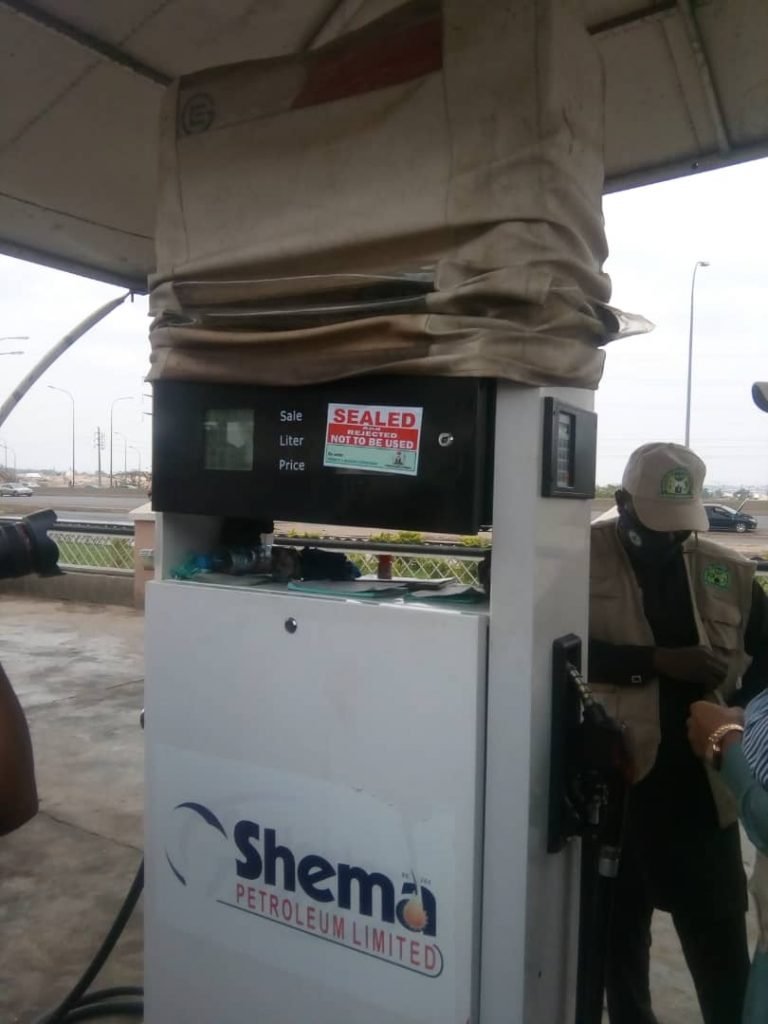
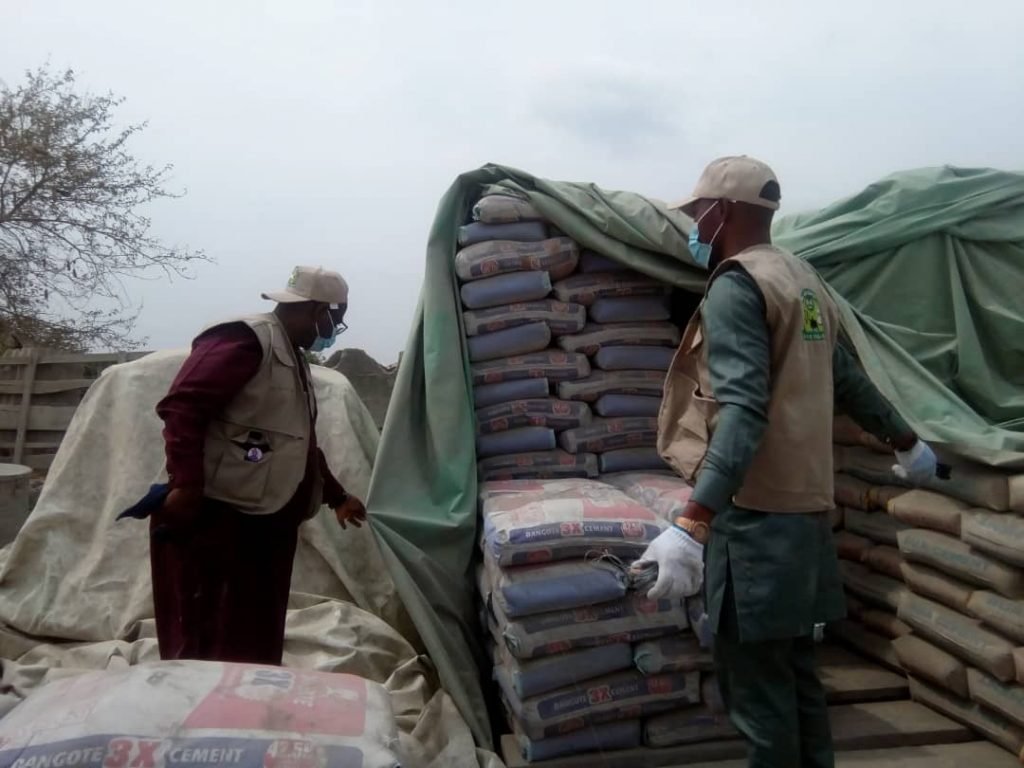
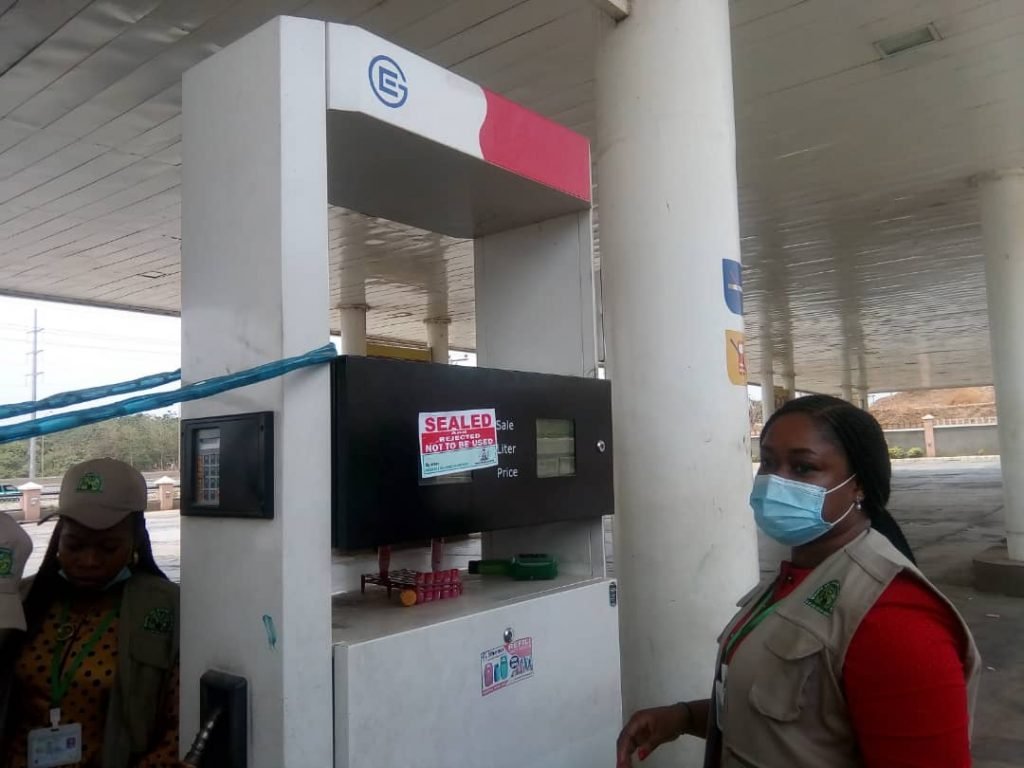
The Director, Weights and Measures Department, Ministry of Industry, Trade and Investment, Mr. Abubakar Galadima sealed Shema filling Station and a cement depot in Abuja over shortchanging consumers the Nigerian government.

Galadima who lead a team of the department on a surveillance activity to food stores, cement depot and filling stations in Abuja stated that the exercise aimed at generating revenue and ensure that Nigerians are not cheated.

LR-Sealed Shema Filling Station

According to Galadima, Shema filling station was sealed because of their inability to produce their letter of certification and over charging of motorists.

“Generally, all the filling stations that we visited are good except this particular station, and I have directed that this place should be sealed.

LR-Cement Deport

He added that the cement factory was sealed due to re-bagging of 50kg cement and reduced to 44kg.

Galadima assured that both companies will be shut for the next 28 days until they comply with their terms.

“This place will be shut for 28 days, we have a tolerant level, it is above or below five points we seal the station, if they are ready to comply, and conform with our directives then they will be unseal but if they refuse to do this, it will remain close for a month after which we take them to court for prosecution.”

LR-Sealed Shema Filling Station

Meanwhile, Galadima stated that because of the ongoing exercise which will be done in the six geopolitical zones of the country, majority of the filling stations will now adjust their pumps to make sure they stay within the accepted level and which will in turn give more revenue for the government.

“We are not going to allow a situation where consumers will be shortchanged, so if we find anything going contrary to our justification, we are not going to allow it”.

“They are shortchanging Nigerians by over charging motorists and that is not allowed by our act, that is why we are sealing this place and until they respond adequately, we are not going to unseal it.”

He however assured that the department will visit all filling stations to ensure compliance and consumers have value for their money.

“We are going to all filling stations within our powers to make sure that they pay their dues, we have a responsibility to ensure compliance, Nigerians can not shortchanged but have value for their money.”

March 13, 2021 0 comments
0 FacebookTwitterPinterestThreadsBlueskyEmail
BusinessHeadlines

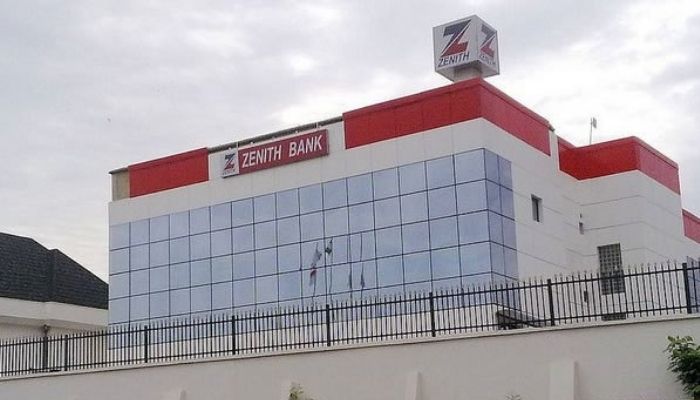
Banks to vacate Abuja choicest Area in 7days…

by Leading Reporters March 10, 2021
written by Leading Reporters

Banks and other business organization might begin to count their loss following a seven-day ultimatum given to them

by the FCTA Administration to vacate Maitama relocate to the Central Business District or risk being sealed up.

The Acting Director, Department of Development Control, Mr Garba Kwamkur, gave the warning when the department visited the popular Gana Street in Maitama on Tuesday.

Kwamkur explained that the objective of the visit was to sensitise business operators on the need to revert all the banks and other commercial hubs to their original allocated locations.

“The department had a week ago served notification to all the buildings that have been converted to commercial use to revert them to the residential purposes but they failed to comply,” he said.

Kwamkur directed the banks and other business organisations to relocate to Central Business District or Idu Industrial Estate which the FCT master plan provided for.

The acting director warned that their business premises would be sealed off at the expiration of the seven days ultimatum.

Meanwhile, Kwamkur, revealed that over 200 hectares of land in the Federal Capital City had been encroached by illegal land grabbers raising unapproved structures around the Lugbe District.

According to him, over 150 criminals have encroached into areas meant for public facilities in the Sabon-Luge area of the district.

“As you are aware the FCT Administration has pronounced that Lugbe will be incorporated into the Federal Capital City proper.So the plan is being incorporated to have the same kind of infrastructure as those in the city.

“This area was planned for public facilities such as schools, markets, hospitals, and other public utilities.

“But land grabbers have now encroached into the area and captured all the plots meant for public facilities and are developing them as housing estates.

“Thereby denying space for the necessary amenities that will be needed for the district in the future,” he said.

Kwamkur added that the department would forward the list of suspected offenders to the FCT Police commissioner to track and prosecute them as specified by the law

March 10, 2021 0 comments
0 FacebookTwitterPinterestThreadsBlueskyEmail
Newer Posts
Older Posts

Recent Posts

  • APC’ll rule Nigeria for 100 years – Yobe chairman, Gadaka

    April 10, 2026
  • World Bank Deletes Nigeria Development Report Three Days After Release

    April 10, 2026
  • U.S. Evacuates Staff, Suspends Visa Processing in Abuja

    April 9, 2026
  • Multiple Factions Emerge in Ruling APC Sparking Leadership Tussle

    April 8, 2026
  • Dangote Refinery Slashes Petrol Price to N1200

    April 8, 2026

Usefull Links

  • Contact Page
  • About Leading Reporters
  • Contact Us
  • Headlines
  • Investigation
  • Exclusives
  • Opinion
  • Business
  • Facebook
  • Twitter
  • Instagram
  • Linkedin

@2021 - All Right Reserved. Designed and Developed by PenciDesign


Back To Top
Leading Reporters
  • Featured
  • Politics
  • Opinion
  • Business
  • Entertainment
  • Sports
  • About Us
  • Contact