Leading Reporters
  • Headlines
  • Health
  • Business
  • Exclusives
  • Investigation
  • Entertainment
  • Opinion
Friday, February 20, 2026
Hot
Ramadan: Hisbah arrests nine in Kano for allegedly...
37 Miners Die, 25 Hospitalised After Suspected Carbon...
FCT Polls: PDP candidate steps down for APC’s...
BREAKING: Tinubu signs controversial Electoral Act amendment bill...
Kano govt ban Dj, music till after Ramadan
Kaduna Terror Victims Demand Accountability for Rights Abuses...
BREAKING: DSS Sues El-Rufai for Intercepting NSA Ribadu’s...
Major Health Crisis Plagues Dape, Karmo Residents As...
BREAKING: INEC announces timetable, schedule of 2027 elections
Aso Rock to disconnect from nat’l grid in...
  • About Leading Reporters
  • Contact Us
Leading Reporters
Advertise With Us
  • Headlines
  • Health
  • Business
  • Exclusives
  • Investigation
  • Entertainment
  • Opinion
Hot
Ramadan: Hisbah arrests nine in Kano for allegedly...
37 Miners Die, 25 Hospitalised After Suspected Carbon...
FCT Polls: PDP candidate steps down for APC’s...
BREAKING: Tinubu signs controversial Electoral Act amendment bill...
Kano govt ban Dj, music till after Ramadan
Kaduna Terror Victims Demand Accountability for Rights Abuses...
BREAKING: DSS Sues El-Rufai for Intercepting NSA Ribadu’s...
Major Health Crisis Plagues Dape, Karmo Residents As...
BREAKING: INEC announces timetable, schedule of 2027 elections
Aso Rock to disconnect from nat’l grid in...
Leading Reporters
Leading Reporters
  • Headlines
  • Health
  • Business
  • Exclusives
  • Investigation
  • Entertainment
  • Opinion
Copyright 2024 - All Right Reserved
Home > Business > Page 12
Category:

Business

Business

Remittance inflows surge by 130% to $553 Million in July 2024 – CBN

by Folarin Kehinde August 20, 2024
written by Folarin Kehinde

The Central Bank of Nigeria (CBN) has reported a 130% surge in remittance inflows, with the figure reaching $553 million in July 2024.

According to the CBN, this milestone represents the highest monthly remittance inflows ever recorded, marking a significant increase from the same period in 2023.

This is according to a statement by Hakama Sidi Ali, the Acting Director of Corporate Communications, on Tuesday, August 20, 2024.

The CBN credits this surge in remittance inflows to a series of strategic policy measures designed to enhance liquidity in Nigeria’s foreign exchange market.

The statement read: “The Central Bank of Nigeria (CBN) has reported a significant increase in remittance inflows, reaching $553 million in July 2024, a 130 per cent increase from the corresponding period in 2023.

“This figure represents the highest monthly total inflows on record and reflects ongoing efforts by the CBN to enhance liquidity in Nigeria’s foreign exchange market.

“The substantial growth in remittance receipts is attributable to policy measures introduced by the CBN to enhance liquidity in Nigeria’s foreign exchange market. These measures include granting licenses to new International Money Transfer Operators (IMTOs), implementing a willing buyer-willing seller model, and enabling timely access to naira liquidity for IMTOs.

“Diaspora remittances are a crucial source of foreign exchange for Nigeria, supplementing both foreign direct investment and portfolio investments. The CBN’s initiatives have supported continued growth in these inflows, aligning with the institution’s objective of doubling formal remittance receipts within a year.”

The CBN also noted that the National Bureau of Statistics (NBS) reported a slowdown in Nigeria’s year-on-year headline inflation rate for the first time in 19 months, signalling the effectiveness of the CBN’s monetary policy tightening measures.

The CBN further expressed its commitment to closely monitoring market conditions and adjusting its policies as needed to ensure the continued flow of remittances, thereby contributing to the stability of the foreign exchange market.

August 20, 2024 0 comments
0 FacebookTwitterPinterestThreadsBlueskyEmail
Employment scam in MINT: Group petitions CBN, National Assembly, CCB, others: CBN Deputy Governor Emem Usoro; her aide Olakunle Abiola indicted Leading Reporters
Business

JUST IN: CBN Approves Merger Of Unity, Providus Banks

by Folarin Kehinde August 6, 2024
written by Folarin Kehinde

The Central Bank of Nigeria (CBN) on Tuesday announced the approval for a pivotal financial accommodation to support the proposed merger between Unity Bank Plc and the Providus Bank Limited.

The apex bank, in a statement by its acting Director of Corporate Communications, Hakama Sidi-Ali, said the move is designed to bolster the stability of the nation’s financial system and avert potential systemic risks.

“The merger is contingent upon the financial support from the CBN. The fund will be instrumental in addressing Unity Bank’s total obligations to the Central Bank and other stakeholders,” the statement read.

“It is unequivocal to state that the CBN’s action is under the provisions of Section 42 (2) of the CBN Act, 2007. This arrangement is crucial for the financial health and operational stability of the post-merger organisation.

“It is important to emphasise that no Nigerian bank currently faces a precarious situation comparable to that of Heritage Bank, which was recently liquidated.”

The CBN said it remains committed to safeguarding depositors’ interests and ensuring the smooth functioning of the banking sector through proactive measures and strategic interventions.

August 6, 2024 0 comments
0 FacebookTwitterPinterestThreadsBlueskyEmail
Business

BREAKING: First Bank sacks over 100 employees after ₦40bn fraud

by Folarin Kehinde August 6, 2024
written by Folarin Kehinde

First Bank has reportedly sacked over 100 employees in July 2024, four months after discovering that Tijani Muiz Adeyinka, a manager on the operations team, allegedly diverted ₦40 billion over two years.

In details first reported by TechCabal, Adeyinka, who is still on the run, used his authorisation to approve chargebacks to accounts he controlled.

Two people with direct knowledge of the matter claimed that at least 120 employees, including full-time and contract staff of First Bank’s large operations department, were given termination letters in July. The head of transactions at the time was also fired.

Those employees were accused of laxity in carrying out their duties and were told they should have spotted the fraud earlier. First Bank’s management team believed it was impossible for a fraud of that scale and timeline to have been executed without the knowledge of Adeyinka’s superiors.

“The CEO said there will be zero tolerance for supervisory negligence,” said one First Bank employee who asked not to be named so they could speak freely.

TechCabal first reported the alleged fraud in May, showing how Adeyinka, who was the final line of authorisation on his team, carried on his scheme unnoticed for two years. When the incident was discovered in March, the bank tried to keep the matter under wraps, suspending several operations team members indefinitely. However, First Bank became more aggressive after the fraud became public.

Several employees were questioned by the Nigerian Police Force (NPF) and detained at the Lion’s Building for at least six hours, one person with direct knowledge of the incident said. Those employees needed to post bail before they were released. Restrictions have been placed on all their personal accounts except their First Bank accounts.

First Bank did not immediately respond to a request for comments.

The blast radius may have extended farther. First Bank’s CEO at the time, Dr Adesola Adeduntan, abruptly resigned in April, eight months before the end of his tenure and less than a month after the fraud was uncovered. Adeduntan, who led First Bank for nine years and “left to pursue other interests,” was initially replaced as CEO by First Bank’s board in April 2021.

The Central Bank blocked that move, claiming First Bank’s board acted without regulatory approval. It paved the way for Dr Adeduntan to serve an unprecedented third term. One publication claimed concerns over his tenure led to his resignation in April.

August 6, 2024 0 comments
0 FacebookTwitterPinterestThreadsBlueskyEmail
Business

NCC Directs Telcos on Tariffs Transparency

by Folarin Kehinde August 6, 2024
written by Folarin Kehinde

The Nigerian Communications Commission (NCC) has issued a directive to telecommunications operators to simplify their tariff plans, bundles, and promotional activities.

This move aims to provide clear, easy-to-understand, and accurate information about the cost of voice, short messaging service (SMS) and data services to subscribers.

The directive, titled “Guidance on the Simplification of Tariffs in the Nigerian Communications Sector,” was issued on July 29, 2024. It mandates Mobile Network Operators (MNOs) to publish a comprehensive table showing the features of their tariff plans and bundle offers.

The table should contain all necessary information for subscribers to make informed decisions, including details on add-ons, their prices, how consumers can opt-in or out, terms and conditions for renewal, and rollover policies.

The guideline is the outcome of consultations with industry stakeholders, including MNOs and Consumer Focus Groups, and extensive data analysis on consumer preferences and expectations.

The objectives of the simplification guidelines are to reduce the complexity of tariff plans and bundles, ensure transparency and fairness of promotional elements of tariff plans, protect consumers’ interests by providing clear and understandable tariff information so that they make informed decisions, and promote fair competition among licensees by standardising tariff structures.

Service providers are also required to display all relevant information about their tariffs, such as the name of the plan, price, validity period, price-per-second for on or off-network and international calls, expected data speeds, and fair usage policies.

“Operators can maintain existing bonus-led tariff plans till 31st December 2024, within which period operators are expected to educate and migrate all subscribers to the simplified tariff plans,” the directive stated.

The guidelines further mandate that MNOs must communicate tariffs to subscribers in “clear language and a user-friendly format,” with full disclosure of a subscriber’s tariff plan via Unstructured Supplementary Service Data (USSD).

The guidelines further mandate that MNOs must communicate tariffs to subscribers in “clear language and a user-friendly format,” with full disclosure of a subscriber’s tariff plan via Unstructured Supplementary Service Data (USSD).

Additionally, “operators must offer stand-alone data bundles at fair prices to avoid tying consumers with products they do not need; bonuses on promotions must be stated in actual value; access fees and asymmetric fee structures must be eliminated,” among other conditions.

The NCC emphasised that while complying with these guidelines, operators must also meet the Key Performance Indicators (KPIs) standards set out in the Quality of Service (QoS) Regulations.

August 6, 2024 0 comments
0 FacebookTwitterPinterestThreadsBlueskyEmail
Business

WhatsApp to discontinue service in Nigeria over $220m fine

by Folarin Kehinde August 1, 2024
written by Folarin Kehinde

One week after Nigeria’s Federal Competition and Consumer Protection Commission imposed a $220 million fine on WhatsApp for a data privacy breach, the Meta-owned company may suspend its operations in the country due to further regulatory demands.

Sources close to the situation indicate that Meta, WhatsApp’s parent company, is contemplating withdrawing certain services from Nigeria.

Alongside the substantial fine, the FCCPC has directed WhatsApp to cease sharing user data with other Facebook companies and third parties without explicit user consent. The commission also requires WhatsApp to disclose details about its data collection practices and to enhance user control over data usage.

In response, a WhatsApp spokesperson emailed TechCabal, “We want to be clear that, technically, based on the order, it would be impossible to provide WhatsApp in Nigeria or globally.” The spokesperson criticized the FCCPC’s order as flawed, asserting that it inaccurately portrays WhatsApp’s data handling and would necessitate significant changes to the platform’s infrastructure.

Meta has not addressed the FCCPC’s allegations regarding user opt-out options from the 2021 privacy policy but maintains that the update does not involve sharing user data. The company’s privacy policy states, “While traditionally mobile carriers and operators store this information, we believe that keeping these records for two billion users would be both a privacy and security risk and we don’t do it.”

The potential suspension of WhatsApp could have significant repercussions for individuals and small businesses in Nigeria, many of whom rely on WhatsApp, Instagram, and Facebook for customer engagement.

Some privacy lawyers have questioned the FCCPC’s use of the National Data Protection Regulation as the foundation for the fine. Enacted in 2019 by the National Information Technology Development Agency, the NDPR is Nigeria’s principal data protection framework. Two unnamed lawyers have expressed doubts about the NDPR’s authority in such a high-stakes matter and questioned whether a government regulation can be deemed definitive in privacy issues.

Additionally, two unnamed government officials have raised concerns about the fairness of the $220 million fine. “We are too revenue-focused. What is the opportunity cost of $220 million in government coffers?” questioned an industry expert.

Should WhatsApp choose to halt its operations in Nigeria due to these demands, both the FCCPC and the Nigerian government will face significant scrutiny and consequences.

August 1, 2024 0 comments
0 FacebookTwitterPinterestThreadsBlueskyEmail
Business

Lagos Govt to tax content creators, remote workers, influencers N200b annually

by Folarin Kehinde July 30, 2024
written by Folarin Kehinde

The Lagos State government has unveiled an ambitious plan to generate N200 billion annually by expanding its income tax base to include remote workers and leveraging digital solutions for enhanced revenue collection, Nairametrics is reporting.

According to the synopsis document for the EKO Revenue Plus Summit, which is expected to hold on September 25th and 26th, 2024, with the theme “Unlocking New Revenue Streams for Lagos State”, this southwest state plans to raise N5 trillion internally generated revenue (IGR) from four major sectors.

One of such sectors is the digital economy, through which Lagos State plans to introduce a Resident Global Digital Citizen Tax Management System, targeting remote workers, foreign firms, and digital influencers. This system will also involve accreditation and licensing of digital economy operators, supported by a robust platform including e-Portal, Market Place, and a Recovery Platform.

According to the synopsis document, the initiative’s estimated budget is N250 million, covering portal construction, data mining, partnerships, stakeholder engagements, and communications. The southwest state aims to generate N200 billion annually from about two million people in this area.

With the EKO Revenue Plus Summit happening in September, Lagos State plans to hit N5 trillion in internally generated revenue (IGR) under the current governorship of Babajide Sanwo-Olu. A part of the document read: “Increasing Lagos State IGR to 5 Trillion Naira in the life of the current administration requires a comprehensive and innovative approach that leverages technology, strengthens tax administration, expands the tax base and explores new revenue stream options, especially in the non-tax areas, while optimizing the existing processes.”

News credit: nairametrics

July 30, 2024 0 comments
0 FacebookTwitterPinterestThreadsBlueskyEmail
Business

Airfares may rise as FG set to raise Operators’ levy by 800%

by Folarin Kehinde July 26, 2024
written by Folarin Kehinde

Amid complaints by the Airline Operators of Nigeria over multiple taxation, the Federal Government has expressed its intention to further raise its charges.

The Managing Director of the Nigerian Airspace Management Agency, Umar Farouk, announced this on Friday at the League of Airports and Aviation Correspondents seminar themed “Aviation Survivability amidst a Challenging Macro-Economic Environment,” held in Ikeja, Lagos.

He stated that the agency would raise its en-route navigational charges from N2,000 and N6,000 to N18,000 and N54,000 per flight. Similarly, the airspace agency increased the extension of service hours to airlines from N50,000 to N450,000, representing an 800 per cent increase per extension to enable the agency to recover the cost of diesel and other logistics during the extension period.

This means that airfares might also skyrocket by 800 per cent.

Mohbad’s father appeals for Nigerians’ help in unraveling cause of son’s death0:00 / 0:00

In January, NAMA and the Nigerian Civil Aviation Authority held a strategic meeting with some airline operators to review what has been described as the outdated N16,000 terminal en-route navigational charges.

He said, “The Nigerian Airspace Management Agency relies on statutory fees for the management of the airspace (remember that aviation takes place only in the air). These funds are generated from services we provide to the flying community. Without these funds, NAMA can’t discharge its responsibility of ensuring the safety of our airspace effectively. We mainly generate these funds through the airline companies.”

Farouk also noted that in 2023, NAMA had an expenditure of about N21 billion in personnel costs alone, over N12 billion in capital costs, and over N10 billion in overhead costs, adding that all these were to be funded without the Federal Government budgetary allocation.

He said NAMA had been charging as low as N11,000 per flight when a one-way domestic ticket cost only N16,000.

He mentioned that while ticket prices today have gone up astronomically to as high as between N150,000 to N200,000 for a one-way economy ticket owing to the prevailing economic circumstances, NAMA navigational charges had remained the same since June 2008.

“Currently, our unit rate for international flights charged for service provision is about $70, and domestic flights are charged N6,000. While NAMA recognises the difficult economic environment in which aviation operates in Nigeria, it is equally a part of the ecosystem.

“It goes to the same market to procure equipment and other services like training. If NAMA is to survive and continue to guarantee safety and efficiency in the airspace, it must breathe.

“Even though most costs in the economy have increased by more than 1,000 percent, NAMA has proposed to increase its fees by 800%. The new rates for en-route and terminal navigation charges are to be reviewed from N2,000 and N6,000 to N18,000 and N54,000 per flight.

“Also, the extension of service hours is to be reviewed from N50,000 to N450,000 per extension to enable the agency to recover the cost of diesel and other logistics during the period of extension”.

“The largest percentage of NAMA’s revenue comes from en-route navigation charges (domestic and international flights) and terminal navigation charges (domestic and international flights). While international flights pay in US dollars, domestic flights pay in the Nigerian currency.”

July 26, 2024 0 comments
0 FacebookTwitterPinterestThreadsBlueskyEmail
Naira against dollar
BusinessHeadlines

Naira Depreciates Below N1600 Against Dollar

by Nelson Ugwuagbo July 26, 2024
written by Nelson Ugwuagbo

On Thursday, the value of the naira dropped below N1,600 per dollar at the official foreign exchange market, reaching a new low.

FMDQ data on Thursday showed that the naira depreciated to N1,603.80 per dollar on Thursday from N1,586.71 traded on Wednesday, recording a N17 loss.

Similarly, at the black market, the naira further depreciated to N1,593 per dollar on Thursday from N1,585 exchanged on Wednesday.

The figures from both official and parallel foreign exchange markets showed that the naira declined further against the dollar and other FX.

This is the fourth consecutive time the naira is depreciating against the dollar, despite the Central Bank of Nigeria’s intervention last week.

The development comes despite CBN’s sales of $106.5 million FX to authorised dealers last week Thursday and Friday amid a demand surge.

July 26, 2024 0 comments
0 FacebookTwitterPinterestThreadsBlueskyEmail
Business

ITU Ranks Nigeria High in Digital Transformation Readiness

by Folarin Kehinde July 25, 2024
written by Folarin Kehinde

A new report of the International Telecommunications Union (ITU), has ranked Nigeria very high at 71 per cent, in comparative legal, policy and governance frameworks towards G5 – advanced state of readiness for digital transformation known as G5 with Germany, Finland and Singapore leading the global chart.

In the report conducted by the ITU, and the United Kingdom’s Foreign, Commonwealth & Development Office (FCDO), and unveiled by Nigeria’s Minister of Communications, Innovation and Digital Economy, Dr. Bosun Tijani in Abuja on Monday, Nigeria was ranked among Africa’s top seven BEMECS 5G Readiness Index, which represents the country’s readiness to deploy and adopt mass-market 5G networks.

Titled, Collaborative Regulation: Accelerating Nigeria’s Digital Transformation, and presented at the Digital Economy Complex, Mbora, Abuja by ITU’s Kagwira Nkonge, the report, among other things, presented a case study for ‘collaborative regulation review to assess and support Nigeria’s transition towards collaborative digital governance, evidence-based policy making and agile regulation in the digital economy”.

The report, which was presented to a cross section of key industry stakeholders including service providers, government agencies, representatives of multilateral institutions, West Africa Telecommunications Regulators Assembly (WATRA), Africa Telecommunications Union (ATU), among others, was also designed to complement existing cross-country benchmarks in which features of countries policy and regulatory environment are assessed.

The features of countries policy and regulatory environment are assessed according to the pillars of the Generations of Regulation frameworks which tracks telecom regulatory maturity towards digital transformation readiness, designated at G5 Advanced State of Readiness”, and for which Nigeria currently stands at G4.

Advanced State of Readiness is benchmarked against four critical levels of accomplishments which include national collaborative governance, policy design principles, digital development toolbox, digital economic policy agenda, with Nigeria scoring 91 per cent in regulatory capacity; 82 per cent in Market Rules; 81 per cent in Collaborative Governance; 76 per cent in Legal Instruments for ICT/Telecom markets; 69 per cent in National Digital Agenda Policy, among other benchmarks.

Dr. Tijani, in his remarks at the event, commended the ITU and partner agencies and consultants that actualised the report; and expressed Federal Government’s commitment “to utilise this report as a navigational aid towards attainment of our regulatory objectives and policies outlines towards achieving a robust digital economy”.

“That is what we will continue to do as a government, ensuring that we can put ourselves in a place to have cutting-edge modern regulations in place to ensure that business is done properly in our sector and to ensure that, where possible, increase the local content of the sector as well,” he said.

Dr. Tijani noted that NCC has adapted over the years in response to how its role and mandate have changed. He explained, “Fifteen, twenty years ago, NCC was just regulating the telecommunications sector, today, NCC regulates the foundation for which any economy would be prosperous.”

The Executive Vice Chairman of the Nigerian Communications Commission, Dr. Aminu Maida, who hosted the presentation, welcomed the indicators that promote effective regulation, attraction of greater investment, and development of innovative models for broader digital inclusion.

He emphasised that collaborative regulation would support Nigeria’s transition towards effective digital governance, evidence-based policy making and agile regulation in the nation’s digital economy.

July 25, 2024 0 comments
0 FacebookTwitterPinterestThreadsBlueskyEmail
Business

Gabon president invites Dangote to invest in cement, fertiliser production

by Folarin Kehinde July 24, 2024
written by Folarin Kehinde

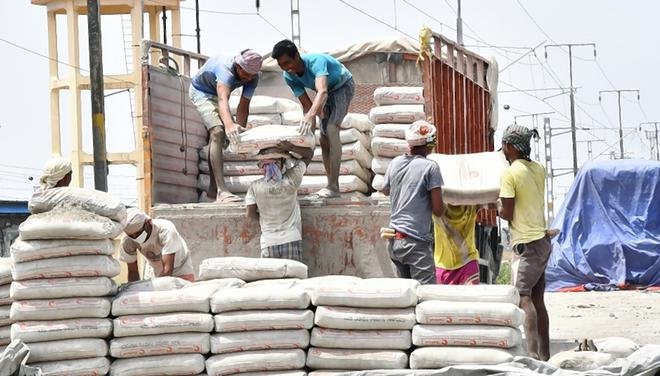
Aliko Dangote, the chairman of Dangote Industries Limited, has been invited by President Brice Oligui Nguema of Gabon to invest in cement and fertiliser production in the country.

According to a statement by the media office of Dangote Group, the billionaire was invited to explore investment opportunities in cement and fertiliser (urea and phosphate).

“President Brice Oligui Nguema of Gabon has invited the President and Chief Executive Officer of Dangote Industries Limited (DIL), Aliko Dangote to invest in Cement and Fertiliser production in Gabon,” Dangote Group said.

“The President urged Dangote to explore potential investment opportunities in the country’s cement and fertilizer sectors, specifically urea and phosphate production.”

According to the statement, Dangote conversed with Nguema and other top government officials during the visit.

“The talks focused on how Dangote Industries could contribute to Gabon’s economic growth by establishing cement and fertilizer plants, which are vital for the country’s infrastructure development and agricultural productivity,” Dangote Group said.

“President Nguema expressed enthusiasm about the potential partnership, highlighting Gabon’s commitment to creating a conducive environment for foreign investments.

“He noted that the collaboration with Dangote Industries would bring significant benefits, including job creation, technology transfer, and enhanced industrial capacity.”

July 24, 2024 0 comments
0 FacebookTwitterPinterestThreadsBlueskyEmail
Newer Posts
Older Posts

Recent Posts

  • Ramadan: Hisbah arrests nine in Kano for allegedly eating in public

    February 19, 2026
  • 37 Miners Die, 25 Hospitalised After Suspected Carbon Monoxide Exposure in Plateau

    February 18, 2026
  • FCT Polls: PDP candidate steps down for APC’s Ishaku after Wike’s intervention

    February 18, 2026
  • BREAKING: Tinubu signs controversial Electoral Act amendment bill into law

    February 18, 2026
  • Kano govt ban Dj, music till after Ramadan

    February 18, 2026

Usefull Links

  • Contact Page
  • About Leading Reporters
  • Contact Us
  • Headlines
  • Investigation
  • Exclusives
  • Opinion
  • Business
  • Facebook
  • Twitter
  • Instagram
  • Linkedin

@2021 - All Right Reserved. Designed and Developed by PenciDesign


Back To Top
Leading Reporters
  • Featured
  • Politics
  • Opinion
  • Business
  • Entertainment
  • Sports
  • About Us
  • Contact