Leading Reporters
  • Headlines
  • Health
  • Business
  • Exclusives
  • Investigation
  • Entertainment
  • Opinion
Thursday, May 14, 2026
Hot
BREAKING: EFCC Arrests Energy DG, Mustapha Abdullahi over...
Court Sentence Former Minister of Power, Saleh Mamman...
FG to Borrow Fresh $1.25 Billion Loan From...
Senate, Reps Approve N1.75tn NDDC Budget for 2026
Gunmen Kill 13 in Plateau Fresh Attacks
Jabi Lake takeover stands even if God comes...
Fuel Scarcity Looms As Dangote Refinery Hikes Fuel...
IGP scraps SWAT nationwide
17 Reps Dump ADC for NDC
Bride’s father, hypeman shot dead at Lagos wedding...
  • About Leading Reporters
  • Contact Us
Leading Reporters
Advertise With Us
  • Headlines
  • Health
  • Business
  • Exclusives
  • Investigation
  • Entertainment
  • Opinion
Hot
BREAKING: EFCC Arrests Energy DG, Mustapha Abdullahi over...
Court Sentence Former Minister of Power, Saleh Mamman...
FG to Borrow Fresh $1.25 Billion Loan From...
Senate, Reps Approve N1.75tn NDDC Budget for 2026
Gunmen Kill 13 in Plateau Fresh Attacks
Jabi Lake takeover stands even if God comes...
Fuel Scarcity Looms As Dangote Refinery Hikes Fuel...
IGP scraps SWAT nationwide
17 Reps Dump ADC for NDC
Bride’s father, hypeman shot dead at Lagos wedding...
Leading Reporters
Leading Reporters
  • Headlines
  • Health
  • Business
  • Exclusives
  • Investigation
  • Entertainment
  • Opinion
Copyright 2024 - All Right Reserved
Home > Archives for > Page 306
Author

Folarin Kehinde

Folarin Kehinde

Headlines

2023 Elections: NUC Orders Immediate Closure of Universities

by Folarin Kehinde February 9, 2023
written by Folarin Kehinde

The National Universities Commission, NUC, has directed the closure of all universities and inter-university centres between February 22nd and March 14.

NUC said there would be no academic activities during the shutdown.

The announcement was contained in a statement signed by the Deputy Executive Secretary (Administration), Chris Maiyaki.

According to the statement, the decision followed concerns about the security of staff, students and the universities’ properties during the general elections scheduled from February 25 – March 14.

The Commission said the Minister of Education, Mallam Adamu Adamu, gave the directive following consultation with relevant security agencies.

February 9, 2023 0 comments
0 FacebookTwitterPinterestThreadsBlueskyEmail
Headlines

Chief Inegbeniki Emerge Brand Ambassador of Oseni Motorcar

by Folarin Kehinde February 9, 2023
written by Folarin Kehinde

Chief Francis Inegbeniki has become the new ambassador of Oseni Motorcar in Ewu Kingdom of Edo State.

Ewu, in his typical characteristic of promoting ingenuity and innovation in Esanland, the Edo State APC State Vice Chairman (Edo Central), Chief (Dr) Francis Inegbeniki, the Uzoya of Esanland, during the ongoing APC ward-to-ward rally, held yesterday at ward 07 in Ewu Kingdom, publicly acknowledged the ingenuity and creativity of an Ewu son, Mr Kadiri Oseni, who invented an automobile in Ewu Kingdom.

Mr Kadiri Oseni is a person living with disability, but, he has demonstrated to the world that, there is ability in disability.

Chief Inegbeniki and some of his followers ride with Mr Oseni in the made in Ewu motorcar, to the home of the eldest man in Ewu Kingdom, where the APC State Vice Chairman led other party chieftains to pay homage to Pa Omoeria Okonofua, who is 126 years of age.

Chief Inegbeniki use the occasion to call on relevant agencies of governments and private individuals to assist Mr Kadiri Oseni in whatever means to develop his ingenuity in a global level.

February 9, 2023 0 comments
0 FacebookTwitterPinterestThreadsBlueskyEmail
Opinion

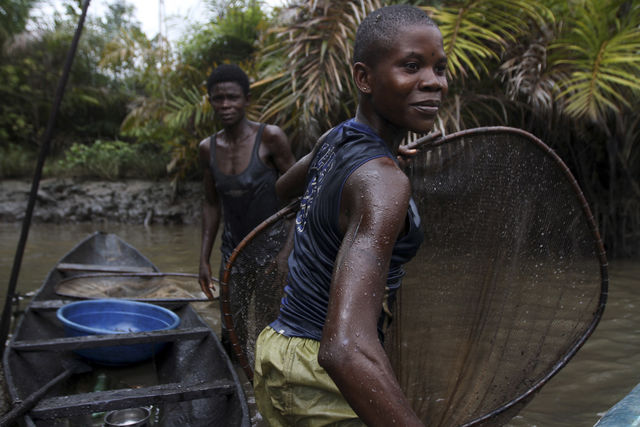
How Nigerian States Are Breaking Boundaries to Eliminate River Blindness, Elephantiasis Transmission

by Folarin Kehinde February 9, 2023
written by Folarin Kehinde

In many parts of Nigeria, onchocerciasis, also known as river blindness, has been as common as it has been devastating – having stolen the eyesight of an estimated 120,000 Nigerians and causing debilitating complications in many others.

The disease has been so common, that researchers interviewing rural Nigerians in 1991 reported its symptoms, including the impairment of vision, are “believed by Nigerian rural dwellers to be part of the natural vicissitudes of aging.” No other country, in fact, has had more people infected or people at risk of contracting the neglected tropical disease (NTD).

One of the leading infectious causes of blindness in the world, onchocerciasis is caused by a worm transmitted by repeated bites of infected female blackflies. It is notoriously difficult to cure – treatment requires reaching affected communities, often in remote locations, with annual or biannual doses of an anti-parasitical medicine for periods spanning a decade.

It has been such a stubborn scourge that when Nigerian health leaders launched their most recent anti-river blindness effort in 1991, their goal was not elimination – instead their goal was simply to reduce the number of people falling ill.

“We thought we would be treating onchocerciasis indefinitely,” said Dr. Abel Eigege, the program director for The Carter Center in Nigeria for the past 25 years. “It was a daunting challenge that had plagued our forefathers for generations.”But 30 years later, health leaders in Nigeria’s Plateau (population 3 million) and Nasarawa states (population 2.5 million) have achieved what few initially thought possible – they have delivered 27 million doses of medication over more than 20 years, to eliminate transmission of river blindness.

Another four Nigerian states: Abia (population 4.2 million), Anambra (population 6.2 million), Enugu (population 4.8 million), Imo (population 5.8 million) appear close to the same historic milestone.

After molecular testing of more than 52,000 black flies and blood samples from more than 12,000 people, the Ministry of Health has just announced that it will no longer be distributing drugs to stop transmission in those four states and instead will monitor to confirm elimination of transmission.

And another three states, Sokoto (population 6.3 million), Yobe (population 3.6 million), and Gombe (population 4 million), are also suspected of having stopped transmission and are launching the widespread surveying and testing of flies and humans necessary to determine if they can confidently stop distribution of anti-parasitic medicine.

Efforts to control the disease continue across more than 20 other Nigerian states. These efforts are led by health officials like Jacob Danboyi, whose own father lost his vision because of river blindness. Danboyi went on to serve as coordinator of Nasarawa state’s neglected tropical disease elimination program.

“I cannot express how gratifying it is to see millions of Nigerians free from the threat of river blindness,” Professor B.E.B. Nwoke, chair of Nigeria’s Onchocerciasis Elimination Committee said in a statement.

“When we started, many questioned our ambition. Today, I’m proud that Nigeria, once again, serves as a beacon of inspiration.”What’s more, river blindness efforts served as the backbone for historic progress against other NTDs. The same 17,102 community volunteers across the Plateau and Nasarawa states who educated their neighbors about river blindness and delivered the 27 million doses of ivermectin, also educated their neighbors about lymphatic filariasis (also known as elephantiasis) and delivered 36 million ivermectin-albendazole treatments for the disease – eliminating it from Plateau and Nasarawa states in 2012.

This same network of community volunteers also reduced schistosomiasis, commonly known as snail fever, by 62 percent in the two states, and delivered hundreds of thousands of insecticide-treated bed nets to help eliminate lymphatic filariasis and reduce malaria.

This remarkable success demonstrates the potential power of community-based interventions, the benefits that may accrue by breaking down silos in vertical health initiatives, and how leveraging existing health structures can help accelerate progress.

“This success confirms that health interventions that logically fit together should go together,” said Dr. Frank Richards, who served as director of the Carter Center’s River Blindness Elimination Program, Lymphatic Filariasis Elimination Program, and Schistosomiasis Control Program from 2005-2020.

“It shows the benefits of moving away from silos. We can’t have a different vertical team delivering each medicine. There are a lot of logistical, economical, and epidemiological reasons for an integrated approach.”

The effort against river blindness in Plateau and Nasarawa states began in 1987 with a historic announcement: the pharmaceutical company Merck had agreed to donate ivermectin – “as much as needed, for as long as needed” – to help eliminate river blindness.

Nigerian health authorities soon launched a vertical initiative, sending out health workers by foot, in four-wheel drive vehicles, or on motorcycles to deliver the medication to far-flung villages once a year. By the mid-1990s, authorities realized that this approach wasn’t regularly reaching the most remote villages, which often had the highest rates of the disease.

They shifted their approach and, with the support of the Carter Center, established a community-based distribution network.Thousands of community volunteers across both states quickly began conducting annual censuses to determine how many doses of medicine each village would require and followed up by delivering ivermectin to every single household.

Many of these communities had never before been reached by the national health system.Soon, community volunteers across the two states were delivering 2.2 million annual doses to their neighbors. As people’s health improved, communities rallied around the program.

In 2000, efforts to stop the transmission of river blindness were presented with a new opportunity and challenge, when another pharmaceutical company, GSK, formerly known as GlaxoSmithKline, stepped forward with its own historic announcement: it would donate albendazole to be used to treat another neglected tropical disease: elephantiasis. The disease is spread by infected female mosquitos and is often found in many of the same areas where river blindness is endemic.

A single annual dose of albendazole, when used in combination with ivermectin (that was already being delivered to prevent river blindness), can wipe out the parasite that causes elephantiasis.

Rural Nigerians were eager for a treatment for elephantiasis, which often causes heavily swollen legs, disfigurement, and disability. In communities afflicted by this disease in Plateau and Nasarawa states, as many as 10% of residents were affected with heavily swollen limbs and as many as half of men suffered from swollen genitals (hydrocele) from the infection. Authorities estimated that in these two states alone, nearly four million Nigerians would need to be treated for at least 5-6 years to eliminate transmission of the disease.

But there was a serious concern: might integrating the medicines for elephantiasis overburden and derail the successful river blindness program?Authorities cautiously moved forward with the expansion, increasing the footprint of the program in the two states to serve five to six times as many communities.

Program logistics were complicated by the expansion – some communities needed the treatment only for elephantiasis, some only needed the treatment for river blindness, and some needed the medication for both elephantiasis and river blindness.

Dr. Eigege and Dr. Richards, together with their colleagues, noted in follow-up research that rather than dilute the impact of the program, an integrated approach accelerated progress. He and his colleagues wrote in The American Journal of Tropical Medicine and Hygiene that “the integrated concept demonstrated here represented an important opportunity that should be seized by governments and donors alike, as it may ultimately be as important to the public health of Africa as childhood immunization.”Dr. Eigege explained that “integration is better for the patient, better for the community, and reduces costs by about 41%. When you think about sustainability and impact – integration is key.”

Buoyed by successful integration, authorities incorporated the distribution of insecticide-treated bed nets into their program in 2004.

The bed nets not only helped prevent the spread of lymphatic filariasis, but also helped prevent malaria.The Nigeria Federal Ministry of Health and its partners developed co-implementation guidelines for a coordinated effort to eliminate both malaria and lymphatic filariasis.

The guidelines strategically map out shared interventions to maximize impact and reduce redundancies, aligning activities including health education, community-based action, distribution of long-lasting insecticidal bed nets, and mass drug administration.

These guidelines are the first of their kind in Africa.In 2006, authorities further expanded efforts, training the same community volunteers addressing river blindness and elephantiasis to also deliver treatment for schistosomiasis, another common neglected tropical disease caused by a worm that can cause malnutrition, anemia, and organ damage.

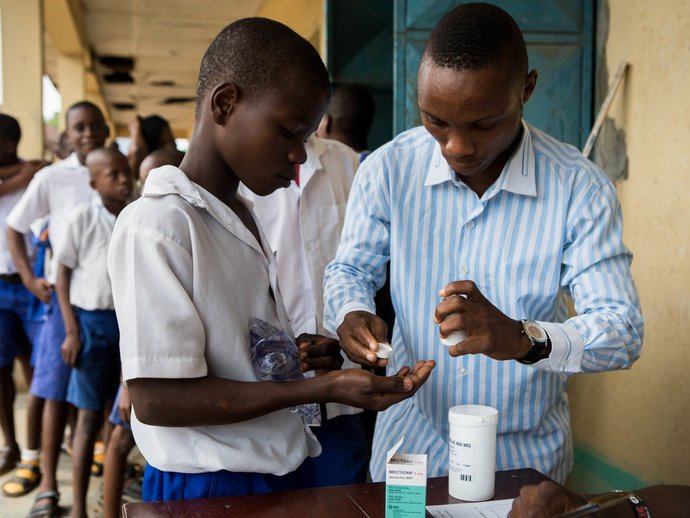
Community volunteers provided a single dose of praziquantel to all school-aged children and eligible adults. By delivering the medication outside of schools, community volunteers were able to reach even the poorest families, whose children sometimes never enroll, have poor attendance, or leave school early.

Again, Dr. Eigege, Dr. Richards, and their research colleagues found that integrating schistosomiasis and elephantiasis into the river blindness program improved “the latter’s sustainability, by capitalizing on cost savings and broadening the programs’ benefits and popularity. In fact, the enthusiasm expressed for the expansion of the popular Plateau/Nasarawa state programs during surveys suggests that integration with LF and SH could increase [ivermectin] consumption for [onchocerciasis] rather than decrease it.”

Explained Dr. Richards, “All of this worked because it was community based. You couldn’t achieve this by getting mobile teams into a land cruiser and distributing medicines to thousands of communities.”

February 9, 2023 0 comments
0 FacebookTwitterPinterestThreadsBlueskyEmail
Headlines

Over 18 million Nigerians Are River Blindness Free – FG

by Folarin Kehinde February 9, 2023
written by Folarin Kehinde

Nigeria’s Federal Ministry of Health has announced that it has achieved the criteria to stop treatment for onchocerciasis in four additional states representing more than 18.9 million people.

Nigerian States such as Imo, Abia, Enugu, and Anambra are no longer at risk of the disease whose symptoms include severe itching, visual impairment, and disfiguration of the skin.

These states join 10 others that have achieved interrupted transmission of river blindness, enabling Nigeria to stop treatment for more than 28 million people, more than any other country in the world.

Chair, Nigeria’s Onchocerciasis Elimination Committee, Professor B.E.B Nwoke expressed his delight
to see millions of Nigerians free from the threat of river blindness.

“Today I’m proud that Nigeria, once again, serves as a beacon of inspiration not only for river blindness elimination globally but also for all the countries around the world working to eliminate neglected tropical diseases,” he continued.

He explained that Nigeria has the largest population at-risk for river blindness of all countries globally, with more than 100 million people in 32 states and the Federal Capitol Territory affected. The country has also made the greatest strides globally in eliminating the disease.

“Nigeria continues to achieve incredible progress in its effort to eliminate river blindness and serves as an example of what is possible”.

“This latest announcement is the largest one-time achievement in the history of river blindness”.

Dr. Wangeci Thuo, Chief of Party for Nigeria on USAID’s Act to End NTDs | East program, led by RTI International, on his part applauded
the Nigerian government and health system’s dedication to freeing its people from the risk of this devastating disease.

The leadership of the Nigerian Federal Ministry of Health’s National Onchocerciasis Elimination Programme and the dedication of tens of thousands of community health workers across the country were critical to this achievement. USAID’s Act to End NTDs | East program, through partners The Carter Center and RTI International, have worked alongside the Nigerian government to achieve its aim of nationwide elimination of transmission of river blindness.

Nigeria achieved this latest record-breaking milestone after 27 years of consistent distribution of the medicine ivermectin (Mectizan®, donated by Merck & Co., Inc.), paired with health education, to treat, prevent, and eliminate the disease. The Nigeria Onchocerciasis Elimination Committee, which advises the country’s national elimination program, recommended cessation of treatment in these four states based on its review of surveillance results in early December. Results demonstrated interruption of transmission of river blindness.

February 9, 2023 0 comments
0 FacebookTwitterPinterestThreadsBlueskyEmail
Headlines

Carter Center Celebrates Nigeria for Stopping River Blindness Spread in Several States

by Folarin Kehinde February 9, 2023
written by Folarin Kehinde

The Carter Center has congratulated the Nigerian Federal Ministry of Health today for stopping river blindness transmission in four of the country’s 36 states, protecting 18.9 million people from the second-leading infectious cause of blindness.

The largest stop-treatment decision in the history of the global river blindness campaign — was announced today in Abuja, Nigeria’s capital, following World Neglected Tropical Diseases Day Jan. 30.

The Director, the Carter Center’s River Blindness Elimination Program, Dr. Gregory Noland
stated that the magnitude of Nigeria’s latest ‘stop treatment decision’ for river blindness is incredible.

Noland explained that the feat is the largest in the history of the global campaign for perspective, prior to this decision, the 16-year cumulative stop-treatment total in 12 Carter Center-assisted countries was about 12.3 million this more than doubles that figure.

Nigeria’s National Onchocerciasis Elimination Committee determined and informed Federal Minister of Health Dr. Osagie Ehanire that four Carter Center-assisted states (Abia, Anambra, Enugu, and Imo) have interrupted onchocerciasis transmission and met World Health Organization criteria to halt Mectizan treatment for river blindness.

The minister’s decision, recommended by NOEC, covers a record of 18.9 million people with about 5 million people in these areas still require Mectizan treatments combined with albendazole for lymphatic filariasis, another parasitic disease; the program believes these areas will soon interrupt transmission of that disease too, enabling the start of post-treatment surveillance for both diseases.

Carter Center-supported laboratories contributed to the historic decision, processing 52,187 black flies and 12,718 blood samples to demonstrate transmission interruption.

The announcement follows last year’s news that Carter Center-assisted Plateau and Nasarawa states were the first in Nigeria to complete post-treatment surveillance for river blindness and achieve transmission elimination status.

For 30 years, we have worked with Nigerians at all levels to eliminate this debilitating disease,” said Dr. Emmanuel Miri, Carter Center country representative and one of the original team members to help launch the country’s national program in the early 1990s.

“Together, we’re committed to the goal of nationwide river blindness elimination.”

As a pioneer in river blindness elimination, The Carter Center assisted the world’s first four countries — Colombia (2013), Ecuador (2014), Mexico (2015), and Guatemala (2016) — to eliminate transmission of the disease through community-directed Mectizan treatments and health education, securing official WHO recognition.

Since 1995, the Center has assisted a dozen countries, including Nigeria, in the cumulative delivery of more than 500 million Mectizan treatments for onchocerciasis. Currently, more than 31 million people no longer require treatment in Carter Center-assisted areas in Latin America and Africa.

Together with partners, The Carter Center is committed to river blindness elimination on World NTD Day and every day. NTDs are a group of 20 diseases — six of which The Carter Center addresses — that are preventable and treatable, but still affect 1.7 billion people around the world. They usually affect people who don’t have access to the basics — clean water, nutritious food, and sanitation. NTDs cost developing countries billions of dollars a year in lost productivity.

Since 1988, The Carter Center and Nigeria’s Ministry of Health have collaborated to eliminate NTDs throughout the country, including WHO certification of the nationwide elimination of Guinea worm disease (2013), elimination of lymphatic filariasis and river blindness transmission in Plateau and Nasarawa states (2017, 2021 respectively) and the elimination of trachoma as a public health problem (2018) in the same two states.

February 9, 2023 0 comments
0 FacebookTwitterPinterestThreadsBlueskyEmail
Headlines

Churches Record Low Tithes, Offering As Naira Scarcity Bites Hard

by Folarin Kehinde February 8, 2023
written by Folarin Kehinde

Anyebe Victor, Abuja

As Nigerians continues to battle with frustrating challenges faced with the scarcity of the new Naira notes, Nigerian churches are not exempted in this anomaly as it has drastically affected their tithes and offerings.

It would be recall that the Central Bank of Nigeria Governor, Mr. Godwin Emefiele assured Nigerians that the CBN and other government agencies are working tooth and nail to ensure the availability of the new notes.

According to a statement, he said
“Let’s me assure all Nigerians that the CBN is working with the Deposit Money Banks and other very important stakeholders such as EFCC, ICPC and Nigerian Financial Intelligent Unit (NFIU) are working together to ensure that the ultimate goal, which is to deliver to all Nigerians, a new currency that meets the global standard is achieved.

“Fellow Nigerians, The CBN is aware of the difficulty being faced by Nigerians in accessing the new currency at this stage of its issue and circulation but wishes to plead with all to please show some understanding as everything is being done to correct some of the observed lapsed in the implementation of this ambitious program”.

The above statement by the CBN governor has not really calm the tension as it has brought more challenges to some pastors and church members/workers.

Recently, a Pastor in one of the fast growing pentecostal churches announced that the old notes would no longer be accepted the coming Sunday, the announcement was met with a lot of jeers and murmuring amongst members complaining how the new get the new notes would be made available.

Also, A leading Pentecostal Church, Deeper Life Ministry, in a memo directed its church leaders to stop the collection of the old Naira notes on February 5 2023, about 5 days before the February 10 deadline set by the CBN.

Also, investigations revealed that some of the Provinces of the Redeemed Christian Church of God (RCCG) has directed members to deposit old notes in their banks by January 26, about five days to the earlier deadline date set by the CBN.

This, it was said would help to avoid a situation where members would have no choice but to use the old notes as Offerings and Tithes in the church.

The ripple effect of this could be seen in the low turn out of members to church services.

Attendance has drastically reduced in most churches as many have difficulty in accessing the new notes, many believe staying at home would save them the embarrassment of not giving offering rather than giving old Naira notes.

To mitigate the situation, many members met church ushers and admins for cash after church services with promises to transfer in return.

Some Pastor are now seen complaining to fellow ministers of how low the Offerings and tithes was after service.

Unlike before, nobody can even meet pastor to say “God bless you” with an envelope. Many would have resolved to using cashless policy but 95% of our banks this days have issues.

Either their money is hanging after a transaction for days or they cannot even access their bank network.

“One of the church Admins who preferred anonymity disclosed that what was generated from Tithes and offerings of first Sunday of January was way higher compared to what was gotten from last Sunday which was the same first Sunday service of the month. The percentage according to her was from 100%-60%. 40% difference is really massive”

With this foregoing, some pastors are helpless, others are encouraging with scriptures while others go the extra mile to assist members with cash and foods.

According to report, the General Overseer of Shekinna Arena Ministry, Evang. Dr. Gospel Agochuckwu JP surprised his members with tubers of Yam and new Naira notes.

As the challenges rages on in Nigeria, all that the church can do is “pray” things change soon and normalcy returns to Nigeria and the Body of Christ in this scarcity of the New Naira Notes in Nigeria.

February 8, 2023 0 comments
0 FacebookTwitterPinterestThreadsBlueskyEmail
Headlines

Nigeria Labour Congress Elects New President

by Folarin Kehinde February 8, 2023
written by Folarin Kehinde

The Nigeria Labour Congress (NLC) has elected Joe Ajaero as its new National President.

Ajaero, who was previously the Deputy National President and General Secretary of the Nigerian Union of Electricity Employees (NUEE), was elected unopposed at the 13th National Delegates’ Conference in Abuja on Wednesday, February 8.

He takes over from Ayuba Wabba, whose tenure as NLC President ended on Wednesday.

The conference, which began on Tuesday, February 7, is to produce new national officers who would lead the union in the next four years.

Born on December 17, 1964, in Emekuku Owerri-North, Imo State, Ajaero has a rich background in the media and has been a prominent figure in the NLC since 2011.

Ajaero marks a new chapter for the NLC and the country’s labour movement. The NLC will be looking to Ajaero to provide the leadership and guidance needed to tackle the challenges facing workers in Nigeria.

February 8, 2023 0 comments
0 FacebookTwitterPinterestThreadsBlueskyEmail
Headlines

Cash Swap: Supreme Court Suspends CBN’s Feb 10 deadline

by Folarin Kehinde February 8, 2023
written by Folarin Kehinde

The Supreme Court of Nigeria has restrained the Federal Government from continuing with the full implementation of the demonetization policy.

Three northern states, Kaduna, Kogi and Zamfara, had, in a motion ex-parte filed on February 3rd, prayed the apex court to halt the Central Bank of Nigeria’s naira redesign policy.

A 7-man panel of the Supreme Court led by Justice John Okoro, in a unanimous ruling, granted an interim injunction restraining the FG, CBN, commercial banks etc, from implementing the February 10 deadline for the old 200, 500 and 1000 Naira notes to stop being a legal tender.

The court further held that the FG, CBN, and commercial banks must not continue with the deadline pending the determination of a notice on notice in respect of the issue on February 15.
By the ruling, the old Naira notes continue to be legal tenders in Nigeria.

February 8, 2023 0 comments
0 FacebookTwitterPinterestThreadsBlueskyEmail
Headlines

Funke Akindele Loses Mom

by Folarin Kehinde February 8, 2023
written by Folarin Kehinde

Nollywood star and Lagos gubernatorial deputy candidate of the PDP, Funke Akindele, has lost her mother.

The actress’s older sister, Olubunmi Akindele, broke the news on Tuesday evening on her official Instagram page.

The statement read, “It is with heavy hearts, but in total submission to God Almighty that the ADEBANJO and AKINDELE families announce the passing of their daughter, mother, grandmother and sister, DR. R B ADEBANJO-Akindele, which occurred on Tuesday 07 February 2023.”

“May her gentle soul begin its rest eternal in peace? Amen. Obsequies in honour of her passing shall be announced in due course.” She added.

Details on the cause of death have not been revealed, and the actress has not said anything about the loss.

Funke’s dad, Godwin Akindele, a retired school principal with origins from Ikorodu, died on 7th December 2019 after a brief illness.

February 8, 2023 0 comments
0 FacebookTwitterPinterestThreadsBlueskyEmail
Headlines

EFCC Arrests Bank Manager for Hoarding N29 Million Redesigned Naira Notes

by Folarin Kehinde February 8, 2023
written by Folarin Kehinde

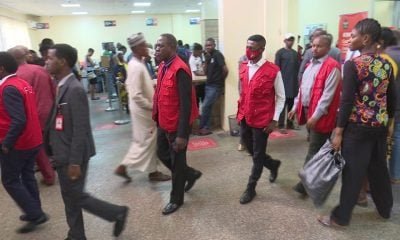
An Operations Manager of a leading Commercial bank in Abuja Central Area was on Tuesday, arrested by operatives of the Economic and Financial Commission, EFCC, for refusing to load the Automated Teller Machines, ATMs, of the bank despite having N29 million of the redesigned Naira notes in the branch’s vaults.

This discovery, which indicates a sabotage of the government’s monetary policy by some banks, was made by the EFCC in continuation of the ongoing surveillance and visit to banks across the country to access their vaults and verify whether they were deliberately refusing to dispense the redesigned Naira notes.

According to the statement, “More than five bank branches were covered today by the operatives in Abuja. Similar exercises were ongoing in Zonal Commands across the country.

“The operation will continue until normalcy is restored to the banking system.

“Nigerians finding it difficult to access their funds at any bank and suspects foul play should contact the commission, for immediate intervention.”

February 8, 2023 0 comments
0 FacebookTwitterPinterestThreadsBlueskyEmail
Newer Posts
Older Posts

Recent Posts

  • BREAKING: EFCC Arrests Energy DG, Mustapha Abdullahi over N500bn Fraud

    May 13, 2026
  • Court Sentence Former Minister of Power, Saleh Mamman to 75 Years Imprisonment for Embezzling N33.8 Billion

    May 13, 2026
  • FG to Borrow Fresh $1.25 Billion Loan From World Bank

    May 12, 2026
  • ‘It’s time to go,’ constituent tells rep who has been in parliament for 27 years

    May 11, 2026
  • Senate, Reps Approve N1.75tn NDDC Budget for 2026

    May 11, 2026

Usefull Links

  • Contact Page
  • About Leading Reporters
  • Contact Us
  • Headlines
  • Investigation
  • Exclusives
  • Opinion
  • Business
  • Facebook
  • Twitter
  • Instagram
  • Linkedin

@2021 - All Right Reserved. Designed and Developed by PenciDesign


Back To Top
Leading Reporters
  • Featured
  • Politics
  • Opinion
  • Business
  • Entertainment
  • Sports
  • About Us
  • Contact