
Leading Reporters
  • Headlines
  • Health
  • Business
  • Exclusives
  • Investigation
  • Entertainment
  • Opinion
Friday, February 20, 2026
Hot
Ramadan: Hisbah arrests nine in Kano for allegedly...
37 Miners Die, 25 Hospitalised After Suspected Carbon...
FCT Polls: PDP candidate steps down for APC’s...
BREAKING: Tinubu signs controversial Electoral Act amendment bill...
Kano govt ban Dj, music till after Ramadan
Kaduna Terror Victims Demand Accountability for Rights Abuses...
BREAKING: DSS Sues El-Rufai for Intercepting NSA Ribadu’s...
Major Health Crisis Plagues Dape, Karmo Residents As...
BREAKING: INEC announces timetable, schedule of 2027 elections
Aso Rock to disconnect from nat’l grid in...
  • About Leading Reporters
  • Contact Us
Leading Reporters
Advertise With Us
  • Headlines
  • Health
  • Business
  • Exclusives
  • Investigation
  • Entertainment
  • Opinion
Hot
Ramadan: Hisbah arrests nine in Kano for allegedly...
37 Miners Die, 25 Hospitalised After Suspected Carbon...
FCT Polls: PDP candidate steps down for APC’s...
BREAKING: Tinubu signs controversial Electoral Act amendment bill...
Kano govt ban Dj, music till after Ramadan
Kaduna Terror Victims Demand Accountability for Rights Abuses...
BREAKING: DSS Sues El-Rufai for Intercepting NSA Ribadu’s...
Major Health Crisis Plagues Dape, Karmo Residents As...
BREAKING: INEC announces timetable, schedule of 2027 elections
Aso Rock to disconnect from nat’l grid in...
Leading Reporters
Leading Reporters
  • Headlines
  • Health
  • Business
  • Exclusives
  • Investigation
  • Entertainment
  • Opinion
Copyright 2024 - All Right Reserved
Home > Archives for > Page 20
Author

Folarin Kehinde

Folarin Kehinde

Entertainment

Why I gave fake testimony about acquiring N500m mansion at Ebuka Obi’s church – Church Member

by Folarin Kehinde March 5, 2025
written by Folarin Kehinde

A Nigerian woman, Helen Loveth, who testified about acquiring a N500 million mansion at Evangelist Ebuka Obi’s Zion Ministry, has revealed why she lied.

Loveth had claimed that divine intervention enabled her to purchase the luxury five-bedroom property.

Social media erupted over the weekend after she was spotted selling drinks in Enugu.

A video showing people confronting her sparked controversy online, prompting Prophet Ebuka Obi to publicly distance himself, stating that he had no knowledge of the woman.

The Enugu-based woman, who appeared visibly shaken during questioning, said she gave the testimony as an act of faith because she was in the process of purchasing the house.

However, speaking after her arrest by the police, she said, “I did not build the house. We’re in the process of buying it. I have checked it, and the agent said we should go and meet the landlord. It is not mine yet. I don’t own any house.”

Loveth, who could not provide the house address, added, “I don’t own it yet. I wanted to pay in instalments.”

March 5, 2025 0 comments
0 FacebookTwitterPinterestThreadsBlueskyEmail
Headlines

Health Safety: NAFDAC shut down over 40 illegal Sachet Water Factory in FCT

by Folarin Kehinde March 5, 2025
written by Folarin Kehinde

The National Agency for Food and Drug Administration and Control (NAFDAC) has launched a crackdown on the illegal production of sachet water also known as ‘pure water’ in the Federal Capital Territory.

The crackdown on the illegal production of water by NAFDAC began in Dutse Alhaji and Dawaki areas of the FCT on Tuesday, March 4, with the agency shutting down some companies.

It was gathered that several water production facilities were shut down by operatives of the agency over various issues of compliance including unsafe environments, use substandard equipment, and the failure to meet regulatory standards.

Speaking on the process, Kenneth Azikiwe, the FCT directorate for NAFDAC said over 40 water factories have been shut down in the FCT since the crackdown on illegal water production companies started.

He said, “This directive comes amid rising concerns over producers using substandard materials, stamping products with unauthorised identification numbers, and operating in unsafe conditions,” he stated.

Giving more insight into the process, Azikiwe said 14 bakeries have also been closed down in places like Mararaba, Nyanya, Gwagwalada and Zuba areas of the FCT due to some issues with safety regulations.

“This operation required strong synergy and collective commitment to tracking down individuals involved in the illegal manufacturing and distribution of substandard products,” Azikiwe state.

Also urging Nigerians to remain vigilant in the purchase of their consumables, Azikiwe said that NAFDAC is working with security agencies to ensure the health safety of citizens.

March 5, 2025 0 comments
0 FacebookTwitterPinterestThreadsBlueskyEmail
Headlines

N700b Fraud: EFCC releases Ex-Akwa Ibom Governor Udom Emmanuel after interrogation

by Folarin Kehinde March 5, 2025
written by Folarin Kehinde

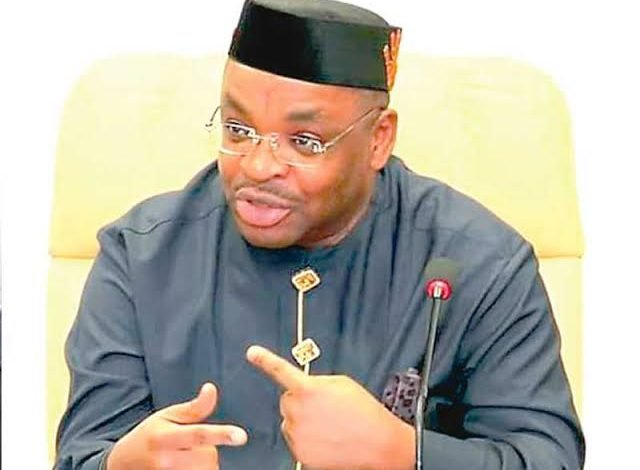
Former Governor of Akwa Ibom State, Udom Emmanuel, has been released by the Economic and Financial Crimes Commission (EFCC) after being questioned over allegations of financial misconduct.

The former governor, who was invited by the anti-graft agency for questioning, arrived at the EFCC headquarters in Abuja on Tuesday, March 4, 2025, at around 12:30 p.m.

He was interrogated for several hours before being allowed to leave later in the evening, without spending the night in custody.

Udom Emmanuel’s visit to the EFCC was in response to an investigation into allegations of money laundering, diversion of public funds, and mismanagement of state resources.

The case was reportedly triggered by a petition from the Network Against Corruption and Trafficking (NCAT), a civil society group that had accused the former governor of financial irregularities during his eight-year tenure.

According to sources within the EFCC, the petition claimed that Udom Emmanuel received a total of ₦3 trillion from the Federation Account while in office but allegedly left the state with a debt profile of ₦500 billion. Additionally, the petition stated that there were ongoing projects in Akwa Ibom State worth ₦300 billion that remain unpaid.

A key part of the allegations revolves around an alleged ₦700 billion that the former governor has yet to account for.

March 5, 2025 0 comments
0 FacebookTwitterPinterestThreadsBlueskyEmail
Business

Ramadan: Good news for Nigerians as food prices begin to crash

by Folarin Kehinde March 5, 2025
written by Folarin Kehinde

With the commencement of fasting which usually signifies the beginning of the Ramadan season, food prices in the market are crashing in states like Yobe, Borno, among others.

It was gathered that the crash in the food prices is quite notable on farm produce like millet, maize, beans and even rice which has been on an all-time high for some time.

Speaking on the new development, some marketers and business people within the markets said they are grateful for the crash in foodstuff prices.

While some of the sellers commended the government for introducing various initiatives to sustain the production of foodstuff by farmers, others said the prices began to drop when it was obvious that people could no longer afford the products and some perishables were going to waste.

However, Adamu Isah, a foodstuff seller said the current drop in prices is due to the harvest season.

Isah noted that this is the season of harvest and at this particular time – annually – prices of foodstuffs usually drop because there is an abundance of produce.

For instance, the price of rice which sold at almost N90,000 last year has dropped to N65,000; beans dropped from N150,000 to about N75,000 while millet which initially stood at N80,000 has now dropped to N45,000.

He, however, called in the governments at all levels to drive policies that would reduce the hardship faced by Nigerians across the country.

Isah said, “We need support, even the farmers need to be supported with seedlings, fertiliser, subsidised farming plans so they can produce more crops.”

March 5, 2025 0 comments
0 FacebookTwitterPinterestThreadsBlueskyEmail
Business

GAIM 6 Promo: Fidelity Bank rewards NYSC member with N500,000 Entrepreneurship Grant

by Folarin Kehinde March 4, 2025
written by Folarin Kehinde

In affirmation to keeping their word, Fidelity Bank has awarded the sum of N500,000 entrepreneurship grant to Koromo Bomane-aziba, a serving FCT Corp member in the 6th edition of its Getz Alerts In Million, (GAIM) promo.

Abuja Branch Leader Fidelity Bank, Vincent Ijioma while speaking in Abuja on Tuesday at the presentation of the grant stated that the entrepreneurship grant aims at giving back to the society, especially to serving corp members as a start up capital to ease their business startup and make their dreams reality.

Ijioma explained that the grant will be given to corp members who won the promo on quarterly basis adding that more than 12 corp members are currently on the waiting list.

“What we are doing is also part of
the way of rewarding and giving back to the society and part of the things that we have done differently in this year promo is to incorporate the NYSC into it.

“The bank decided they were going to make available 500,000 what we call
entrepreneurship grants that we are giving to people, the lucky winners from the
draw. What we are doing here today is also happening in every other place across the nation with people that have won, they are making that presentation.

“Like I said, from the list that was sent to
us, we have more than 12 corp members currently, you know, that this transition is going on. And it’s not going to be a one-off thing, it’s going to happen every quarter.”. he added.

Expressing her delight after receiving the cash reward, Koromo Bomane-aziba stated that her dreams of starting her culinary business is now a reality, she however advised her fellow corp members to open account with fidelity bank and enjoy many benefits and opportunities that the bank presents.

“I am happy that I was chosen for this. I was really surprised because I didn’t expect it. This just came about and I really want to thank fidelity Bank for giving me this opportunity. And I would want to go into a business, which is what I love doing. I love cooking. While in camp, I joined the culinary class because that’s what I love doing. So with this money, I’m really going to start a big business. Something I can use to manage myself while I’m in
Abuja.

“I will advise fellow corp member that if something like this happens to them, they shouldn’t take it for granted and they should try as much as they can to own an account with Fidelity Bank. Because just as I was, I was surprised and I didn’t expect this. So once they are able to get an
account with Fidelity Bank, I believe they have more packages for other corp members so they will definitely be opportune like me.”. She added.

March 4, 2025 0 comments
0 FacebookTwitterPinterestThreadsBlueskyEmail
Opinion

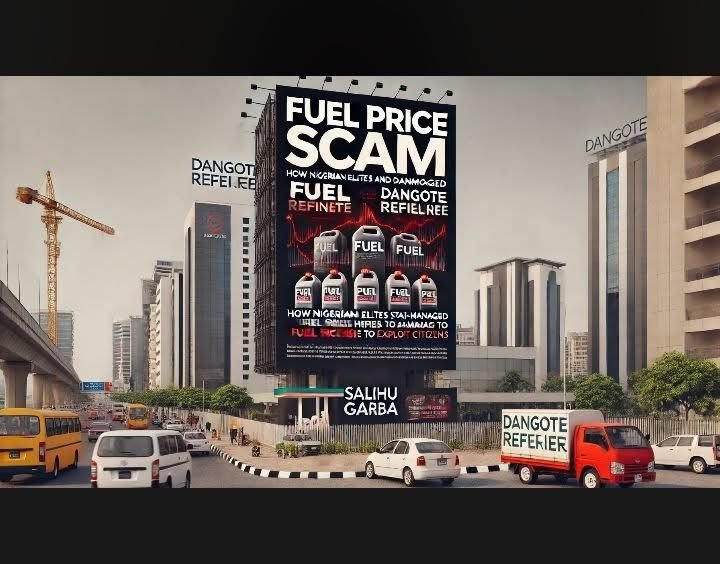
Fuel Price Scam: How Nigerian Elites and Dangote Refinery Stage-Managed Fuel Price Hikes to Exploit Citizens

by Folarin Kehinde March 4, 2025
written by Folarin Kehinde

By Salihu Garba-mama Aliyu (#SAGMA), Published on 3rd March 2025

Introduction: How This Article Evolved

This article is a continuation of my previous piece, “Fuel Price Scam: How Nigerian Elites Keep You Enslaved.” It expands upon the issues raised, incorporating feedback, counterarguments, and deeper research into the deceptive pricing mechanisms that have kept Nigerians struggling under the weight of artificially high fuel prices.

In that article, I exposed how Nigeria’s ruling elites, in collusion with foreign rent-seekers and the IMF/World Bank, have deceived Nigerians into believing that they must buy fuel at international rates, even though the crude oil is sourced from our own land. I also debunked the false argument that Nigeria cannot subsidize fuel for its citizens while exposing the hypocrisy of Western nations that heavily subsidize energy, education, and food for their own people.

This article takes the discussion further by examining how the Dangote Refinery—despite having the capacity to meet over 60% of Nigeria’s domestic petroleum needs—was complicit in an elaborate fuel price manipulation scheme that began with extreme inflation of fuel prices, followed by a gradual “reduction” to create the illusion of progress. In reality, Nigerians are still paying far more than they should.

The Dangote Refinery Fuel Price Scam: A Staged Manipulation

When the federal government removed fuel subsidies in May 2023, the official pump price of Premium Motor Spirit (PMS) shot up from ₦238.11 per liter to between ₦955 (Dangote Refinery price) and ₦1,200 (retail stations). This sudden price surge—without any meaningful increase in global crude oil prices—was part of a stage-managed scheme to exploit Nigerian citizens while shielding the government from scrutiny.

How the Deception Was Orchestrated

Phase 1: Artificial Price Inflation (May 2023 – Early 2024)

  • The elimination of fuel subsidies provided the perfect excuse to artificially inflate the price of petrol.
  • Despite the Dangote Refinery beginning production and having the capacity to refine crude at lower costs domestically, it sold PMS at exaggerated prices, aligning with the IMF/World Bank-fueled narrative that fuel should be priced at “market rates.”
  • The Nigerian National Petroleum Company Limited (NNPCL) and Dangote Refinery orchestrated a staged confrontation to divert public scrutiny from the sudden and unjustified fuel price hikes. However, in a telling contradiction, NNPCL was later granted exclusive rights to first offtake and sell Dangote’s refined products.

Why? A classic case of vested interests at play.

If NNPCL truly believed in a free market and price deregulation, why did it secure a monopoly over Dangote’s refined fuel? This blatant double standard exposes the deception behind the so-called “market-driven pricing” narrative. It was never about free-market principles—it was about control, profiteering, and ensuring that only a select few benefit at the expense of ordinary Nigerians.

Phase 2: Stage-Managed Price Reductions (Early 2024 – Present)

  • Once public frustration peaked, small reductions in fuel prices were introduced, creating the illusion that the market was “self-correcting.”
  • From a high of ₦955-₦1,200 per liter, the price was gradually lowered to ₦825 per liter, and further reductions may follow in a controlled manner.
  • This staged “reduction” is not a real price cut but a calculated deception designed to pacify Nigerians while keeping fuel prices far above the true cost of domestic refining.

Phase 3: Long-Term Price Fixing and Exploitation

  • By inflating prices to extreme levels initially, any later reductions appear “reasonable” in comparison, even though Nigerians are still paying much more than they should.
  • The same cartel that profited from the subsidy regime has now hijacked the so-called deregulated market to maintain artificial pricing structures that serve elite interests.

Why This Is a Fraudulent Scheme

  • If Dangote Refinery has the capacity to refine crude locally, why was fuel priced at over ₦955 per liter in the first place?
  • Why did NNPC and Dangote pretend to be at odds, only to later align in a staged price adjustment?
  • Why is the price of PMS in Nigeria still among the highest in Africa despite our crude oil reserves and refining capacity?

The answer is clear: The removal of fuel subsidies was never about free-market efficiency—it was about enriching a select few at the expense of ordinary Nigerians.

Rebutting the Lies: Why Must Nigerians Pay International Rates for Their Own Resources?

Imagine a local farmer in Nigeria who produces palm oil. The cost of palm oil in the international market can never be the same as the price of palm oil sold in local markets where palm oil kernels are abundantly available. Likewise, the price of Aso Oke (a traditional Yoruba fabric) in international fashion markets will never match the price of Aso Oke sold within Yoruba land.

Similarly, electric vehicles designed and manufactured in China cost significantly less in China than in African or American markets due to additional costs such as export duties, transportation, and foreign market regulations. Between domestic and export markets, there are substantial differences in overhead costs—processing, customs duties, and other levies. There are also profit margins factored into international pricing.

So why has the Nigerian government and its oil industry elites—acting in collusion with foreign rent-seekers—brainwashed Nigerians into believing that the country cannot sell its own backyard natural resources at prices cheaper than the international market rate (Reuters Platts)? Worse still, why have they convinced us that Nigeria cannot subsidize fuel to make life easier for its citizens? This grand deception has condemned Nigerians to suffering under artificial fuel scarcity and skyrocketing prices, while a small elite class, in alliance with neocolonialists, reaps the benefits.

In my previous article, “Fuel Price Scam: How Nigerian Elites Keep You Enslaved,” I exposed this fraudulent scheme and outlined the urgent reforms needed to bring down fuel costs and strengthen the naira. I also reaffirmed that subsidy on energy and food is an inalienable right of every citizen—not a privilege.

If Nigeria’s ruling class refuses to heed these patriotic calls for reform and insists on maintaining the status quo, then the 2027 elections will be an opportunity for Nigerians to correct this injustice by electing leaders who genuinely care about the common good.

The Facts Vs. Fallacies

The claim that Nigerians must buy fuel at international market prices is not only false but intellectually lazy and deceptive. The same Western countries that pressure Nigeria to remove fuel subsidies provide massive subsidies to their own citizens in key sectors such as energy, education, and agriculture.

I am a living witness to these subsidies. Having lived in the UK, I have seen firsthand how the British government subsidizes essential services viz-a-viz:

  • Education: While international students pay exorbitant fees for university education, UK citizens pay only a fraction of that amount—sometimes what an international student pays for one academic year covers the entire three-year program for a local student.
  • Food Subsidies: The same food items that elites in the UK can afford in grocery stores are also accessible to street cleaners and minimum-wage workers because the government ensures price stability through strategic interventions.
  • Health Care: The National Health Service (NHS) provides free or highly subsidized health care to all citizens, ensuring that even the poorest receive quality medical attention.
  • Energy Support: During economic downturns, European governments provide direct financial aid to citizens to help with energy bills, ensuring that everyone has access to affordable heating and electricity.

So, if these neocolonial powers aggressively subsidize key sectors for their own citizens, why should Nigeria—a country with abundant crude oil—fail to provide affordable fuel for its people? The answer is clear: Nigeria’s ruling elites are complicit in the economic enslavement of their own people.

The “High Refining Cost” Excuse: A Convenient Lie

One of the most common excuses given by the government and oil cartel is that the cost of refining crude oil is too high, making it impossible to sell fuel cheaply. This argument is nothing but a convenient lie used to justify fuel price hikes and the continued importation of refined petroleum products.

Here are the facts:

  1. Nigeria Has the Human and Material Resources to Build Local Refineries
  • The Ajaokuta Steel Company has the potential to manufacture components for building refineries. With the right investments, Nigeria can design and produce its own branded refining equipment.
  • Local engineers and technologists are fully capable of running refineries, provided there is political will and investment in skills development.
  1. Other Countries Have Lower Refining Costs—Why Can’t Nigeria Learn From Them?
  • Several developing nations with economies similar to Nigeria’s have far lower refining costs per barrel.
  • Instead of allowing IMF and World Bank dictates to cripple Nigeria’s energy sector, why not study and adopt cost-effective refining models from these countries?
  1. Artificially Inflated Costs Serve Elitist Interests
  • Many of the costs associated with refining in Nigeria are deliberately exaggerated to create loopholes for **fraudulent subsidies, inflated contracts, and fuel importation scams.
  • The government has failed to prioritize local refining, allowing a few elites and their foreign partners to profit from the importation of refined products at the expense of ordinary Nigerians.

The Hypocrisy of the Nigerian Elite

While Nigerians are told that subsidies are “unsustainable,” the same elites enjoy heavily subsidized luxuries at the expense of taxpayers:

  • Government officials receive free fuel allocations, yet they insist ordinary Nigerians should pay high prices.
  • Dangote’s refinery benefited from massive tax incentives and government-backed loans, yet it sells fuel at exorbitant prices.
  • Foreign interests who push for subsidy removal in Nigeria continue to subsidize fuel and essential goods in their own countries.

This is nothing but economic neocolonialism disguised as “reform.”

Breaking Free from IMF/World Bank Dictates: The Path to Economic Liberation

Nigeria’s continued economic struggles—high fuel prices, inflation, and worsening poverty—are not accidental. They are the direct result of policies imposed by external forces such as the IMF and World Bank, implemented by Nigerian leaders who act as their puppets.

To break free from this vicious cycle, Nigeria must adopt policies that prioritize national interests over foreign economic prescriptions.

How Do We Achieve This?

  1. End the Discretionary Pricing System in the Oil Sector
  • Nigeria’s petroleum sector must adopt an end-to-end AI-driven hydrocarbon trade and exchange system that eliminates manipulation and ensures real-time transparency in fuel pricing.
  • A centralized cloud based hydrocarbon price database must replace the foreign-controlled Reuters Platts system, ensuring that fuel prices reflect domestic production costs, not external market distortions.
  1. Revamp and Expand Local Refining Capacity
  • Why should Dangote Refinery be the only major private refiner? The government must invest in multiple refineries to prevent price-fixing by monopolies.
  • Existing public refineries must be rehabilitated and operated with full transparency to drive down costs.
  • The Ajaokuta Steel Company and other local industries should be revived to produce refinery components locally, reducing dependency on expensive foreign imports.
  1. Use the 2027 Elections to Elect Leaders Who Reject IMF/World Bank Enslavement
  • Nigerians must elect leaders who prioritize national interests over foreign economic dictates.
  • The current system benefits only a few elites at the expense of the masses. Citizens must demand economic justice at the ballot box in 2027.

Conclusion: The Scam Is Clear—Now It’s Time to Act

The Dangote Refinery fuel price manipulation, the collusion between the Nigerian government and foreign economic forces, and the artificial price hikes justified by false narratives are nothing but a grand conspiracy against the Nigerian people.

The time for economic liberation is now.

  • Expose and reject the lies of the fuel price cartel.
  • Demand transparency in the oil and gas sector.
  • Elect leaders in 2027 who will fight for Nigeria’s economic sovereignty.

Nigerians must wake up! The only thing standing between economic justice and continued exploitation is our collective will to fight back.

Fuel #fuelsubsidy #scam #Dangote #NNPC #nigeriadecides

March 4, 2025 0 comments
0 FacebookTwitterPinterestThreadsBlueskyEmail
Headlines

BREAKING: Obasa returns as Lagos Assembly Speaker

by Folarin Kehinde March 3, 2025
written by Folarin Kehinde

Rt. Hon Mudashiru Obasa has returned as the speaker as Lagos State House of Assembly.

The plenary is currently ongoing at the assembly chmabers.

Hon. Noheem Adams of Eti Osa Constituency 1 nominated Obasa.

His nomination was seconded by Hon. Nureni Akinsaya of Mushin constituency.

Recall the Lagos Assembly crisis began after 32 lawmakers removed Obasa and ex-Clerk Olalekan Onafeko in January.

However on Monday, March 3, Meranda resigned as speaker.

Meranda was nominated and sworn-in as the deputy speaker of the house.

March 3, 2025 0 comments
0 FacebookTwitterPinterestThreadsBlueskyEmail
Headlines

BREAKING: Meranda sworn in as Deputy Speaker after resignation as Speaker

by Folarin Kehinde March 3, 2025
written by Folarin Kehinde

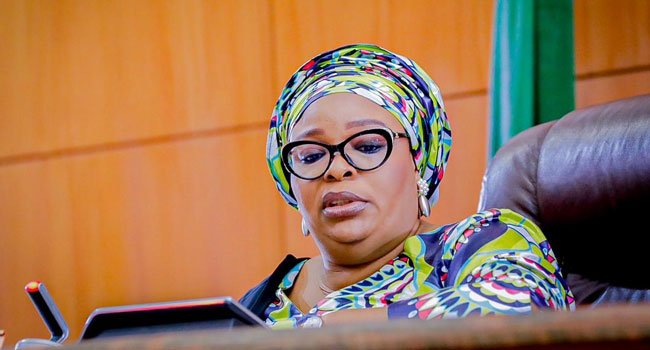
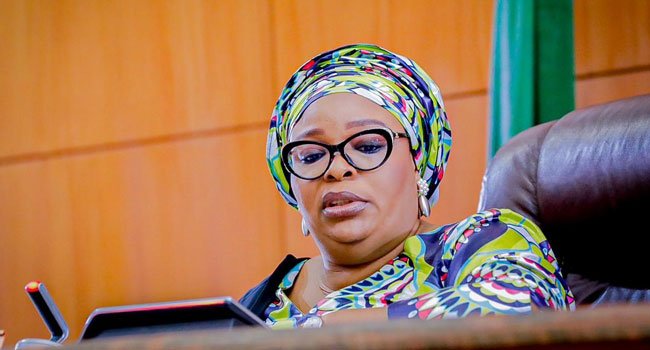
The former Speaker of Lagos State House of Assembly Mojisola Meranda, has been sworn in as the Deputy Speaker of the assembly.

She was immediately sworn-in following her nomination.

Meranda stepped down amid the leadership crisis rocking the Lagos State Assembly.

But the crisis remain unresolved as Obasa’s removal divided the Assembly, and party’s leadership in the state.

Details later…

March 3, 2025 0 comments
0 FacebookTwitterPinterestThreadsBlueskyEmail
Headlines

BREAKING: Meranda resigns as Lagos Speaker

by Folarin Kehinde March 3, 2025
written by Folarin Kehinde

Mojisola Meranda has resigned as the speaker of the Lagos State House of Assembly.

She resigned on Monday, March 3 at the ongoing plenary session.

She said she had to make the selfless sacrifice to preserve the institution.

More details loading………

March 3, 2025 0 comments
0 FacebookTwitterPinterestThreadsBlueskyEmail
Headlines

JUST IN: Jandor Dumps PDP

by Folarin Kehinde March 3, 2025
written by Folarin Kehinde

Abdul-Azeez Adediran, a former governorship candidate for Lagos State in the 2023 elections have dumped the Peoples Democratic Party (PDP).

Adediran, popularly know as Jandor announced his resignation from the PDP on Monday, March 3, at the Liberty Place in Ikeja, Lagos State.

Speaking at a press briefing, Jandor said he deemed it necessary to resign from the PDP over the tolerance of indiscipline and anti-party activities among the party leadership.

Accompanied by a crowd of supporters to the briefing, Jandor said the actions by some PDP leaders, especially, Olabode Geroge were not something he wants to be associated with.

He, however, did not state which party he would be joining following his resignation from the PDP.

“We will consult widely with everybody and then take the decision to collapse our structure to another platform. What is majority on the ground now is that we have left the Peoples Democratic Party,” Jandor said.

March 3, 2025 0 comments
0 FacebookTwitterPinterestThreadsBlueskyEmail
Newer Posts
Older Posts

Recent Posts

  • Ramadan: Hisbah arrests nine in Kano for allegedly eating in public

    February 19, 2026
  • 37 Miners Die, 25 Hospitalised After Suspected Carbon Monoxide Exposure in Plateau

    February 18, 2026
  • FCT Polls: PDP candidate steps down for APC’s Ishaku after Wike’s intervention

    February 18, 2026
  • BREAKING: Tinubu signs controversial Electoral Act amendment bill into law

    February 18, 2026
  • Kano govt ban Dj, music till after Ramadan

    February 18, 2026

Usefull Links

  • Contact Page
  • About Leading Reporters
  • Contact Us
  • Headlines
  • Investigation
  • Exclusives
  • Opinion
  • Business
  • Facebook
  • Twitter
  • Instagram
  • Linkedin

@2021 - All Right Reserved. Designed and Developed by PenciDesign


Back To Top
Leading Reporters
  • Featured
  • Politics
  • Opinion
  • Business
  • Entertainment
  • Sports
  • About Us
  • Contact