Leading Reporters
  • Headlines
  • Health
  • Business
  • Exclusives
  • Investigation
  • Entertainment
  • Opinion
Wednesday, February 18, 2026
Hot
37 Miners Die, 25 Hospitalised After Suspected Carbon...
FCT Polls: PDP candidate steps down for APC’s...
BREAKING: Tinubu signs controversial Electoral Act amendment bill...
Kano govt ban Dj, music till after Ramadan
Kaduna Terror Victims Demand Accountability for Rights Abuses...
BREAKING: DSS Sues El-Rufai for Intercepting NSA Ribadu’s...
Major Health Crisis Plagues Dape, Karmo Residents As...
BREAKING: INEC announces timetable, schedule of 2027 elections
Aso Rock to disconnect from nat’l grid in...
Valentine’s Day: FG bans money bouquets, warns against...
  • About Leading Reporters
  • Contact Us
Leading Reporters
Advertise With Us
  • Headlines
  • Health
  • Business
  • Exclusives
  • Investigation
  • Entertainment
  • Opinion
Hot
37 Miners Die, 25 Hospitalised After Suspected Carbon...
FCT Polls: PDP candidate steps down for APC’s...
BREAKING: Tinubu signs controversial Electoral Act amendment bill...
Kano govt ban Dj, music till after Ramadan
Kaduna Terror Victims Demand Accountability for Rights Abuses...
BREAKING: DSS Sues El-Rufai for Intercepting NSA Ribadu’s...
Major Health Crisis Plagues Dape, Karmo Residents As...
BREAKING: INEC announces timetable, schedule of 2027 elections
Aso Rock to disconnect from nat’l grid in...
Valentine’s Day: FG bans money bouquets, warns against...
Leading Reporters
Leading Reporters
  • Headlines
  • Health
  • Business
  • Exclusives
  • Investigation
  • Entertainment
  • Opinion
Copyright 2024 - All Right Reserved
Home > Archives for > Page 35
Author

Leading Reporters

Leading Reporters

HeadlinesBusiness

Nigeria may be Broke but don’t need Money to Turn the Tide

by Leading Reporters February 10, 2022
written by Leading Reporters

Nigeria has continued to borrow money to fund its budgets, the 2022 budget, and the country does not plan to stop borrowing soon, as details on its Medium Term Expenditure Framework show that between 2022 and 2024, the country will borrow N14.8 trillion.

Debt servicing, a consequence of the heavy borrowing, continues to gulp huge amounts and between 2022 and 2024, debt servicing will take a total of N14.6 Trillion.

To put it concisely Nigeria is broke, maybe not in the same way Musa or Nkechi are broke two days after receiving a salary, but broke all the same. 

President Muhammadu Buhari told the global community that the country needs $1.5 Trillion to bridge its infrastructure gap.

However, has more money always translated into more development for Nigeria?

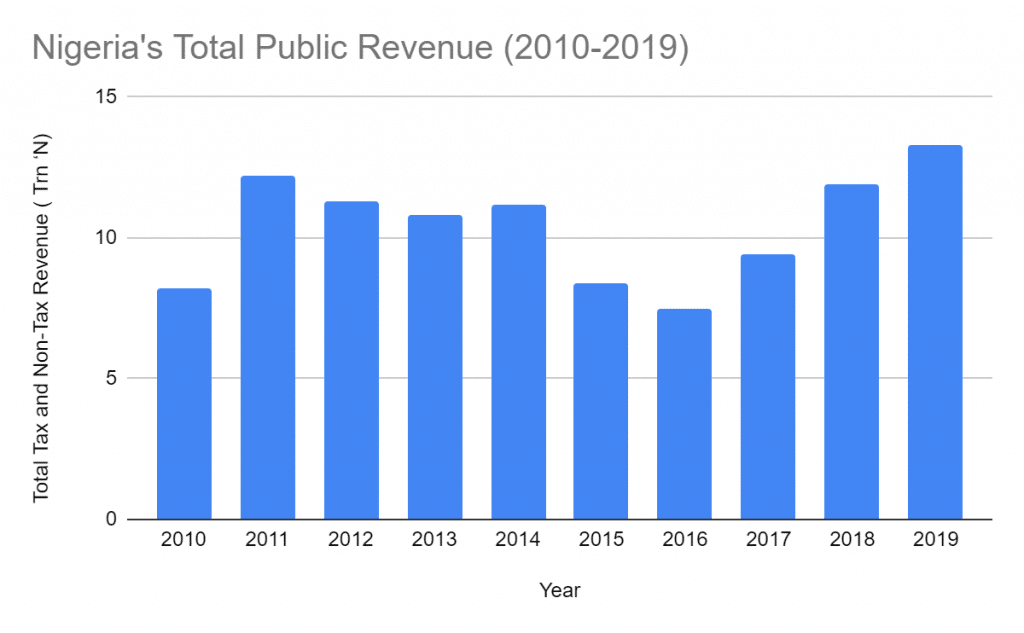
Figures available on the Organization for Economic Cooperation and Development portal show the total public revenue of the country. 

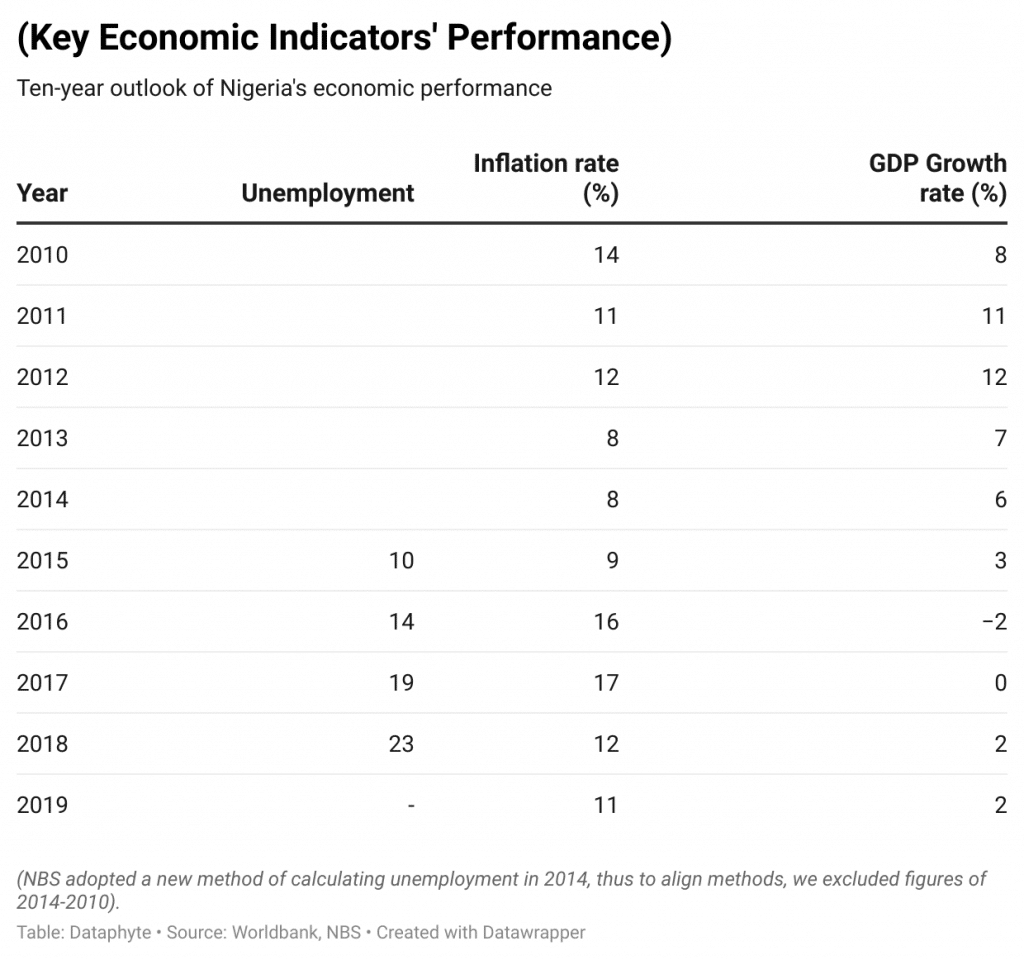
Key Economic Indicators

(The public revenue of the country for 2020 and 2021 was not added due to the COVID-19 pandemic which altered financial demands and spending of the country and all countries across the globe.)

Between 2018 and 2019, public revenue increased with the revenue hitting N13 Trillion. Unfortunately, increased revenues have not always guaranteed better economic outcomes. Economic indicators showed that GDP growth remained at 2% in both years.

The inflation figures of the country have remained in double digits impacted by both demand-pull and cost-push forces. Dependency on imports has also put pressure on the country contributing to inflation especially when the increase in the price of imported goods may also drive up prices of goods and services in the country. The naira has continued to reduce in value as exchange rates makes the country’s dependence on imported goods near suicidal. Yet in 2019, importation figures increased up to N5.3 trillion, an increase of 49.34% over the 2018 figure. 

The various policies of the government have failed to reduce the food importation bill. Importation of agricultural products rose by 6.6% between Q4 2018 and Q4 2019. Wheat importation bill stood at $1.48billion as of 2019, according to the Observatory of Economic Complexity.  Although the country’s rice production increased, the country has yet to achieve self-sufficiency.

Nigeria has also battled with poverty, with the World Bank noting that over 40% of Nigerians representing 83 million persons live below the poverty line while another 25% (53 million people) were vulnerable.

Food insecurity is heightened as the country has struggled in recent times to meet its local demand for food. Scarcity occasioned by insufficiency and strengthened by insecurity has led to a surge in food prices. Although the country has recorded some increase in the Agricultural sector’s contribution to GDP over the years, in real-time, the results have not translated to a positive effect on final economic indicators nor the country’s food security positioning.

In 2016, the country introduced N-power to tackle unemployment but the unemployment figure has not dropped since then, growing from 14%, 19% to 23% respectively in 2016, 2017 and 2018. The N-power intervention and other related policies of the government did not reduce the unemployment percentage.

Recurrent, Capital Expenditure Ratio, Corruption May be Denying Nigeria Adequate Results of Increased Revenue

Nigeria has over the years experienced high recurrent expenditure over capital expenditure across key sectors. The ability to invest in key infrastructures that may have impacted on key indicators by increasing job creation, improving local manufacturing and production etc. have reduced the value of development and increase in public revenue could offer.

Corruption is a significant factor in the loss of development benefits from increased revenue. The corruption perception index of the country stood at 145 of 180 countries in 2020 with the country scoring 25 points out of a possible 100, according to Transparency international. 

Although Nigeria dropped one place in 2020 having ranked 146 in 2019, its record has historically been poor, ranking 1444 in 2018 and 148 in 2017. This is despite the introduction of the Treasury Single Account by the government in 20016 aimed to harmonize financial operations and ensure a transparent public sector. If the Auditor General’s report is anything to go buy, the government and its agencies continue to miss the mark on transparency and accountability

Budget Deficit, Debt Servicing May Deny Nigerians Full benefit of Increased Public Revenue

A report earlier noted the high cost of debt servicing in the country for instance between January to May 2020 Nigeria spent N72 on debt servicing for every N100 earned. The 2022 budget has a 22% debt servicing figure of N3.8 trillion. This means that a substantial part  of Nigeria’s public revenue will be spent on debt servicing, monies that might have aided in boosting key economic indicators.

With Nigeria planning to borrow another N14.8 Trillion between 2022 and 2024, that will shoot up the cost of the country’s debt servicing and is expected to gulp N14.6 Trillion in the same period (2022-2024).

Review of Nigeria’s Current Key Fiscal Policies

Nigeria’s policies on improving the economic outcomes of the country have suffered various handicaps. For instance, the diversification of the economy to Agriculture has been greatly affected by insecurity, climate change, among other issues.

Policies for reducing the unemployment burden have not yielded much results as the figures have continued to grow. 500,000 Nigerians were reported to have benefitted from the N-power program as of 2020, but there has been no impact on the rate of unemployment in the country which ended the year at 32.5% . The president launched another initiative, Nigeria Jubilee Fellows program aimed at employing twenty thousand Nigerians who just graduated from the National Youth Service Corps. Again this is unlikely to affect the employment projected to rise even higher in 2022. 

The country operates the Retail Dutch Auction system for its foreign exchange. What this implies is that the Central Bank sells Forex through Banks to the end-users. The apex bank announced in July 2021, that it was suspending the Bureau-De-Change operators and suspended the issuance of new licenses. This move was perceived by actors as part of a strategy to improve the naira’s positioning but the value of Naira has remained unstable at N414 to $1 as at the time of this report. Not only are import prices  higher which drives up inflation, Nigeria’s debt servicing costs will also increase as the naira weakens. 

Exports, government spending and local manufacturing and production are a major part of increasing Gross Domestic Product but increase in price of raw materials compounded by insecurity and insufficient government investment in capital projects are likely to keep the country’s GDP growth rate nominal. 

Nigeria may need money but clearly mere increase in revenue does not necessarily translate to development and without improving its key economic performance indicators, Nigeria may continue to be in a vicious cycle of lack, dependence and borrowing.

Better policies, a genuine fight against corruption and open and accountable governance are critical to lifting Nigeria out of poverty.

While more money may mean more resources to do more things, the country may need to improve on corresponding effective policies that are commensurate with the growth in public revenue.

The question may be that the value of those monies at that time also determines what they can do, but the value relies on working policies too. (dataphyte)

February 10, 2022 0 comments
0 FacebookTwitterPinterestThreadsBlueskyEmail
Headlines

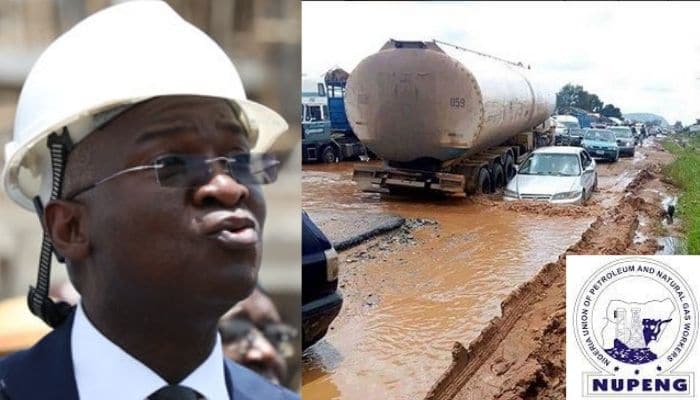
Federal roads rehabilitation has swallowed N621b; NUPENG alleges misappropriation

by Leading Reporters February 10, 2022
written by Leading Reporters

“This is an open day robbery, but we are assuring all and sundry, that our Union will go to all lengths to expose these unscrupulous individuals.

Amidst the growing fuel scarcity in the country, a face-off appears imminent between the Federal Ministry of Works, the Nigerian National Petroleum Company Limited and the Petroleum Tanker Drivers Branch of the National Union of Petroleum and Natural Gas Workers (NUPENG) that could complicate petroleum products distribution in the country.

The NUPENG on Wednesday accused the Federal Government of reneging on its promise to rehabilitate 21 critical federal roads across the country. It accused certain agencies of the Federal Government of lack of sincerity in implementing the agreement reached last October.

Addressing newsmen, the National Chairman of the PTD Branch of NUPENG, Comrade Salimon Akanni Oladiti alleged that information available to his union revealed that the fund in the estimate of N621billion through the Road Infrastructure Tax Credit Scheme for the rehabilitation of the 21 federal roads, were already being depleted.

He pointed fingers of scorn at those he called “some vultures in the garbs of being state governments, officials of Ministry of Works and Housing and politicians are already depleting these funds and misappropriating them on roads and projects not intended in the agreement as approved by the Federal Executive Council.”

Investigations revealed that following the ultimatum issued by the PTD Branch of NUPENG demanding for the fixing of certain federal roads, an agreement was signed last October between the top officials of NUPENG, the management of the NNPC led by its Group Executive Director, Downstream, Engineer Adeyemi Adetunji and the leadership of the National Association of Road Transport Owners NARTO.

In the communiqué, the NNPC unveiled the plan to “finance the rehabilitation of the critical roads through the Road Infrastructures Tax Credit Scheme in collaboration with Federal Ministry of Works and Housing and the Federal Inland Revenue Services to repair sixteen road segments at an estimated sum of N621billion.”

Comrade Oladiti expressed disaffection over the indifference of the federal government agencies to the agreement signed where critical Stakeholders were in attendance, including FIRS, FRSC, Federal Ministry of Works and Housing, Nigeria Association of Road Transport Owners and the Union.

He further expressed concern that while his union members, particularly tanker drivers continued to be at the receiving end of fatal accidents and attacks from bandits on the bad roads, no one is giving information on when the roads would be fixed despite the huge fund allocated for the rehabilitation.

“We’re tired of accidents, being stranded on the roads for weeks, risk of attacks by kidnappers, bandits and terrorists. These criminals have taken over some of these roads. We’ve been on this matter of bad roads for more than three years and last year, we reached an agreement with the NNPC which promised to rehabilitate these critical roads and earmarked N621 billion for it. Some of these roads are less than 25km in length. Tanker crashes were almost a daily occurrence. Security challenges on these roads can’t be overemphasised.

“You will also recall, that to avert the situation of industrial action of the Union, the management of Nigeria National Petroleum Corporation apprehended the situation by calling the leadership of the Union for two separate meetings on the 10th of October 2021 in Ibadan and 12th October 2021 in Abuja.

“All critical Stakeholders were at these meetings, including FIRS, FRSC, Federal Ministry of Works and Housing, Nigeria Association of Road Transport Owners and the Union.

“These two meetings resulted in the signing of communique indicating the readiness and willingness of NNPC to finance the rehabilitation of identified 21 critical roads at an estimated sum of N621 billion through the Road Infrastructure Tax Credit Scheme.

“On the basis of this communiqué, we suspended the intended industrial action but with a very clear warning, that should the spirit and letter of the agreement not fully implemented with a focus on those jointly identified critical roads, the Union will not hesitate to resume the intended actions without further warning.

“To the delight of all of us, the issue was tabled before the Federal Executive Council and was expressly approved within two weeks as agreed.

“Unfortunately, and to our greatest shocks, we heard it from very reliable sources that some vultures in the garbs of being state governments, officials of Ministry of Works and Housing and politicians are already depleting these funds and misappropriating them on roads and projects not intended in the agreement as approved by the Federal Executive Council.

“Every kobo of the approved fund must be accounted for and we must see and broadcast the pre and post-rehabilitation of all the identified 21 federal roads to the whole nation. Tax payers’ money must be accounted for. We urge every patriotic Nigerian to rise up and join us in this struggle, this is not a fight for NUPENG alone, it is our collective fight. Our solidarity remains constant, for the union makes us strong,” he said. (Nigerian Tribune)

February 10, 2022 0 comments
0 FacebookTwitterPinterestThreadsBlueskyEmail
Headlines

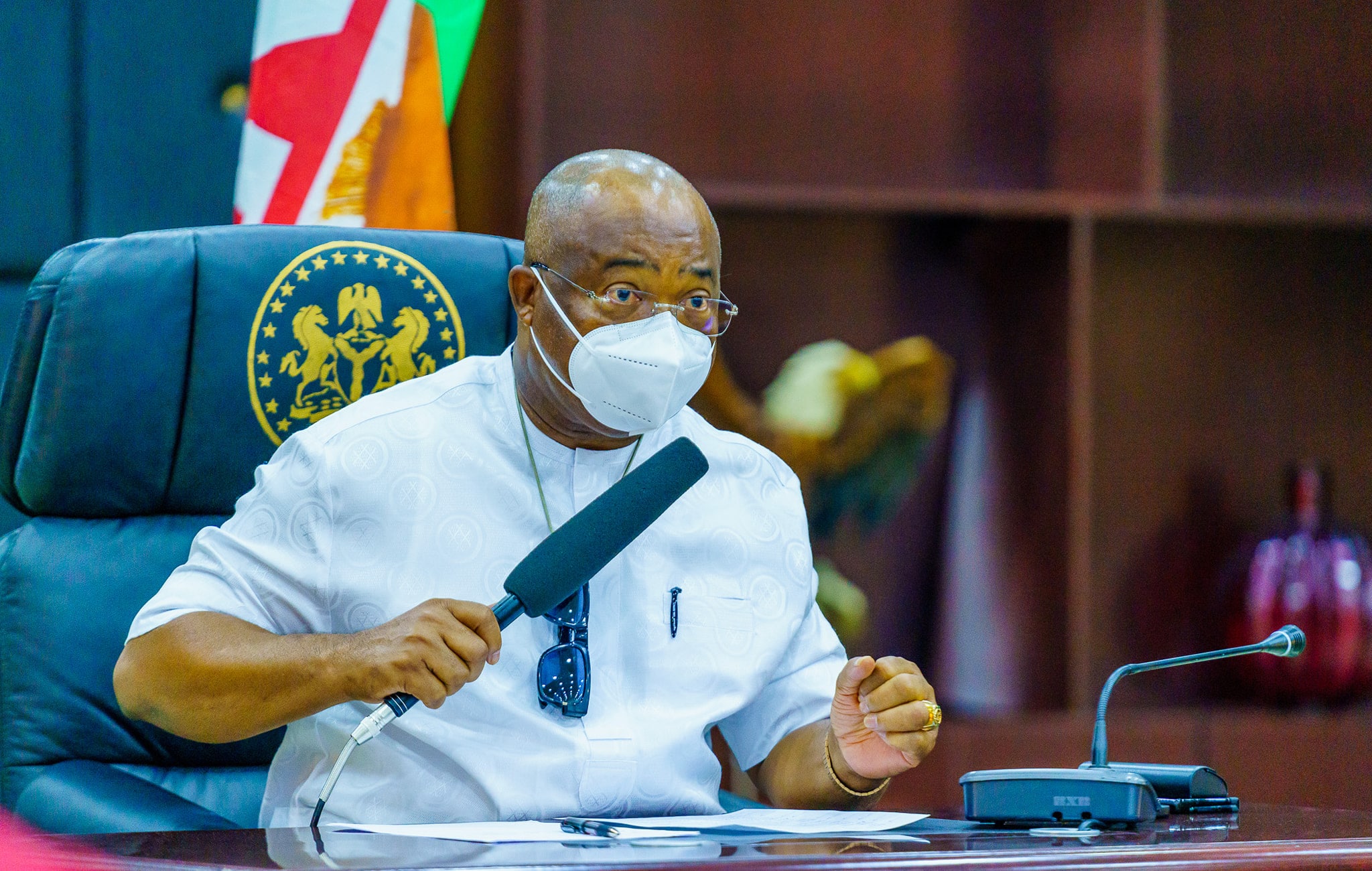
2023: Senator Hope Uzodimma Join Presidential Race?

by Leading Reporters February 10, 2022
written by Leading Reporters

Following the rumour that the governor of Imo state governor Senator Hope Uzodinma joined the presidential race the commissioner for information and strategy, Declan Emelumba has reacted. Emelumba in a statement made vailable to us opened up to the public the ambition of Governor Hope Uzodinma on the 2023 contest.

The commissioner said Uzodimma has neither contemplated contesting for the presidency nor informed anyone of such intention.

He maintained that Uzodinma is committed to serving out his tenure satisfactory, adding that he is preoccupied with the delivering of democracy dividends to the people and making their lives meaningful.

Imo people and all political associates of the governor nationwide should disregard the malicious rumours as a vain attempt to smear the name of Uzodinma. We’ve restored democracy in Imo, says Governor Hope Uzodimma In a previous report, Uzodimma declared that his government has succeeded in restoring democracy in Imo state.

The governor made the declaration during the 6th stakeholders meeting involving leaders drawn from across the state which was monitored by LR. According to Uzodimma his government was founded on the democratic principles of open, transparent, accountable, and inclusive governance.

February 10, 2022 0 comments
0 FacebookTwitterPinterestThreadsBlueskyEmail
Headlines

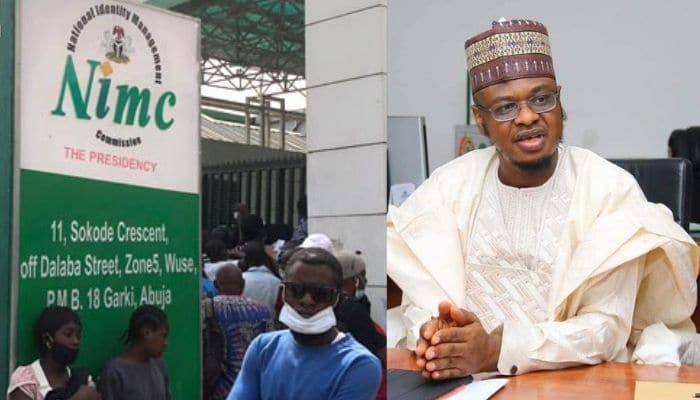
NIMC Server Hacked, As Millions of Nigerian NIN Stolen

by Leading Reporters February 9, 2022
written by Leading Reporters

Over three million National Identity Numbers of Nigerians have been stolen after a hacker known only as Sam broke into the server of the National Identity Management Commission.

Revealing how easy it was for him to breach the NIMC server and access personal information of millions of Nigerians in an article he shared on infosecwriteups.com, the hacker boasted that he got access to “juice” on the Nigerian Government agency’s server and that he could go ahead to do whatever he desired with other sensitive data at his disposal.

As the technical hitch that has bedeviled the portal of the National Identity Management Commission (NIMC) persisted yesterday, it is feared that the portal may have been compromised by hackers, data security experts have said, However, Engr. Aliyu A. Aziz DG/CEO is yet to commit.

It was revealed that telcos had continued to turn back subscribers seeking to retrieve lost, damaged or stolen SIM cards due to their inability to verify their customers’ NIN.

Responding to complaints from Twitter users, MTN Nigeria said it could not process SIM swap and update requests due to challenges with the NIMC portal.

“We are sorry we currently cannot process SIM swap and update requests due to external challenges. We appreciate your understanding and will post an update once this has been resolved,” MTN said.

Agencies such as immigration, police and road safety are among government agencies affected, according to officials.

Staffs of the Nigeria Immigration Service who spoke to Leading Reporters, that their are people who have been waiting for over 7 months for their NIN verifications to drop for international passport processing.

Displaying a defaced National Identity card of a Nigerian alongside the article, the hacker said, “I’ve got one more output for s3 bucket, I casually tried to access it without any hope, and damn! The s3 bucket is full of juice.

“I just simply got access to their (Nigeria) data of internal files, users and everything they have. I can download everything, even the whole bucket. I am sure that the bucket is full of juice.

“I wanted to look at more files but as we have to follow bug bounty rules I stopped doing more. 

“I’ve got one more s3 bucket with nuclei and it also contained about 4–5 gigs of data.

“I’ve rewarded 5250$ for only one report and 0$ for the second one even it contained so much sensitive data,” the hacker wrote in the article that has continued to generate reactions from some Nigerians on Twitter especially tech enthusiasts.

A user on the micro-blogging platform with the handle @isidags while reacting to the development said, “I’m shocked Nigerians are shocked.

“Seems you people don’t know the government and country you’re involved with.”

Another user known as @boluxxxx while commenting said, “Jokes aside, this is enough reason for Buhari to sack Pantami.”

Berating Nigeria’s weak cyber security, another Twitter user, @bespokeKENErd, said, “It was only a matter of time before this happened.

“Nigeria’s information security is ridiculously lax. So careless with sensitive data.”

@St_Gothica while reacting to the issue said, “This is exactly why I never wanted to do the NIN registration. Delayed it as long as I could.”

Another Twitter user, @The_Jonathanian, said, “Somebody should tell Sheik Pantami that the most sensitive data of Nigerians under his care have been compromised and floating in the wild.”

The hacking of the NIMC server has not only exposed Nigeria’s weak cyber security but also highlighted the danger the country’s residents and investments were currently under.

The latest cyber attack comes less than two months after the Nigerian Communications Commission in November 2021 issued a warning that an Iranian hacking group was planning to carry out cyber espionage across Africa.

A statement from the agency had further disclosed that the hackers were targeting telecoms, Internet Service Providers, and Ministries of Foreign Affairs in Nigeria and other African countries.

The incident also comes months after the President Muhammadu Buhari administration while mandating Nigerians to enroll for National Identification Number claimed that it was going to stop crimes in the country including those perpetrated via the Internet.

Speaking during the launch of the National Policy for the Promotion of Indigenous Content in Nigerian Telecoms Sector and Revised National Identity Policy for SIM Cards registration in May 2021, President Buhari said, “The NIN will cover one of the weaknesses in our security structure. We will be able to easily identify and know the personality of Nigerians.

“We will identify people easily, including the crooks.”

Assuring Nigerians of how vital the new system would be to crime fighting in the country, Minister of Communications and Digital Economy, Isa Pantami, in June 2021, claimed that incidents of terror such as banditry and kidnapping in the country had significantly reduced as a result of the insistence by government for persons in Nigeria to register for NIN.

Pantami went further to say that the improved database will protect Nigerians more than ever before.

But despite those assurances, the latest attack has exposed the failure of the President Buhari administration to protect Nigerians from cyber criminals.

Over 60 million Nigerians had so far been captured on the national identity database, according to the NIMC. 

NIMC denies hacking

NIMC debunked the notion that its portal has been hacked, but that the portal was only undergoing routine maintenance.

Over 60 million Nigerians and legal residents of the country have been registered and given their unique identity numbers otherwise known as NIN.

We further reports that some banks and telecommunication operators in the country have refused to attend to some customers since last week due to the “maintenance” being carried out on the identity portal. 

The federal government has made it compulsory for Nigerians to supply their NIN before they can access certain services offered by some private companies and government agencies.

When the NINs are supplied, the companies and agencies will then verify the unique numbers using the NIN verification portal of NIMC. 

However, NIMC’s portal has been down since last week and the development is said to have affected the issuance of international passport, account opening at banks and SIM replacement by telecommunications operators.

NIMC, in a statement on Monday by its spokesperson, Kayode Adegoke, said it was an unreasonable action for the organisations to shirk their duties.

The commission said these organisations had an alternative platform through which they could render services. The alternative platform according to NIMC is TOKENISATION. “Tokenization is working!!!”. Declare NIMC.

Adegoke, who is the NIMC Head Corporate Communications, said:  “Even though the NIN verification service (NVS) might be down due to maintenance by one of our service providers of its infrastructure, the alternative platform – TOKENISATION is up and running. No one should be debarred of any service on the guise of NIN not being verified”.

“The NVS issue has not in any way affected our other operations and services-Enrollment/issuance of NIN and other services going on”.

“There is the need to ask questions from the Telcos, The Nigerian Immigration Service (NIS), Banks and others on the reason for turning down customers in the guise of NIN not being verified due to the temporary unavailability of the NVS, while the alternative platform- Tokenization is working!!!

“NIMC NVS platform is not the only verification platform available for use, but Tokenisation which protects the identity of NIN holders is also up and running!!!

“And for accurate information, it is not a NIMC problem, rather, a government service provider has embarked on maintenance of its infrastructure, which has affected most government agencies that rely on it for the provision of IT service.”

Galaxy Backbone contradicts NIMC claims on maintenance

Galaxybackbone, a government agency which mandate is to store all data for MDAs and provide backup for their data, apologised for the temporary service outage on the network.

“The management of Galaxy Backbone Limited (GBB) regrets the temporary outage of some of its services and the inconvenience being experienced by some of its customers across the country”, the agency said in a statement signed by its Head of Communications, Chidi Okpara. News Credit: saharareporters/dailytrust

February 9, 2022 0 comments
0 FacebookTwitterPinterestThreadsBlueskyEmail
Headlines

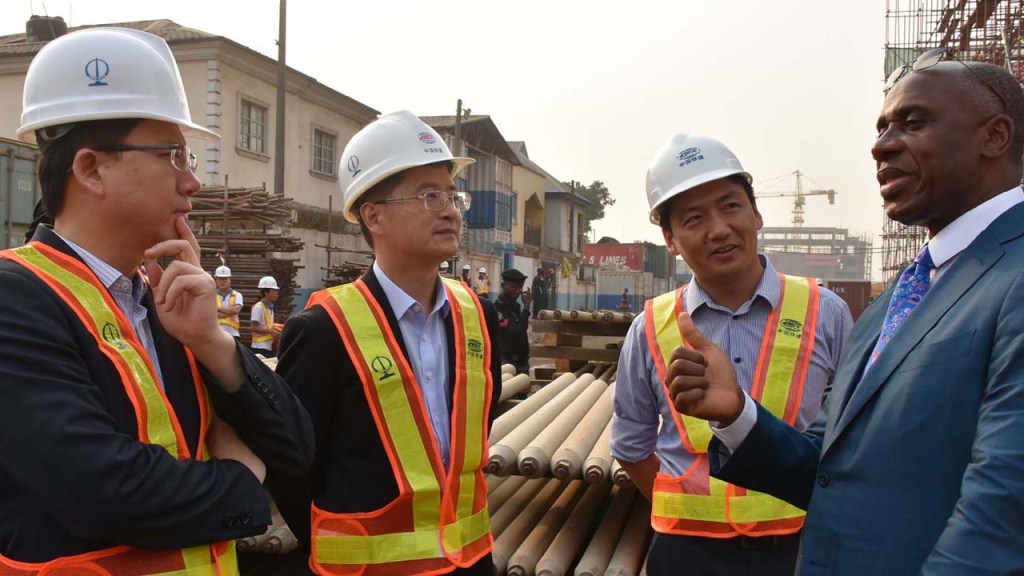
N91.7B Fraud Alert; Amaechi, Malami sued over alleged illegal rail line contract award

by Leading Reporters February 7, 2022
written by Leading Reporters

The Minister of Transportation, Rotimi Amaechi and the Attorney General of the Federation (AGF), Abubakar Malami (SAN) have been dragged before a Federal High Court in Abuja over an alleged unlawful award of 190 km rail line construction to a Chinese firm without due process of law.

They were sued along with the Federal Ministry of Transportation and the benefitting firm, China Civil Engineering Construction Company (CCECC).
Plaintiffs in the suit marked FHC/ABJ/CS/1426/2021 Duluidas Nigeria Limited, Duliz Dredging and Construction Limited and Consortium of Duluidas Nigeria Limited, Duliz dredging and Construction Limited/Hebbelyixin Fastener Company Limited, China.

In their writ of summons issued by their lead counsel, James Okoh, the plaintiffs are asking the Federal High Court to cancel the letter of “no objection” issued by the Bureau of Public Procurement (BPP) in favour of CCECC for the award of the N91.5bn rail line contract in breach of procurement laws and re-issue same in their favour.

The disputed contract is for the reconstruction of the narrow gauge track from Minna in Niger State to Baro with an extension to the Baro River Port at a whopping sum of N91.5 billion and a completion period of 36 months.

The plaintiffs prayed the court for an injunction restraining the defendants from awarding or purporting to award the contract to the Chinese firm or any third party on the basis of the flawed bidding process.

In the alternative, they sought an order setting aside any purported award on the basis of the flawed and heavily compromised bid process by the Nigeria Railway Corporation (NRC) with the concurrence of other defendants.

They also asked for an order restraining the minister of transportation or any of his agents from presenting the CCECC to the Federal Executive Council (FEC) for the purpose of the award of the contract.

In the same way, they are asking the court to set aside any purported approval received from the Federal Executive Council awarding the disputed contract to any other company during the pendency of the suit.

The plaintiffs, who claimed to have quoted a lesser amount of N76.7 billion for the execution of the same project during their successful bidding, are alleging bias against them by the minister and undue favouritism in favour of the CCECC in the contract award.

They alleged that the minister on May 19, 2021, wrote the BPP for a certificate of no objection in favour of CCECC in the sum of N91, 580, 101, 710 and that by a letter of June 9, 2021, BPP rejected the minister’s request on the claim that such certificate can only be issued to them on the basis of their quotation of N76.7b to execute the job.

They asserted that along the line, other bidding processes were manipulated and compromised leading to receipt of an acceptance letter by the NRC from CCECC for the minister to be presented to the federal executive council for the purpose of the award of the contract.

Plaintiffs, therefore, prayed the court to make a declaration that the action of the minister and his agents in interfering with due process of the bid process for the contract damaged the integrity of the process of law. They also want the court to declare that the minister and his agents were biased in their assessment of the bidding in favour of the CCECC.

Plaintiffs applied for order of injunction against the minister, his ministry and the CCECC from continuing with the award of the contract and execution of same on the basis of a flawed process.

In the alternative, they sought general damages to be quantified against the defendants on a compensatory basis and compound interest for loss of use of money.

Meanwhile, a hearing in the matter has been fixed for February 17, 2022, by Justice Ahmed Ramat Mohammed.

February 7, 2022 0 comments
0 FacebookTwitterPinterestThreadsBlueskyEmail
Headlines

‘The Youths Are Coming,’ Ambode Asks Youths To Get PVCs Ready for 2023.

by Leading Reporters February 1, 2022
written by Leading Reporters

The immediate past governor of Lagos State Akinwunmi Ambode after a long silence since leaving office in 2019, has asked Nigerian youths to register and get their Permanent Voter Cards (PVCs) to vote in the 2023 elections saying power is in their hands.

Ambode made this known in a post shared on his official Facebook, Instagram, and Twitter pages.

He also appreciated Lagosians for endorsing his contributions to the development of the state

“The youths are coming. The power is in their hands. Go and get your Permanent Voters Card (PVC) ready. Your future is NOW!

“After all we have been through, God has been faithful. Thank you for the overwhelming endorsement of our modest contributions to the growth of Lagos. It can only get better for Lagos, and indeed Nigeria,” Ambode said

https://twitter.com/AkinwunmiAmbode/status/1488457197352804354?ref_src=twsrc%5Etfw”

Since he left office in 2019, Ambode has been missing at political functions. preferring the quiet ambiance.

Ambode served as the governor of Lagos State from 2015 to 2019 and lost his re-election to Babajide Sanwo-Olu at the All Progressives Congress (APC) primary.

He was the first governor of Lagos State to stay in office for four years since the return to democracy in 1999.

Before Ambode, the current Minister of Works and Housing, Babatunde Fashola, was Lagos governor between 2007 and 2015 while Tinubu was governor from 1999 to 2007.

Although Ambode has not announced his intention to contest any political office in 2023, he is constitutionally permitted to be in office for one more term of four years if the electorate so decides.

February 1, 2022 0 comments
0 FacebookTwitterPinterestThreadsBlueskyEmail
Headlines

No China loan: No more ongoing project – Amaechi

by Leading Reporters February 1, 2022
written by Leading Reporters

Minister of Transportation Rotimi Amaechi, has blamed the delay in the execution of major projects in the country including railways, on the failure of China to fund them. Rotimi sounded as though Nigeria will plunge if China does not give it loans. Recall that Amaechi in one of his leaked tape said that President Muhammadu has asked him to get loan wherever he finds it.

The minister who lamented the delays said the Federal Government has started looking towards Europe to get loans, following the refusal of the Chinese to fund Nigerian projects.

He expressed hope that if Nigeria could get loans from Europe, the existing projects will be completed.

According to Amaechi, “We are stuck with lots of our projects because we cannot get money. The Chinese are no longer funding. So, we are now pursuing money in Europe.

“And when I look at the money they are borrowing in other countries and compare it with the one we have borrowed, the kind of comments by Nigerians will put you off.”

Amaechi said the Abuja-Itakpe railway is underway, which will link the existing Itakpe-Delta rail line.

He said the link rail would have been completed but for a misunderstanding with the Chinese contractor.

February 1, 2022 0 comments
0 FacebookTwitterPinterestThreadsBlueskyEmail
Headlines

Nigeria Loses Over N5b to UK Annually: Call For Scrapping of IELTS Intensifies

by Leading Reporters February 1, 2022
written by Leading Reporters

Nigerians have intensified campaign asking foreign institutions to stop demanding an English proficiency test — the International English Language Testing System (IELTS).

IELTS is one of the world’s known English language tests for work, study and migration.

It is an international standardised test of English language proficiency.

Annually, thousands of young Nigerian migrants take IELTS tests physically in different locations all over Nigeria, as part of the requirements to secure admissions into universities overseas or work abroad.

The Nation learnt the test costs over N80,000 and N90,000 per time and expires after two years. One has to re-sit if they have not been successful with their applications for UK scholarships.

Nigerians are questioning why they have to prove they can speak English ㅡ every two years

In 2020, the UK Home office, which is said to be primarily in charge of the test, had said that it did not have evidence that the majority of Nigerians speak English as a first language.

Many Nigerians took to social media with the hashtags — #ReformIELTSPolicy, #IELTS and #TOEFL calling on the UK home office to remove Nigeria from the list of countries whose citizens are required to take English Proficiency tests.

Some other requests include cancellation of two-year expiry clause, including Nigeria in the UKVI exemption list, and reducing test cost and increasing validity period.

Meanwhile, the UK home office is yet to react as at the time of report. while we await further engagement by the Ministry of Foreign Affairs.

IELTS: Why we impose language tests on Nigerians – UK

The statement noted that UK uses the Common European Framework of Reference for Languages (CEFR), an international standard for describing language ability, to set level of competence required to integrate in the UK.

The United Kingdom High Commission in Nigeria has reacted to Nigerians’ quest for the review of the International English Language Testing System (IELTS) which mandates Nigerians seeking to study or work in the United Kingdom to sit and pass the test.

On Saturday, in a response to an earlier enquiry by PREMIUM TIMES shared by the head of communications at the British High Commission in Abuja, Nigeria’s Federal Capital Territory, Dean Hurlock, the UK home office said it is important that anyone willing to either work or study in the UK shows evidence of language competence to integrate in the country.

The statement noted that UK uses the Common European Framework of Reference for Languages (CEFR), an international standard for describing language ability, to set level of competence required to integrate in the UK.

“We use CEFR (Common European Framework of Reference) levels to provide a common set of standards, and set them on a route by route basis, taking into account the types of activities and nature of the route. CEFR standards are an important common baseline to ensure applicants meet the required language standard,” the response noted.

How much English is English enough?

The British Council states that IELTS test results provide evidence of English language skills in most countries where it is the main language. But one big grouse many have with the initiative is: English is also the main language in Nigeria.

Having been a colony of Great Britain for nearly eight decades, it is both the country’s lingua franca and language of instruction in schools — even, some observe, to the detriment of native languages.

Nigeria’s history as an anglophone country is reflected in the people’s generally good grasp of the language. The country is ranked third-best in Africa and 29th best in the world by the 2019 EF English Proficiency Index. Also, out of over 140 countries who wrote the General IELTS in 2018, Nigerians had the sixth-best performance on average.

“Most of our systems have been set up in the English language. In fact, we even learn our own indigenous languages in secondary schools as electives,” observes Ebenezar Wikina, a development practitioner and editor of NDLink. “We have pretty much learnt English all our lives; so why then do I need to prove to you that I can speak it if we can communicate via email and you understand what I am saying?”

The Harvard-trained journalist had, in January, applied for a programme at Nexford University, an online institution based in the US, which then told him it needed to verify his English proficiency. He says he has never written the IELTS and just doesn’t bother putting in for opportunities that require it.

On fees charged

Speaking on the allegation of charging exorbitant fees, the response explained that individual test providers set the fees but these must be comparable to what is charged globally.

The statement reads in part; “Individual test providers set the fees for SELT. UK Visas & Immigration stipulate that the fees providers charge our customers must be comparable to the fees they charge others for the same or similar English language tests.”

Exception

The Home Office, however, explained that Bachelor’s Degree holders or its equivalent will not need to take a Secure English Language Test (SELT) if it is verified by UK Ecctis if it “meets, or exceeds the recognised standard of a UK bachelor’s degree, master’s degree or doctorate”.

It said on behalf of UK national agencies, Ecctis provides evidence of the level of qualifications and, or English language proficiency for the UK Home Office.

It provides services on behalf of the UK Government in qualifications, skills, and migration.

The United Kingdom also added in its response that, “An accurate and reliable SELT process is highly important to ensure people coming to work and study have the skills they need to complete the activity they are coming to the UK to do.”

How much English is English enough?

The British Council states that IELTS test results provide evidence of English language skills in most countries where it is the main language. But one big grouse many have with the initiative is: English is also the main language in Nigeria.

Having been a colony of Great Britain for nearly eight decades, it is both the country’s lingua franca and language of instruction in schools — even, some observe, to the detriment of native languages.

Nigeria’s history as an anglophone country is reflected in the people’s generally good grasp of the language. The country is ranked third-best in Africa and 29th best in the world by the 2019 EF English Proficiency Index. Also, out of over 140 countries who wrote the General IELTS in 2018, Nigerians had the sixth-best performance on average.

“Most of our systems have been set up in the English language. In fact, we even learn our own indigenous languages in secondary schools as electives,” observes Ebenezar Wikina, a development practitioner and editor of NDLink. “We have pretty much learnt English all our lives; so why then do I need to prove to you that I can speak it if we can communicate via email and you understand what I am saying?”

The Harvard-trained journalist had, in January, applied for a programme at Nexford University, an online institution based in the US, which then told him it needed to verify his English proficiency. He says he has never written the IELTS and just doesn’t bother putting in for opportunities that require it.

More difficult than necessary

The British Council’s head of IELTS, James Shipton, once described the test as “a reliable indicator of a person’s ability to communicate in English”. But the IELTS is designed to do much more than to simply ascertain fluency. The IDP admits that test questions are not only checking comprehension skills and are demanding — “even for native English speakers”.

When Jay Merlo wrote the test in 2017, he got a disappointing score of 6.5 even though he is a native speaker from Australia who was top of his English class at high school, studied English Literature at university, has a masters degree with first-class honours in Applied Linguistics from the University of Melbourne, and had taught English for nine years at universities in different countries.

“If the IELTS Academic were the only measurement of my English abilities then I think my confidence would now be destroyed,” he concedes.

Laurie Mitchell, another native speaker from the US who has written the test, describes it as difficult and stressful to take.

“It involves a lot of logical thinking and attention to detail, which can trip anyone up,” she says. “For the listening part, the recorded voices have various accents (Irish, Australian, American, etc.) and it can be challenging to understand everything they say because they may use pronunciations and vocabulary different than the English one is used to.”

Liadi in Nigeria has written the test twice already but is not satisfied with his results, and he does not agree he didn’t do well because of the quality of his English. “I am going to write it for the third time not because I can’t speak English,” he insists. “At least speaking with you, you can tell that I have control over the language.”

He also blames poor performances partly on the tension and anxiety that come with examinations. While he has friends who have written the test three or more times, Elizabeth’s coaching centre has seen worse cases.

“We’ve met someone who has taken the test 16 times before coming here. He shared his testimony and said that was his 17th time,” she tells The ICIR. 

A money-making machine

Writing the IELTS costs an average of $225 depending on the test centre and country. In Nigeria, the cost ranges between N85,000 – N90,000 for academic and general tests designed for UK Visas and Immigration.

But there are additional expenses as well. If a candidate is not satisfied with his result, for instance, they may apply for the paper to be remarked, which costs N 20,000 — refundable if the score increases.

Coaching centres also charge applicants separately for training sessions, with the price ranging between N30,000 and N60,000 per month.

Emails sent to the British Council multiple times to ask for how many Nigerians apply for the IELTS yearly and what the pass rate is were not acknowledged or replied — except with autoresponders. A call placed to Maryam Thomas, the Nigerian office’s Operations Resource Pool Manager, was also not answered, nor were texts sent on different days replied.

But, in 2017, the organisation had announced that as many as three million people wrote the test within a one-year period. Using this figure, gross profits should have averaged $675 million (N245 billion).

In Nigeria, there are 11 test centres run by the British Council, sometimes “with up to five test dates per month”. An exams invigilator working with the organisation informed The ICIR that an average of 120 people write the test at a centre on each day.

If there is a minimum of four test dates in a month and each applicant pays at least N75,000, then at the end of a year Nigerians would have paid at least N5.15 billion to the Council — and this does not include fees paid for remarking and certificate authentication.

According to the British Council’s as at 2017-18 financial review, it “achieved almost 9 per cent growth in total income to £1,172.3 million principally due to strong performance from its English teaching and examinations activities together with higher income from contract work”.

The contribution of exams to its income that year was 41 per cent (£486.9 million, N229 billion). The following year, exams together with teaching contributed 58 per cent of its total income (£727 million, N341 billion).

“I don’t see a reason why it should be that expensive,” says Liadi, referring to the IELTS. “They are using the avenue to milk us. When you go to their office, you’ll know these people are definitely in for business.”

Seyi Kolawole, another Nigerian seeking to migrate to Canada, however, considers the pricing fair especially for people whose goal is to relocate or study abroad. “Even though a reduction won’t be bad,” he adds.

Edited by: LeadingReporters, PremiumTimes and The ICIR

February 1, 2022 0 comments
0 FacebookTwitterPinterestThreadsBlueskyEmail
HeadlinesOpinion

Tinubu the veiled face behind Mafab Communication Ltd 5G license? alleged role of Remi Tinubu and how it could benefit Tinubu’s presidential ambition

by Leading Reporters January 30, 2022
written by Leading Reporters

The recent 5G license awarded to Mafab Communication Limited on 13th December, 2021, a company owned by Dr. Musbahu Mohammad Bashir, by the Nigeria Communication Commission has once again brought to fore the widely held belief that Nigeria is a country where favouritism and other sentiments hold sway.

Since Mafab Communication Limited won a 5G license, tongues have been wagging around how a company with no history in telecommunication industry surfaced from the blues and won a coveted 5G licence.  Another allusion in the front burner is the actual ownership structure of the company.

While some said Tinubu is a major stakeholder, the communication regulatory agency Nigeria Communication Commission has come out to say that due process was holistically followed in the award of the licenses. But whether Ahmed Bola Tinubu has stake in Mafab Communication Limited or not, one thing is certain.  Bola Ahmed Tinubu is a master strategist who understands that morality has no place in power-game. 

Tinubu is believed to have taken mastery of using fronts, associates, friends, and relatives to achieve anything he intends to achieve. Although, some would say Tinubu is an opportunist and a ruthless entrepreneur with ravenous appetite for wealth and more wealth.  But who is not? We all are! Whatever impression anyone has about the Lagos big-man, it has not deterred him from vigorously pursuing his ambitions, the latest of it being to succeed President Muhammadu Buhari as president.

Allegations have been made that the former Lagos State Governor and the ruling party National chieftain is one of the veiled faces behind Mafab Communication Ltd, a company that suddenly emerged from the blues and raked in a license that big player in communication industry like Airtel could not get.

Curiously, a hitherto unknown Mafab Communication Ltd won one of the only two 5G, 2.3GHz spectrum band licenses offered for sale by President Muhammadu Buhari APC-Led Federal Government through the Nigeria Communication Commission after paying $273,600,000. Tinubu, according to a source who claimed to be in the know is a major stakeholder in Mafab Communication Ltd.  Plans and discussions are already on top gear with some USA and China based telecommunication equipment suppliers  that will supply and man the equipment for Mafab Communications Ltd, according to the latest update from the company.

Although the Nigeria Communication Commission has come to Tinubu’s defence through its spokesman, Dr. Ikechukwu Adinde that the subject company has the wherewithal to be awarded the said license, event that played in 2022 budget of the commission may be a cue to what played out.  Ahmed Tinubu’s wife, Senator Remi Tinubu is the Senate Committee Chairman on telecommunication. Communication technology is key in every election.  Mrs. Tinubu was believed to be instrumental in the passage of N633.4billion budget for NCC in 2022 fiscal year.

Tinubu critics have opined that Tinubu is a man who stubbornly brings his tomorrow before it comes.  To that extent, they said that Tinubu ensured that his wife becomes the Senate Committee Chairman because of the role she would be needed to play in the telecommunication sector and by extension, in his presidential ambition.  In fact, communication, and technology are everything for Tinubu in a time like this.

The question then arises, should Tinubu have a hand in Mafab Telecommunications Ltd 5G license, how can that favourably affect his presidential ambition?

5G network is an emerging network that has a lot of possibilities.  It guarantees greater speed and access to information at a higher speed.  As beautiful as the benefits, there are other sides that could be used to manipulate information to one’s advantage and to other’s detriment.  That includes the fact that small antennas could be installed in places of interest such as street lights, buses, selected collation centers, and other places of interest. This implies that the antennas may not be centrally located and monitored, thereby giving room for manipulation by those who intend to use it to their own advantage.

Part of the challenges associated with 5G which could be cashed in for electoral manipulation is that it may become difficult to access these locations owned by various stakeholders, which would hinder the large-scale deployment of this type of antenna. What it means is that companies of interest may be used to site small antenna in areas that it may favour their paymaster.  An integrated Internet of Things (IoT) could work in anyone’s favour. Again, this innovation, could as well mean that there would not be a cohesion in deployment of small cell antennas and this could be used in a candidate’s favour against others.

Furthermore, there have been allegations of security breach against Hauwei, one of the largest players in the 5G innovation. It is said that the software and firmware used in Hauwei’s devices can be leveraged for manipulation.

Whether Ahmed Tinubu has hand in Mafab Telecommunications Ltd 5G or not, communication and technology can be used for venal purposes

Contributed by Light Shedrack, a public issues analyst and commentator.  .

January 30, 2022 0 comments
0 FacebookTwitterPinterestThreadsBlueskyEmail
Africa & World

Denmark: first EU country; announces the removal of all COVID-19 curbs

by Leading Reporters January 28, 2022
written by Leading Reporters

Denmark’s Prime Minister Mette Frederiksen announce on Wednesday the removal of all COVID-19 restrictions by the end of this month..

Denmark loosened all restrictions two weeks ago after a month-long lockdown, allowing cinemas and music venues to reopen, but some rules remain, including limited opening hours for restaurants and mandatory face masks.

The sudden shift was based on recommendations from an expert panel that also recommends removing the classification of COVID-19 as a disease that is a critical threat to society, which has allowed the current restrictions.

Frederiksen gave a media briefing on Wednesday evening and make the long-awaited announcement. Her office declined to comment on the report.

The Nordic country registered 40,348 new cases on Monday, down from a peak of 47,831 on Friday. The number of coronavirus-related hospitalisations rose to 894, the highest in a year.

But health authorities said it estimated between 30 percent-40 percent of those currently in hospital with a positive coronavirus test are there for other reasons than COVID-19.

Since a peak of 82 on Jan. 6, the number of COVID-19 patients in intensive care has fallen steadily to 43 on Monday.

January 28, 2022 0 comments
0 FacebookTwitterPinterestThreadsBlueskyEmail
Newer Posts
Older Posts

Recent Posts

  • 37 Miners Die, 25 Hospitalised After Suspected Carbon Monoxide Exposure in Plateau

    February 18, 2026
  • FCT Polls: PDP candidate steps down for APC’s Ishaku after Wike’s intervention

    February 18, 2026
  • BREAKING: Tinubu signs controversial Electoral Act amendment bill into law

    February 18, 2026
  • Kano govt ban Dj, music till after Ramadan

    February 18, 2026
  • Kaduna Terror Victims Demand Accountability for Rights Abuses Under El-Rufai Administration

    February 17, 2026

Usefull Links

  • Contact Page
  • About Leading Reporters
  • Contact Us
  • Headlines
  • Investigation
  • Exclusives
  • Opinion
  • Business
  • Facebook
  • Twitter
  • Instagram
  • Linkedin

@2021 - All Right Reserved. Designed and Developed by PenciDesign


Back To Top
Leading Reporters
  • Featured
  • Politics
  • Opinion
  • Business
  • Entertainment
  • Sports
  • About Us
  • Contact